
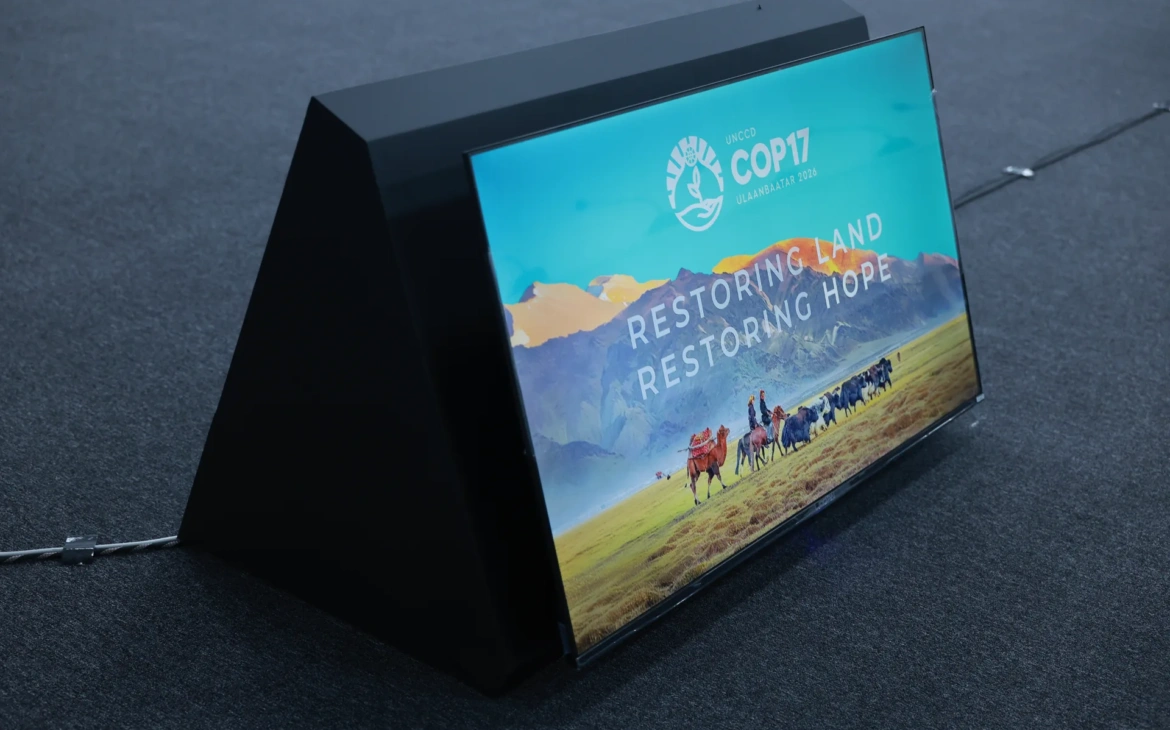
As the UN’s land summit opens under a hopeful banner, a new financial accounting shows where the money for drought resilience has actually gone, and where it hasn’t.
When the seventeenth Conference of the Parties to the UN Convention to Combat Desertification (UNCCD) opened in Ulaanbaatar on August 17 under the theme “Restoring Land. Restoring Hope,” the slogan arrived with a receipt attached.
Days before the summit, the Global Environment Facility (GEF), the convention’s principal financial mechanism, submitted its own account of two years of spending on land degradation, desertification, and drought. The numbers behind the rhetoric are worth reading closely, because they show a global response that is scaling up fast in some places and lagging conspicuously in others.
The money so far
Between July 2024 and April 2026, the GEF approved 68 projects tied to its Land Degradation Focal Area, channeling $451.7 million in direct funding across 49 countries.
That money pulled in $2.16 billion more from co-financing partners, governments, development banks, and private investors, a leverage ratio of roughly 1 to 5.3.
Cumulatively, since GEF-8 funding began in mid-2022, $600.4 million has been programmed toward land degradation work, alongside $1.37 billion in related multifocal investment, for a combined $1.97 billion mobilized under the UNCCD banner in this replenishment cycle alone.
The results claimed from that spending are substantial: 15.2 million hectares of land under restoration cumulatively, 44.5 million hectares brought under sustainable management, and 4.4 million people, 2.1 million of them women, reported as direct beneficiaries.
Africa has absorbed the largest regional share of funding, at nearly 27 percent, followed by Asia at 21 percent and Latin America
and the Caribbean at just over 15 percent.
Where drought itself sits in the ledger
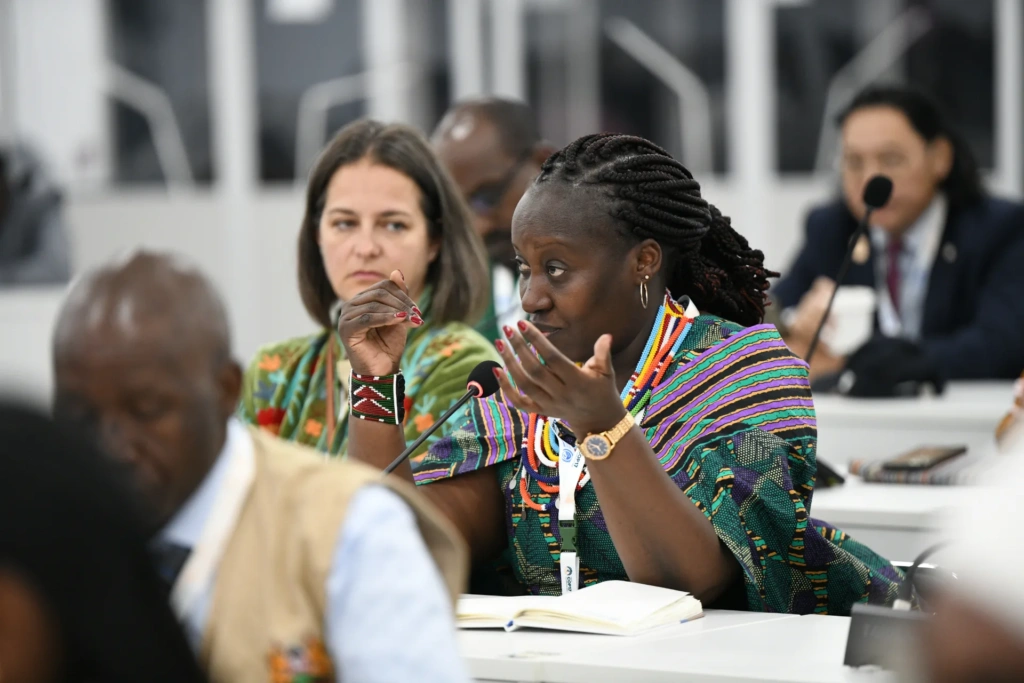
For an event convened specifically around drought resilience and desertification, one figure stands out for its modesty. Of the $451.7 million approved in this reporting period, only $44.2 million went to the 11 projects that explicitly target drought as a named objective, spanning Cameroon, Djibouti, Honduras, the Marshall Islands, Pakistan, Sudan, Syria, Tanzania, and Türkiye. That is under 10 percent of total programming.
The report’s own accounting suggests the shortfall is partly a bookkeeping artifact: drought-smart practices are often funded under the broader sustainable-land-management objective rather than tracked separately, meaning the true drought-related spend is likely higher than the line item shows.
Still, the GEF has acknowledged the gap is real enough to act on. It says tracking of drought investment “will be further improved in GEF-9 to allow for more granularity,” and the incoming GEF-9 cycle, running July 2026 to June 2030, includes a newly dedicated Drylands and Drought Management Integrated Program, designed to work alongside the Riyadh Global Drought Resilience Partnership and a new private philanthropic vehicle, the Drought Resilience Investment Facility, which is targeting $400 million.
A gap between ambition and delivery
The clearest sign of strain in the report is a shortfall against the GEF’s own targets. Against an 85-million-hectare goal for land brought under sustainable management during the GEF-8 period, only 43.2 million hectares, just under 51 percent, have been achieved so far.
The GEF attributes this to overly ambitious initial estimates set at the start of the funding cycle, compounded by rising costs of land restoration work. It has responded by resetting the GEF-9 target to a more conservative 45 million hectares.
By contrast, targets for land restoration and greenhouse gas mitigation have both been exceeded, with 10.1 million hectares restored against a 10-million-hectare goal and 2.28 billion tonnes of CO2-equivalent mitigated against a 1.85-billion-tonne target.
The GEF’s Independent Evaluation Office (IEO), in its Eighth Comprehensive Evaluation published in November 2025, offered a broadly positive assessment of the program’s design and coherence, while pointing to the centrality of drought planning in current strategy.
Its report found that GEF-8 programming directions emphasize drought management, including support for national drought plans and land degradation neutrality targets, language that GEF’s own report to COP17 leans on as validation of its current direction, even as the funding data shows drought-specific programming still trailing behind restoration and sustainable management spending.
What’s launching at COP17 itself
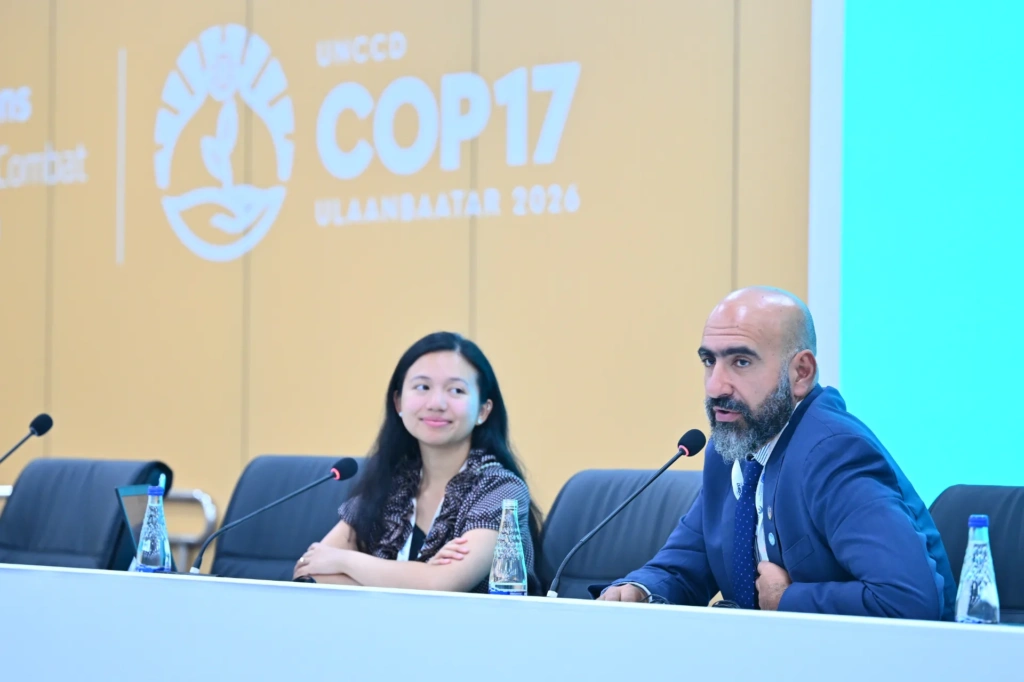
The financing conversation is set to continue live at the summit. On Finance Day, August 24, the International Union for Conservation of Nature and the UN Environment Programme are expected to announce two new funding calls under the Global Ecosystem-based Adaptation Fund, worth up to $7.5 million combined: the fund’s eighth small-grants round and its first-ever medium-grants round, aimed at scaling nature-based adaptation in vulnerable developing countries.
Additionally, a new Drought Resilience Capacity Index is due to be unveiled: a self-assessment tool, developed with the European Commission, the UN Office for Disaster Risk Reduction, and UNCCD, intended to help countries measure their own resilience and identify investment gaps before a drought hits rather than after, a direct response to the estimated $300 billion in annual global losses attributed to drought.
Two days later, UNEP and the Food and Agriculture Organization will honor the newest UN World Restoration Flagships, recognizing large-scale land restoration efforts that together span nearly five million hectares, a tangible, photographable counterpoint to the spreadsheets, and the kind of story the summit’s “Restoring Hope” branding is built around.
The bigger picture
None of this happens in a funding vacuum. Donor countries have pledged an initial $3.9 billion toward the GEF’s ninth replenishment cycle, described by GEF officials as a renewed vote of confidence in multilateral environmental finance.
Whether that confidence translates into faster, more targeted drought spending, closing the gap between the convention’s rhetoric and its own reported numbers, is likely to be one of the quieter but more consequential storylines to watch as COP17 runs through its second week in Ulaanbaatar.
Read Also: The Myth of Rangelands is Costing Africa Its Future


