
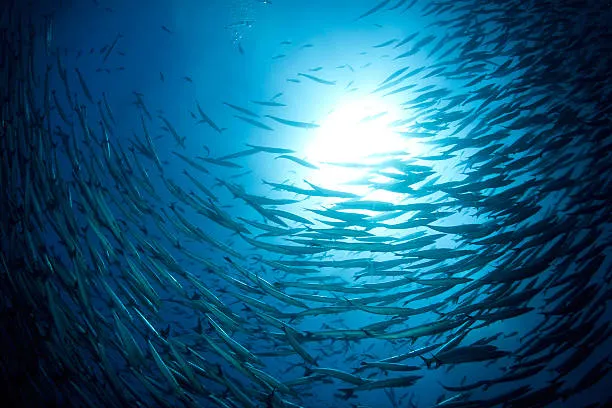
I remember the day; I remember it well. A few fortnights have gone by, but the mulling has been worth it, seeking to understand, curiosity sparked by the 11th Our Ocean Conference in Mombasa and the interesting conversations on its sidelines.
Marine, ocean and blue economy: a frontier of not only economic empowerment, but also a pulsing nerve of ecological conservation. And somewhere between conversations on climate action, ports, communities and the future of our oceans was a question that stayed with me.
“How can we tap into what already exists to see how to move forward?”
That was the rhetoric of Fredrick Kung’u, a Research Associate for Marine, Ocean and Blue Economy at the African Group of Negotiators Expert Support (AGNES), put forward during a coffee break at the Pride Inn in Mombasa.
It is a simple question, perhaps, but one that carries a weightier proposition for Africa’s blue economy: before asking for more resources, more commitments or more programmes, what can be done with what is already available?
For Kung’u, the answer begins with recognising the breadth of activity already taking place across Africa’s oceans and coastal spaces.
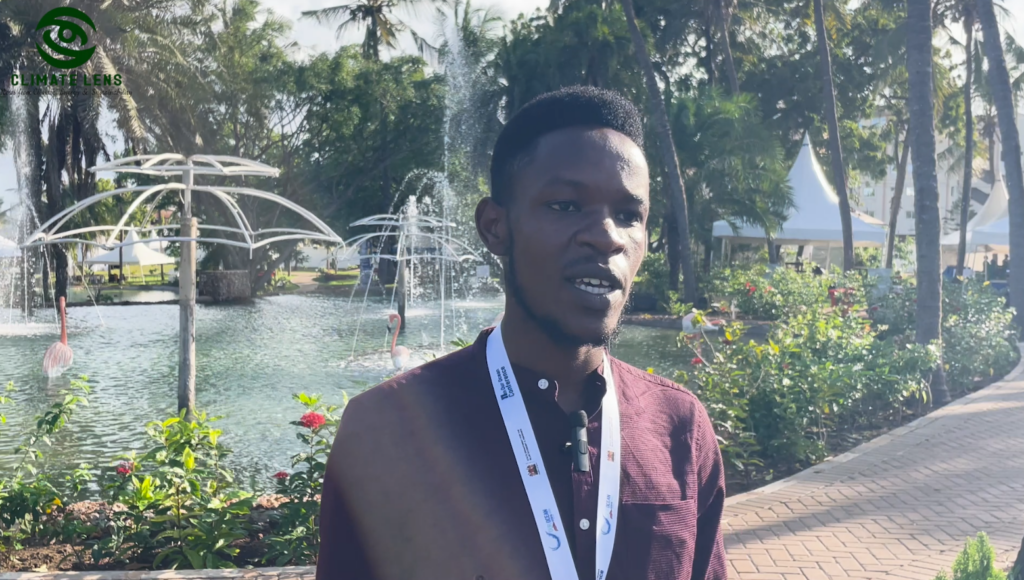
At the conference, he had expected to see Africa showcase what it is doing in ocean climate action. That expectation, he says, was met.
Partners, development organisations, community-based organisations and local communities were showcasing work ranging from conservation and mangrove restoration to coral restoration and engagement in policy processes.
“I have seen quite a lot of projects, some I didn’t even know are happening in Africa,” he says, reflecting on the experience.
It was a reminder that the continent’s ocean story is not one of waiting for action to begin. In many places, action has already started.
The question, then, is how to connect, scale and build on it.
The port at the heart of the blue economy
Perhaps nowhere is this question more important than at Africa’s ports.
Ports are economic gateways, connecting countries to trade and global markets. But they are also part of the wider blue economy, supporting activities and livelihoods that stretch far beyond the movement of ships and cargo.
They are also increasingly exposed to the consequences of a changing climate.
For Kung’u, building their resilience is therefore not simply an infrastructure concern. It is central to protecting the economic potential of the blue economy.
“We are very keen in supporting the resilience for ports,” he says. “Basically, we want to see our ports become more resilient to climate change because a lot of resources and finances within the blue economy actually comes from the port.”
It is an important distinction. A port that is unable to withstand climate-related disruptions does not only face an environmental challenge. The consequences can extend into trade, businesses, communities and livelihoods that depend on the activities taking place around it.
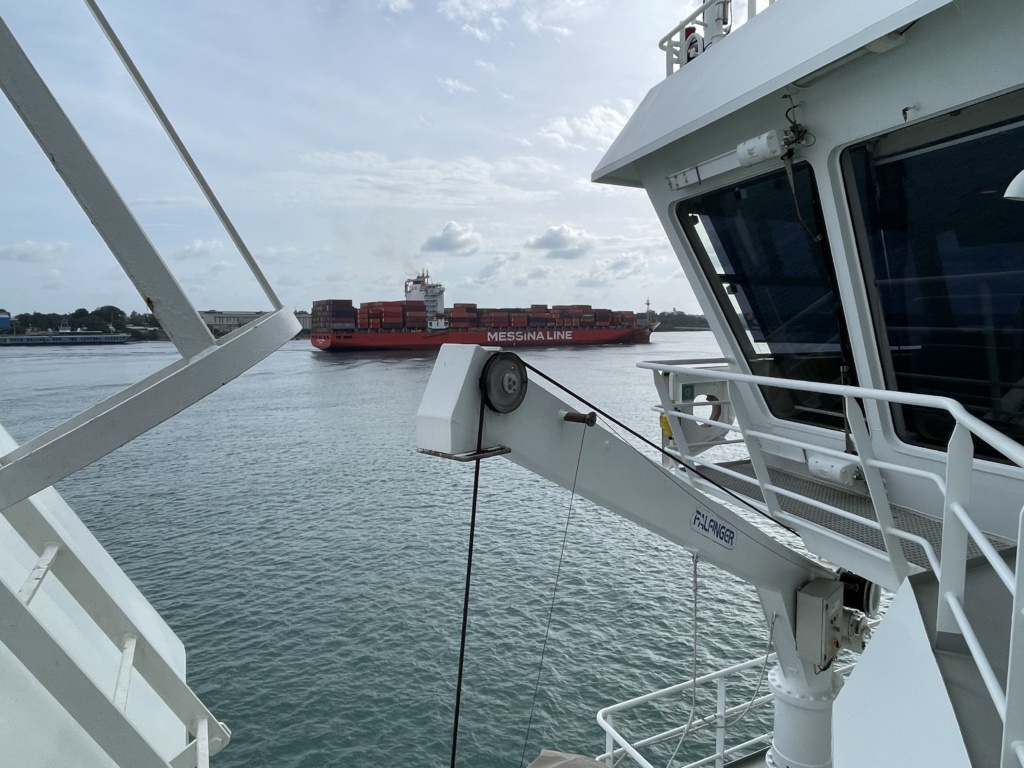
This was at the heart of a side event organised around blue African ports and cities, bringing together mayors, policymakers, industry players, academics and researchers to examine how ports can respond to climate risks while also reducing emissions.
The conversation was not simply about resilience.
It was also about decarbonisation.
For African ports and coastal cities, Kung’u says, the two conversations need to happen together.
“Basically, this is to see how our governors, our subnational leaders, and decision makers are leading the conversation and action around the climate resilience of ports, but also the conversation about decarbonization.”
The significance of bringing cities and ports into the same conversation is difficult to miss. Ports are not islands, even when they sit beside the ocean. They exist within cities, economies and communities, and their environmental decisions have consequences beyond their boundaries.
Mombasa and the port-city connection
Mombasa offered a fitting backdrop to that conversation.
The Governor of Mombasa joined the side event and, according to Kung’u, spoke about how the county is collaborating with the port on environmental and climate management.
It is the kind of relationship that could become increasingly important as coastal cities confront the intersecting demands of economic development and climate resilience.
But Kung’u’s thinking stretches beyond one port or one city.
He sees opportunities across Africa and among coastal and island developing states, particularly in fisheries, ports and shipping.
The challenge is not necessarily a shortage of opportunity.
It is making better use of what is already there.
“We need to tap into the already existing resources,” he says. “Quite a lot of commitments have been made, so something exists already.”
Those commitments span different concerns, from climate action to maritime security and the livelihoods of communities that depend on the ocean.
The task, then, is to move from commitment to implementation.
“How do we tap into what already exists before maybe even asking for more?” Kung’u asks.
There is a certain practicality in the question. It shifts the conversation from what Africa does not have to what it already possesses, and how those resources can be better connected to climate action.
Beyond the conference room
The answer may also lie beyond government offices, conference halls and boardrooms.
During the conference, Kung’u encountered community-based organisations and local communities showcasing their work in mangrove and coral restoration, conservation and policy engagement.
These initiatives matter because the blue economy is ultimately about more than infrastructure and investment. It is also about the ecosystems that sustain marine life and the people whose livelihoods are tied to them.
Healthy mangroves, coral reefs and fisheries are not simply environmental assets. They form part of the natural foundation upon which coastal communities depend.
This makes ocean health inseparable from the question of human wellbeing.
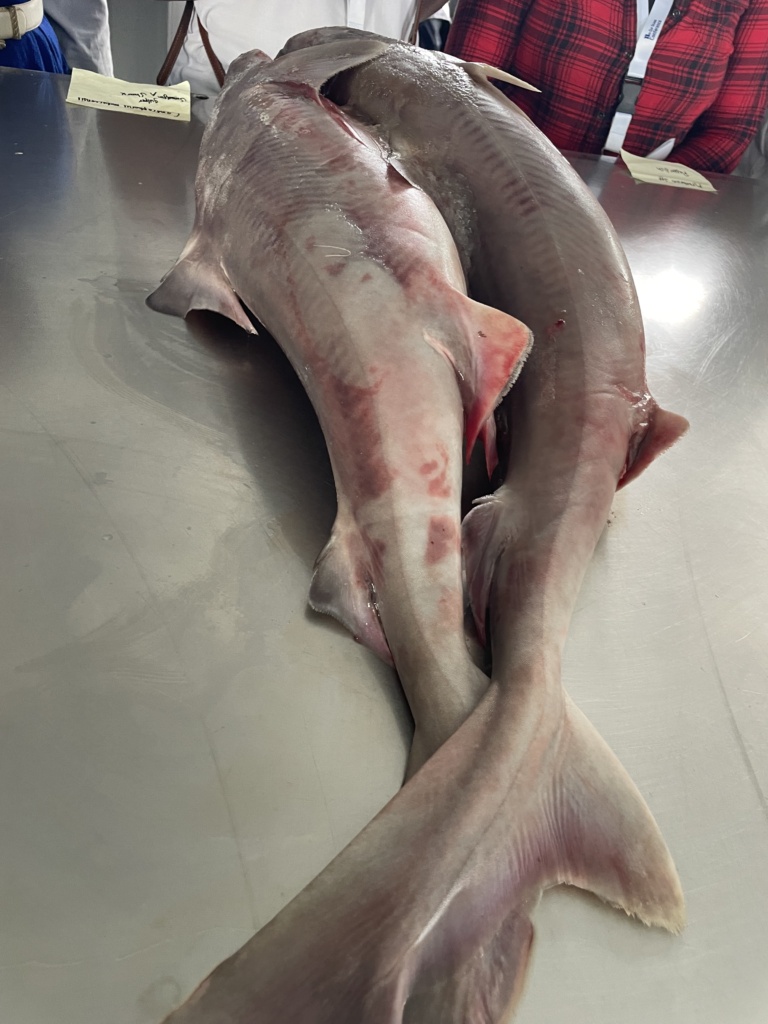
“We as humans should stop polluting our ocean,” Kung’u says.
For him, the relationship is straightforward: the condition of the ocean cannot be separated from the condition of the wider environment or from human health.
“The ocean health is intertwined with human health and also the wider environmental health.”
Perhaps this is where the idea of tapping into what already exists becomes more profound.
Africa already has oceans rich in resources. It already has coastal communities with knowledge and experience. It already has ports that serve as economic gateways. It already has conservation initiatives, climate commitments, institutions and programmes.
What remains is the difficult work of bringing these pieces together, investing in what works and turning commitments into action at a scale that matches the opportunity.
For Kung’u, the ocean is not merely another economic frontier waiting to be exploited.
It is something that carries a responsibility beyond today’s balance sheets and tomorrow’s projects.
“We should perceive the ocean as our resource, our heritage, our future, and our responsibility.”
And perhaps, after all the conversations, that is the question that lingers: not only what more can Africa ask for, but what can it do with what it already has?
Watch the conversation with Fred on our YouTube Channel: Tap Into What Already Exists”: AGNES on Africa’s Ocean Climate Future


