How the Japanese port city of Kobe is training young people to carry on the fight against biodiversity and nature loss, from rice paddies to the global negotiating table.
At the UN biodiversity conference (CBD COP17), among delegates, officials, and observers from around the world, a small group from Japan stood out to me for one reason; some were still students, while others were recent graduates.
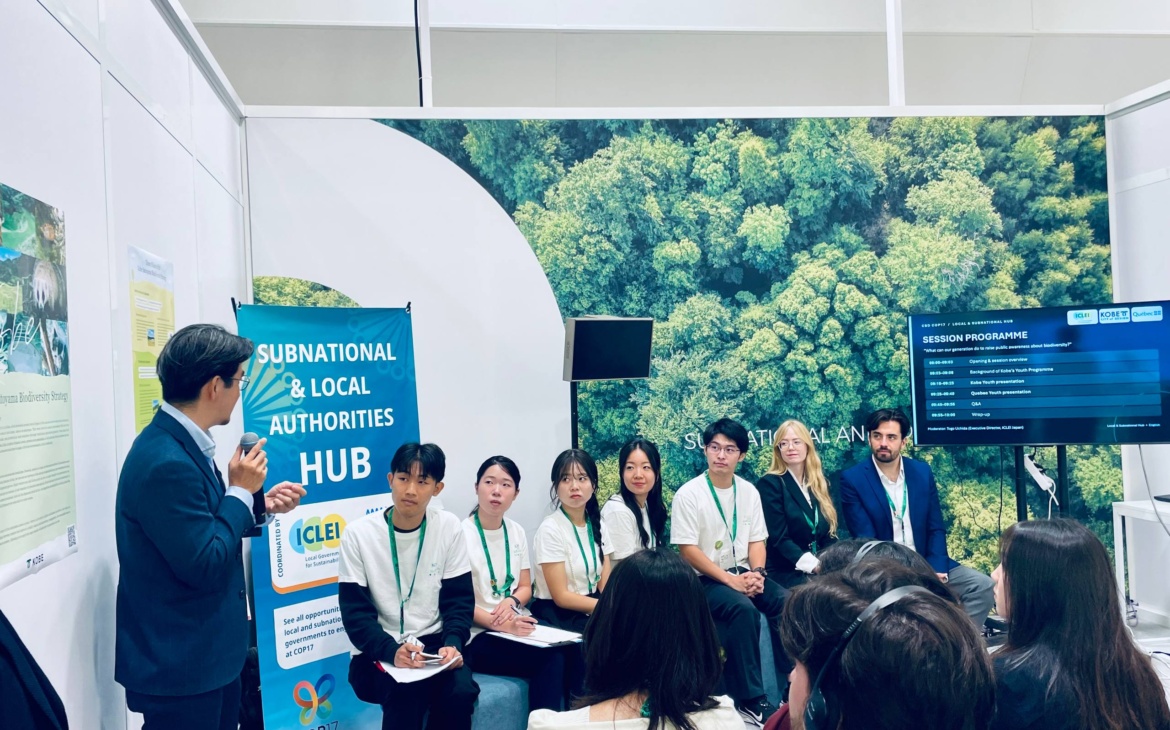
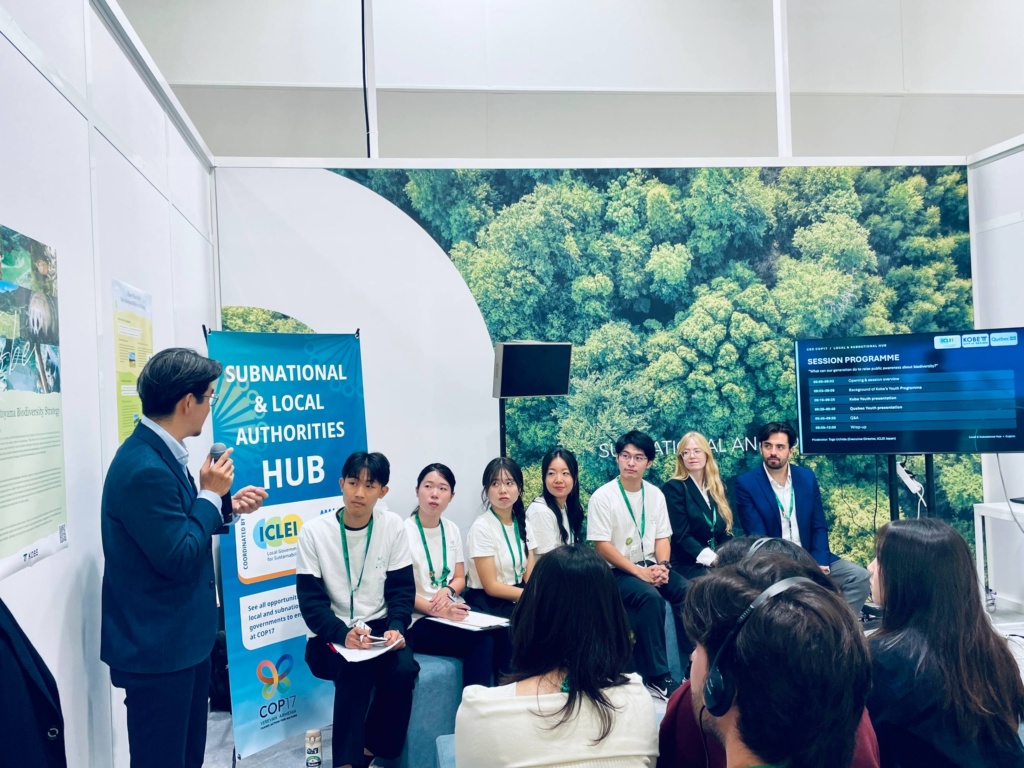
Five undergraduate and graduate students from Kobe were brought to the talks by the Kobe City Government, part of a deliberate bet that the people who will live longest with the consequences of biodiversity loss should be in the room while decisions are made.
In conversation with Climate Lens News on the sidelines of COP17, two of the students and their professor, who also served as the city official leading the delegation, explained to me why Kobe made that bet, what the students have learned, and what they plan to do when they get home.
“The ones who will live in it”
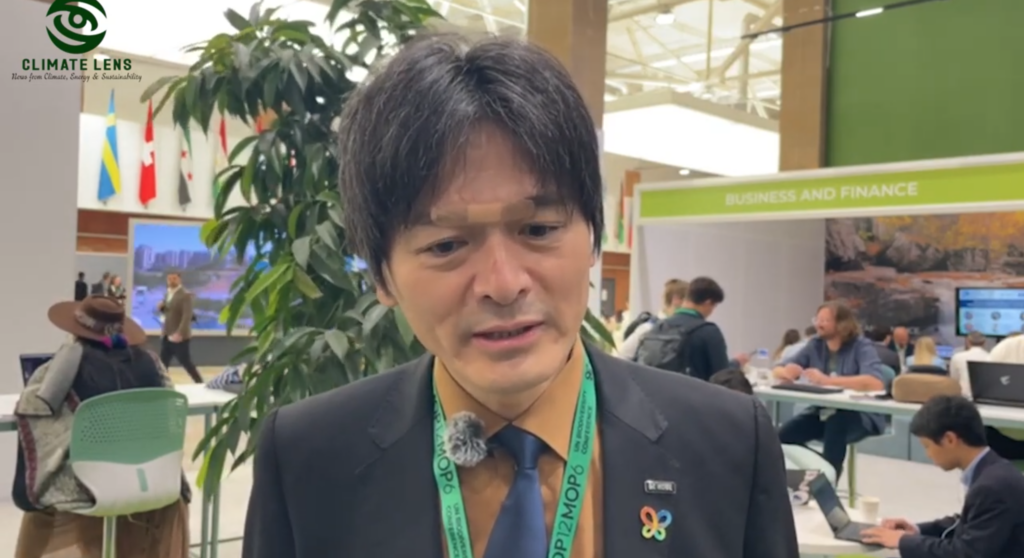
According to Atsushi Okada, the Principal Biodiversity Officer in the Environment Bureau of the Kobe City Government, the logic is simple: global biodiversity loss is one of the biggest challenges of our time, and the next generation is set to inherit it. He points out that they should therefore be involved and play an active part, rather than watch from the sidelines.
To ensure the trip was more than a sightseeing exercise, the city prepared the students for months prior to departure through capacity-building sessions. He notes that they studied biodiversity and international relations, conducted fieldwork in Kobe’s satoyama (the managed countryside where villages, farmland, and woods meet), and took part in conservation work, including controlling invasive alien species.
The aim, Okada emphasizes, was for them to understand what is actually happening on the ground regarding biodiversity so they could easily comprehend the global policy space, and to experience it firsthand by exchanging ideas with people from around the world.
COP itself, he adds, is a place where global targets are set and monitored. He stresses that it is no longer just governments at the table—women, Indigenous peoples, and local governments are part of the conversation, and the city wants young people to be included as well.
While Kobe sent its own youth this time, Okada shares his hope that young people from many more countries will participate, swapping views and experiences with one another to help replicate best practices globally.
A green city with a quiet problem
Kobe looks healthy on the map, with roughly 60 per cent of the city covered in green. Yet taking a closer look, Okada explains, reveals the nitty-gritty as the picture changes, highlighting how invasive species are spreading and how satoyama landscapes—which depend on constant human care—are deteriorating.
“Those landscapes are a mosaic of ponds, rice paddies, rivers, and grasslands, and each habitat supports different life. But Japan’s population is ageing, fewer people are farming, and fields are being abandoned. Without people tending them, the mosaic slowly collapses into a simpler, poorer environment, which is bad news for biodiversity,” says Okada.
This very challenge is why enriching biodiversity has become a priority for Kobe’s city policy.
Home to about 1.5 million people, the city is taking a critical step further by trying to reach children early: every third-grader across Kobe’s roughly 200 public elementary schools receives a seasonal wildlife research guidebook to help them explore the nature around them.
Two students, two routes into nature
The students we spoke with shared how they came to biodiversity from different directions, yet with a similar goal; to understand how biodiversity restoration, conservation, and preservation can be broadened into viable career paths.
Eimi Nagahama, a graduate student at Kobe University, joined a satoyama restoration project during her third year of undergraduate studies. She now studies insect and plant communities using environmental DNA (eDNA) analysis, which detects the genetic traces organisms leave in their surroundings.
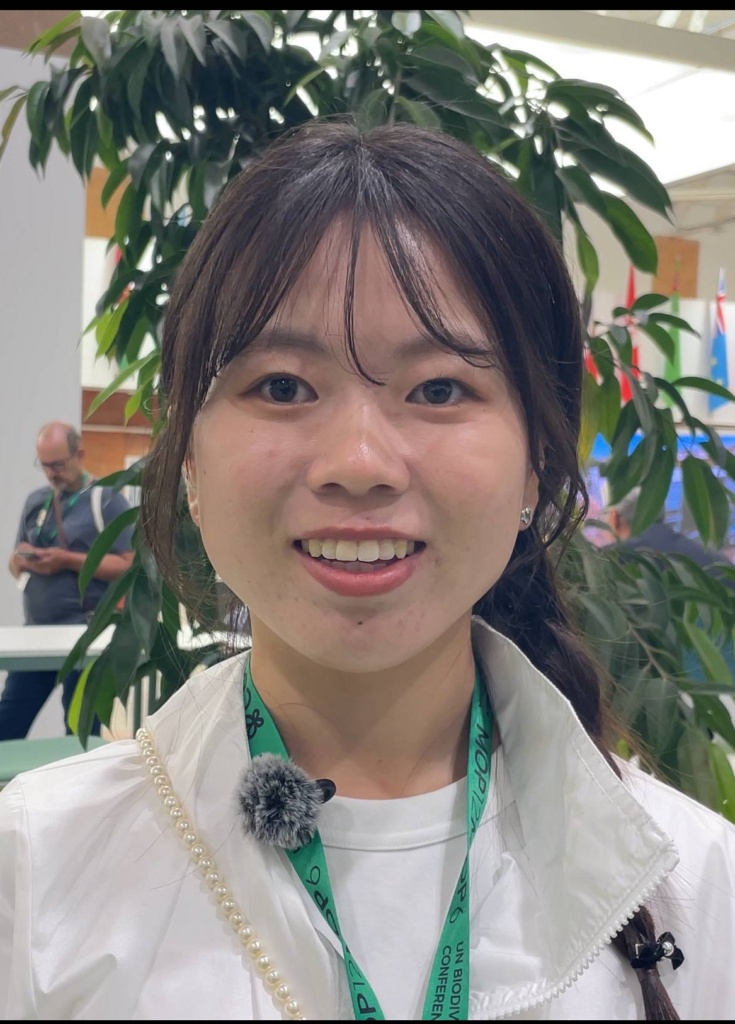
Through that work, she has come to deeply appreciate the richness of Kobe’s biodiversity. “There are a lot of beautiful animals and plants,” she says, and she wants them to still exist far into the future. Her message to her peers: take an interest in nature, because chances to connect with it are everywhere.
Sota Makino, a Kobe University student, approaches the field from an economic perspective, focusing on environmental economics and, in particular, on how to assign value to biodiversity.
He was introduced to the project through his professor, who collaborates with the Kobe City Government, and subsequently joined the program. Before traveling, he studied the city’s biodiversity initiatives and spoke with local farmers, an experience he calls “wonderful.”
Makino is frank about a gap he sees at home, pointing out that interest in environmental issues, especially environmental economics, is low among young Japanese people, many of whom lack the knowledge and information to engage.
He does not claim to know whether that is true worldwide, which is part of why the trip matters: it allows him to compare notes with young people from elsewhere.

For Kobe, the trip is a beginning, not an end. As Okada notes, the students are expected to spread what they have learned once they are back in Japan through discussion sessions, biodiversity symposiums, training workshops, and seminars for citizens and children. The hope is that a delegation of five becomes a much wider conversation in a city of 1.5 million.
It is a modest model, but a clear one: train young people locally, send them to the global table, and bring them home to teach. If Okada is right, the next time biodiversity targets are reviewed, there will be a few more voices from Kobe who have already been in the room.
This story was produced as part of the 2026 CBD COP17 Fellowship, operated by Informed Earth in collaboration with Internews’ Earth Journalism Network.
Author Profile

-
Seeker.
Inspire AFRIKA.
Latest entries
 Biodiversity23 October 2026Inside Kobe’s Grassroots Effort to Train the Next Generation of Biodiversity Leaders
 Animals23 October 2026As COP17 Meets, World’s Rarest Great Ape Faces a Make-or-Break Test in Indonesia
 Biodiversity22 October 2026One in Five Tropical Biodiversity Sites Overlapped by Mining Concessions, COP17 Report Finds
 Biodiversity21 October 2026COP17 Opens in Armenia with Global Biodiversity Progress Under Scrutiny