As COP17 concludes with new institutional arrangements for Indigenous participation and a pathway to accelerate biodiversity action, a Hoopa Valley tribal member says conservation must go beyond global targets to recognise the rights of the people whose ancestral lands sustain nature.
There is a question worth asking whenever world leaders gather to discuss protecting nature: who gets to decide what happens to the land, and whose voices matter when those decisions are made?
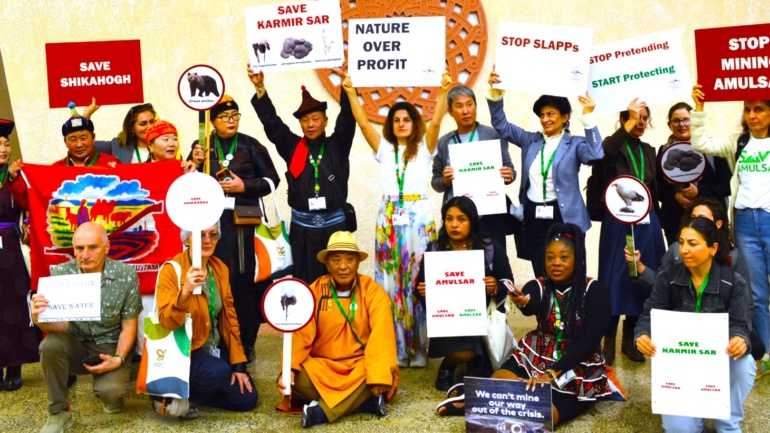
For Indigenous peoples, protecting biodiversity is not simply about conserving forests, rivers and wildlife. It is also about generations of relationships with ancestral territories, traditional knowledge and the right to determine how these ecosystems are governed.
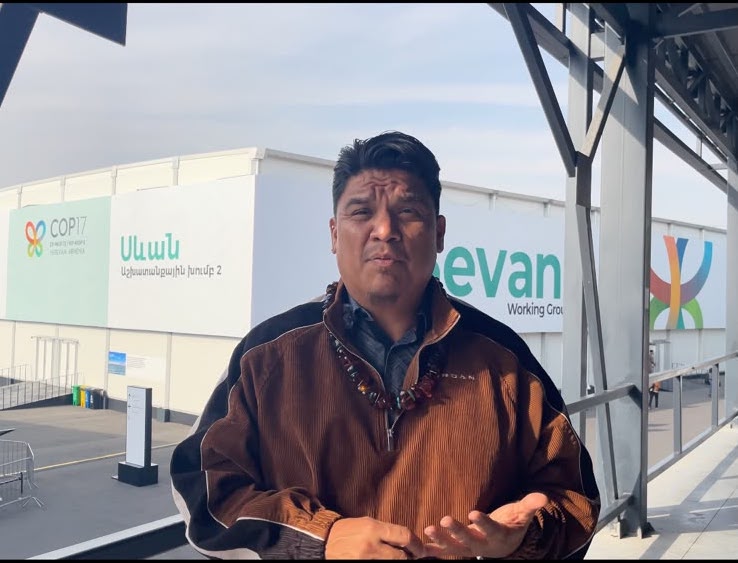
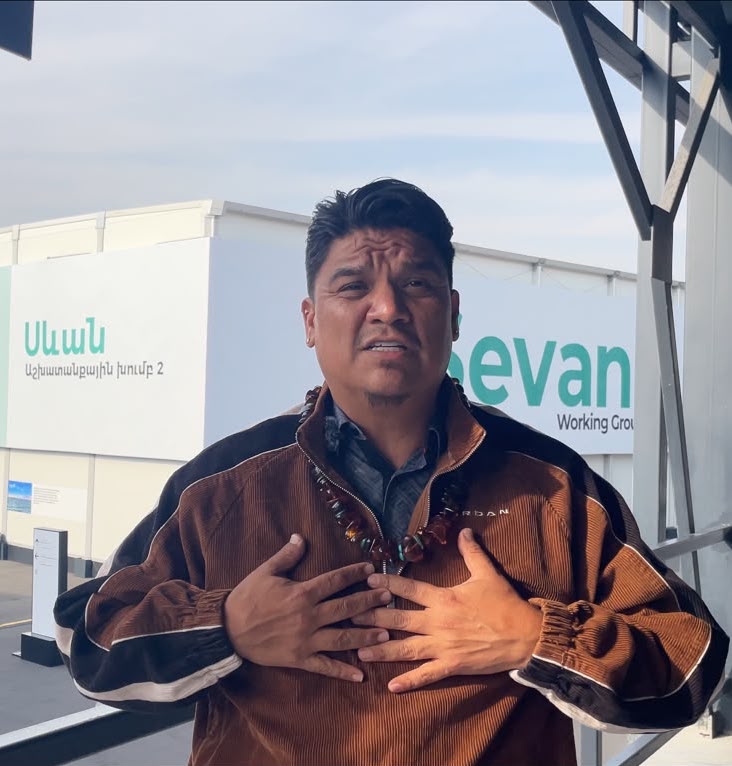
It is a concern that Thomas Joseph, a member of the Hoopa Valley Tribe in Northern California, United States, brought to the 17th meeting of the Conference of the Parties (COP17) to the Convention on Biological Diversity (CBD).
“Our tribal people have lived on our ancestral lands for over 10,000 years,” he says, introducing a history that he believes should matter in today’s global biodiversity decisions.
A Carbon Pricing Educator with the Indigenous Environmental Network, Joseph is particularly concerned about the implementation of Article 8(j) of the Convention, which addresses traditional knowledge, innovations and practices of Indigenous peoples and local communities relevant to biodiversity conservation and sustainable use.
He argues that current discussions risk weakening Indigenous peoples’ rights and their ability to determine how they are represented in international processes.
The struggle over representation and recognition
One of Joseph’s concerns centres on proposals to organise Indigenous representation through five geographical regions rather than the seven distinct socio-cultural regions through which Indigenous peoples have traditionally organised themselves.
He argues that the proposed arrangement could undermine the distinct representation of Indigenous peoples from North America by grouping them with Western Europe.
“Indigenous peoples have always operated out of seven distinct regions of the globe. If they move forward with the five versus the seven, they are eliminating the Indigenous peoples of North America from their own homelands,” he says.
Pointing out that representation is not merely an administrative matter since it concerns the ability of Indigenous peoples to speak for themselves and protect their collective rights without having their identities and histories diluted.
He is also critical of what he describes as the conflation of Indigenous peoples with local communities, arguing that the two groups have different historical experiences and legal circumstances.
“We are willing to work together with them, alongside them, but we can’t have these colonial countries dictate to us how we represent ourselves or what we do to protect the biodiversity of the world,” he says.
His concerns speak to a wider question within biodiversity governance: whether Indigenous peoples are recognised as rights-holders with distinct systems of knowledge and governance, rather than simply stakeholders in conservation programmes.
When protecting nature becomes a business
Beyond representation, Joseph questions the economic approaches through which the world is attempting to address biodiversity loss.
He is particularly critical of market-based conservation mechanisms that place economic value on nature, arguing that they risk turning biodiversity into a commodity while leaving the underlying drivers of environmental destruction largely unaddressed.
“It’s not about protecting our rights. It’s not about protecting biodiversity. It’s about the continuation of commodifying our Mother Earth,” he says.
His concerns extend to the global 30×30 target, which seeks to conserve at least 30 per cent of the world’s land and sea by 2030.
While the target is central to the Kunming-Montreal Global Biodiversity Framework (KMGBF), Joseph questions how conservation initiatives are implemented when they risk restricting Indigenous peoples’ access to or control over ancestral territories.
He argues that protecting one ecosystem should not become a justification for allowing the destruction of another, particularly where commercial interests determine which areas are conserved and which are opened to exploitation.
“Indigenous peoples hold tenure over 80 per cent of the world’s biodiversity. If we are truly intimate about protecting the biodiversity of the world, we need to give land tenure back to Indigenous peoples with their ability to govern their land, with the ability that they see best, that they know how best,” he says.
For Joseph, meaningful conservation must therefore recognise Indigenous land tenure and governance, allowing communities to determine how their territories and natural resources are managed.
The Yerevan Pathway and the question of implementation
Joseph’s concerns take on added significance when considered alongside the outcomes of COP17 in Yerevan, Armenia.
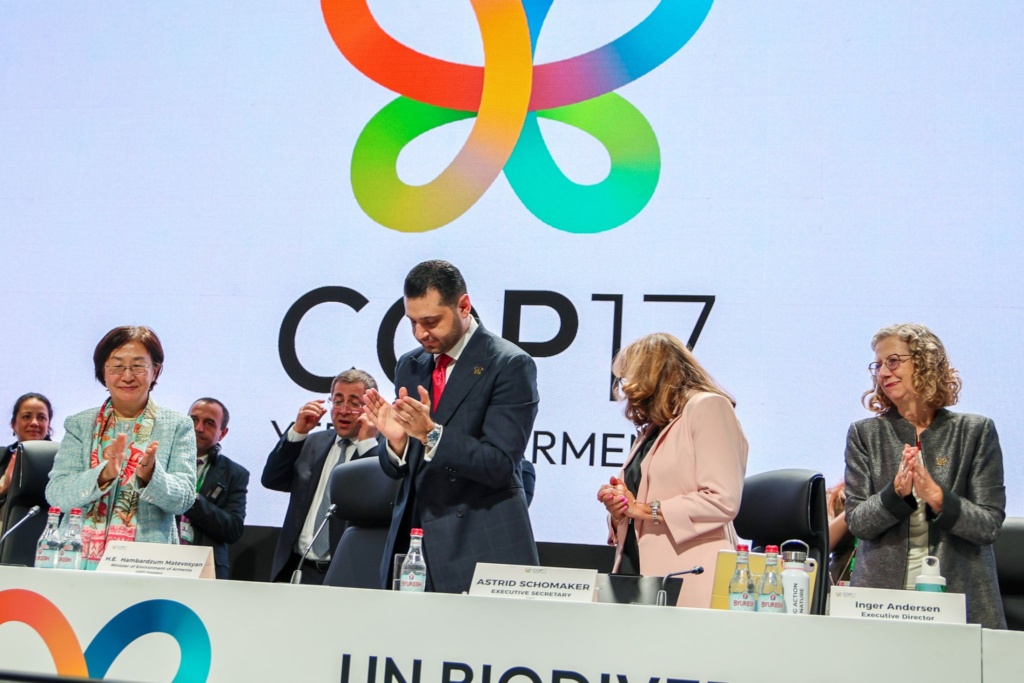
Parties adopted more than 40 decisions covering scientific, technical and implementation-related issues. Among the major outcomes was the Yerevan Pathway, developed in response to the first global review of collective progress under the KMGBF.
The review acknowledged that the world remains off track to achieve the Framework’s 23 targets by 2030, highlighting the need to accelerate implementation.
The Yerevan Pathway identifies priorities including addressing subsidies and incentives harmful to nature, increasing financial, scientific and technical support for developing countries, aligning national budgets and economic decisions with biodiversity targets, and strengthening monitoring and reporting mechanisms.
These priorities connect with Joseph’s criticism of economic systems that continue to drive biodiversity loss. However, whether the resulting measures adequately address Indigenous land rights and the distribution of benefits from biodiversity financing remains an important question.

There was also a significant institutional development concerning Article 8(j), which Joseph had raised during the negotiations. Parties agreed on the operating arrangements for a permanent subsidiary body on Article 8(j), associated with the Sevan Guidelines, strengthening the institutional space for Indigenous peoples and local communities within the CBD process.
Yet, this development does not automatically resolve the specific concerns Joseph raises about Indigenous peoples’ distinct regional representation and self-determination.
For him, progress must go beyond establishing institutional arrangements. It must ensure that decisions made in international forums do not weaken the rights Indigenous peoples have fought for over generations.
He would rather see negotiations on arrangements that could undermine Indigenous representation carried forward to another COP than accept an outcome that risks reversing progress.
“We would rather see it punted to the next COP than for them to come up with a plan or a modus operandi that would do nothing more than cause harm and move us back many decades from the Declaration of Rights of Indigenous Peoples,” he says.
Perhaps, then, the question Joseph leaves us with is not whether the world has made progress in developing biodiversity policies. COP17 has produced new decisions, institutional arrangements and a pathway for accelerating action.
It is whether these commitments will translate into greater recognition of the people whose ancestral lands and knowledge are closely connected to biodiversity protection.
Because the future of nature cannot be secured through targets and financing arrangements alone. It must also account for the rights, knowledge and voices of those who have called these territories home for generations.
Author Profile

-
Seeker.
Inspire AFRIKA.
Latest entries
 Biodiversity10 November 2026Who Speaks for Indigenous Peoples? Thomas Joseph on the Fight for Land, Rights and Biodiversity
 COP319 November 2026New Zealand Earns Fossil of the Day as Brazil Receives Ray of the Day in COP31
 Climate9 November 2026The Ocean Has a Fever, and It Is About to Exhale
 COP319 November 2026COP31: Africa Must Power Its Farms to Secure Food Sovereignty