
Anyone who has cared for a sick child knows the moment: you place a hand on the forehead and feel the heat before a thermometer confirms it. The ocean is giving the planet a similar warning.
Now picture that forehead as wide as the Pacific.
That is the planet the World Meteorological Organisation (WMO) described on the opening day of COP31 in Antalya, Türkiye, in its State of the Climate Update 2026.
The past 12 years have each been the warmest on record, with 2023 to 2026 holding the top four places.
From January to September this year, global average surface temperature stood about 1.47°C above pre-industrial levels, and it is expected to climb as El Niño strengthens.
Where the heat goes
Most of us feel warming in the air: a sticky night, a harsher noon. But the air holds very little of it. Of the excess heat accumulating in the Earth’s climate system, the oceans absorb approximately 90 per cent.
For years they have taken it in without complaint, like a vault that keeps accepting deposits. Ocean heat content hit its highest observed level in 2025, and early measurements suggest another record in 2026, which would make ten years in a row.
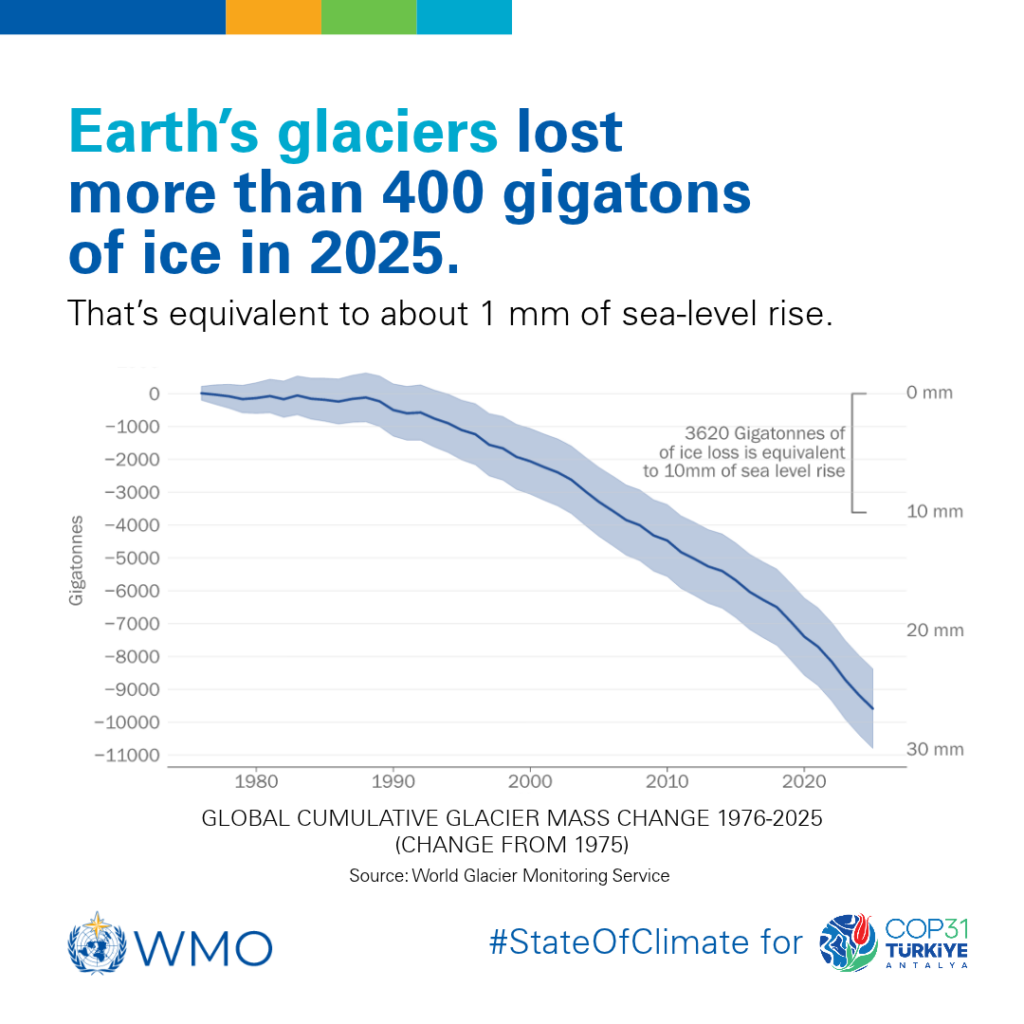
Warm water also expands, and with glaciers and ice sheets melting into it, global sea level reached a record high this year, with June, July and August the highest since satellite records began in 1993.
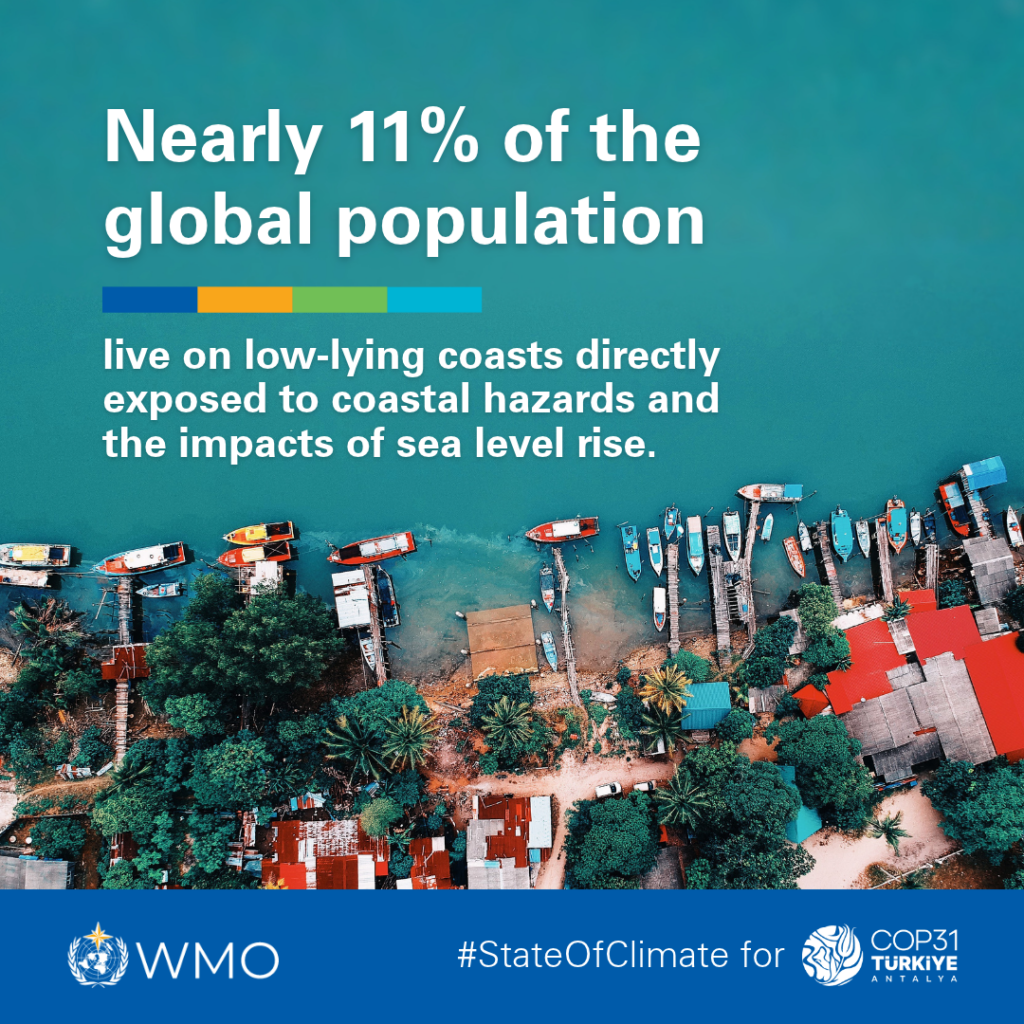
For families in low-lying countries and island states, this is not an abstract measurement. It means saltwater seeping into farmland, shorelines wearing away, and floods that reach a little further each season.
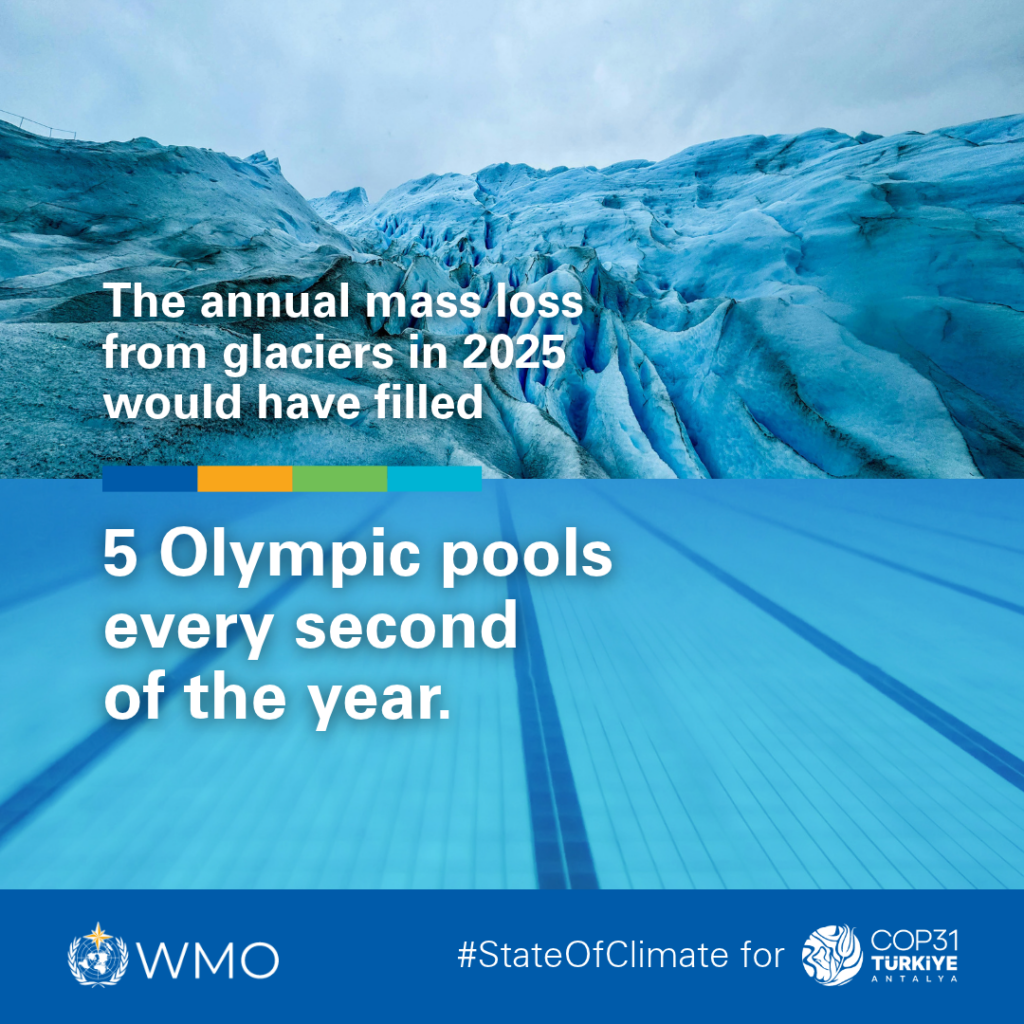
The ice tells the same story as the report reveals: glaciers lost more than 400 gigatons in 2025, which the WMO compares to five Olympic-sized swimming pools emptying every second for a year.
Antarctic sea ice recorded its third-lowest annual maximum in 2026, and the Arctic maximum was among the lowest since 1979. Downstream, rivers that fed fields and households for generations are beginning to carry less.
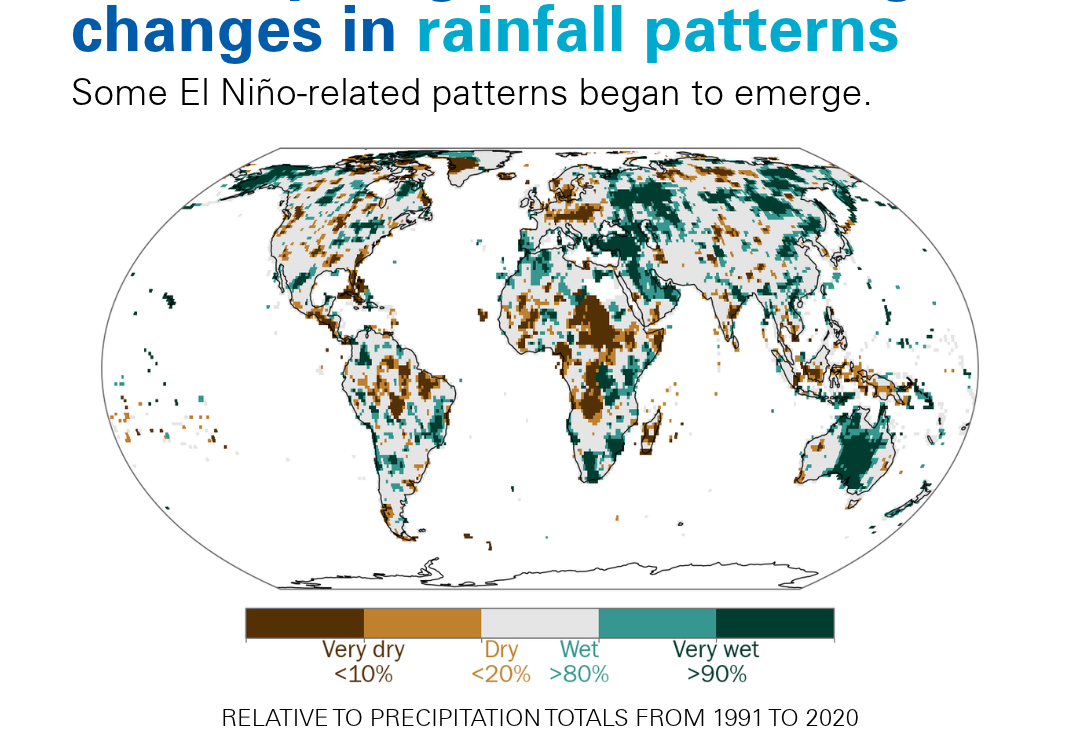
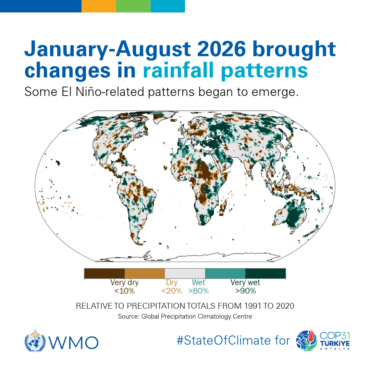
El Niño is a natural rhythm, a warming of the central and eastern equatorial Pacific that reshapes wind and rain across the world. This one has been building since August and is expected to last into early 2027.
What sets this one apart is the heat it is drawing from. WMO Secretary-General Celeste Saulo explained:
“El Niño doesn’t add new heat to the planet. It releases heat from the ocean, which is the warmest ever measured. There is simply more heat available to release.”
The vault has been filling for years. Now it is opening.
What it costs in lives
This year has already shown what that ocean heat can do. European heatwaves, drought and wildfires were linked to more than 30,000 estimated excess deaths.
In India, about 146.5 million people were exposed to extreme heat during an April heatwave, while in Nepal, a glacier and rock collapse sent flash floods down the valleys in late August, killing more than 1,300 people.
Each of those figures is a set of households. These disasters did not come singly. Heat, ice and water combined in places where communities had little room to prepare and even less to recover.
The months ahead carry their own worries. For farmers who plant by the rains, a shifted pattern can mean a failed harvest or hungry livestock.
Across the Greater Horn of Africa, where agricultural production and pastoral livelihoods depend heavily on seasonal rainfall, changes in rainfall distribution can have far-reaching consequences. Prolonged dry conditions can reduce pasture and water availability, while excessive rainfall can cause flooding, damage infrastructure and disrupt agricultural activities. The impacts vary across countries and seasons, making reliable regional forecasts essential.
The WMO warns that changing rainfall, prolonged dry spells and extreme heat could deepen food insecurity. Health risks follow too: heat illness, poor air quality, malnutrition, and diseases carried by water and insects, including cholera, malaria and dengue. For the first time, the World Health Organisation has classified the anticipated health impacts as a health emergency.
UN Secretary-General António Guterres called it a new age of climate extremes, with El Niño colliding with a planet already superheated by human activity.
He urged governments to cut emissions faster, pursue a just transition away from fossil fuels, and give vulnerable countries the finance and protection they need.
A warning that arrives in time
The report is not only a list of losses, but also wins, with the number of countries reporting multi-hazard early warning systems rising from 56 in 2015 to 136 in 2025.
In practice, that can be a family leaving before the river rises, a clinic stocking up before an outbreak, a farmer changing what goes into the ground, but a warning only helps if it reaches people and they know what to do with it.
That depends on reliable observations, accessible forecasts and community preparedness, and on sustained investment in weather services, particularly in developing countries with the highest exposure and the fewest resources.
So the lesson of this report is twofold: notably, emissions must come down, because that is what fills the vault, and societies must adapt to the heat already stored inside it.
The update draws on observations only up to September and does not yet capture the full reach of this El Niño. A more complete State of the Global Climate report is due in March 2027.
Until then, the signs are plain: the ocean is warm, the ice is shrinking, and the coming months will show whether governments and communities are ready for a climate changing faster than many of their systems were built to handle.
Author Profile

-
Seeker.
Inspire AFRIKA.
Latest entries
 Climate9 November 2026The Ocean Has a Fever, and It Is About to Exhale
 COP319 November 2026COP31: Africa Must Power Its Farms to Secure Food Sovereignty
 COP318 November 2026One Shared Calendar: What COP31 Is and What It Hopes to Achieve
 Oceans5 November 2026Shipping Emissions Have Cost the World Nearly $1 Trillion, Study Finds


