

At the United Nations complex in Nairobi, members of the World Food Forum Kenya Chapter are calling for better documentation of how climate shocks affect young people and women, arguing that their experiences must inform food security and resilience interventions.
Kenya’s rangelands cover approximately 80 per cent of the country’s land area, supporting livelihoods and food systems increasingly exposed to droughts, floods, disease and water scarcity. Young people and women living in these areas often bear a significant share of these pressures.
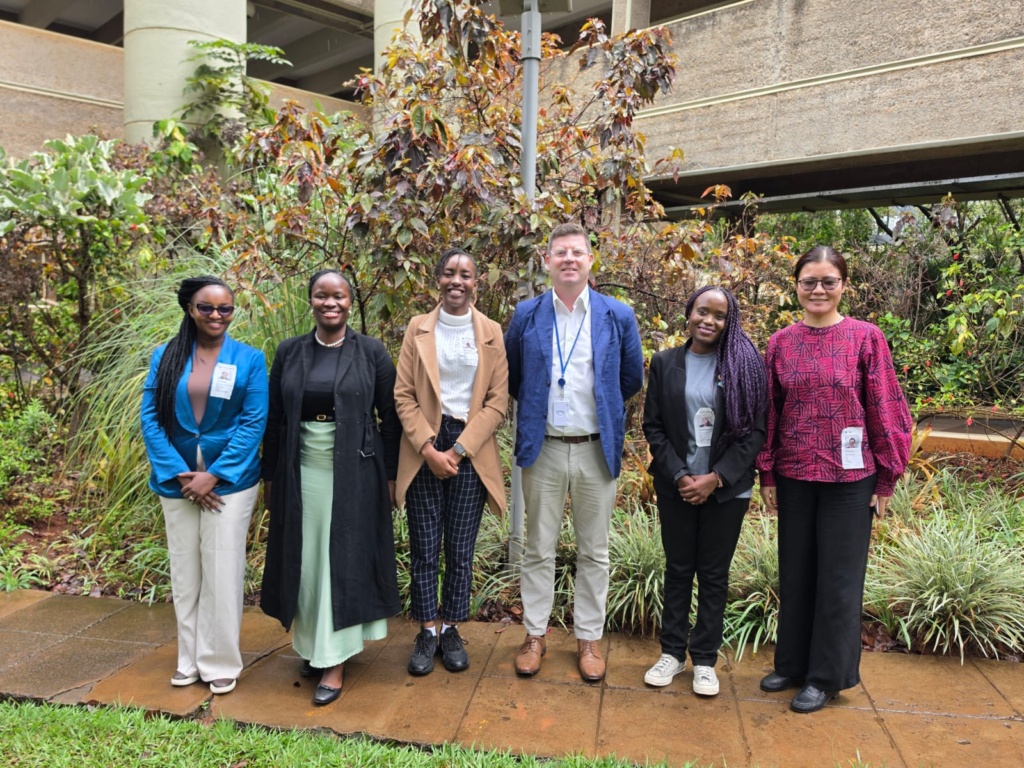
Against this backdrop, members of the World Food Forum (WFF) Kenya Chapter visited the United Nations Office at Nairobi last week to meet representatives of the Global Network Against Food Crises and the Global Youth Network on Climate Resilience.
The engagement explored opportunities for collaboration, particularly around documenting climate shocks and their effects on food systems and vulnerable communities.
Belinda Omino, the chapter’s Local Youth Action Lead, said discussions focused on “climate and climate shocks and the impact it has on our food systems and the people that are mostly affected, i.e. the youth and the young people, especially in the arid and semi-arid areas.”
Making young people visible
A central concern was how climate-related impacts on young people and women are identified, recorded and communicated.
Maureen Meso, a chapter member, highlighted the need for better data collection and disaggregation to capture their experiences, including the effects of current and anticipated climate shocks such as El Niño.
She emphasised that experiences gathered from chapter members should inform wider reporting and decision-making, generating “information and data that we can share with people that we want to take up responsibilities on supporting and protecting young people and women against climate shocks.”
Alice Ritho, the chapter’s Working Groups Coordinator and Africa representative on the WFF Youth Policy Board, said young people are frequently overlooked in development programmes despite their exposure to climate and food-security challenges.
“Documentation is one key thing, because what has not been documented has not happened,” she said, urging young people involved in adaptation, resilience and nutrition initiatives to record their work so successful innovations can be replicated and scaled up.
Employment as part of resilience
Beyond documentation, discussions explored how economic opportunities could strengthen communities facing climate and food-security pressures.
Christine Karanja, National Chapter Lead for WFP Kenya and the FAO Office of Youth and Women, highlighted the Creating Shared Value in the Livestock Sector with Young People in Kenya’s ASALs (CASHA) project.
Funded by the Mastercard Foundation and led by the Food and Agriculture Organisation (FAO), CASHA is a five-year initiative running from 2025 to 2030. It targets 300,000 young people across 15 arid and semi-arid counties, with the ambition of enabling 200,000 dignified and fulfilling employment opportunities through climate-smart livestock and related agricultural enterprises.
Karanja linked employment opportunities to broader social stability, arguing that limited economic prospects can expose young people to radicalisation.
“Building resilience is key to us,” she said, adding that communities need interventions addressing both water scarcity and livelihoods.
Under the WFF theme, Innovate Today, Nourish Tomorrow, she also highlighted the chapter’s biodiversity incubator and plans for a food laboratory to be hosted in Kenya.
Strengthening partnerships and accountability
Among those present was Uba Abdullahi of the Organisation for Peace and Pastoral Development, which works with pastoral women and girls in Kenya and Somalia.
“It was a successful meeting. Looking forward to many more engagements,” he said.
For the WFF Kenya Chapter, meaningful external partnerships must also be supported by stronger internal structures. Its leadership plans to improve governance, member onboarding, coordination, succession planning and communication across working groups.
Looking towards 2027, the chapter hopes to make its working groups more active and expand its contribution to food-system transformation in Kenya.
Ultimately, the Nairobi engagement raises a question beyond institutional partnerships: whether the experiences of young people and women living with climate shocks can translate into evidence, recognition and practical support.
For communities dependent on climate-sensitive food systems, being counted is an important first step. Ensuring their experiences inform decisions and attract meaningful support is the greater task.
Author Profile

-
Seeker.
Inspire AFRIKA.
Latest entries
 Animals24 November 2026Where Is the Milk? Feed Is the Missing Link in Kenya’s Dairy Sector
 Events23 November 2026Why Kenya’s Young People Want Their Climate Struggles Counted
 COP3120 November 2026The Age of Electricity? Antalya’s Big Bet on 35 by 35 in COP31
 Agriculture20 November 2026Kenya’s Indigenous Seeds: The Farmers Keeping Food Sovereignty Alive


