
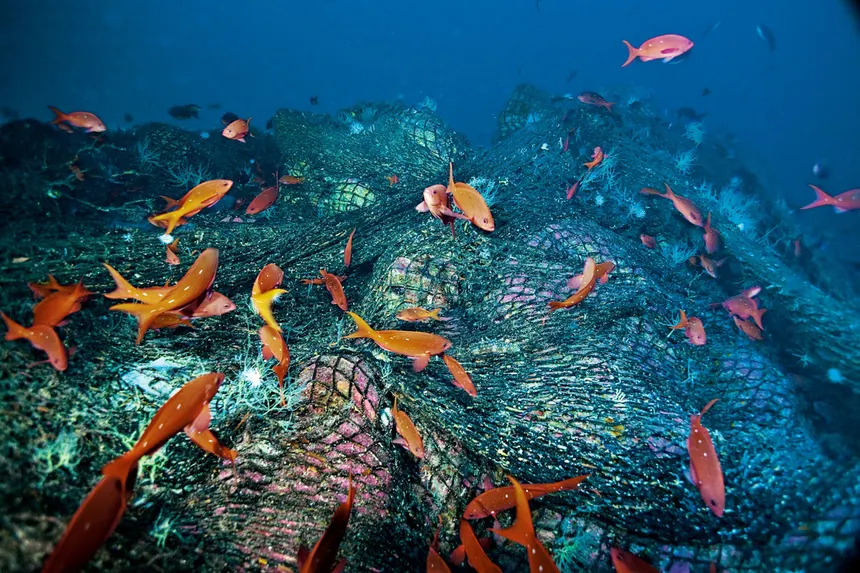
As UN negotiations approach, growing scientific concern over the damage caused by bottom trawling is fuelling calls for governments to phase out the practice on high-seas seamounts by the end of 2027.
Beneath the ocean’s surface lie underwater mountains that support diverse marine life, influence ocean processes and provide habitats for some of the deep sea’s most vulnerable species. Yet these ecosystems face a persistent threat from fishing practices that can leave lasting scars on the seabed.
Seamounts and knolls are estimated to cover approximately 21% of the global seafloor, according to a July 2026 science brief by the Deep Sea Conservation Coalition (DSCC). These underwater features support deep-sea corals, sponges and other marine organisms, while contributing to interconnected ocean ecosystems.

Now, governments are facing renewed calls to strengthen their protection as negotiations on the United Nations Sustainable Fisheries Resolution take place in New York from 29 October to 6 November 2026.
The negotiations offer an opportunity to secure a commitment to phase out bottom trawling on seamounts in areas beyond national jurisdiction by the end of 2027. Whether governments will agree to the proposed deadline remains to be seen.
The threat beneath the surface
Bottom trawling involves dragging fishing gear along or close to the seabed to catch fish and other marine species. While it is an established fishing method, its effects on vulnerable deep-sea habitats have raised significant scientific concerns.
Seamount ecosystems are particularly susceptible because many are dominated by slow-growing corals and other organisms attached to the seabed. When fishing gear damages or removes these organisms, the resulting habitat loss can persist long after fishing activity has stopped.
A 2020 review published in Marine Environmental Research found that the effects of bottom trawling on seamount communities can last for decades, with recovery varying considerably between species. Research has also documented signs of coral recovery at some protected seamounts after 30 to 40 years, highlighting both the potential for recovery and the time it can take.
Dr Lissette Victorero, Scientific Advisor at the Deep Sea Conservation Coalition, said the scientific evidence points to significant and lasting damage.
“The scientific evidence from seamounts around the world is clear: bottom trawling causes significant and long-lasting damage to seamount ecosystems, with studies showing little evidence of recovery even decades after fishing has stopped.
These are exceptionally vulnerable habitats and continued bottom trawling risks damage that may persist for centuries. We have the scientific evidence needed to act. The question now is whether governments will translate it into meaningful protection.“
Her remarks underline the challenge facing policymakers: protecting vulnerable ecosystems before further damage occurs, rather than relying on recovery after habitats have been disturbed.
A growing call for protection
The push to protect seamounts has gained support from scientists and conservation organisations ahead of the upcoming negotiations.
Launched in 2025 at the UN Ocean Conference in Nice, France, the Seamount Scientists Proclamation calls on governments to protect vulnerable seamount ecosystems from destructive fishing. The initiative was launched by the DSCC, Marine Conservation Institute and the International Programme on the State of the Ocean and has attracted support from more than 400 scientists, according to the coalition.
In October 2025, the International Union for Conservation of Nature’s World Conservation Congress also adopted a resolution calling for the initiation of a transition away from bottom trawling on seamounts during the 2026 UN negotiations.
These calls reflect wider concerns about the management of deep-sea fisheries and the need to protect vulnerable marine ecosystems from significant adverse impacts.
Bronwen Golder, Seamounts Campaign Director at the DSCC, said the negotiations could help translate existing commitments into action.
“Seamounts are lifelines of the ocean, supporting extraordinary biodiversity across around a fifth of the global seafloor. This year’s UNGA Sustainable Fisheries Resolution negotiations are a pivotal opportunity for governments to turn commitments into active implementation by agreeing to end bottom trawling on high-seas seamounts by the end of 2027.“
A proposed deadline for governments
Ahead of the negotiations, Monaco and Armenia have jointly proposed language calling for greater protection of seamount ecosystems from multiple threats, including overfishing and destructive fishing practices.
Armenia, which holds the presidency of the 17th Conference of the Parties to the Convention on Biological Diversity (CBD COP17), is also proposing language calling for the “phasing out of bottom trawl fishing on seamounts in areas beyond national jurisdiction by no later than 31 December 2027”.

The proposal comes as governments gather in Yerevan, Armenia, for CBD COP17 to assess progress towards international biodiversity commitments.
A deadline would provide a specific timeframe for action, but its practical implications would depend on the final resolution and the measures required to implement it. The proposed phase-out has not yet been agreed by governments.
For the DSCC, the negotiations represent an opportunity to address the gap between international commitments and the protection of marine ecosystems.
Sian Owen, Executive Director of the DSCC, said governments must use the moment to strengthen implementation.
“With CBD COP17 and the UN Sustainable Fisheries Resolution negotiations taking place back-to-back, governments must seize this moment to turn their biodiversity commitments on paper into urgent action for the ocean. Setting a clear deadline to phase out bottom trawling on high-seas seamounts is essential to delivering 30×30, and a strong and serious signal going into the first Conference of Parties on protecting biodiversity beyond national jurisdiction in January.”
Linking seamount protection to the 30×30 target
The proposed phase-out is also linked to the Kunming-Montreal Global Biodiversity Framework, which sets out global targets for conserving nature and addressing biodiversity loss.
Target 3, widely known as 30×30, calls for the effective conservation and management of at least 30% of the world’s terrestrial, inland water, coastal and marine areas by 2030.
Protecting vulnerable seamount ecosystems could contribute to broader efforts to conserve marine biodiversity. However, achieving the 30×30 target will require more than a single measure, including effective conservation arrangements, implementation and monitoring.
The coming negotiations will therefore test whether governments are prepared to translate existing biodiversity commitments into more specific action for the deep sea.
For ecosystems that may take decades or longer to recover from damage, the decisions made in New York could help shape the future of high-seas seamount protection. The immediate question is whether governments will agree on a clear deadline—and how they will ensure that any commitment delivers meaningful protection beneath the ocean’s surface.
Read Also: One in Five Tropical Biodiversity Sites Overlapped by Mining Concessions, COP17 Report Finds
Author Profile

- How can we learn if we don't question?
Latest entries
 Oceans22 October 2026Seamounts Under Threat: Can Governments Turn Ocean Promises into Protection?
 Events21 October 2026New Guide Links Animal Welfare to Biodiversity and Human Health
 COP1717 October 2026The World Has a Plan to Save Nature. Can It Deliver by 2030?
 Agriculture16 October 2026“There Is No Shortcut”: A Kiambu Grower’s Decade in Mushrooms


