
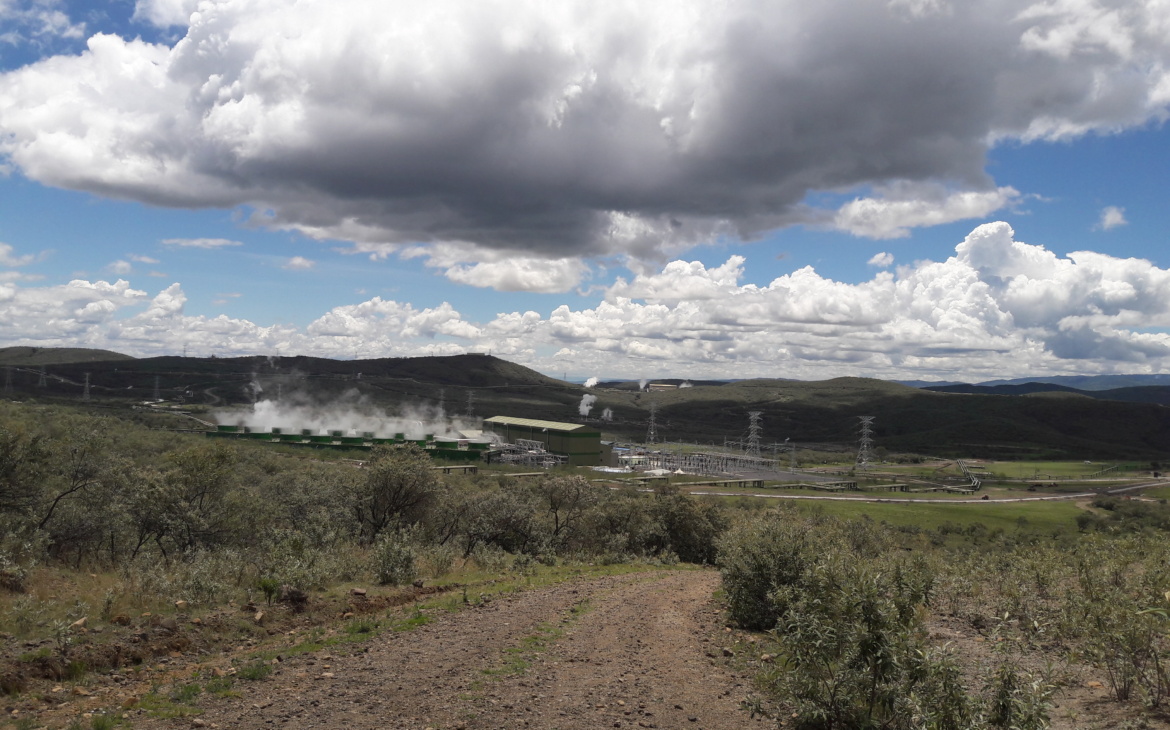
In June 2026, the Kenya Electricity Generating Company (KenGen) announced that it had set itself a far bigger target for renewable power. It expanded its long-term power development pipeline from 1,500 megawatts (MW) to 5,500 MW. This is a move that KenGen says reflects the surging demand from households and, increasingly, industry.
“We have recalibrated our long-term growth trajectory from 1,500MW to a 5,500MW renewable energy development pipeline,” KenGen CEO Peter Njenga said, framing the revised target as a response to a country that is growing faster than its grid.
The announcement comes as Kenya is already one of Africa’s stronger performers in low-emissions electricity generation. The International Energy Agency (IEA) says geothermal, hydropower, wind and solar together account for nearly 90% of Kenya’s electricity generation. Geothermal alone provides almost one-third of the country’s total electricity-generation capacity.
The new pipeline leans heavily on three sources: 2,000 MW of nuclear power, 700 MW of hydropower, and fresh geothermal capacity layered on top of what is already Africa’s largest geothermal fleet.
Kenya has never generated power in the nuclear route before. Nuclear is not renewable, but it is generally classified as a low-carbon source of electricity because its generation produces very little direct greenhouse-gas emissions.
The flagship project on this is a plant proposed for Siaya County, found on the shores of Lake Victoria. The project is estimated to cost 500 billion Kenyan shillings (about $3.8 billion). Kenya’s President William Ruto says that construction is due to start in 2027, with commissioning targeted for 2037.
The project faces some opposition in Siaya County, over concerns of contamination risk to the lake, and the funding not being secured yet.

Can the grid keep up?
More Kenyans connected to the grid, expanding businesses and industries, and increased urbanisation are all contributing to growing electricity demand. The IEA’s 2026 electricity outlook also points to the need for significant expansion of electricity systems as demand grows, particularly as economies become increasingly electrified. For Kenya, that means adding generation capacity is becoming increasingly important.
Generating more electricity is only one part of the equation. A power plant can produce electricity, but if the transmission and distribution networks cannot carry that electricity to where it is needed, additional generation does not automatically translate into a more reliable power supply.
The IEA’s recent work on integrating variable renewable energy in Kenya highlights the need for stronger system flexibility as more renewable generation is brought onto the grid. Its analysis points to gaps in the systems needed to manage a changing electricity mix, including system services and flexibility.
Not only will the country need more generation, but also transmission lines, distribution infrastructure, storage and systems capable of balancing supply and demand.
In Parliament, lawmakers have raised concerns about persistent power outages affecting households and businesses. In an April 2025 sitting, MPs called for explanations over repeated and prolonged outages and questioned what was being done to stabilise the national grid.
Clean electricity does not automatically mean cheap electricity
In all this, it is important to note that more capacity is not the same as lower bills. Kenya’s energy transition has often been framed around the benefits of renewable power, but the price consumers ultimately pay for electricity is influenced by much more than the cost of generating a unit of power.
Industrial customers in Kenya currently pay $0.18–$0.23 per kilowatt-hour. This is roughly four to six times what large consumers pay in South Africa or Egypt, and three to four times the rate in Morocco or Ethiopia. Kenya, unlike those countries, offers little in the way of direct government subsidy to soften the price.
“The perception that electricity is expensive is subjective,” Kenya Power CEO Joseph Siror has said, pointing instead to infrastructure costs, tariff design and unresolved bill recoveries as the real drivers.
He has also noted that the heavy tilt toward renewables carries its own cost: the infrastructure to harness geothermal steam or run a hydro dam is expensive to build and keep running.
Energy analysts largely agree that the generation mix is not the bottleneck, but rather, the system around it is. Mugwe Manga, climate finance lead at FSD Kenya, points to grid losses as the clearest example: more than 20% of electricity in Kenya is lost to technical failures and illegal connections, roughly double the global average of 8–10%.
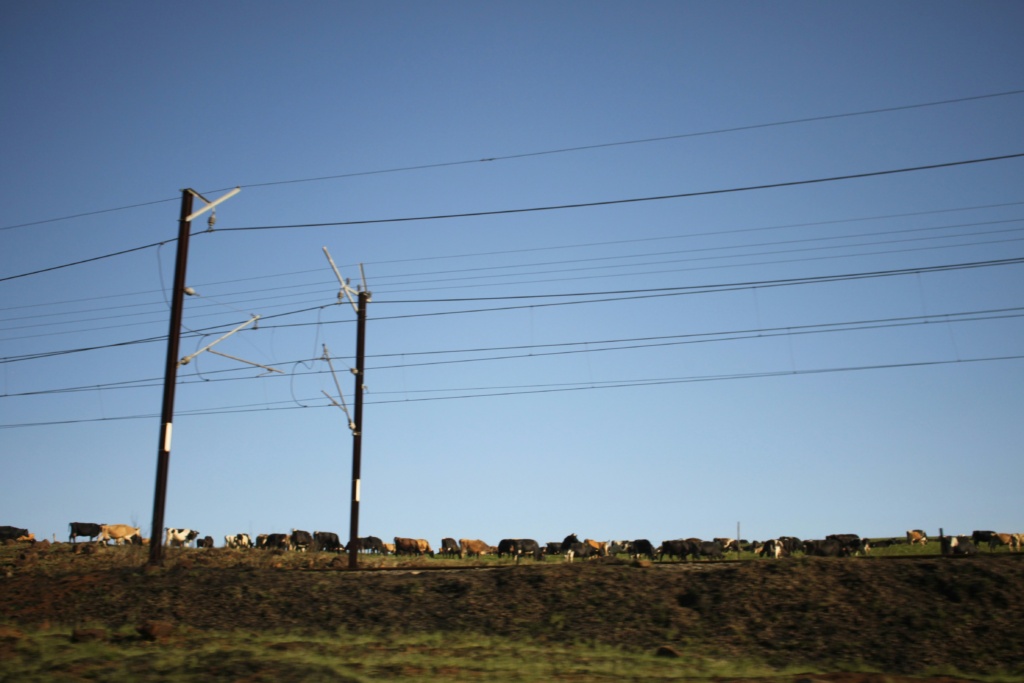
Closing that gap, he argues, is one of the more obvious ways to pass savings on to consumers, though he cautions that pricing ultimately depends on the whole system, not any single fix.
There’s also the matter of who is financing all this. African renewable energy developers typically borrow at markedly higher interest rates than developers in wealthier economies, because investors see the projects as riskier.
Those extra financing costs eventually land on consumer bills. Added to that, some of the purchase agreements that Kenya has with independent producers have clauses that require the country to pay for contracted electricity whether or not it’s actually used.
Albert Nganga, senior regulatory manager at CrossBoundary Energy, frames the tension this way: Kenya’s renewable resources are a genuine asset, but tariffs are shaped by how power is contracted, moved and billed and not just by how it’s generated. He points to proposed open-access market reforms, which would let large consumers buy electricity directly from generators, as a potential source of competitive pressure on prices.
Lawmakers are also already pushing on this front. In July, parliament directed Energy Cabinet Secretary Opiyo Wandayi to draw up a policy for renegotiating supply agreements with major power producers, on the logic that lower wholesale prices would give Kenya Power room to cut consumer rates without hurting its own finances.
Now, as Kenya prepares for a much larger electricity system, its biggest test may be turning that clean-energy advantage into reliable, affordable and accessible power for a growing economy.
Author Profile

Latest entries
 Energy21 September 2026Egypt wants to manufacture its wind-energy transition. Can the model work across Africa?
 Climate16 September 2026What Happens When Climate Change Has Schools Closed? A Growing Education Crisis
 Agriculture8 September 2026More Than Half of Nigeria’s Cocoa Farmers Could Lose EU Market Access as Deforestation Law Nears
 Events25 August 2026Kenya triples its clean energy ambitions: Will power get any cheaper?

