
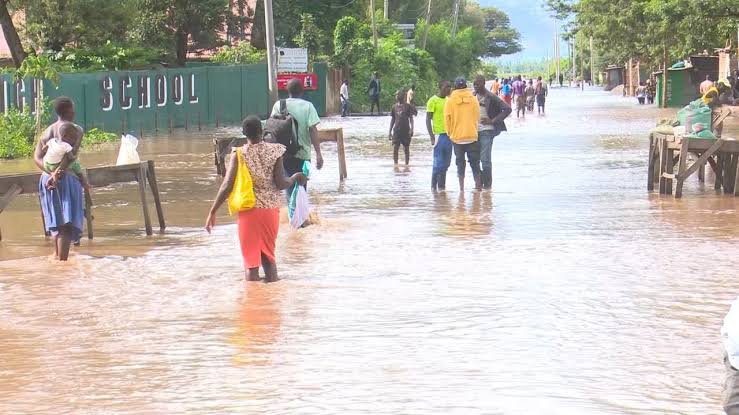
When floods swept across Kenya’s long rain season in 2024, the damage was measured in lives lost, homes destroyed, roads cut off, and families displaced. In the aftermath of the floods, at least 62 primary schools nationwide were destroyed, leaving more than 15,000 children with nowhere to learn when term resumed.
UNICEF later estimated that more than 2 million Kenyan learners had their schooling disrupted that season alone as a result of lost textbooks, damaged classrooms, and children displaced along with their families.
At least 5,278 primary and secondary schools were affected by the heavy rains and floods, according to a rapid assessment supported by the Ministry of Education, UNICEF and Save the Children. Roughly half a million learners had still not reported back to school.
For thousands of Kenyan children, the climate crisis had effectively entered the classroom. A new global analysis from UNICEF suggests their experience is part of a much larger disruption to education.
More than 171 million students across 106 countries and territories had their schooling disrupted by climate hazards in 2025, according to UNICEF’s Learning Interrupted: Global Snapshot of Climate-Related School Disruptions in 2025, released in September 2026.
Storms affected 109 million students, floods at least 70 million and heatwaves approximately 50 million. The consequences ranged from damaged schools and suspended classes to reduced attendance, shortened learning time and an increased risk of children dropping out altogether.
“For millions of children, climate hazards do more than disrupt lessons; they destroy schools, uproot families, and push the most vulnerable children, especially girls, out of the classroom for good,” UNICEF Executive Director Catherine Russell said when the analysis was released.
What a flood does to a school
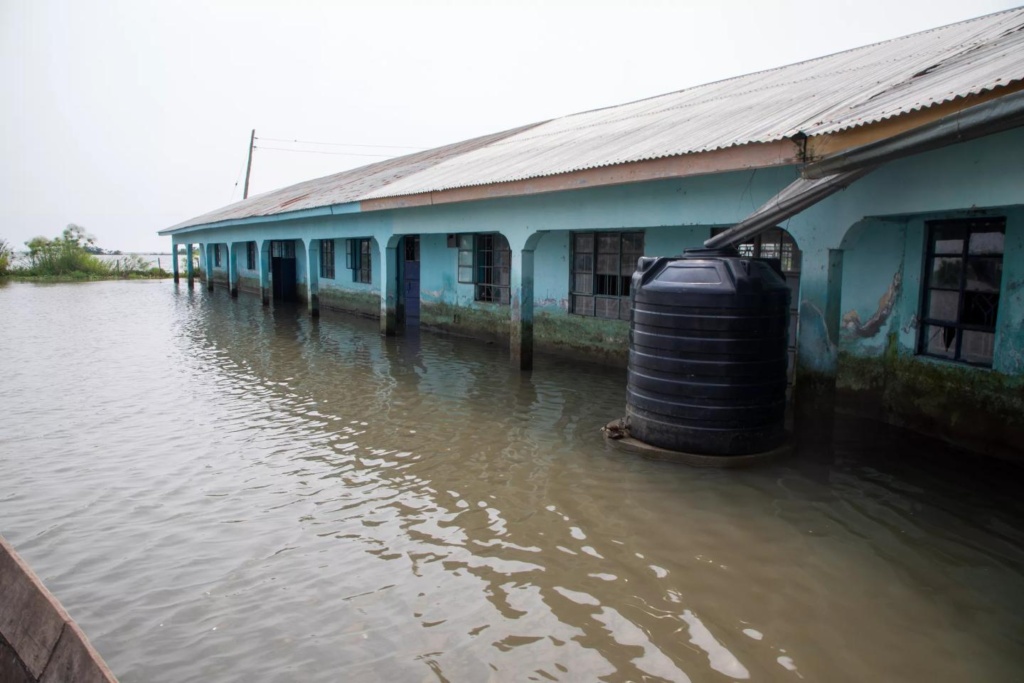
When floodwaters hit Nduru Primary in Kisumu County during the 2024 long rains, three neighbouring schools were submerged, and Nduru absorbed roughly 1,000 additional students from Odienya, Oseth and Nyamurundu primaries.
Head teacher George Aringo told UNICEF Kenya staff that displaced families had moved into a temporary shelter at a nearby shopping centre while they waited for the situation to improve. Thirteen-year-old Cyprin Oloo, one of the affected pupils, was photographed holding replacement exercise books and pencils UNICEF had distributed to the school.
That kind of improvisation, where one surviving school absorbs the students of two or three that didn’t survive, is the normal pattern, not the exception.
A rapid survey by the Elimu Bora Working Group, a Kenyan education-sector coalition, covering 60 schools across nine flood-hit counties (Nairobi, Kiambu, Kisumu, Busia, Homa Bay, Baringo, Nakuru, Tana River and Kilifi) after the 2024 floods found that more than 20,000 school toilets were damaged or destroyed, and at least 34 cholera cases were reported along the Tana River as pupils returned to school.
It also found that most schools had no disaster-response plan at all and that enrolment fell by 9% after the floods, with the drop falling hardest on female students and children with disabilities.
The disruption does not end when the water recedes
Climate-related education loss is often harder to see than a collapsed classroom. A school building can be repaired. A flooded road can eventually reopen. But what happens to the missed lessons, household displacement, lost income and interrupted attendance? These can continue affecting children long after the immediate emergency has passed.
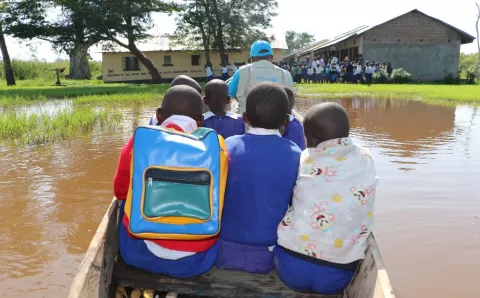
In Kisumu, research published by UNICEF Innocenti examining the impacts of the 2024 floods found that some schools became inaccessible while others were converted into emergency shelters, stopping children from continuing their education.
Families simultaneously faced damaged homes, lost agricultural livelihoods, destroyed sanitation facilities and health risks. That combination is important to note.
Climate shocks rarely affect education in isolation. A drought can reduce household income and food security. Flooding can destroy a family’s home and displace children. Water scarcity can increase the amount of time families spend looking for water. Damaged roads can make the journey to school difficult or dangerous.
UNICEF’s 2025 Climate Landscape Analysis for Children estimates that around 12 million of Kenya’s 24.6 million children face moderate to very high climate and disaster risks. Around nine million are exposed to drought and water scarcity, while more than 1.3 million are exposed to flood risks.
Children in Turkana, Samburu, Marsabit, Wajir, Mandera, Garissa and Tana River fall into the country’s very high-risk category. These environmental statistics describe conditions that can determine whether children consistently reach a classroom.
Girls can pay the higher price
The consequences of these disasters are also not necessarily distributed equally. UNICEF’s global analysis warns that girls face a greater risk of dropping out when climate hazards interrupt schooling.
Displacement, damaged sanitation facilities and declining household incomes can increase girls’ caregiving and water-collection responsibilities and raise their exposure to child marriage, making their return to school more difficult.
Recent research from Kenya provides further evidence of how those pressures can interact. A UNICEF study published in January 2026, based on research involving more than 500 children, caregivers and other stakeholders in Kenya, found that climate shocks are intensifying poverty, food insecurity, displacement and school dropout while weakening family and community protection systems.
As livelihoods deteriorate, the study found, some families and children resort to harmful coping mechanisms, while risks including teenage pregnancy can increase.
That means the effect of a flood or drought on a girl’s education may follow a chain rather than a single event. A climate shock damages a household’s livelihood, the household income falls, then food and water become harder to secure.
When a family is displaced or responsibilities at home increase, attendance becomes irregular. Eventually, returning to school becomes more difficult. The classroom may actually reopen before the barriers keeping a child away from it disappear.

Building schools for a different climate
Kenya has already begun incorporating climate considerations into education. In 2024, the Kenya Institute of Curriculum Development, UNICEF and Alef Education signed an agreement to integrate climate change education into learning resources available to public schools through the Kenya Education Cloud.
However, teaching children about climate change addresses only one side of the problem. The schools themselves must also be capable of functioning in a changing climate. That could mean classrooms designed to cope with extreme heat, schools constructed away from high-risk flood zones, reliable water and sanitation systems, safer routes to school, temporary learning spaces after disasters and mechanisms that allow displaced children to continue learning. It also means having systems capable of identifying which children fail to return after a disaster and why.
UNICEF is calling for governments to strengthen climate resilience in education planning, increase financing for resilient infrastructure, maintain continuity of learning during emergencies and improve climate and education data systems.
For Kenya, better data may be particularly important. The headline numbers tell us the scale of exposure. It does not, on its own, tell us how many lessons individual children missed, how much learning was lost, how many transferred to other schools, or how many never returned.
Those are increasingly important questions for an education system operating in a country where floods, droughts, extreme temperatures and water scarcity are becoming part of the conditions under which children learn.

