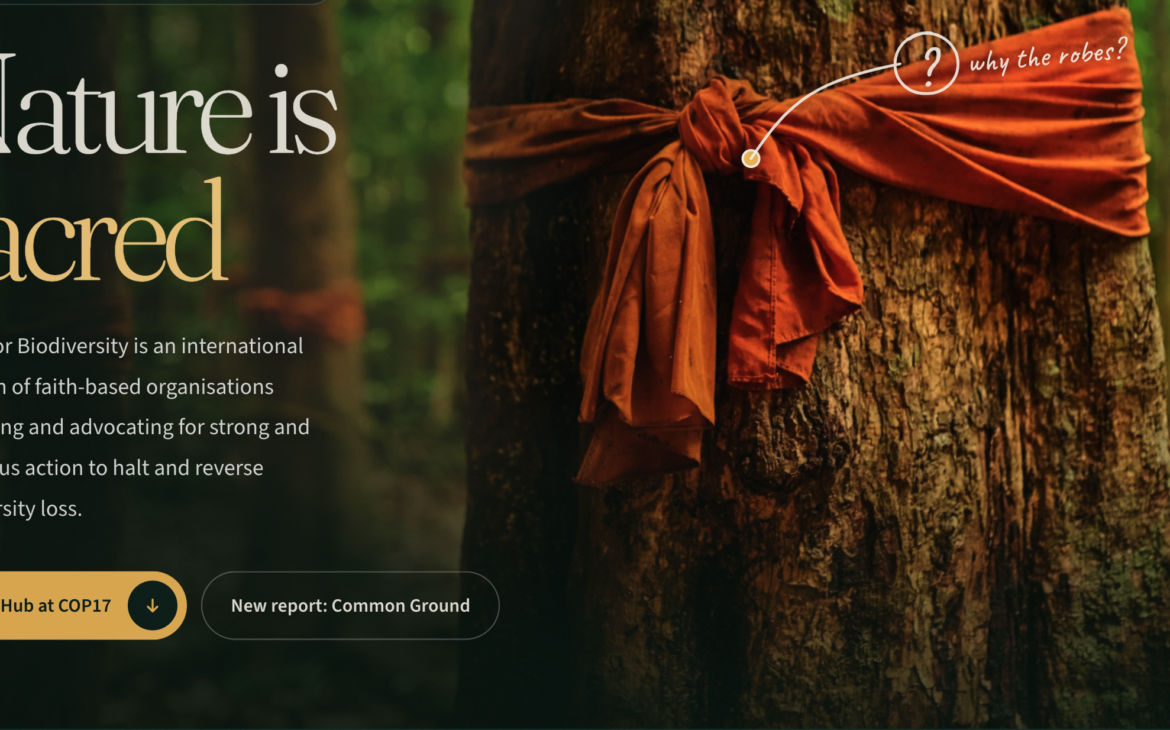
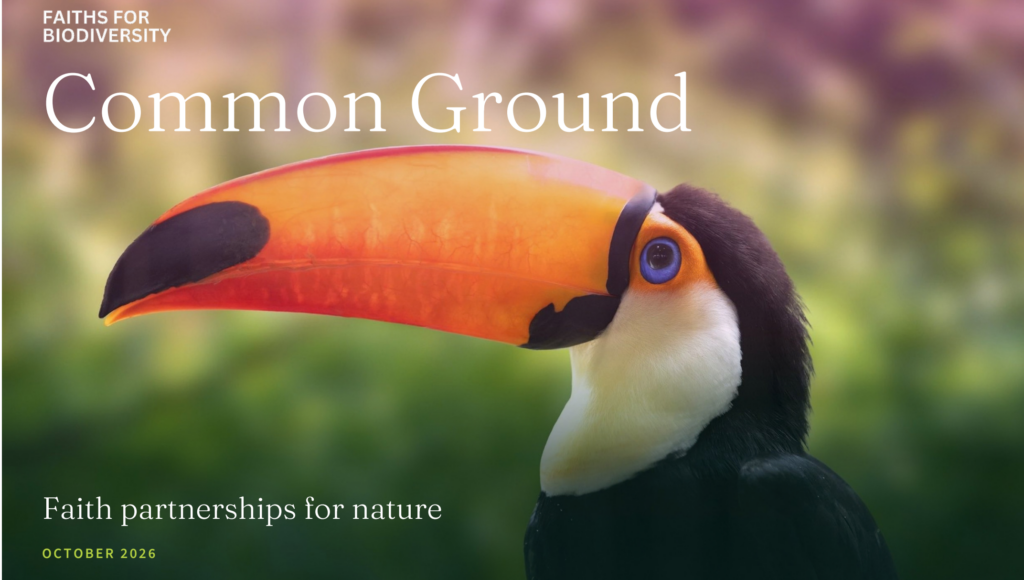
A new report from Faiths for Biodiversity highlights how faith institutions, youth, women and other conservation actors can work together to turn global biodiversity commitments into action.
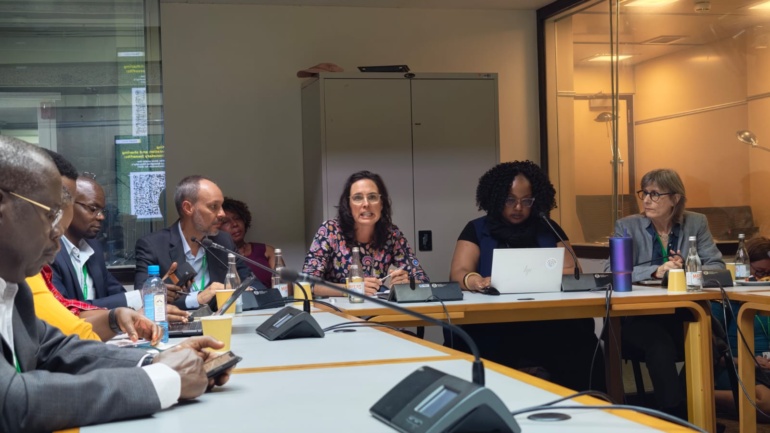
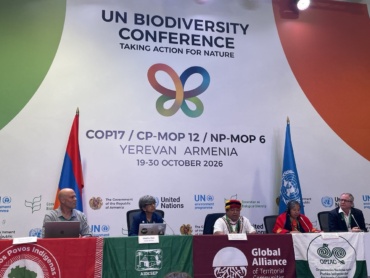
At a press conference bringing together faith leaders and representatives of different constituencies at COP17, one message stood out: biodiversity recovery depends on more than conservation commitments. It requires the people and institutions holding land, knowledge, decision-making power and financial resources to work together.
The discussion took place on October 23 during the 17th Conference of the Parties to the Convention on Biological Diversity (COP17) in Yerevan, Armenia.
The session presented Common Ground: Faith Partnerships for Nature, a report by Faiths for Biodiversity that examines how collaboration between faith institutions and other stakeholders can support implementation of the Kunming-Montreal Global Biodiversity Framework (GBF), the global plan adopted in 2022 to halt and reverse biodiversity loss.
Drawing on seven case studies, including community-led forest monitoring in Cambodia and collaborations involving young people and multilateral institutions, the report identifies six pathways for stronger cooperation among constituencies involved in the Convention on Biological Diversity (CBD). It also proposes a framework for effective faith partnerships in delivering global biodiversity targets.
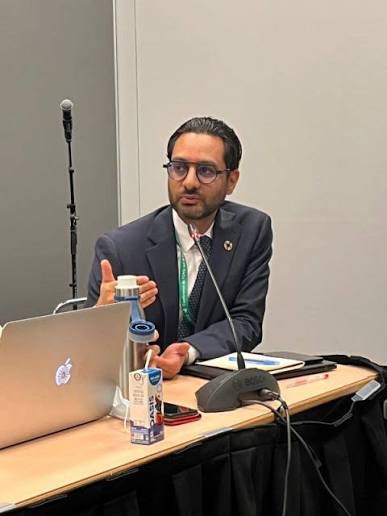
Gopal Patel, co-founder of Faiths for Biodiversity and Faiths for Oceans, who opened and moderated the session, said COP17 should be an opportunity to strengthen the relationships needed to deliver on existing commitments.
“COP17 is not only a moment to review commitments. It is an opportunity to strengthen the partnerships required to implement them,” Patel said.
The report argues that partnerships are most useful when they bring together the different contributions required to protect an ecosystem, rather than treating conservation as the responsibility of a single institution or group.
Partnerships must last beyond individual projects
The Cambodia case study illustrated the importance of sustained cooperation. According to the presentation, the partnership began in 2014 with a relatively small group and has continued with the same partners involved. The approach has since been viewed as a model with potential for collaboration across other sectors.
Its longevity highlights a challenge in conservation: ecological recovery often takes longer than the funding cycles and project timelines supporting restoration activities.
Training, tree planting and financial support can be important steps, but they do not automatically demonstrate that an ecosystem is recovering. Establishing whether biodiversity is improving requires evidence of changes in habitat condition, species populations and other ecological indicators.
The report therefore distinguishes between activities undertaken through partnerships and the results those activities ultimately deliver. It emphasises the need for long-term relationships that can sustain conservation work while allowing progress to be assessed over time.
Faith institutions can contribute through land management, purchasing and investment decisions, schools and other institutions that adopt more sustainable practices, as well as community relationships that help conservation initiatives continue.
However, their contribution does not replace the responsibilities of governments, scientists, Indigenous Peoples and local communities, or businesses.
Indigenous Peoples and local communities hold rights and place-based knowledge that other actors cannot replace. Governments remain responsible for public policy and implementation, while scientific expertise is necessary to establish whether interventions are delivering ecological benefits. Businesses must also remain accountable for their impacts on nature.
The report’s approach is therefore based on cooperation that respects the different roles, responsibilities and rights of those involved.
Youth and women need more than a place at the table
Flore Ghetti of the Global Youth Biodiversity Network said young people are already contributing to conservation and should be recognised for the knowledge and experience they bring.
“They already are knowledge holders. They already are on the front lines, conserving biodiversity,” Ghetti said.
She framed the issue as one of justice, highlighting three questions raised by the report: what can be done for young people, what can be done with them, and what space can be created for them to lead?
The distinction matters because inviting young people into discussions does not necessarily give them the resources or authority to influence decisions. Meaningful participation requires opportunities to contribute knowledge, access funding and take leadership roles in conservation initiatives.
Marie Salvatrice Musabyeyezu of the CBD Women’s Caucus similarly stressed that partnerships must be grounded in cooperation, fair development, gender justice and women’s empowerment.
She welcomed the report’s attention to gaps in national biodiversity strategies, noting that plans alone cannot guarantee inclusive implementation. Women and girls need access to resources and meaningful opportunities to participate in decisions affecting biodiversity and their communities.
The scale of the challenge is reflected in the CBD Secretariat’s February 2026 analysis of 51 National Biodiversity Strategies and Action Plans and 130 sets of national targets.
Fewer than half of the strategies analysed indicated how actors beyond national governments, including Indigenous Peoples and local communities, women, youth and the private sector, would participate in implementing the global framework. The analysis also found that only one-quarter of Parties were taking steps to involve women’s groups in developing their national biodiversity strategies.
These findings point to a gap between recognising the importance of participation and establishing the arrangements needed to make it meaningful.
For women and young people, this means moving beyond consultation towards access to resources, decision-making authority and opportunities to lead. For governments and other institutions, it means ensuring that national plans translate into practical cooperation with the people and organisations contributing to biodiversity protection.
The report’s central question is therefore not simply who should participate, but what each ecosystem needs and who holds the rights, knowledge, resources and authority to provide it.
As governments and partners consider how to advance the global biodiversity framework beyond COP17, the measure of success will ultimately be ecological and social outcomes: healthier habitats, cleaner water, species able to survive and move, and communities and institutions equipped to continue caring for the places on which they depend.
Partnerships can help bring these contributions together, but their value must be demonstrated through lasting action and measurable progress towards nature’s recovery.
This story was produced as part of the 2026 CBD COP17 Fellowship, operated by Informed Earth in collaboration with Internews’ Earth Journalism Network.
Author Profile

-
Seeker.
Inspire AFRIKA.
Latest entries
 Biodiversity24 October 2026Faith Leaders and Civil Society Call for Stronger Partnerships to Restore Nature
 Biodiversity23 October 2026Inside Kobe’s Grassroots Effort to Train the Next Generation of Biodiversity Leaders
 Animals23 October 2026As COP17 Meets, World’s Rarest Great Ape Faces a Make-or-Break Test in Indonesia
 Biodiversity22 October 2026One in Five Tropical Biodiversity Sites Overlapped by Mining Concessions, COP17 Report Finds