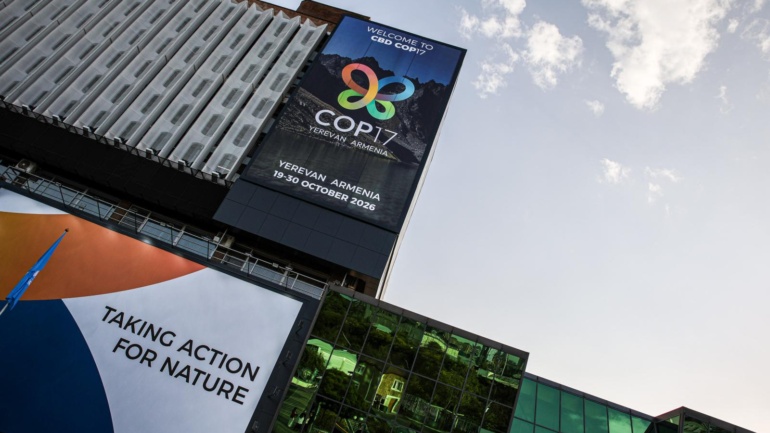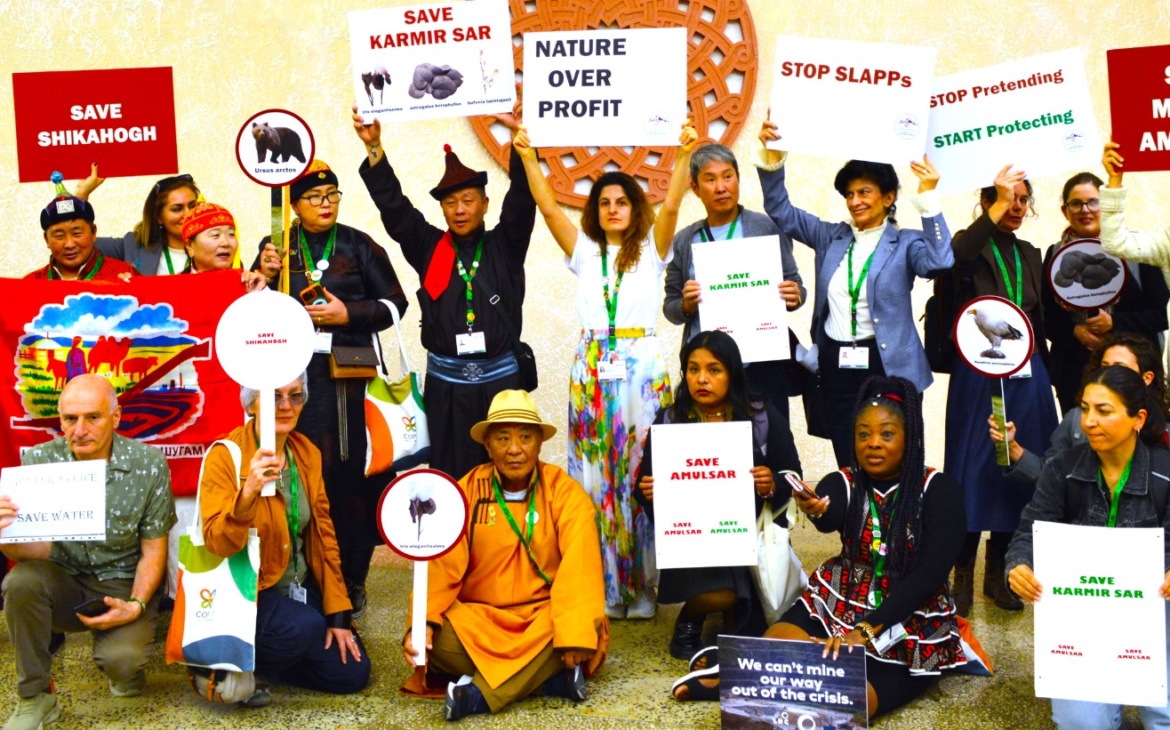
At COP17 in Yerevan, Indigenous Leaders and environmental campaigners warn that turning wildlife and their habitats into carbon credits and biodiversity offsets risks placing a price on nature while allowing extractive industries to continue operating.
As the world searches for ways to finance biodiversity conservation, Indigenous leaders and environmental campaigners are questioning a growing contradiction: can wildlife be protected by turning animals and their habitats into financial assets that companies can use to offset environmental damage?
At the United Nations Convention on Biological Diversity summit, COP17, in Yerevan, Armenia, Indigenous representatives and civil society organisations are warning against schemes that attach financial value to wildlife and ecosystems, arguing that such arrangements risk legitimising the destruction they are intended to address.
Their concerns range from buffalo being used to generate soil-carbon credits in North America to carbon-credit projects associated with jaguar habitats in the Amazon and biodiversity offsets linked to endangered orangutans in Indonesia.
For the campaigners, the problem extends beyond how these schemes are designed or measured. It touches on who has the authority to determine the value of nature, whose territories are involved and whether environmental destruction can genuinely be compensated for elsewhere.
Aimee Robeson, Executive Director of Cultural Survival, who identifies as Chahta/Chikashsha, argues that nature’s value cannot be adequately captured through financial calculations.
“If we truly care about biodiversity, we should not be tempted to monetise our relatives nor ecosystem services like carbon sequestration, because they have inherent value that cannot be reduced to a dollar amount,” she says.
Robeson’s argument challenges the premise that attaching a monetary value to ecosystems necessarily leads to their protection.
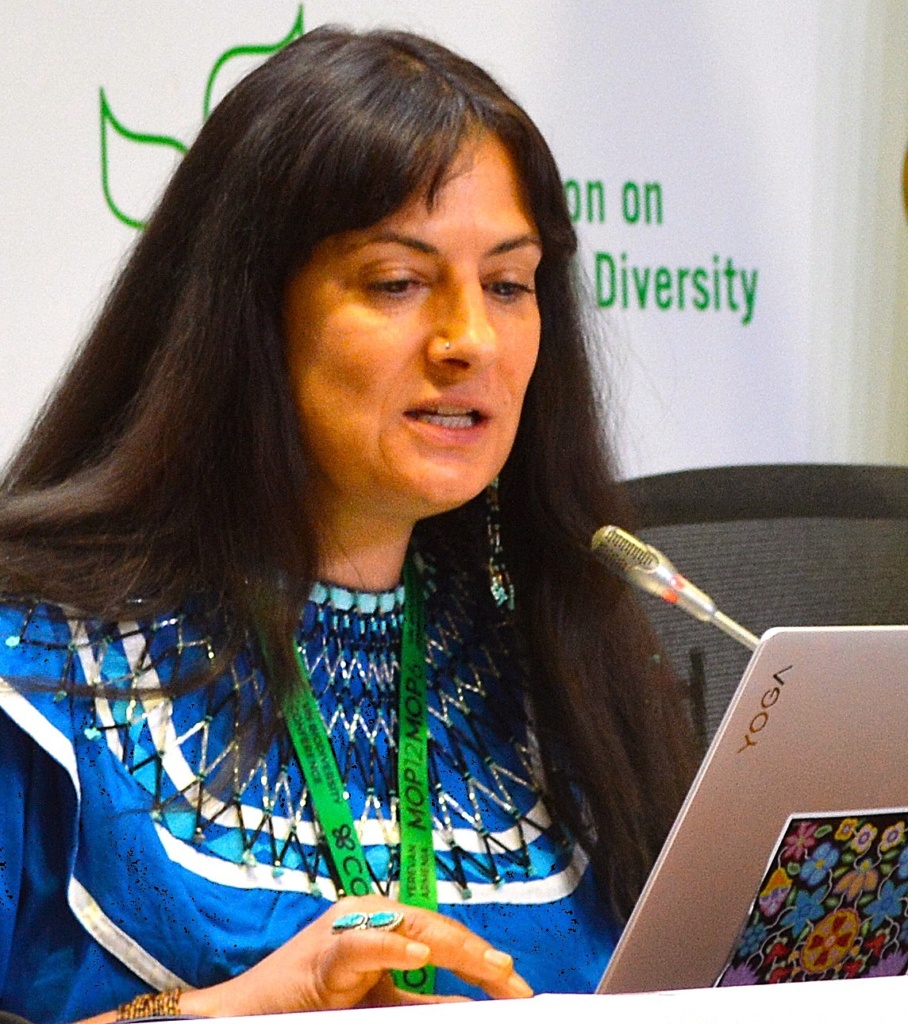
“There can be no sacrifice zones, no trade-offs and no offsets if we want life on Mother Earth to survive for generations to come,” she says.
The distinction matters as biodiversity finance expands and governments, companies and conservation organisations explore different ways of directing money towards nature.
Carbon credits generally represent claimed reductions or removals of greenhouse gas emissions, while biodiversity offsets are intended to compensate for ecological damage in one location through conservation or restoration elsewhere. Biodiversity credits, meanwhile, can represent measured biodiversity outcomes under different schemes.
Although these mechanisms differ, the campaigners’ shared concern is that financial incentives could allow environmental harm to continue rather than require it to be prevented.
When wildlife becomes a financial asset
For Tom Goldtooth, Executive Director of the Indigenous Environmental Network and a member of the Diné/Dakota communities, the use of buffalo to generate carbon credits brings this conflict into sharp focus.
Goldtooth says buffalo, known to his people as Tanka Oyate, are not simply animals with an economic or environmental function. They are relatives whose place in Indigenous life is inseparable from history, identity and spirituality.
He points to the devastating slaughter of buffalo during the nineteenth century, when their populations collapsed from tens of millions to only a few thousand by the 1880s. Against that history, he objects to the contemporary framing of buffalo as instruments for storing carbon in soils.
“Our buffalo, Tanka Oyate, are part of our genesis, not ‘bison bonds,’” he says.
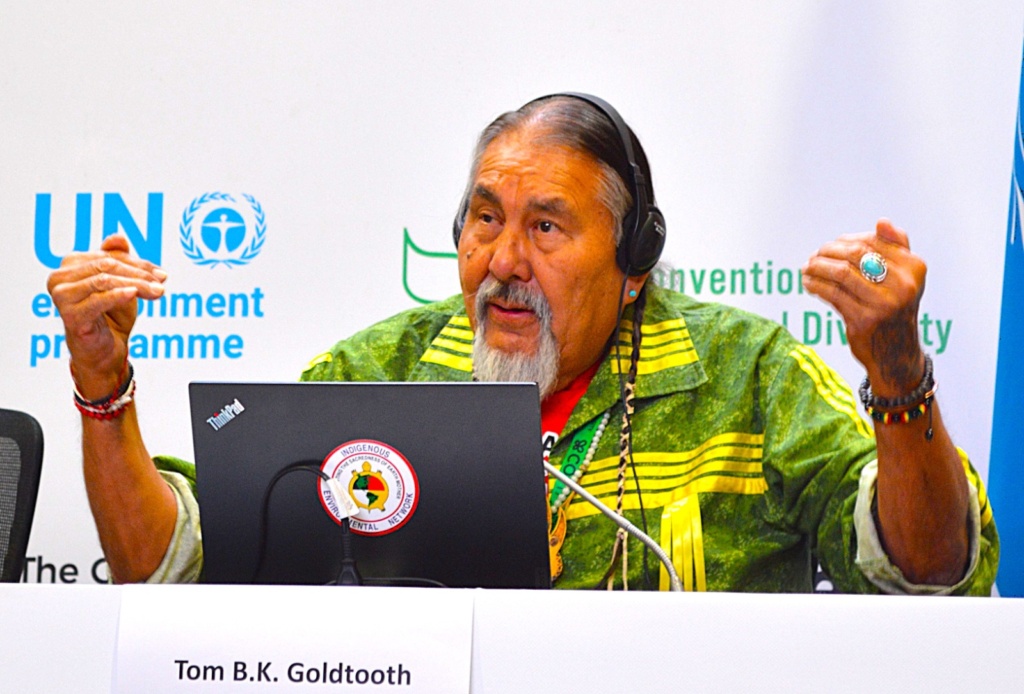
Goldtooth argues that using buffalo-related soil-carbon credits to help companies compensate for their emissions risks turning a relationship of cultural and ecological significance into a commercial transaction.
“Carbon trading is an offensive scam that threatens the future of humanity,” he says, calling instead for the return of buffalo without what he describes as a new form of colonialism.
A similar dispute is emerging in the Amazon, where carbon-credit projects associated with jaguar habitats have drawn criticism from Indigenous representatives.
Wilmer Lucitante, of UDAPT, Friends of the Earth-Ecuador and the Indigenous A’i Kofán Nation, says the commercialisation of jaguar habitats risks obscuring the pressures facing the wider ecosystem.
His community’s territory has been devastated by oil extraction associated with Texaco, now owned by Chevron, he says. Against this background, he rejects the use of jaguar-related credits as a response to climate change while extractive activities continue to threaten the Amazon.
“Turning our sacred jaguars into carbon credits is a false solution to climate change that accelerates their extinction, while greenwashing extractive industries,” Lucitante says.
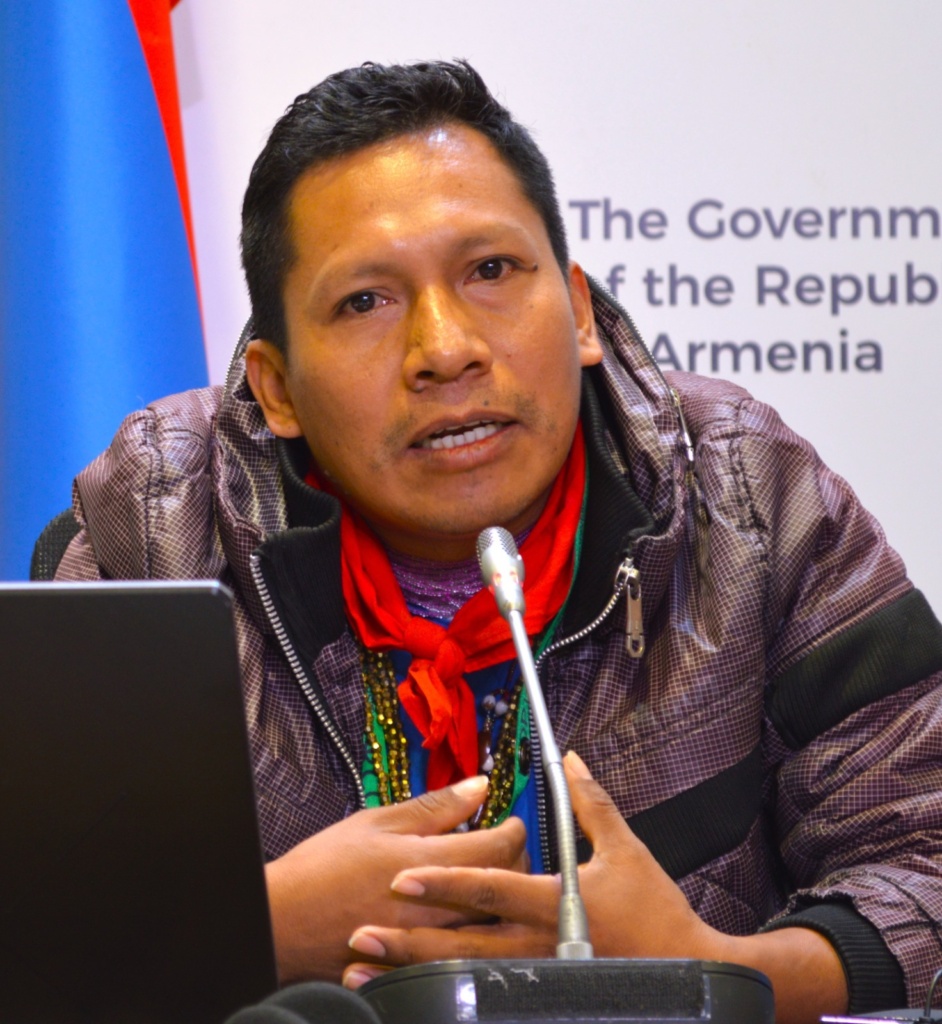
He argues that protecting the Amazon requires confronting the activities driving environmental destruction, rather than relying on credits associated with wildlife habitat.
“Instead of monetising wildlife, we need to stop oil drilling and mining in the Amazon,” he says.
The concern raises a wider question for carbon markets: whether protecting an ecosystem can compensate for emissions or environmental damage elsewhere, particularly when the activities generating those impacts remain in place.
Offsetting the irreplaceable
In Indonesia, campaigners have raised similar objections over the critically endangered Tapanuli orangutan, one of the world’s rarest great apes.
Andine Fahira Lubis, of the North Sumatra regional office of WALHI/Friends of the Earth-Indonesia, says orangutan-related biodiversity offsets are being used to greenwash the Martabe Gold Mine in Sumatra, operated by PT Agincourt Resources, a subsidiary of Jardine Matheson.
The mine is located in the Batang Toru ecosystem, within territories the campaigners identify as belonging to Indigenous Peoples. Lubis says the use of offsets in this context raises serious questions about whether financial mechanisms can adequately account for the loss of irreplaceable habitat.
The Tapanuli orangutan population is estimated at fewer than 800 individuals, according to the figures cited by the campaigners. Its precarious status makes the protection of its remaining habitat particularly important.
“Not only is the sheer hypocrisy of orangutan offsets staggering, but as our report clearly shows, offsets cannot redeem the irreplaceable,” Lubis says.
Her objection goes to the heart of the biodiversity-offset debate. Unlike carbon emissions, which can be quantified in tonnes, biodiversity is made up of interconnected species, habitats and ecological relationships.
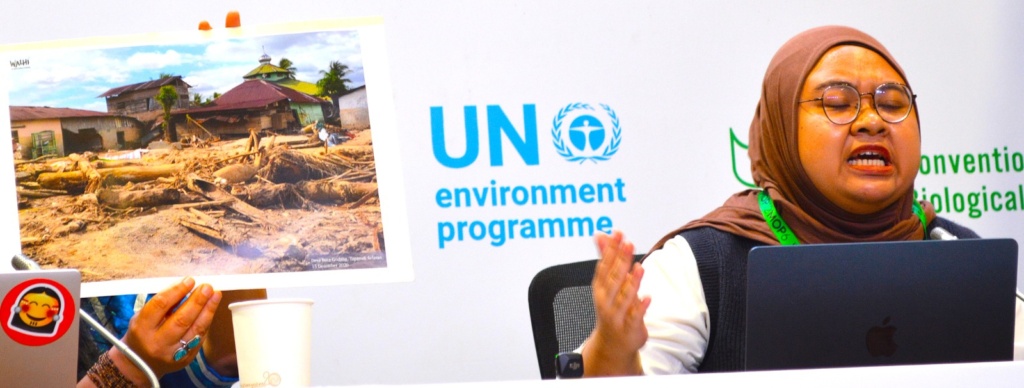
The loss of a particular habitat may not be reversible simply because conservation activities take place somewhere else.
The question is whether a proposed offset can deliver an equivalent ecological benefit, whether that benefit would have occurred without the project and whether it can be sustained over time. For highly threatened species, the consequences of getting those calculations wrong can be especially serious.
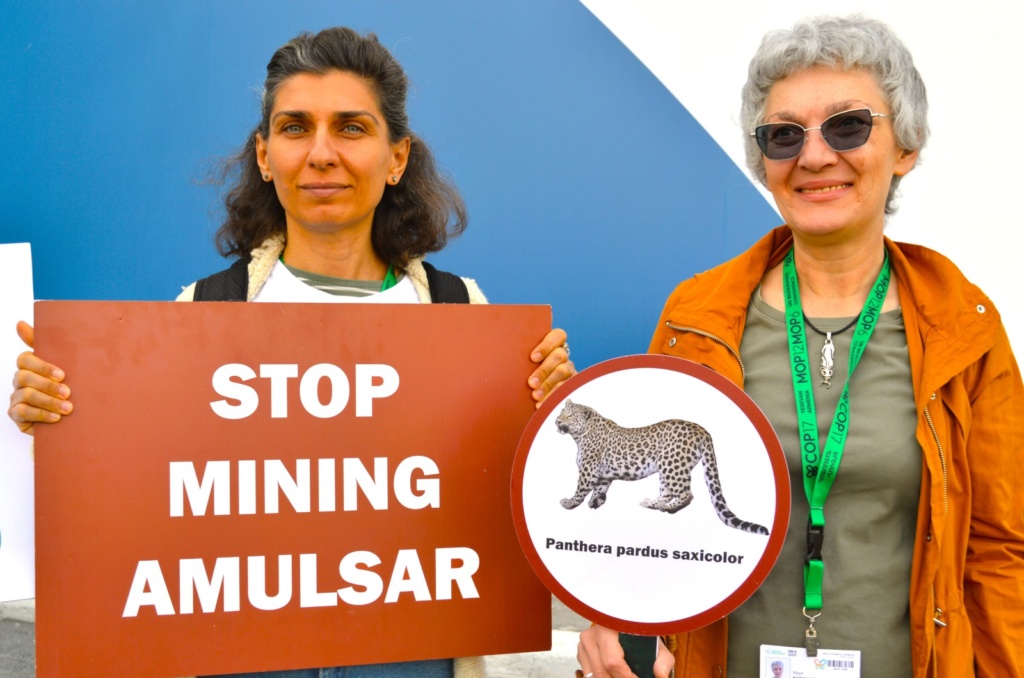
A comparable dispute surrounds the Amulsar gold mine in Armenia, where environmental campaigners say biodiversity offsets are being considered in areas associated with the Caucasian leopard and brown bear.
Nazeli Vardanyan, Director of Armenian Forests, says the controversial mine, which civil society groups opposed for years, was approved shortly before the opening of the UN biodiversity summit.
According to Vardanyan, plans to use biodiversity offsets around the mine risk undermining conservation in habitats that the project itself threatens.
The example brings the debate into the country hosting COP17, where the global biodiversity agenda is being discussed alongside questions about how development, mining and conservation should coexist.

Across these cases, campaigners are challenging the assumption that financial compensation can adequately address ecological damage. Their position is that protecting wildlife requires preventing the destruction of habitats and addressing the industries and activities placing pressure on them.
For Cassandra Smithies, an offsets expert with Global Justice Ecology Project, the broader danger lies in treating nature as a service that can absorb the environmental costs of economic activity.
“Indigenous Peoples’ animals, lands and oceans are not sponges for greenhouse gases, to be grabbed and pillaged by Big Oil and the extractive industries responsible for the climate emergency, which accelerates the 6th extinction,” she says.
Smithies argues that putting a price on nature will not necessarily protect it, particularly when credits allow companies to claim environmental benefits without adequately addressing the damage caused by their operations.
The campaigners are therefore calling on the United Nations to reject what they describe as the financialisation of nature and the use of Indigenous territories and sacred animals to support carbon and biodiversity markets.
Their warning also exposes a wider tension within global conservation policy. Financing the protection of nature is an urgent challenge, but the means of raising that money matter.
A system that rewards measurable conservation outcomes may offer opportunities in some circumstances; one that allows irreplaceable ecosystems to be damaged on the promise of compensation elsewhere risks undermining the very goals it claims to advance.
As biodiversity negotiations continue in Yerevan, the question is not simply how much wildlife and ecosystems are worth in financial terms. It is whether conservation can succeed when the protection of nature becomes entangled with the commercial interests responsible for putting it at risk.
For Indigenous leaders challenging wildlife offsets, the answer begins with recognising that some relationships, places and species cannot be reduced to credits, traded away or replaced by a calculation on a balance sheet.
Author Profile

-
Seeker.
Inspire AFRIKA.
Latest entries
 Biodiversity28 October 2026From Buffalo to Orangutans, Indigenous Leaders Challenge the Business of Wildlife Offsets
 Biodiversity28 October 2026Biodiversity Commitments Face a Defining Test as Yerevan Talks Enter Final Week
 COP1727 October 2026Caribbean Nations Turn to Regional Cooperation to Advance Ocean’s 30×30 Target
 Biodiversity27 October 2026COP17 Puts Ocean Protection in Focus, but Delivery Remains Uncertain