High in the mountains of northern Philippines, generations of Kankanaey Igorot families have safeguarded forests rich in Biodiversity. Yet despite centuries of stewardship, these landscapes remain largely invisible on official conservation maps, recognised neither as ancestral domains nor as protected areas. Their story reflects a growing global dilemma: how can the world claim to protect nature if many of its most effective custodians remain legally unrecognised?
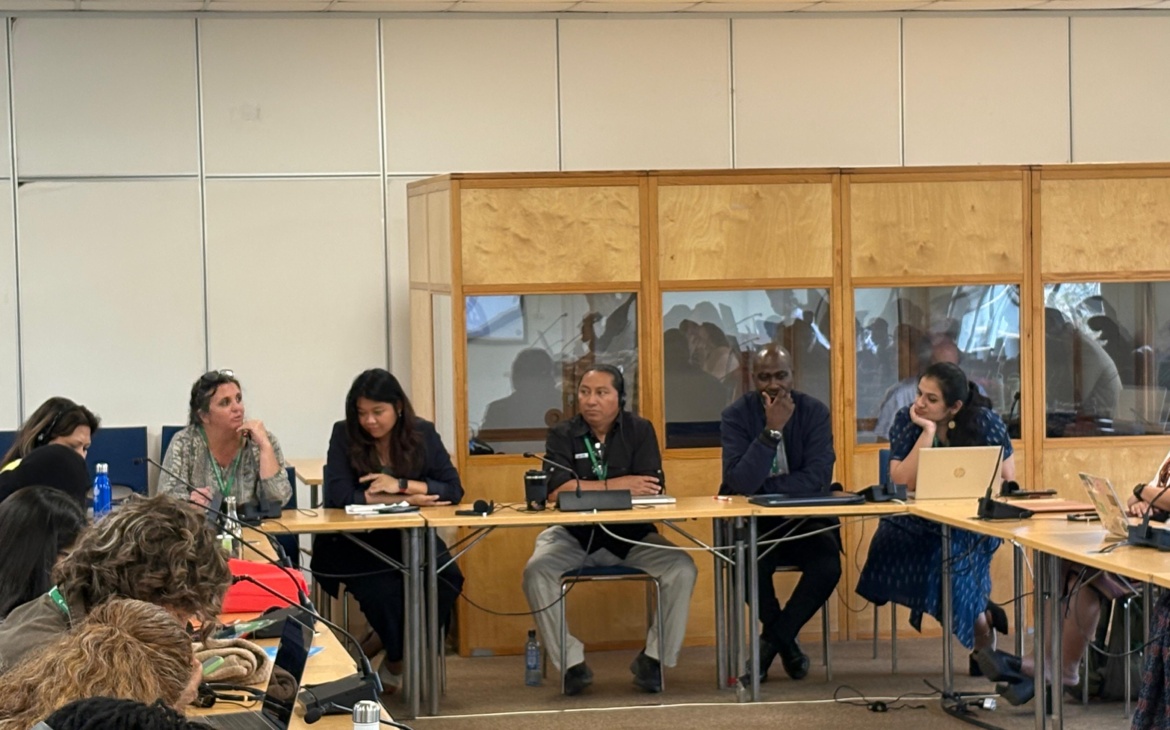
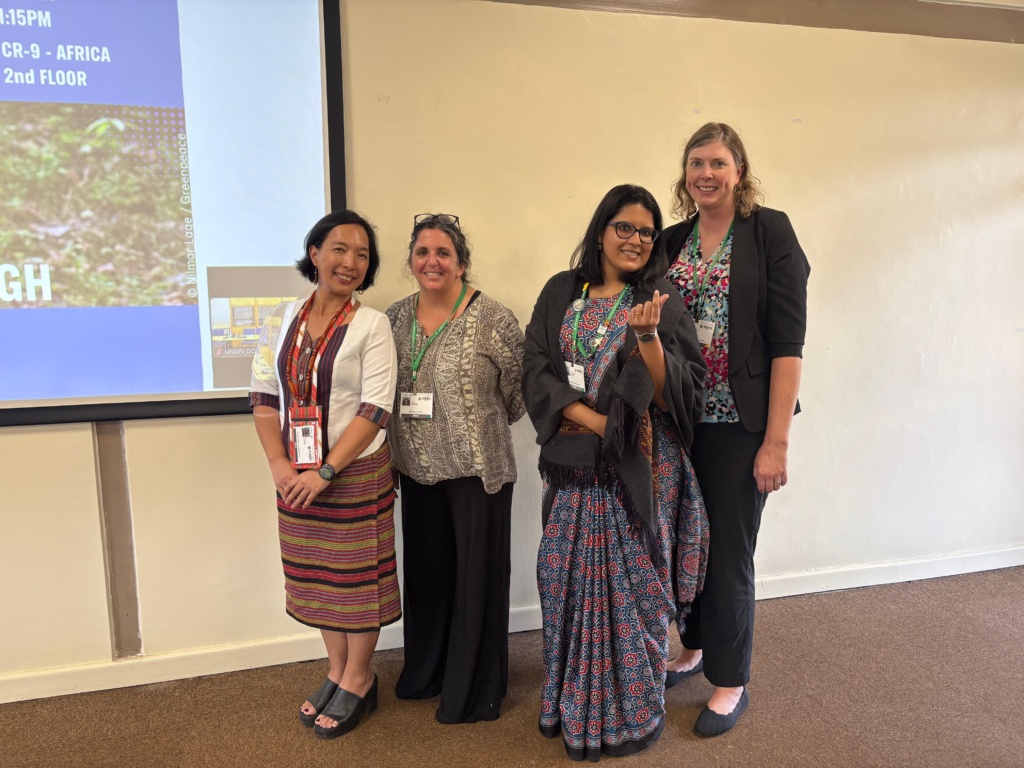
That question echoed throughout a side event convened by Greenpeace International, the IUCN World Commission on Protected Areas, the ICCA Consortium, the CBD Women’s Caucus and other partners during the Convention on Biological Diversity negotiations.
While governments continue racing to deliver Target 3 of the Kunming-Montreal Global Biodiversity Framework, the commitment to conserve 30% of the planet’s land and sea by 2030, participants argued that success will depend less on drawing new boundaries than on recognising the rights, governance systems and knowledge of Indigenous peoples and local communities.
Across the discussions, speakers returned to a common concern: conservation targets cannot be measured by hectares alone. They must also reflect who governs those landscapes, who benefits from conservation finance, and whose voices shape decisions.
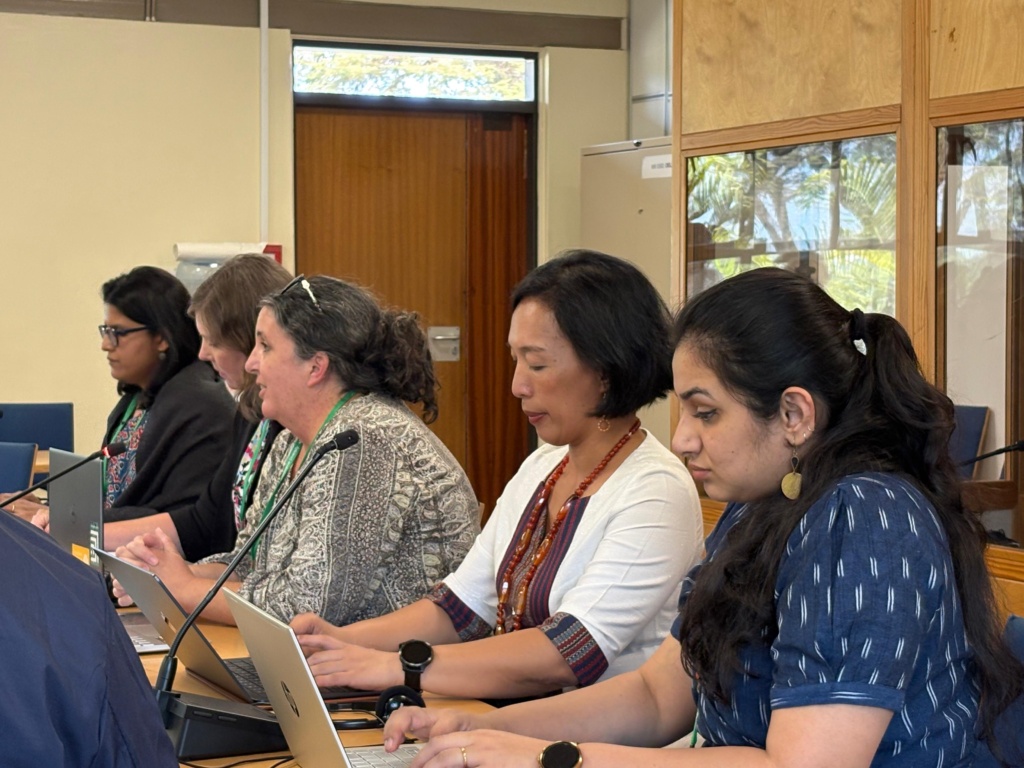
Jennifer Corpuz of the International Indigenous Forum on Biodiversity pointed to Indigenous and Traditional Territories (ITTs) as a critical missing piece in global conservation policy. Drawing from the experience of her own Kankanaey Igorot community, she argued that many biodiverse territories remain excluded from official conservation systems despite being sustainably managed for generations.
Rather than treating these lands as subsets of protected areas or Other Effective Area-Based Conservation Measures (OECMs), she called for their recognition as a distinct category, supported by a global registry and a grievance mechanism for communities whose territories have been incorporated into protected areas without their free, prior and informed consent.
That call, participants noted, is not new. More than two decades after the Programme of Work on Protected Areas was adopted in 2004, its ongoing revision presents what many see as a long-overdue opportunity to align global conservation policy with the rights-based vision of the Global Biodiversity Framework.
Jessica Campese of the ICCA Consortium argued that recognising community-conserved territories should no longer be treated as a peripheral issue, but as a cornerstone of achieving Target 3.
The numbers reinforce that argument. According to analysis presented by Katie Reytar of the World Resources Institute and Landmark, protected areas and OECMs currently account for roughly 18% of the Earth’s land. When Indigenous and traditional territories are included, global coverage rises to about 31%, suggesting that the landscapes needed to achieve the 30×30 target already exist.
However, only legally recognised Indigenous territories are counted; the figure falls sharply, with formal recognition adding just two percentage points. The gap reveals a stark reality: communities are already conserving vast ecosystems, but governments have yet to fully acknowledge their role.
Participants also stressed that equitable conservation cannot overlook gender, arguing that inclusion must extend beyond participation to equitable decision-making and access to resources.
Meenal Tatpati of the CBD Women’s Caucus argued that women must move beyond being consulted to becoming equal decision-makers in conservation governance. She called for better gender-disaggregated data, stronger monitoring of gender-based violence linked to protected areas, and direct access to conservation finance for women-led initiatives.
From Global Targets to Local Realities
The disconnect between policy and practice is already evident across many regions.
In the Congo Basin, where Indigenous peoples and local communities govern extensive forest landscapes, Daniel Mabengo of ANAPAC described how conservation initiatives continue to overlap with community territories without meaningful consultation.
He pointed to the Kivu-Kinshasa Green Corridor, announced in 2024 and 2025, alongside widespread mining concessions that intersect Indigenous lands, as examples of conservation and development policies advancing faster than legal recognition of community rights.
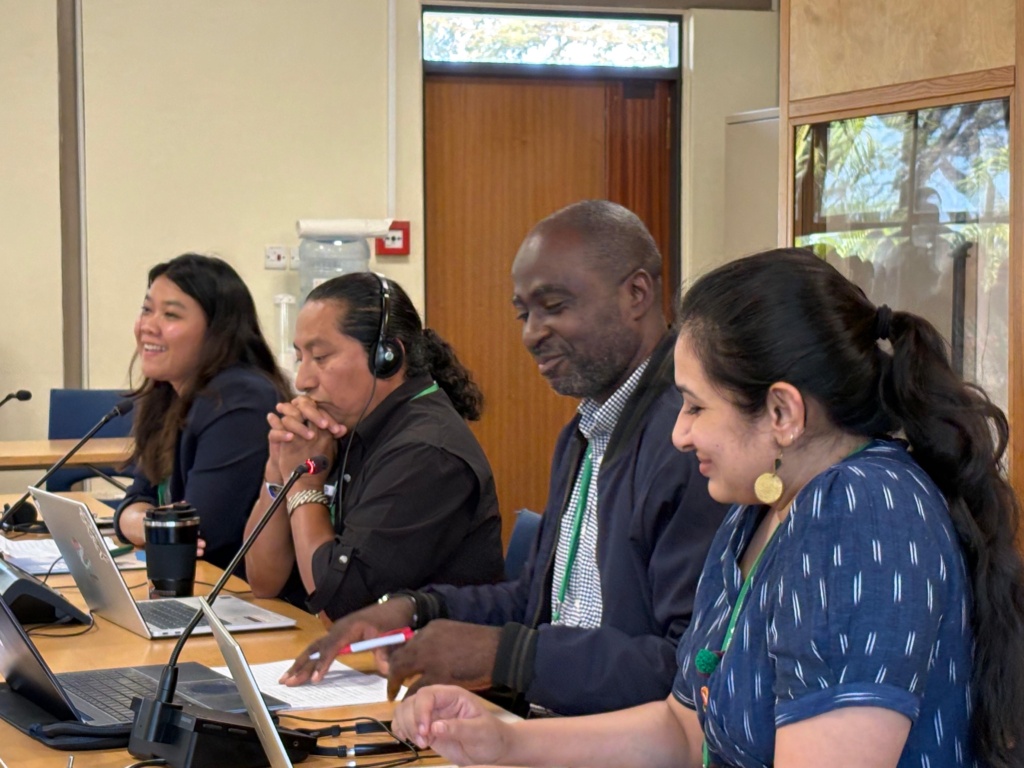
Addressing these challenges, he argued, requires harmonised land registries, genuine co-management of protected areas and financing that reaches community institutions directly rather than being channelled primarily through governments.
Similar tensions are unfolding elsewhere, as evidenced by contributions from Albert Chan, the ICCA Consortium’s Mesoamerican coordinator, who said many governments continue to view territory through administrative boundaries, while Indigenous communities understand it as a living cultural and ecological relationship.
In Guatemala, he noted, communities living within protected areas still face the threat of eviction even though commercial activities such as cattle ranching remain a far greater driver of deforestation than traditional land use.
The conversation extended beyond forests to the world’s oceans as it drew on findings from Greenpeace International’s Global Ocean Justice Now report.
Drawing on Greenpeace International’s Global Ocean Justice Now report, Nichanan Tanthanawit said coastal communities in Chile, Thailand, Sri Lanka and Senegal are already sustaining marine ecosystems through customary governance and local stewardship. Yet marine conservation financing and decision-making structures continue to lag behind terrestrial conservation efforts, leaving many coastal communities underrepresented in discussions around the 30×30 target.
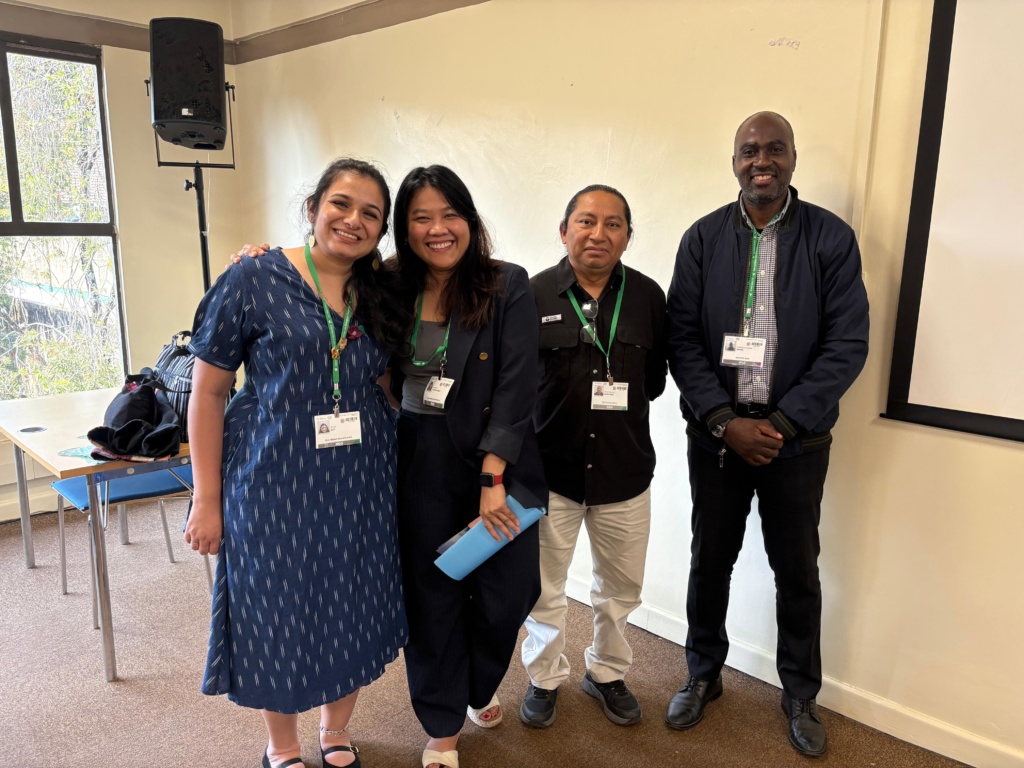
As the discussion turned to implementation, two priorities emerged repeatedly: stronger accountability and direct investment. Participants called for an effective grievance mechanism capable of addressing rights violations linked to conservation, as well as greater follow-through on emerging financing commitments, including the Global Environment Facility’s pledge to channel 20% of its ninth replenishment portfolio toward Indigenous peoples and local communities.
As countries translate the Global Biodiversity Framework into national biodiversity strategies and expand protected and conserved areas, decisions over land rights, governance and equitable financing will shape whether conservation strengthens livelihoods or deepens longstanding inequalities.
The discussion ultimately suggested that achieving Target 3 is not simply about expanding conservation maps to cover 30% of the planet. It is about recognising that many of those landscapes have long been protected, not by governments alone, but by communities whose stewardship has often gone unseen.
Whether the world chooses to acknowledge those custodians as equal partners may determine not only whether the 30×30 target is met, but whether it is achieved with the justice and legitimacy needed for conservation to endure.