
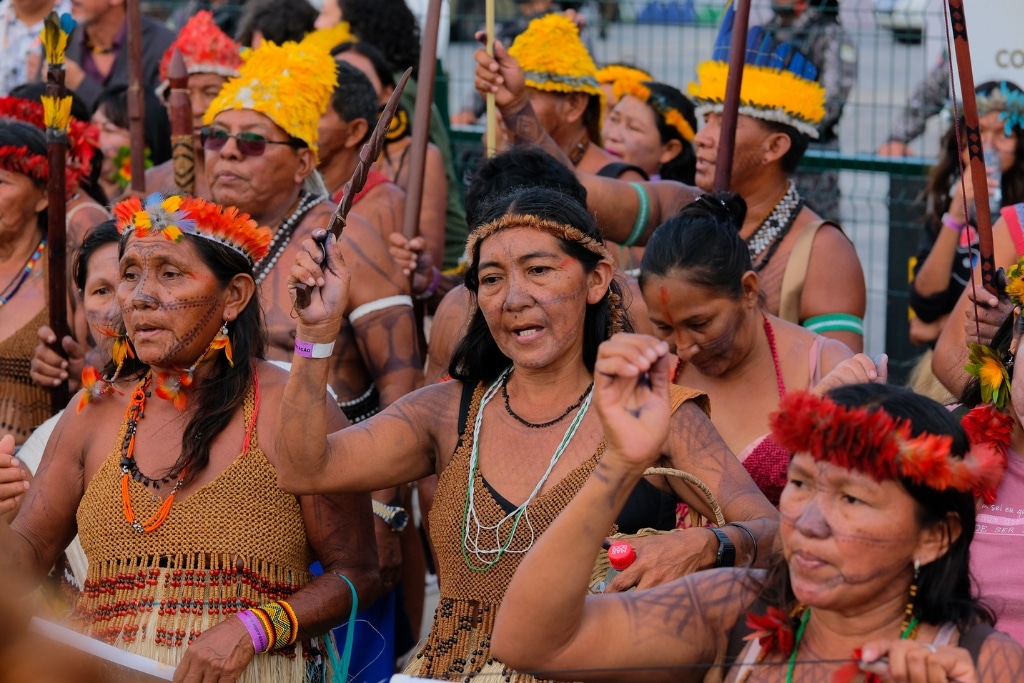
For the first time in the history of the UN climate talks, the world gathered in the Amazon for COP30, prompting a reckoning as the indigenous peoples overwhelmingly turned up seeking a seat at the table to voice their plights.
COP30, which opened on November 10 in Belém, drew a record-breaking 2,500 Indigenous representatives from Brazil, the Andes, and the wider Amazon Basin, a sevenfold increase from Paris and Dubai. Their presence is not just symbolic but also highlights a political and urgent need for inclusion.
Brazil is home to more than 1.7 million Indigenous people belonging to over 300 ethnic groups, whose territories sit on the frontline of climate impacts, from rising droughts to surging invasions and escalating fires. Hosting COP30 in their ancestral forest has thus thrust their demands, frustrations, and leadership into the heart of global climate negotiations.
The host government made Indigenous inclusion a signature priority of its COP presidency, creating the Peoples’ Circle, a new platform bringing together Indigenous communities, Afro-descendants, family farmers, and traditional peoples to shape resilience discussions.
This was followed by a dedication of spaces in the Green Zone and the sprawling COP Village camp that have become hubs for storytelling, policy debates, and cultural exchanges. However, despite the genuine, meaningful steps undertaken, outside these curated spaces, reality has been far more turbulent.
Notably, in spite of their unprecedented numbers, only 14% of Indigenous representatives are expected to access the Blue Zone, where actual negotiations have been taking place. An exclusion that has triggered a series of high-profile protests that have defined the first week of COP30 discussions.
Brazil’s Minister for Indigenous Peoples, Sônia Guajajara, captured the stakes bluntly, pointing out how essential it is for the inclusion of the indigenous peoples. “There is no solution to avoid climate change without the participation of Indigenous people,” said Guajajara.
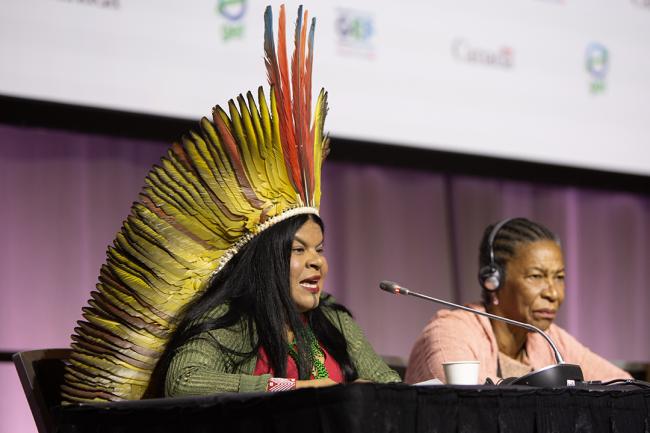
Guajajara further warned that climate finance continues to fail the larger part of the community, with less than 1% reaching Indigenous communities despite their custodianship of lands that hold 80% of global biodiversity.
As she put it in a searing critique of global climate politics: “Indigenous Peoples want to take part, not just show up. We want to lead and be part of the solution.”
This began on November 11, when dozens of Indigenous activists stormed the venue’s perimeter, demanding entry and chanting against agribusiness, illegal mining, oil exploration, and deforestation.
One protester summed up their anger that had become a rallying cry across Belém as a call for meaningful inclusion rather than appearance only for photo ops and to be seen.
“You cannot make climate policies without Indigenous people,” jibed the protester.
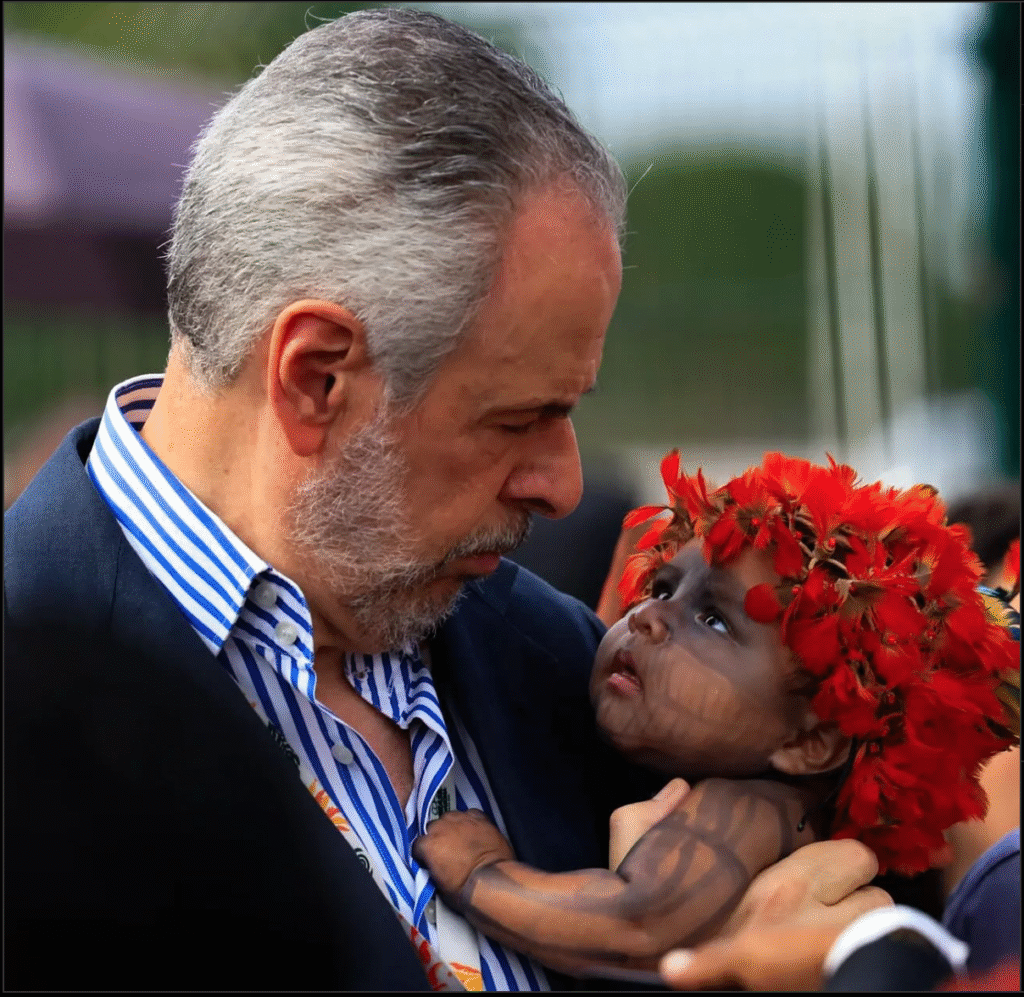
Three days later, about 90 Munduruku people from the Ipereg Ayu movement staged a peaceful sit-in at the main entrance for more than an hour, blocking access for delegates. A move that prompted COP30 President André Corrêa do Lago to come out and negotiate with them to calm the mood.
The exchange would see Correa Lago even briefly cradle a protester’s baby during the tense dialogue that ultimately culminated in shelving their pledges for more passes and meaningful engagement.
Their demands amplified the stark reality of the lives lived and challenges faced. Ranging from a call to halt river commercialization, reject carbon credits that “greenwash” forest destruction, drop plans for a deforestation-risk grain railway, and accelerate long-delayed land demarcations.
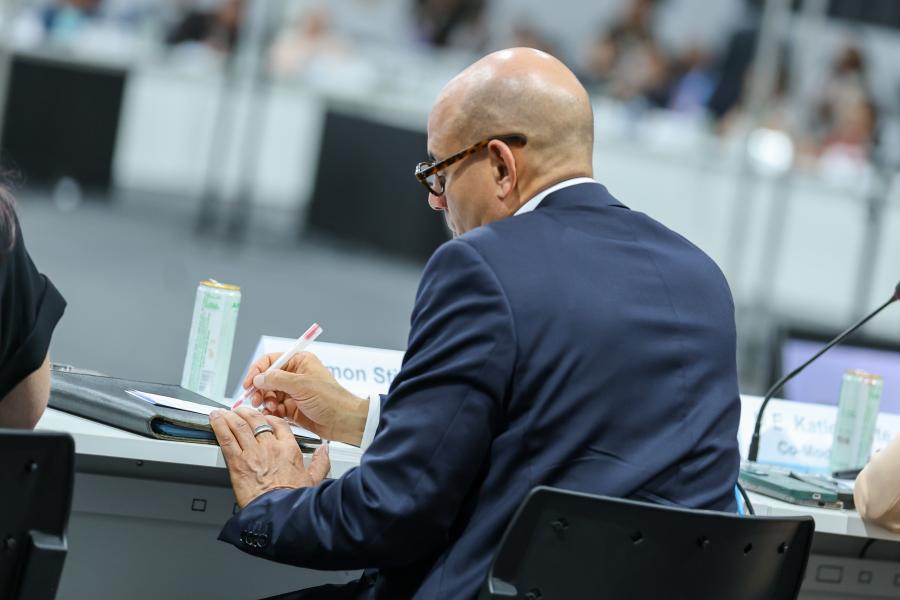
According to UN Climate Change Executive Secretary Simon Stiell, for centuries, Indigenous Peoples have lived a truth showing that the purest climate action cannot be confined to a policy document. Adding that they have it is a relationship of responsibility, reciprocity, and respect.
Along the river, more than 100 vessels sailed through Guajará Bay in a flotilla on November 13, while an estimated 70,000 people marched on November 18, chanting “Hands Off Mother Earth.”
The mood was sharpened by outrage over the fatal shooting of a Guarani Kaiowá leader days earlier, which Indigenous groups say illustrates growing repression around the talks.
Stiell revealed that the UN Climate Change remains committed to supporting that vision through practical, principled action.
First, by strengthening the meaningful participation of Indigenous Peoples across our processes, we ensure your knowledge and voices inform decisions on adaptation, just transitions, and finance. This includes upholding the principles of Free, Prior, and Informed Consent.
Second, by applying the Care Principles developed by the Facilitative Working Group as a model for how we work across the system. Then third, by embedding Indigenous knowledge and rights into the technical work that underpins delivery, reflecting real experience in indicators, budgets, and action.
A Call for Territory, Rights, and Respect
For Indigenous leaders, the message at COP30 is both moral and practical, one that is embedded in securing their territories as the most effective defense against deforestation and against climate collapse.
Kayapó elder Chief Raoni Metuktire, one of the Amazon’s most respected leaders, used Belém’s massive public mobilizations to issue both a plea and a warning that if we continue destroying everything on this earth, there will be chaos.
“Listen to me, and demarcate Indigenous territories, so that the forests can be protected by us,” added Chief Raoni.
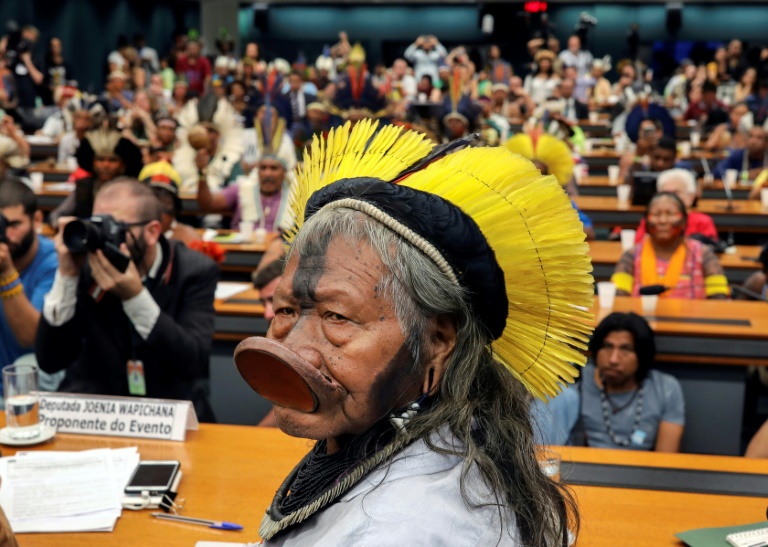
From Ecuador’s Sarayaku community, youth leader Katty Gualinga reminded delegates of who truly keeps the forest standing: “We are the ones protecting life in the forest.”
For communities resisting encroachment, from agribusiness to oil blocks, the fight is existential. Most of these silent battles, mainly fought in the backyards of our attention, are now in the full glare of the world, and the Indigenous peoples await what will be done in response.
“We’re not going to stop fighting,” said Carolman Koganon Canela, from the Memortumré-Kanela people of Maranhão. “We are not many, but we are fighting to protect our lands and the entire planet.”
Beyond politics, Indigenous voices at COP30 have brought spiritual dimensions of climate action to the surface. This was apparent when Cunadule theologian Solano Miselis framed ecological protection as a sacred covenant. Urging that to care for the Earth is to love the Creator and to respect the Earth is to respect the Creator.
And in calling for true global solidarity, he cautioned against tokenism: “We cannot be church without the Indigenous church… We are the Body of Christ when the Indigenous church is also present.”
Notably, political commitments are emerging; however, Indigenous leaders remain wary. At least 12 countries have pledged to secure 160 million hectares of Indigenous-managed lands by 2030, and Brazil says it will finalize 107 pending demarcations during the summit.
An intergovernmental commitment announced just days before COP30 also aims to recognize predefined territories by the end of the decade. The Amazon, battered by mega-droughts, fires, and invasions since 2023, is still losing forest at alarming rates.
Apparently, finance remains thin while extractive industries continue expanding, and without strong, binding language on fossil fuels, land rights, and nature protection, many fear COP30 risks becoming another climate summit heavy on symbolism but light on power.
Still, Indigenous peoples’ leaders insist that solutions exist, and they have been practicing them for millennia. These include community-led reforestation, territorial monitoring, regenerative food systems, and holistic adaptation based on reciprocity and respect.
As Elcio “Toya” Manchineri reminded the world: “80% of biodiversity is on Indigenous lands, we conserve life.”
As much as COP30 may be the most Indigenous COP in history, the question that lingers in minds is whether it will stand the test, that is, whether global leaders will finally listen.
Author Profile

-
Seeker.
Inspire AFRIKA.
Latest entries
 Climate9 October 2026Beyond Negotiations: Africa Expects Concrete Outcomes from Antalya
 Animals7 October 2026In Kajiado’s Drylands, Collective Selling of Small Herds Is Changing the Livestock Trade
 Oceans6 October 202640 Years of Ocean Cooperation: The Western Indian Ocean’s Next Test Is Implementation
 Adaptation5 October 2026Africa Is Financing Its Own Survival as Climate Adaptation Money Falls Short


