
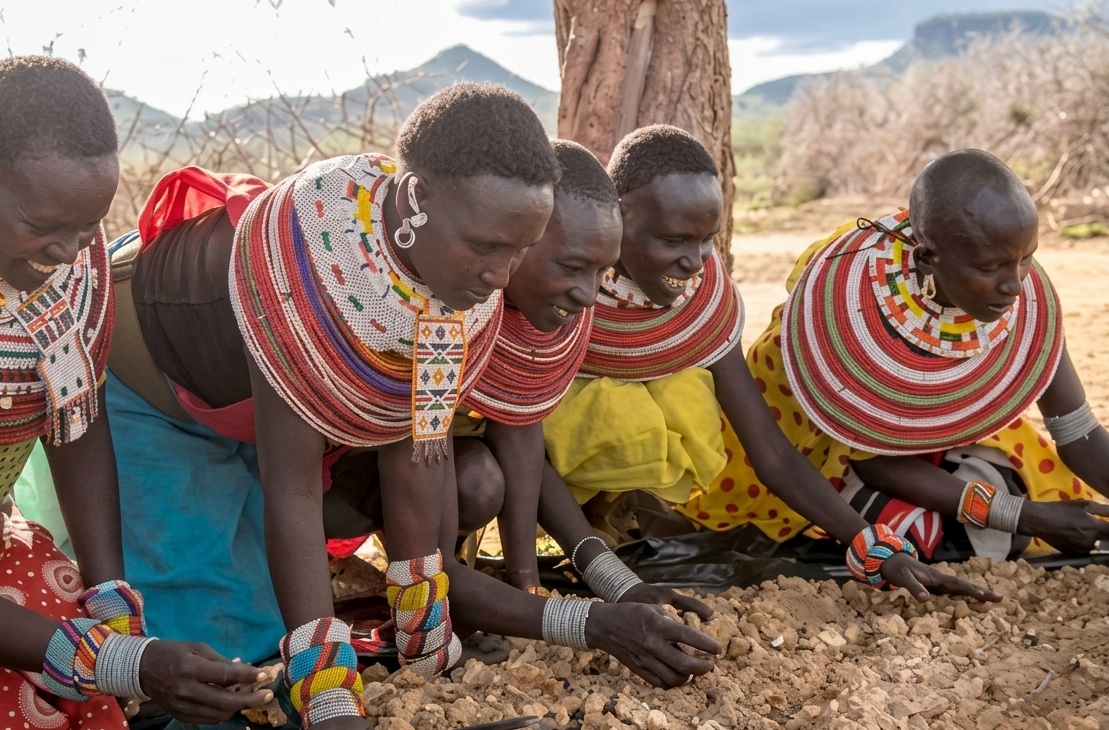
By linking income from gum Arabic harvesting to the protection of acacia woodlands, the Kenyan company is building a business model that puts dryland communities at the center of conservation.
Across Kenya’s drylands, acacia trees are more than a familiar feature of the landscape. They support ecosystems and provide resources that communities depend on for their livelihoods. Among these resources is gum Arabic, a natural substance used in products ranging from soft drinks and confectionery to pharmaceuticals and cosmetics.
Yet the economic value of this commodity has not always translated into structured income for the people who harvest it.
Acacia EPZ, a Kenyan company founded in 2015 by Sam Ombogo Nyamboga, is seeking to change that by connecting gum Arabic collection to formal markets while making the protection of acacia woodlands central to its business.
The company works with more than 12,000 collectors across northern Kenya’s dryland counties, over 70 per cent of whom are women. Through collection, processing and export, it has developed a supply chain intended to turn what was once an informal, unpaid harvest into a source of income for thousands of families.
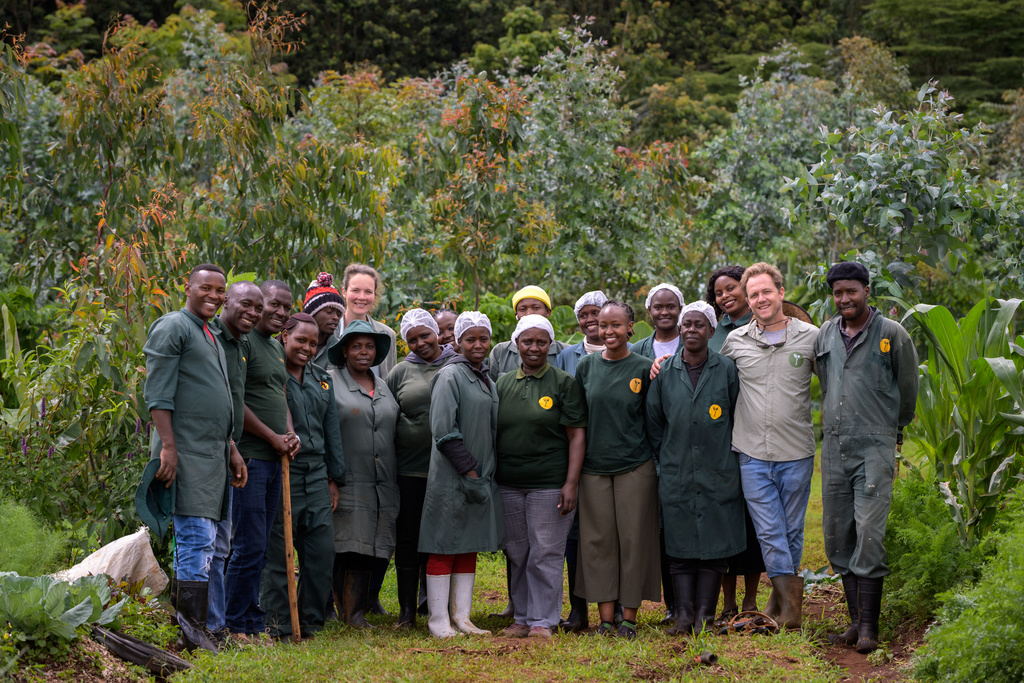
The business rests on a straightforward principle: healthy acacia trees produce the gum on which the industry depends. Protecting the trees, therefore, is not separate from commercial success; it is fundamental to sustaining the supply.
For communities living in drylands, where livelihoods are closely tied to natural resources, that relationship offers a potential route towards aligning economic opportunity with environmental stewardship.
Putting a value on standing trees
Dryland ecosystems face multiple pressures, including land degradation, changing climatic conditions and the loss of vegetation. Although the specific pressures vary by location, maintaining healthy woodlands is important to the ecological functions and livelihoods these landscapes support.
Acacia EPZ’s model seeks to give communities a direct financial incentive to maintain the trees from which gum arabic is harvested.
By organising collectors and connecting their produce to export markets, the company is attempting to create a more dependable economic pathway for a resource that can otherwise remain outside formal commercial systems.
The potential significance lies in the link between income and conservation. When communities can earn from a standing tree, protecting that resource may offer an economic alternative to activities that degrade the landscape.
However, the environmental benefits depend on how the model operates in practice. Evidence of improved woodland condition, sustainable harvesting and long-term changes in household income would help establish whether the commercial approach is delivering measurable conservation gains alongside its economic benefits.
For now, Acacia EPZ’s experience offers an example of how businesses built around natural resources can place local communities at the centre of their supply chains.
A global market disrupted by conflict
Beyond its local conservation ambitions, Acacia EPZ is operating in a global market facing supply-chain uncertainty.
Sudan has historically been a major source of gum arabic, supplying international industries that rely on the ingredient. Conflict in the country has disrupted established supply channels, prompting buyers to look for alternative sources they can trust.
For Kenya, this creates a potential commercial opportunity. But entering an established international market requires more than access to the raw material. Buyers also need consistency, quality assurance, reliable delivery and confidence in where products originate.
Acacia EPZ is positioning traceability as one of its competitive advantages.
The company uses its proprietary Dukawala platform to track gum arabic from the collector to shipment. It says the system enables each kilogram to be traced through its supply chain, providing greater visibility into the product’s origin.
Such traceability can help buyers assess sourcing arrangements and improve accountability across a supply chain. In a market affected by conflict-related disruptions, the ability to demonstrate where a commodity comes from may also strengthen a supplier’s appeal.
Acacia EPZ reports that its revenues have increased by 56 per cent over the past two years and that it has exported more than 300 metric tonnes of gum arabic to date. The company says it is already selling profitably to international buyers.
These figures point to commercial traction, although independently verified financial and export data would provide a clearer picture of the scale and durability of its growth.
The company is also developing a sourcing corridor in Abyei, South Sudan, in partnership with local authorities and a cross-border consortium. The proposed corridor is intended to expand access to gum arabic through a community-endorsed, conflict-free supply chain.
Its success will depend on the practical arrangements governing sourcing, traceability, community participation and safeguards in a conflict-sensitive region.
Making conservation commercially viable
Acacia EPZ’s approach has attracted the attention of the Nature-First Innovation Lab (NFIL), which selected the company for support as it prepares for its next phase of growth.
For Nyamboga, the selection recognises the connection between the company’s environmental objectives and its efforts to build viable incomes for collectors.
“Being selected for the Nature-First Innovation Lab is a real milestone for us. It recognises what we’ve believed since day one: That keeping Kenya’s acacia woodlands standing and building genuine incomes for the families who harvest from them are the same task, not competing ones. The world needs a source of gum arabic it can trust, one that isn’t tied to conflict, and that is exactly what we are building,” he said.
Through NFIL, the company hopes to strengthen its financial foundations, connect with investors and increase its supply of traceable gum arabic to international markets.
That ambition raises an important question for nature-based businesses: how can commercial expansion translate into lasting environmental and social benefits?
For Acacia EPZ, growth could create opportunities to bring more collectors into formal supply chains and increase the value of gum arabic harvested from Kenya’s drylands. But expansion will also require maintaining responsible sourcing practices and ensuring that the communities supplying the commodity share in the benefits.
The number of collectors involved is an important measure of reach, but it does not, on its own, establish how much individual households earn or whether their incomes have become more secure. Similarly, traceability can help establish a product’s origin, but it does not automatically demonstrate that the landscapes supplying it are recovering.
These distinctions matter as businesses increasingly position themselves at the intersection of conservation and commerce.
The future of Kenya’s dryland economy
Acacia EPZ’s experience illustrates the potential of building commercial value chains around natural resources that communities already know and use.
Rather than treating conservation solely as an external responsibility, the company’s model seeks to make healthy woodlands part of the economic infrastructure supporting its business. The approach links local harvesting to international demand while creating a financial reason to maintain the resource on which the trade depends.
The challenge now is to demonstrate that the model can deliver sustained income for collectors, responsible harvesting and measurable benefits for the ecosystems supporting production.
As the company pursues investment and expands its sourcing ambitions, its longer-term significance will depend not only on how much gum arabic it sells, but also on the outcomes for the people and landscapes behind every shipment.
For Kenya’s drylands, the opportunity is to show that natural resources can support livelihoods without undermining the ecological foundations on which those livelihoods depend. Whether Acacia EPZ can deliver that balance at greater scale will be an important test of its conservation-led business model.
Author Profile

- How can we learn if we don't question?
Latest entries
 Food28 October 2026Can Kenya’s Gum Arabic Trade Help Protect Its Drylands?
 COP1727 October 2026A Bard, the Blues and the Stories of Our Land
 Health26 October 2026KSh454 Million DNA Sequencer to Expand Kenya’s Genomic Research Capacity
 Climate23 October 2026The Road Back to 1.5°C: UNEP Sets Out the Emissions Cuts Needed


