The initiative aims to help countries track ecosystem health and measure progress towards global conservation targets through better data, technical support, and emerging technologies.
Countries have committed to halting and reversing biodiversity loss by 2030, but a fundamental question remains: how can governments determine whether their conservation efforts are working if they lack reliable data about the ecosystems and species they are trying to protect?
Many countries continue to struggle with fragmented monitoring systems, insufficient infrastructure and, gaps in the information needed to assess biodiversity trends.
At the 17th Conference of the Parties to the Convention on Biological Diversity (COP17) in Yerevan, Armenia, a new initiative is seeking to address this challenge by connecting countries with technical expertise, stronger monitoring systems and emerging technologies.
Launched on 27 October during the conference’s High-Level Segment, the Yerevan Tech for Biodiversity Monitoring Hub aims to help countries generate reliable data and translate global biodiversity commitments into practical action.
The initiative comes as governments review progress under the Kunming-Montreal Global Biodiversity Framework, adopted in 2022, which sets 23 targets for 2030 and four long-term goals for 2050.
The first global review has highlighted the gap between biodiversity ambitions and implementation, reinforcing the need for reliable information to establish what is working and where action is falling short.
The challenge of measuring biodiversity loss
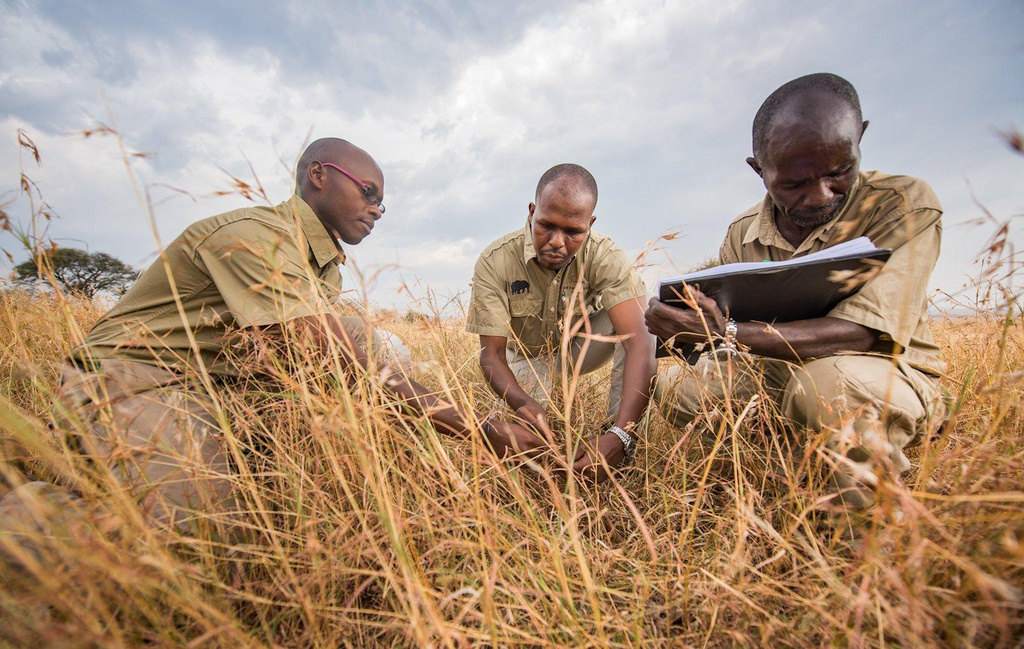
Biodiversity monitoring helps governments and conservation practitioners understand changes in ecosystems, track species populations and identify areas requiring intervention.
Without reliable information, it becomes difficult to establish whether restoration programmes are working, habitats are deteriorating or conservation resources are reaching the places where they are most needed.
Voskhat Grigoryan, a representative of Armenia’s Ministry of Environment, highlighted this challenge while explaining the initiative on 28 October.
“To make decisions aimed at conserving biodiversity, we need to know the condition of our ecosystems, how species populations are changing and where intervention is needed,” she said.
Grigoryan noted that many countries lack coordinated monitoring systems and the infrastructure needed to generate, manage and report reliable data. Armenia faces similar difficulties, with its own national monitoring system remaining fragmented.
The problem is not necessarily an absence of scientific knowledge or technology, but the difficulty of connecting institutions, expertise and information to support decision-making.
As Grigoryan put it: “What cannot be measured cannot be accounted for or corrected.”
From satellites to environmental DNA
The Yerevan Hub seeks to address these shortcomings through three areas of work: improving cooperation among institutions responsible for biodiversity indicators, strengthening countries’ technical capacity, and expanding access to technologies and innovations.
The initiative is being developed in coordination with the Secretariat of the Convention on Biological Diversity, under the joint leadership of the Food and Agriculture Organization of the United Nations (FAO) and the International Union for Conservation of Nature (IUCN), with support from the Global Environment Facility (GEF). The Group on Earth Observations is also a contributing partner.
The technologies under consideration include Earth observation, ecosystem mapping, environmental DNA, bioacoustic monitoring and artificial intelligence-assisted data integration.
Satellite imagery can help track changes in land cover and ecosystem extent over time, supporting assessments of habitat loss, degradation and restoration.
Environmental DNA, or eDNA, allows researchers to detect genetic material left by organisms in water, soil and other environments, helping establish which species may be present without necessarily observing them directly.
Bioacoustic monitoring uses sound recordings to help identify and track species, while artificial intelligence can assist researchers in processing large volumes of recordings and integrating information from different sources.
Ecosystem mapping and assessments of species extinction risk and genetic diversity can provide further evidence to guide conservation priorities.
However, these tools cannot replace skilled personnel, functioning institutions or sustained investment. Their value depends on whether countries can access, interpret and apply the information to real conservation decisions.
The Hub therefore aims to make technology and expertise available in formats that countries can use in practice.
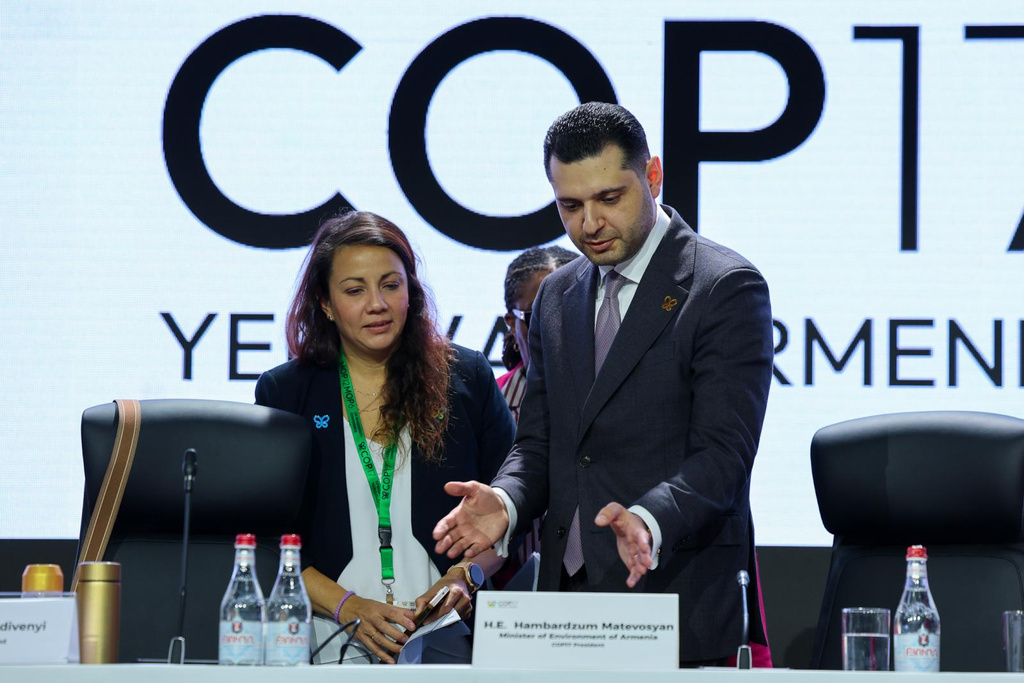
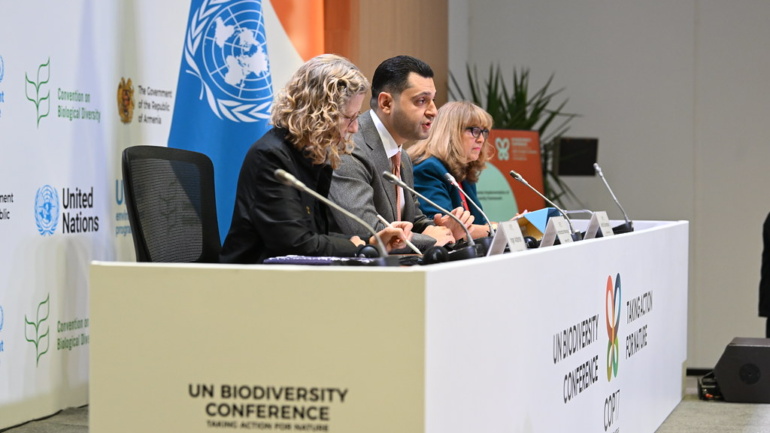
Christine Estrada, CBD Secretariat, and COP 17 President Hambardzum Matevosyan, Minister of Environment, Armenia
Why the initiative matters for Africa
For African countries, stronger biodiversity monitoring could improve understanding of ecosystem changes, strengthen national reporting and help governments identify where conservation and restoration interventions are needed.
The continent’s conservation priorities span forests, wetlands, grasslands, drylands, freshwater systems and marine environments. Monitoring these ecosystems requires appropriate scientific expertise and information that can be compared over time.
Countries may have biodiversity targets and conservation programmes but struggle to measure progress because information is scattered across institutions, collected using incompatible methods or not regularly updated.
The Hub’s emphasis on institutional cooperation and technical support could help address some of these barriers. Access to satellite observations and other emerging technologies could also provide additional ways to gather evidence where conventional monitoring is limited.
Yet access to technology alone will not close the gap. Countries need trained personnel, adequate funding and systems capable of maintaining monitoring activities beyond individual projects.
The question is whether the initiative can match available expertise and tools to countries’ actual needs, particularly where financial and technical constraints are greatest.
From a launch to measurable action
At the launch, FAO Deputy Director-General Godfrey Magwenzi outlined priorities that include making better use of existing national data, addressing biodiversity and sectoral data gaps, and developing integrated national monitoring and knowledge systems.
This emphasis on existing information is significant. Countries may not need to build monitoring systems from scratch; better coordination and integration of data already collected by national institutions could help address some gaps while new capabilities are developed.
Nevertheless, the initiative’s effectiveness will depend on what follows the announcement.
Countries will need clarity on the technical support available, how assistance will be organised and how the Hub’s activities will be sustained. Long-term financing, institutional cooperation and reliable data systems will remain essential.
The COP17 Presidency has outlined plans for continued work beyond the conference, including governance arrangements, work plans and technical and policy dialogue, with results intended to be reported at COP18.
These steps will help establish whether the initiative can translate its ambitions into lasting improvements in national biodiversity monitoring.
Better evidence, better decisions for nature
The global biodiversity framework has given countries a shared set of targets. The challenge now is to accelerate implementation and demonstrate whether commitments are producing results.
The Yerevan Tech for Biodiversity Monitoring Hub offers a way to strengthen the evidence needed to assess that progress. Its combination of technical cooperation, capacity-building and emerging technologies could help countries understand changes in nature and make better-informed conservation decisions.
But success will not be measured by the number of technologies introduced or partnerships announced. It will depend on whether countries develop monitoring systems that inform action, identify what works and reveal where progress is falling short.
At COP17, President Hambardzum Matevosyan called on partners to contribute their expertise and technological capabilities to meet countries’ needs, stressing that cooperation must continue beyond the conference.
With the 2030 biodiversity targets approaching, the challenge is to ensure that better data lead to better decisions—and that those decisions translate into measurable gains for nature.
Read Also: Biodiversity Commitments Face a Defining Test as Yerevan Talks Enter Final Week
Author Profile

- How can we learn if we don't question?
Latest entries
 COP1729 October 2026COP17: Yerevan Hub Seeks to Close Global Biodiversity Monitoring Gap
 Food28 October 2026Can Kenya’s Gum Arabic Trade Help Protect Its Drylands?
 COP1727 October 2026A Bard, the Blues and the Stories of Our Land
 Health26 October 2026KSh454 Million DNA Sequencer to Expand Kenya’s Genomic Research Capacity