
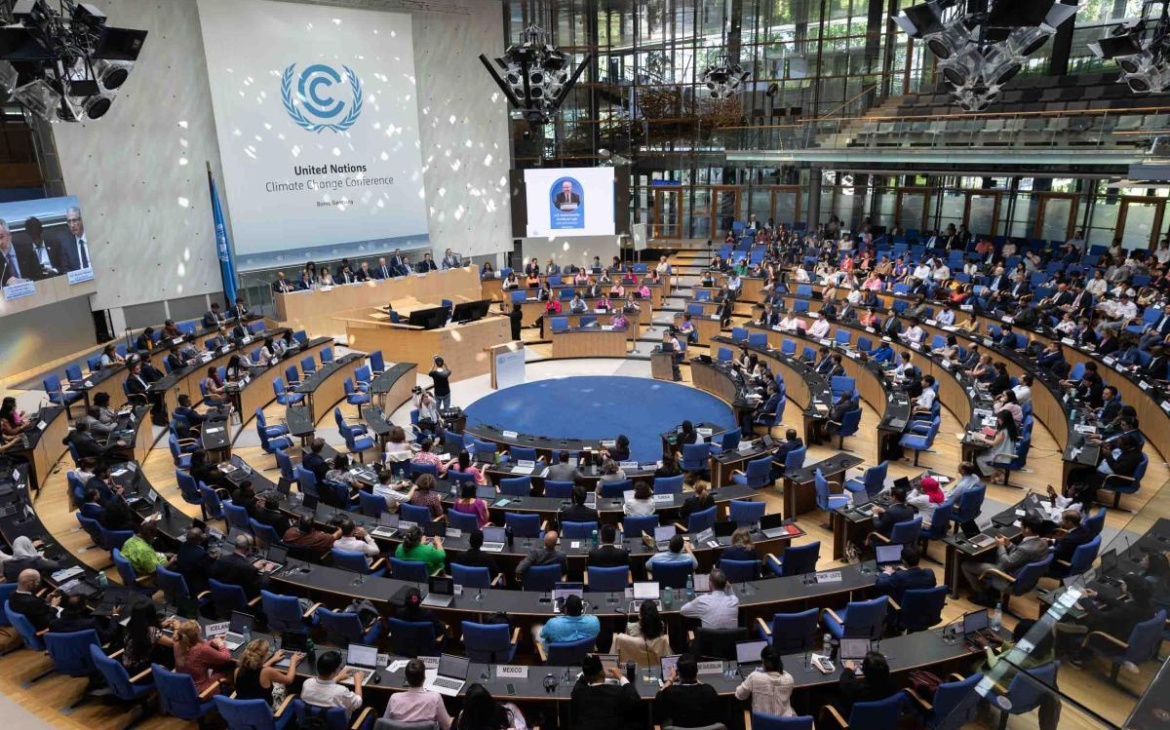
As COP31 approaches, African climate experts are calling for a shift from climate commitments to meaningful implementation, arguing that financing, energy access and economic sovereignty must be at the centre of the continent’s climate priorities.
African climate experts have called on world leaders to make climate finance justice, renewable energy access and economic transformation central to negotiations at the upcoming COP31 climate summit in Antalya, Türkiye.
Speaking during a virtual media briefing on Africa’s climate vision ahead of COP31, experts warned that the continent’s transition to a low-carbon economy must not reproduce existing inequalities or deepen its dependence on external financing.
The discussion brought together representatives from South Africa’s Presidential Climate Commission, PowerShift Africa, Oil Change International and Africa Change Lab to examine the priorities African countries should advance as they prepare for the negotiations.
A recurring concern was the need to move beyond political commitments towards practical implementation, particularly in addressing the continent’s financing gaps, energy poverty and vulnerability to climate impacts.
Simpiwe Ngwenya, Senior Manager for Mitigation at South Africa’s Presidential Climate Commission Secretariat, said COP31 should be remembered as an implementation-focused summit, where the success of climate commitments is measured by their impact on people’s lives.
She highlighted the importance of aligning climate action with development and social justice, particularly for countries grappling with unemployment, inequality and poverty.
“Climate action, development and social justice must advance together,” she said.
Ngwenya also stressed that adaptation and resilience should be treated as development priorities, pointing to the growing impacts of droughts, floods and extreme weather events across South Africa.
She called for greater investment in water security, agricultural infrastructure, human settlements and disaster risk management, while highlighting the difficulties countries face in accessing adequate adaptation financing.
On the energy transition, she cautioned that decarbonisation must not come at the expense of vulnerable households and workers. Expanding renewable energy and electricity infrastructure must go hand in hand with affordability and accessibility.
Financing a just transition
The question of who pays for the energy transition emerged as another central theme.
Kuda Manjonjo, Just Transition Advisor at PowerShift Africa, highlighted the importance of operationalising the global Just Transition Mechanism agreed upon at COP30.
He argued that the mechanism must go beyond dialogue and facilitate practical support through knowledge-sharing, technical assistance, capacity building, resource mobilisation and coordination.
He also emphasised the importance of inclusive governance, ensuring that workers and communities directly affected by the transition have a voice in shaping its direction.
Manjonjo pointed to existing just transition initiatives in countries such as South Africa and Senegal, warning that some approaches have relied heavily on loans without providing sufficient social protection for affected communities.
For Africa, he argued, a successful transition must account for the livelihoods of communities dependent on fossil fuel industries while creating opportunities in emerging low-carbon sectors.
Shady Khalil, Senior Global Policy Strategist at Oil Change International, similarly called for predictable, accessible and grant-based public financing from developed countries.
He argued that private finance alone cannot deliver a just transition, particularly given the continent’s existing debt burdens and the historical responsibilities of wealthier nations for climate change.
“The energy transition cannot be another chapter of wealthy countries and corporations getting richer while the rest of the world pays the price,” Khalil said.
He called for credible national fossil fuel phase-out roadmaps supported by public finance, a dedicated Just Transition Mechanism and ambitious electrification commitments powered by renewable energy.
Khalil also called for technology transfer, debt relief and reforms to international financial systems to enable developing countries to pursue their own climate and development priorities.
Africa’s economic sovereignty at stake
Beyond financing, speakers stressed that Africa must have greater control over the economic opportunities emerging from the global energy transition.
Hope Dlamini, Strategist, Programs and Policy Advocacy Specialist at Africa Change Lab, warned against an approach that continues to position African countries primarily as suppliers of raw materials for the global green economy.
She argued that the continent must move away from resource extraction towards domestic value creation, ensuring that its mineral wealth contributes to industrialisation and long-term economic development.
“Africa cannot finance its future by mortgaging its development, nor achieve a just transition by reproducing the extractive systems that created the climate crisis,” Dlamini said.
She further cautioned against using Africa’s mineral wealth as collateral for financing arrangements that could deepen economic dependency and limit the continent’s development choices.
Instead, she called for a transition rooted in climate finance justice and African economic sovereignty.
Turning commitments into action
The discussions highlighted several interconnected priorities for African countries heading into COP31: accessible climate finance, stronger adaptation measures, affordable renewable energy, industrial development and meaningful participation by workers and communities.
For South Africa’s Presidential Climate Commission, these priorities also include strengthening electricity infrastructure, supporting local manufacturing and ensuring that the transition towards cleaner transport creates economic opportunities.
Ultimately, the message from the briefing was that Africa’s climate ambitions cannot be separated from its development needs.
As countries prepare for negotiations in Antalya, the challenge will be ensuring that international climate commitments translate into tangible investments, stronger institutions and improved livelihoods.
For African countries, a just transition must mean more than moving away from fossil fuels. It must also mean building economies that are more resilient, inclusive and capable of creating prosperity for their people.
Author Profile

Latest entries
 Events31 October 2026COP31: African climate experts call for climate finance justice and a just energy transition
 Events26 October 2026Who Gets to Shape Shipping’s Climate Transition? Japan’s IMO Proposal Raises Concerns for Africa
 Energy21 September 2026Egypt wants to manufacture its wind-energy transition. Can the model work across Africa?
 Climate16 September 2026What Happens When Climate Change Has Schools Closed? A Growing Education Crisis

