
Why Africa’s food future depends on climate finance and renewable energy as leaders convene for COP31
As global leaders gather in Antalya, Türkiye, for COP31, food systems face growing pressure from rising production costs, geopolitical tensions and climate-related disruptions.
The Food and Agriculture Organisation of the United Nations (FAO) Food Price Index stood 5.9 per cent higher in October 2026 than a year earlier. For African countries, where millions of households already struggle to afford nutritious food, fluctuations in global food and agricultural input markets carry significant economic and social consequences.
The geopolitical tensions that erupted in February 2026 and disrupted shipping through the Strait of Hormuz have further exposed the vulnerability of global agricultural supply chains. According to the World Trade Organisation (WTO), disruptions in the Persian Gulf affected international fertiliser trade, particularly supplies of urea and phosphate fertilisers. If all fertiliser exports from Gulf economies are considered affected, the potentially disrupted share could reach 23.3 per cent of global fertiliser trade.
Urea prices also rose from around US$400 per metric tonne before the conflict to more than US$850 in April 2026, demonstrating how quickly geopolitical instability can translate into higher agricultural production costs.
These developments recall the food and energy price shocks of 2021 and 2022 following Russia’s invasion of Ukraine. Together, they expose a fundamental reality: food security is inseparable from energy security. Africa cannot achieve lasting food sovereignty without addressing its energy deficit.
For too long, agricultural production and energy access have been treated as separate development priorities. While agricultural policies focus on seeds, soil health and fertiliser availability, energy strategies concentrate largely on electricity generation, grid expansion and urban industrial demand.
Yet agriculture depends on reliable and affordable energy at almost every stage, from irrigation and production to processing, refrigeration and distribution.
The 2026 Tracking SDG 7 report estimates that more than 560 million people in sub-Saharan Africa still lack access to electricity. Meanwhile, FAO estimates that approximately 309 million people across Africa experienced hunger in 2025, representing about one-fifth of the continent’s population.
These figures highlight the scale of the challenge. Agriculture remains central to Africa’s economy, contributing approximately 30 per cent of sub-Saharan Africa’s gross domestic product and employing at least 60 per cent of the workforce in many African countries, according to the International Fund for Agricultural Development (IFAD). Yet the sector continues to operate with inadequate infrastructure, limited investment and considerable exposure to climate shocks.
Africa will not feed itself on an empty grid.
Much of the continent’s agriculture remains dependent on rainfall. IFAD estimates that only about 6 per cent of cultivated land in Africa is irrigated, compared with approximately 37 per cent in Asia. This leaves farmers highly exposed to unpredictable rainfall, prolonged dry spells and droughts.
Expanding irrigation is therefore essential to strengthening agricultural resilience. However, reliable water access depends on affordable energy to pump and distribute water. For farmers relying on expensive diesel-powered systems or unreliable electricity supplies, irrigation can become an additional production cost.
Decentralised solar-powered irrigation offers an opportunity to address some of these challenges by reducing dependence on diesel and unreliable grid connections; solar technologies can help farmers extend growing seasons and maintain production during periods of irregular rainfall. Such investments must be accompanied by sustainable water management, appropriate infrastructure and affordable maintenance to avoid depleting groundwater resources.
Beyond production, Africa must also address the challenge of preserving and moving agricultural produce from farms to consumers.
Historical FAO estimates indicate that approximately 37 per cent of food produced in sub-Saharan Africa is lost between production and consumption, although losses vary across commodities and supply-chain stages. Inadequate storage, handling, refrigeration and transportation continue to undermine farmers’ incomes and food availability.
For perishable commodities, the absence of reliable cold storage often forces farmers to sell quickly, sometimes at unfavourable prices, or risk losing their produce before it reaches markets.
Solar-powered cold rooms, refrigeration facilities and agro-processing equipment can help extend the shelf life of produce, reduce avoidable losses and create opportunities for farmers to access higher-value markets.
Africa must therefore move beyond increasing agricultural production alone. It must invest in the infrastructure required to preserve, process, package and distribute what it grows.
Renewable energy offers an opportunity to power these agricultural value chains while reducing exposure to fossil fuel price volatility and supporting the continent’s climate commitments. The transition must go beyond installing solar panels on individual farms. It requires connecting clean energy to irrigation, grain milling, refrigeration, food processing and rural enterprise development.
For Africa’s growing youth population, this transformation also presents opportunities in renewable energy installation, equipment maintenance, agricultural technology and climate-smart entrepreneurship. Investment in productive energy infrastructure can create employment while strengthening local food systems.
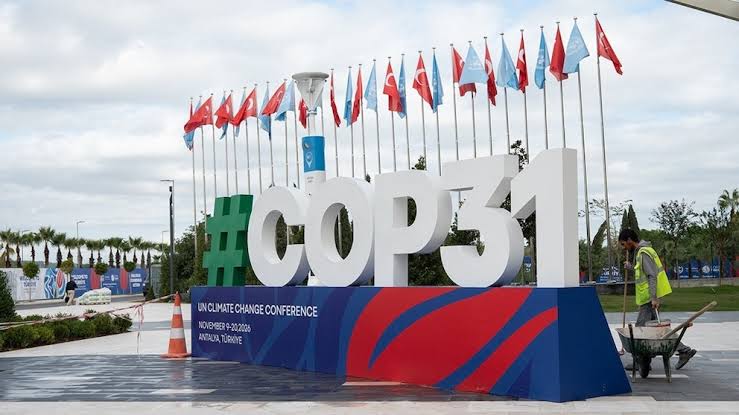
However, governments, smallholder farmers and agricultural enterprises cannot mobilise the required investment independently. This is why climate finance must become central to the conversation at COP31.
African negotiators should push for accessible, predictable and affordable financing that connects the clean energy transition directly to food security and agricultural adaptation. This includes concessional loans and grants for decentralised renewable energy, affordable credit for farmer cooperatives, and investment in solar-powered irrigation, cold storage and agro-processing facilities.
Climate finance must reach smallholder farmers, women and young entrepreneurs rather than remain concentrated in large infrastructure projects that do not sufficiently address rural needs. Equally important are technology transfer and capacity-building programmes that enable African countries to develop local expertise, maintain equipment and establish sustainable business models.
COP31’s Action Agenda offers an opportunity to advance this integrated approach. With food security and clean energy transition identified as priority areas, alongside the Climate Implementation Bridge, the Antalya conference should move beyond declarations towards practical investments and measurable outcomes.
Africa must therefore prioritise financing for productive renewable energy infrastructure in agricultural communities, affordable funding for smallholder farmers and cooperatives, and technology transfer that strengthens local capacity to operate and expand clean energy solutions.
For Sierra Leone, this agenda presents an opportunity to accelerate climate-resilient agricultural transformation and sustainable energy development. The Presidential Initiative on Climate Change, Renewable Energy and Food Security (PI-CREF), based in the Office of the President, provides an institutional framework for bringing these priorities together.
Through coordination across government institutions, development partners and the private sector, PI-CREF can help align national development priorities with climate finance opportunities and strategic investment. This includes strengthening efforts to expand solar-powered irrigation and cold storage, promote clean energy for agro-processing and support resilient agricultural livelihoods.
Sierra Leone’s experience in bringing climate change, renewable energy and food security under one institutional framework could offer useful lessons for other African countries pursuing similar priorities.
Ultimately, the challenge facing Sierra Leone and the rest of Africa in Antalya is not simply to secure additional climate commitments. It is to translate those commitments into bankable investments, locally owned solutions and measurable development outcomes.
Food sovereignty is about more than producing enough food. It is also about the capacity of nations and communities to shape their food systems, access productive resources and secure dignified livelihoods.
If Africa is to feed its growing population, strengthen its economic independence and protect the dignity of its people, it must invest in the energy systems that sustain its farms and food value chains.
Securing Africa’s food future requires powering its farms today.
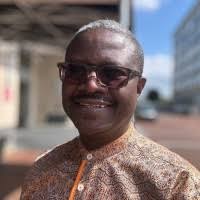
Dr Patrick M. Kormawa is Chief Technical Adviser and Head of the Secretariat for Sierra Leone’s Presidential Initiative on Climate Change, Renewable Energy and Food Security (PI-CREF), based in the Office of the President.
Author Profile

-
Seeker.
Inspire AFRIKA.
Latest entries
 Climate9 November 2026The Ocean Has a Fever, and It Is About to Exhale
 COP319 November 2026COP31: Africa Must Power Its Farms to Secure Food Sovereignty
 COP318 November 2026One Shared Calendar: What COP31 Is and What It Hopes to Achieve
 Oceans5 November 2026Shipping Emissions Have Cost the World Nearly $1 Trillion, Study Finds