Along Kenya’s coastline, where the Indian Ocean meets forests rooted in saltwater, mangroves have quietly protected communities for centuries. They shield homes from storm surges, stabilise fragile shorelines, nurture fisheries that sustain thousands of livelihoods, lock away vast amounts of carbon and provide habitats for countless marine species.
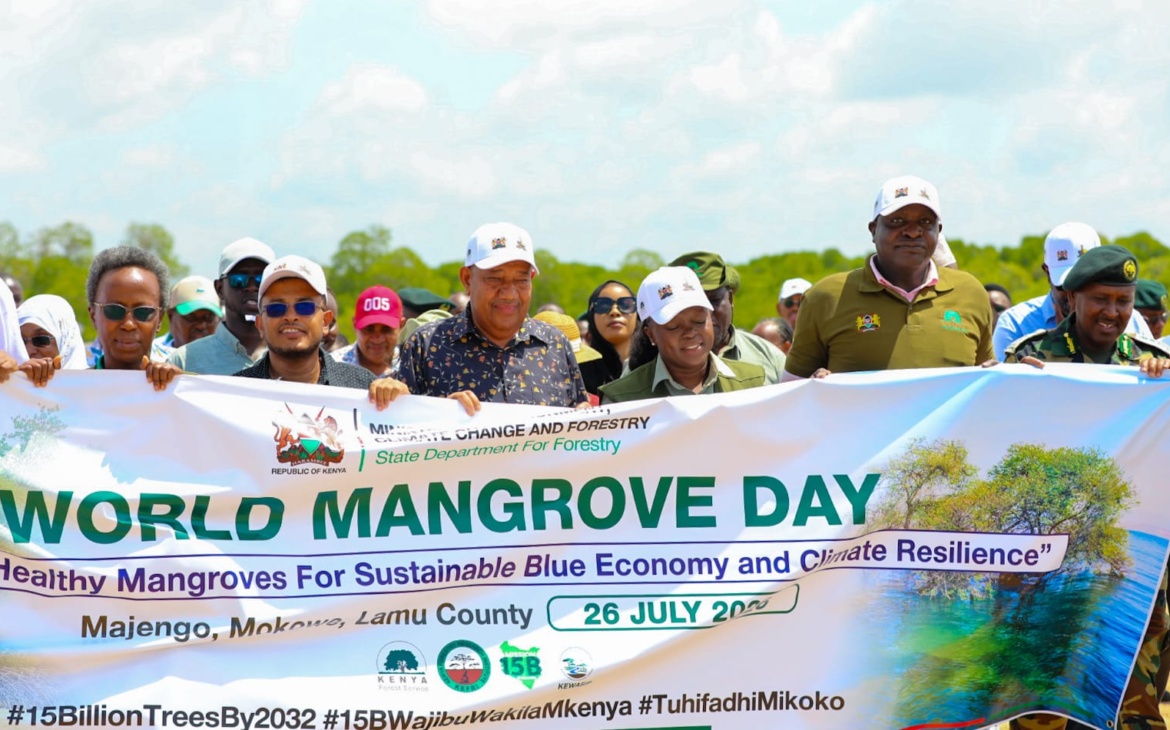
Yet despite the invaluable services they provide, mangroves remain among the world’s fastest-disappearing forests. As the world marked the International Day for the Conservation of the Mangrove Ecosystem on July 26 under the theme “Healthy Mangroves for Sustainable Blue Economy and Climate Resilience,” it implied a gesture of goodwill toward restoration.
Kenya used the occasion not only to celebrate progress in restoring these critical forests but also to highlight the urgency of protecting them before further losses undermine the country’s climate resilience and coastal economy.
Established by UNESCO in 2015 and first observed in 2016, World Mangrove Day draws attention to the ecological and economic importance of mangroves while spotlighting the alarming rate at which they are disappearing.
Across many parts of the world, mangroves are being lost at three to five times the rate of other forests due to coastal development, pollution, overharvesting, and climate change.
For Kenya, the warning is particularly significant. The country is home to more than 61,000 hectares of mangrove forests stretching across approximately 536 kilometres of coastline in Lamu, Kilifi, Kwale, Mombasa and Tana River counties. Lamu alone contains more than 60 per cent of Kenya’s mangrove cover, making it the country’s most important mangrove landscape.
Although they account for only a small share of Kenya’s forests, mangroves deliver benefits far beyond their size. Their intricate root systems reduce coastal erosion, absorb the force of waves and help protect communities from rising sea levels and increasingly severe storms.
They store substantial amounts of “blue carbon”, often several times more per hectare than tropical terrestrial forests, making them an increasingly valuable ally in tackling climate change.
At the same time, they trap sediments and pollutants before they reach coral reefs and seagrass beds, supporting healthier marine ecosystems that underpin Kenya’s growing blue economy. For coastal communities, healthy mangroves also mean timber harvested sustainably, honey production, ecotourism opportunities and cultural heritage that has supported generations.
Yet decades of human pressure have left these ecosystems increasingly vulnerable. Illegal logging, pollution, unplanned coastal development, unsustainable harvesting and climate change have contributed to significant losses, with estimates suggesting Kenya has already lost between 30 and 40 per cent of its historical mangrove cover.
Recent studies indicate that losses continue at about 0.7 per cent annually where restoration efforts fail to keep pace. Against this backdrop, Kenya is increasingly shifting from simply recognising the value of mangroves to actively restoring them.
The country’s National Mangrove Ecosystem Management Plan (2017–2027) places conservation, restoration, sustainable harvesting, scientific research and community participation at the heart of mangrove management while supporting emerging blue carbon initiatives and broader climate commitments.
That growing commitment was underscored during this year’s national celebrations in Mokowe, Lamu County, where Cabinet Secretary for Environment, Climate Change and Forestry Dr Deborah Mlongo Barasa joined Lamu Governor Issa Timamy, researchers and community leaders to review progress and outline the next phase of restoration.
The event also marked a significant milestone for scientific research as the Kenya Forestry Research Institute (KEFRI) elevated its Lamu Forestry Research Centre into a National Centre of Excellence for Mangrove and Estuarine Research and Development.
“Mangroves are not wastelands; they are among Kenya’s greatest natural assets,” Dr Barasa said, noting that every hectare restored strengthens climate resilience, protects coastlines and creates new opportunities for coastal communities.
Her remarks reflect Kenya’s broader ambition under the 15 Billion Trees Programme, which aims to increase national tree cover to 30 per cent by 2032 while recognising mangroves as one of the country’s most valuable nature-based climate solutions.
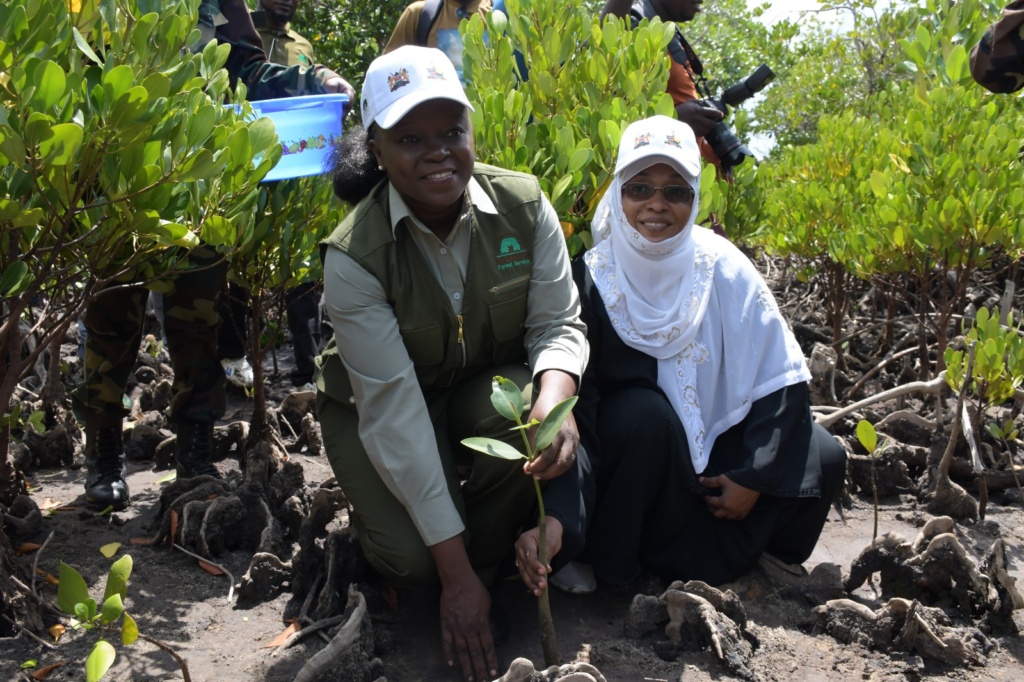
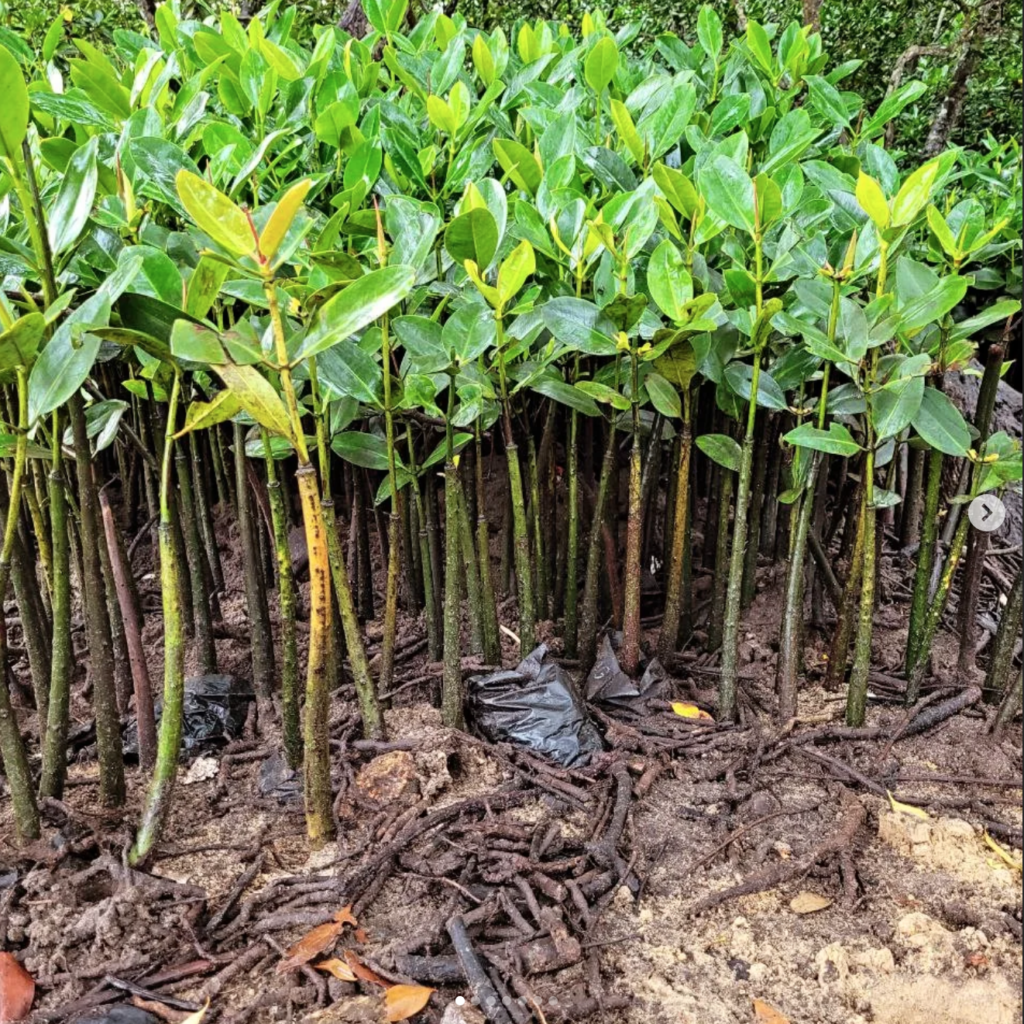
Scientists say, however, that restoration is not simply about planting more trees but ensuring the right species are restored in the right ecosystems.
“Healthy mangroves don’t happen by chance; they are built on science,” said KEFRI Director General Dr Jane Njuguna, emphasising the role of research, innovation and ecological monitoring in ensuring restoration efforts survive long enough to deliver climate, biodiversity and economic benefits.
Elsewhere along the coast, restoration has increasingly become a community-driven movement. At the Jomvu Kuu Mangrove Site in Mombasa County, the Kenya Scouts Association, working with the Kenya Forest Service and other partners, set a Guinness World Record after 4,124 participants simultaneously planted mangrove seedlings under internationally verified standards.
The event attracted more than 5,000 people, transforming a restoration exercise into one of Kenya’s largest demonstrations of collective environmental action.
Chief Conservator of Forests Alex Lemarkoko said the initiative went beyond international recognition, demonstrating how restoring mangroves strengthens carbon sequestration, protects biodiversity and supports livelihoods linked to the blue economy while contributing to Kenya’s target of planting 15 billion trees by 2032.

Community-led restoration also continued in other parts of the coast, including the Malindi-Watamu-Arabuko Sokoke Biosphere Reserve, where thousands of trees, including mangrove seedlings, were planted as part of broader ecosystem restoration efforts.
As climate change accelerates sea-level rise and intensifies coastal hazards, mangroves are increasingly being recognised not as optional conservation projects but as essential natural infrastructure.
Their ability to protect coastlines, sustain fisheries, capture carbon and support local economies places them at the centre of Kenya’s climate adaptation strategy.
For generations, these forests have quietly defended Kenya’s coastline without concrete walls or engineered barriers. As restoration efforts gather momentum, the country’s greatest defence against a changing climate may prove to be the one nature perfected long before modern infrastructure existed
Author Profile

-
Seeker.
Inspire AFRIKA.
Latest entries
 Climate9 October 2026Beyond Negotiations: Africa Expects Concrete Outcomes from Antalya
 Animals7 October 2026In Kajiado’s Drylands, Collective Selling of Small Herds Is Changing the Livestock Trade
 Oceans6 October 202640 Years of Ocean Cooperation: The Western Indian Ocean’s Next Test Is Implementation
 Adaptation5 October 2026Africa Is Financing Its Own Survival as Climate Adaptation Money Falls Short