At CBD COP17 in Armenia, civil society organisations are mobilising behind a proposed Universal Declaration of the Rights of Nature, calling for a shift in how governments recognise and protect the living world.
As countries gather in Armenia to assess progress towards global biodiversity targets, a growing movement is seeking to change how the world understands its relationship with nature, arguing that ecosystems should be recognised not merely as resources for human use but as living systems with inherent rights.
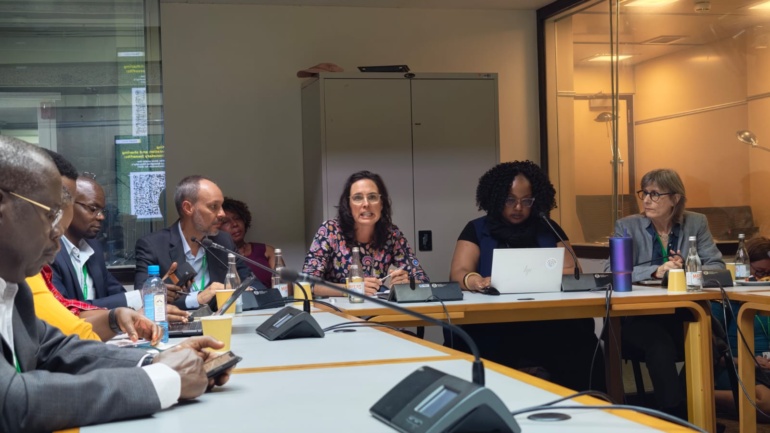
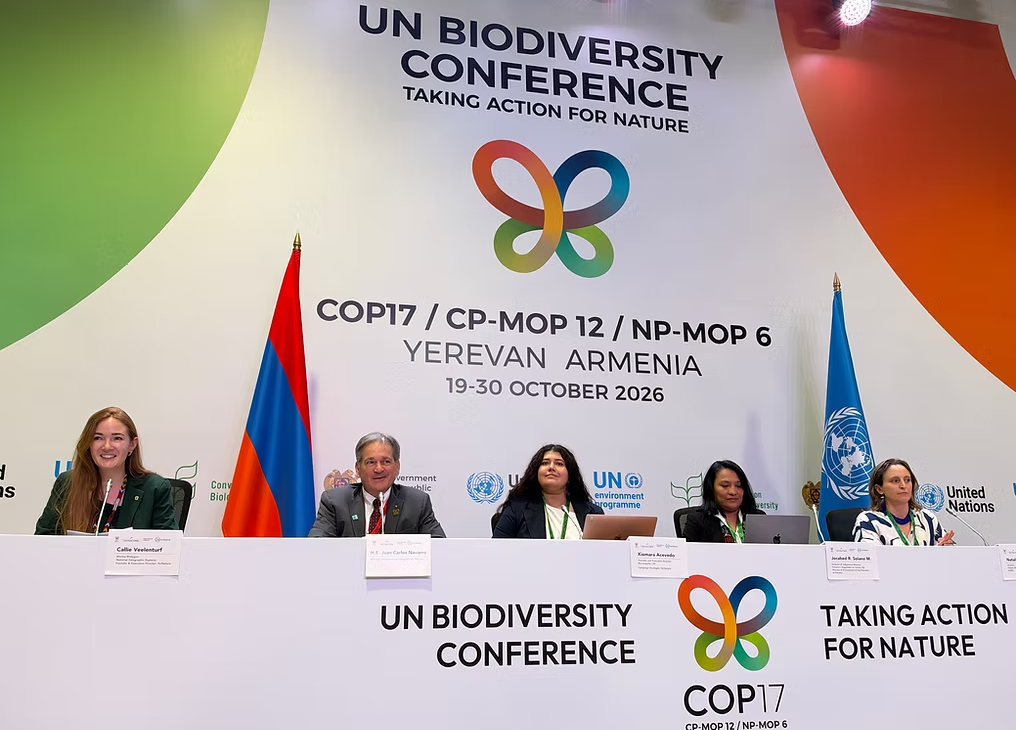
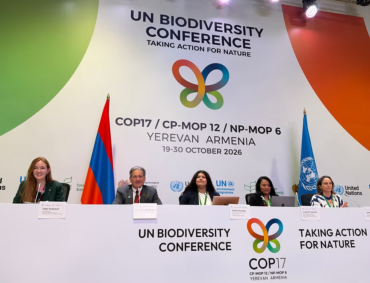
On the margins of the seventeenth meeting of the Conference of the Parties to the Convention on Biological Diversity (CBD COP17), Rights of Nature advocates and civil society representatives announced the launch of the Civil Society Coalition for a Universal Declaration of the Rights of Nature.
The coalition aims to bring together Indigenous Peoples, local communities, environmental organisations, scientists, legal experts and young people to strengthen cooperation and contribute to international discussions on the possible development of a United Nations declaration.
The announcement comes alongside the For Nature Coalition of States, an informal government-led initiative launched at the United Nations General Assembly by Panama, Tonga and Vanuatu. Although the two coalitions operate independently, they seek to contribute complementary perspectives to the growing international conversation.
For Panama’s Minister of Environment, Juan Carlos Navarro, who has been advocating for international recognition of nature’s rights, the initiative reflects the need for countries to confront the environmental crises facing the planet.
“We are destroying every living organism on earth. We are successfully destroying every possible habitat. We are driving the world towards desertification, loss of habitat, climate change and biodiversity loss,” Navarro said.
Panama passed legislation recognising the Rights of Nature in 2022. The country has since taken the proposal to the international level, with President José Raúl Mulino presenting the idea of a universal declaration at the UN General Assembly.
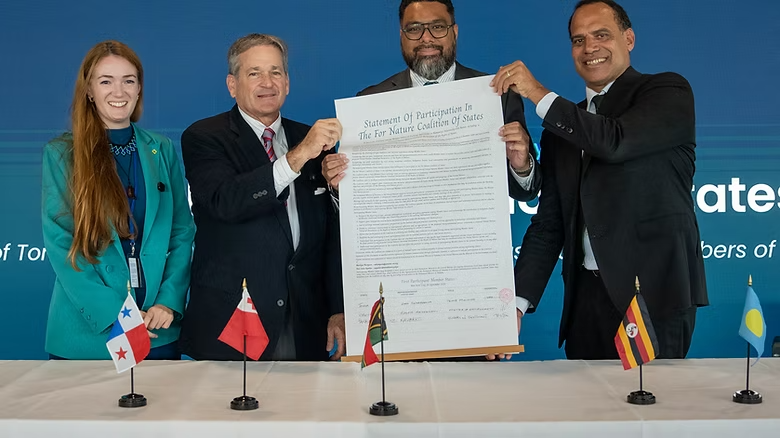
Navarro called on other countries to support the initiative, arguing that recognising nature’s rights is both a responsibility and a necessity for humanity’s survival.
“The Rights of Nature are sacred. It is our obligation to recognise them, and it is our moral imperative to defend them,” he said.
The push comes at a critical moment for global biodiversity action, considering COP17 is hosting the first global review of progress under the Kunming-Montreal Global Biodiversity Framework, adopted in 2022 to halt and reverse biodiversity loss by 2030.
Although nearly 90 per cent of countries have established national biodiversity targets, the UN’s State of Biodiversity Action report indicates that fewer than half of the assessed targets are on track. With four years remaining before the 2030 deadline, questions around implementation and the effectiveness of existing environmental approaches are becoming increasingly important.
For Rights of Nature advocates, addressing biodiversity loss requires more than expanding conservation programmes. It also calls for reconsidering the legal and economic systems that determine how nature is valued and protected.
Xiomara Acevedo Navarro, Campaign Strategist at forNature and Executive Director of Fundación Barranquilla+20, said the movement had been built over decades by Indigenous Peoples, Afro-descendant communities, environmental defenders, lawyers, scholars and grassroots organisations.
She argued that governments cannot advance a universal declaration without meaningful participation from the communities and organisations that have long defended nature.
“The launch of the Coalition of States, led by Panama, creates an important political opportunity to advance international dialogue and cooperation on the Rights of Nature, including the possibility of a Universal Declaration,” she said. “But a process of that significance cannot be built by governments alone.”
The civil society coalition intends to provide a platform for knowledge-sharing, coordinated advocacy and collective contributions to the emerging international process.
Its organisers also see an opportunity to connect the movement with the implementation of the Kunming-Montreal Global Biodiversity Framework. Section C of the Framework recognises diverse value systems, including the Rights of Nature and Rights of Mother Earth for countries that recognise them. Target 19(f) further acknowledges collective action, Mother Earth-centric approaches and non-market approaches in biodiversity conservation and sustainable use.
However, Acevedo Navarro cautioned that recognition in international agreements must translate into practical action through national biodiversity strategies, financing decisions and monitoring processes.
She questioned how countries assess conservation progress, particularly when the contributions of communities and the value of ecosystems cannot always be adequately captured through market-based measures.
Indigenous knowledge at the centre
For Jocabed Solano, a Guna Indigenous leader and Director of Indigenous Memory, the recognition of nature’s rights is not a new concept. It reflects an understanding that Indigenous communities have maintained for generations through their relationship with the land.
Speaking about her Guna community in Panama’s Caribbean islands, Solano described the Earth as a relative rather than an object to be possessed.
“The rights of the land are not new. They are millennial,” she said, explaining that human beings do not grant rights to Mother Earth but derive their own existence from it.
“I do not give you the right, Mother Earth. You give me the right to exist,” she said.
Solano challenged the conventional legal understanding of nature as property, calling for a relationship based on care and coexistence.
“We would like to relate to the land and nature as a relative, as a family. We do not possess it; we are its family. And the family is not negotiated, it is taken care of,” she said.
She further emphasised that a universal declaration must recognise the rights of Indigenous Peoples and the communities that protect ecosystems, including through respect for free, prior and informed consent.
“Recognising the rights of the land is also recognising the rights of those who care for it,” she said.
Natalia Greene, Director of the Global Alliance for the Rights of Nature, said the movement had expanded into 40 countries, inspiring legislation, court decisions and Indigenous-led initiatives.
She pointed to developments including Ecuador’s constitutional recognition of the Rights of Nature and the 2025 advisory opinion of the Inter-American Court of Human Rights on the Climate Emergency and Human Rights as important milestones in the movement.
Greene said the proposed UN declaration presents an opportunity to bring decades of grassroots advocacy into a coordinated international process, but stressed that civil society must have a meaningful role in shaping it.
The Global Alliance intends to draw on its five regional hubs covering Latin America, North America, Africa, Asia-Pacific and Europe to connect organisations, share experiences and strengthen participation.
The proposed declaration remains an emerging initiative, with the For Nature Coalition of States operating voluntarily and each participating country retaining the freedom to determine its own legal approach.
For the civil society coalition, the immediate task is to ensure that Indigenous knowledge, community experiences, scientific evidence and legal expertise inform the discussions.
As COP17 examines the gap between global biodiversity commitments and implementation, the Rights of Nature movement is advancing a broader question: whether protecting the natural world requires not only stronger environmental laws, but a fundamental change in how humanity understands its place within it.
This story was produced as part of the 2026 CBD COP17 Fellowship, operated by Informed Earth in collaboration with Internews’ Earth Journalism Network.
Author Profile

-
Seeker.
Inspire AFRIKA.
Latest entries
 Biodiversity29 October 2026From Indigenous Territories to the UN: The Growing Movement for the Rights of Nature
 Biodiversity28 October 2026From Buffalo to Orangutans, Indigenous Leaders Challenge the Business of Wildlife Offsets
 Biodiversity28 October 2026Biodiversity Commitments Face a Defining Test as Yerevan Talks Enter Final Week
 COP1727 October 2026Caribbean Nations Turn to Regional Cooperation to Advance Ocean’s 30×30 Target