
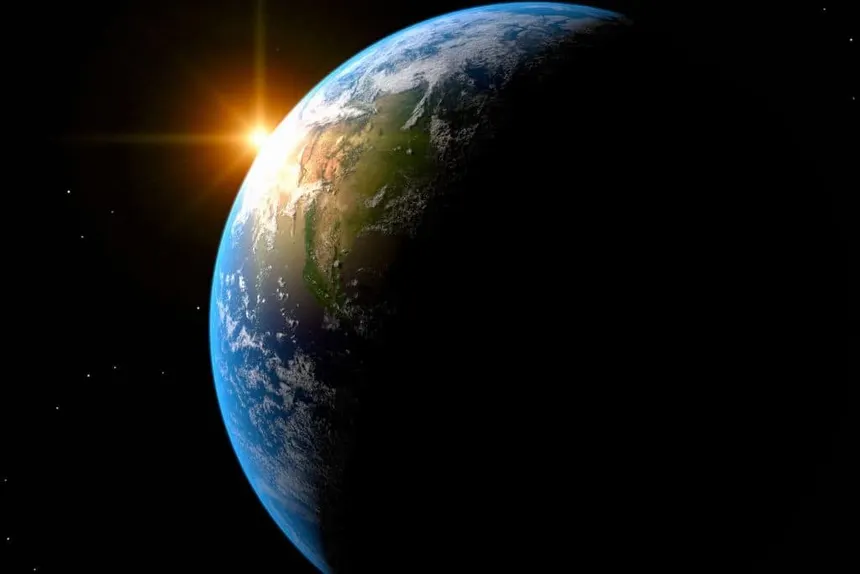
For decades, the hole in the ozone layer over Antarctica has been one of the clearest warnings that human activity can alter the atmosphere and threaten life on Earth.
Now, there is encouraging news.
The Antarctic ozone hole in 2025 was among the smallest recorded in recent decades, further evidence that the protective layer around the planet is recovering after years of damage from ozone-depleting chemicals.
According to the World Meteorological Organization (WMO) Ozone and UV Bulletin released on World Ozone Day on 16 September 2026, the 2025 ozone hole ranked as the fourth or fifth smallest since severe ozone depletion patterns were observed in 1992. For the second consecutive year, both its depth and extent were significantly below the 1990–2010 average.
It is an important environmental success story. But scientists caution that the recovery is not a simple straight line, and the world still needs to keep watching the atmosphere.
“This is an environmental success story. Since 2000, the ozone layer has been recovering, and we can expect full recovery within several decades,” said WMO Secretary-General Celeste Saulo.

A success built on global action
The ozone layer sits high in the stratosphere and plays a vital role in protecting life from harmful ultraviolet radiation from the Sun. About 90 per cent of atmospheric ozone is found in the stratosphere.
The layer is extremely thin. If all the ozone in the atmosphere were brought down to the Earth’s surface, the resulting layer of pure ozone would be only about three millimetres thick.
Yet this thin shield absorbs most of the harmful short-wave ultraviolet radiation that reaches Earth.
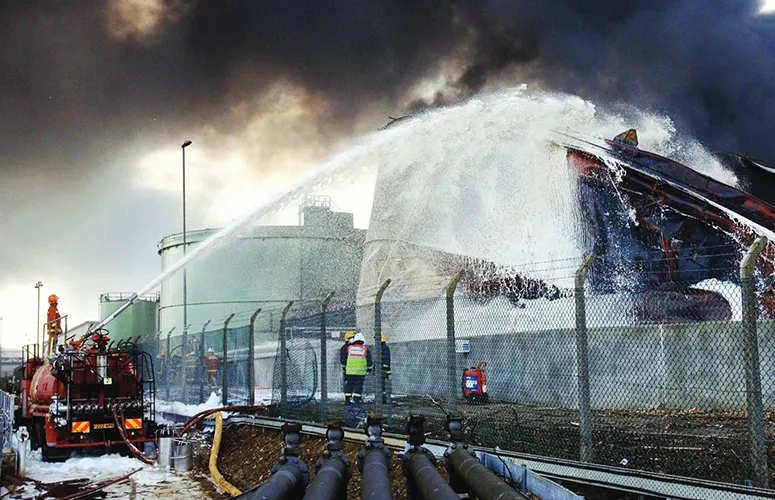
The threat became particularly serious when scientists discovered that chemicals such as chlorofluorocarbons, or CFCs, were destroying ozone in the stratosphere. These chemicals had been widely used in refrigeration, fire-fighting foam and other applications.
The response was the Montreal Protocol on Substances that Deplete the Ozone Layer, adopted in 1987. The agreement established controls that led to the phase-out of many ozone-depleting substances.
The results are now visible in the atmosphere.
WMO says atmospheric measurements over the past four decades have shown significant reductions in the concentrations of controlled ozone-depleting substances. The long-term recovery of the ozone layer is therefore closely linked to the international action taken under the Montreal Protocol.
The ozone story offers an unusual example of an environmental problem where international agreements, scientific research and long-term monitoring have combined to produce measurable progress.
Recovery does not mean the problem has disappeared
The smaller 2025 ozone hole should not, however, be interpreted as the end of the ozone problem.
Ozone levels fluctuate from year to year because atmospheric conditions influence how ozone is transported and depleted.
The WMO says large-scale meteorological transport conditions affect springtime ozone depletion over Antarctica and can also influence ozone variations in the Northern Hemisphere.
In 2025, for example, total column ozone was below average across a large area of the Northern Hemisphere stretching from Greenland and Europe through Central Asia, northern Japan and the Kamchatka Peninsula.
This is why scientists look at long-term trends rather than judging the health of the ozone layer from one year’s measurements.
The overall direction remains positive. But natural atmospheric variability means that some years can still produce significant ozone depletion.
The message is therefore not that the ozone hole has disappeared, but that the long-term recovery trend is becoming increasingly clear.
The UV warning
There is another part of the WMO bulletin that deserves attention.
Even as the ozone layer recovers, ultraviolet radiation remains a public-health concern.
The UV index, now an international health standard for communicating the risk of ultraviolet exposure, was originally developed in the context of concerns about ozone depletion.
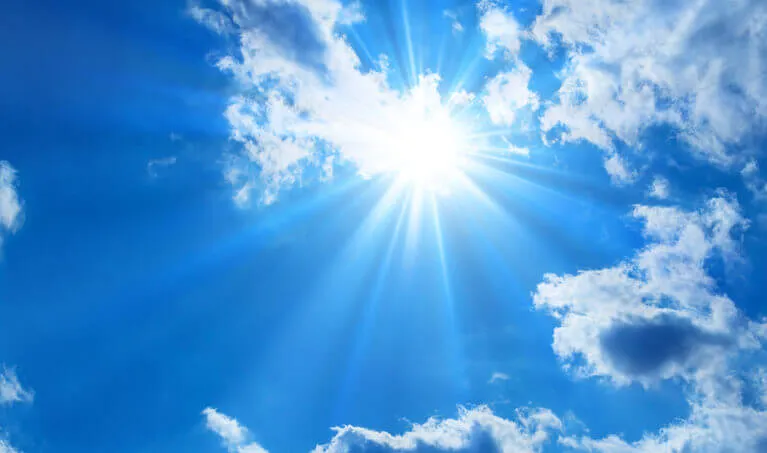
WMO says measurements over recent decades have shown a significant increase in the number of days with high UV index values. In some parts of Europe, UV radiation has increased by as much as 20 per cent since the mid-1990s. The bulletin says this increase has been driven primarily by reductions in cloud cover and increased annual sunshine duration.
The distinction is important.
A recovering ozone layer does not mean that people are automatically protected from high UV exposure.
Greater exposure to ultraviolet radiation increases the risk of skin cancer and other UV-related diseases. This makes public awareness and practical protection measures important, particularly for people who spend long periods outdoors.
For countries such as Kenya, where millions of people work outdoors in agriculture, construction, transport and other sectors, understanding UV exposure is not simply a scientific issue. It is also a question of occupational and public health.
Kigali adds another climate connection
The ozone story also connects directly to the global climate agenda.
The Montreal Protocol was originally designed to address substances that damage the ozone layer. But its evolution has also brought climate considerations into the picture.
The 2016 Kigali Amendment established a phase-down of hydrofluorocarbons, or HFCs.
HFCs do not destroy the ozone layer, but many are extremely powerful greenhouse gases. They are widely used in refrigeration, air conditioning, insulating foams and other cooling technologies.
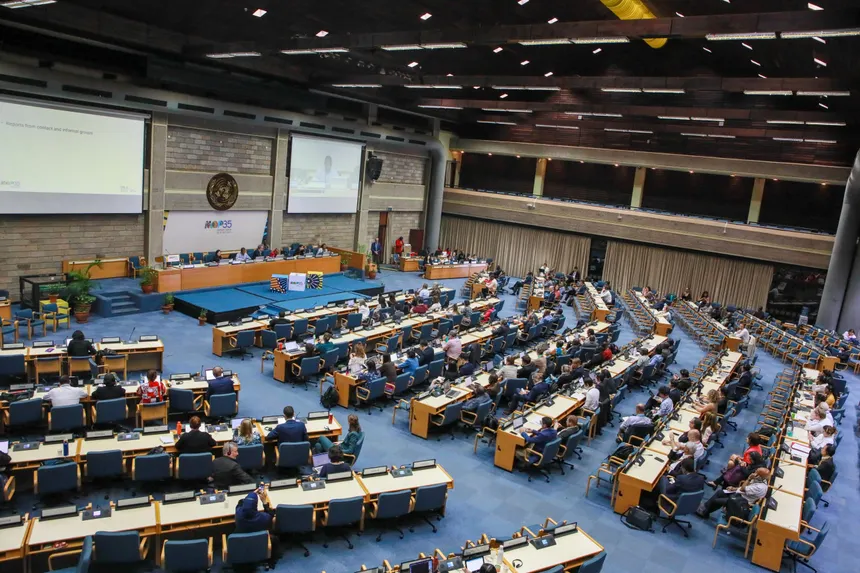
That makes Kigali particularly relevant at a time when demand for cooling is growing in many parts of the world.
For developing countries, including those in Africa, the challenge is increasingly twofold: expanding access to cooling while avoiding technologies that contribute unnecessarily to global warming.
The experience of the Montreal Protocol demonstrates that environmental policy can evolve as science identifies new risks.
The world still needs to keep watch
Perhaps the most important warning in the latest WMO bulletin concerns the systems used to monitor the atmosphere.
Scientists cannot assess ozone recovery without reliable observations.
The WMO Global Atmosphere Watch network provides ground-based measurements needed to understand long-term changes in ozone. Traditionally, this monitoring has relied heavily on instruments such as Dobson and Brewer spectrophotometers.
But the observation network is shrinking.
The number of active stations has declined from around 130 in the early 2000s to about 110 today. WMO says stations are sometimes being closed in areas where observations are already sparse. At the same time, newer array spectrometers have expanded rapidly, but many are focused on air-quality measurements rather than stratospheric ozone monitoring.
That creates a potential vulnerability.
The world may be celebrating the recovery of the ozone layer, but continued monitoring is needed to ensure that unexpected changes are detected early.
There is precedent for why this matters. Atmospheric monitoring has previously helped scientists identify unexpected emissions of ozone-depleting substances, including CFC-11.
Such episodes demonstrate that international environmental agreements cannot simply be signed and forgotten. They require continuing measurement, verification and enforcement.
A lesson beyond ozone
The shrinking Antarctic ozone hole is therefore more than a piece of good environmental news.
It is evidence that international cooperation, scientific research and policy action can address a planetary environmental threat.
But it is also a reminder that environmental recovery takes time.
The chemicals that damaged the ozone layer did not disappear overnight, and the atmosphere continues to respond to changes in their concentrations. At the same time, new pressures and uncertainties require scientists to keep measuring what is happening above us.
The lesson from the ozone layer is perhaps as relevant to the wider climate crisis as it was when the hole was first discovered.
Global environmental agreements can work.
But they work best when countries act together, science continues to guide policy, and the world keeps watching closely enough to know when something begins to change.
Read Also: Rainfall, Warmer Conditions Expected across the Greater Horn of Africa
Author Profile

- How can we learn if we don't question?
Latest entries
 Oceans22 October 2026Seamounts Under Threat: Can Governments Turn Ocean Promises into Protection?
 Events21 October 2026New Guide Links Animal Welfare to Biodiversity and Human Health
 COP1717 October 2026The World Has a Plan to Save Nature. Can It Deliver by 2030?
 Agriculture16 October 2026“There Is No Shortcut”: A Kiambu Grower’s Decade in Mushrooms


