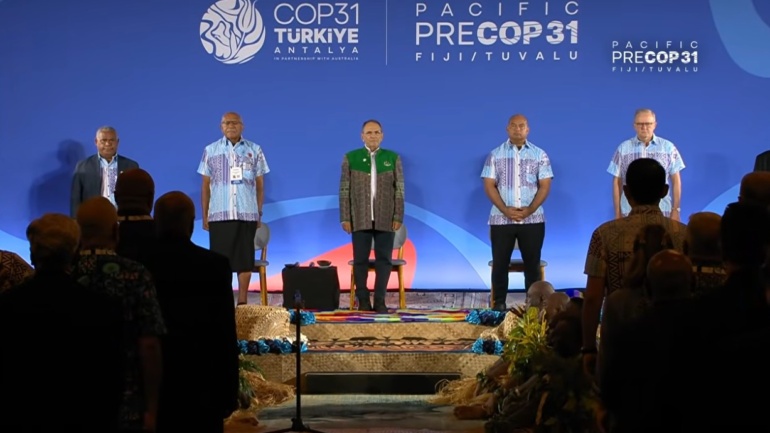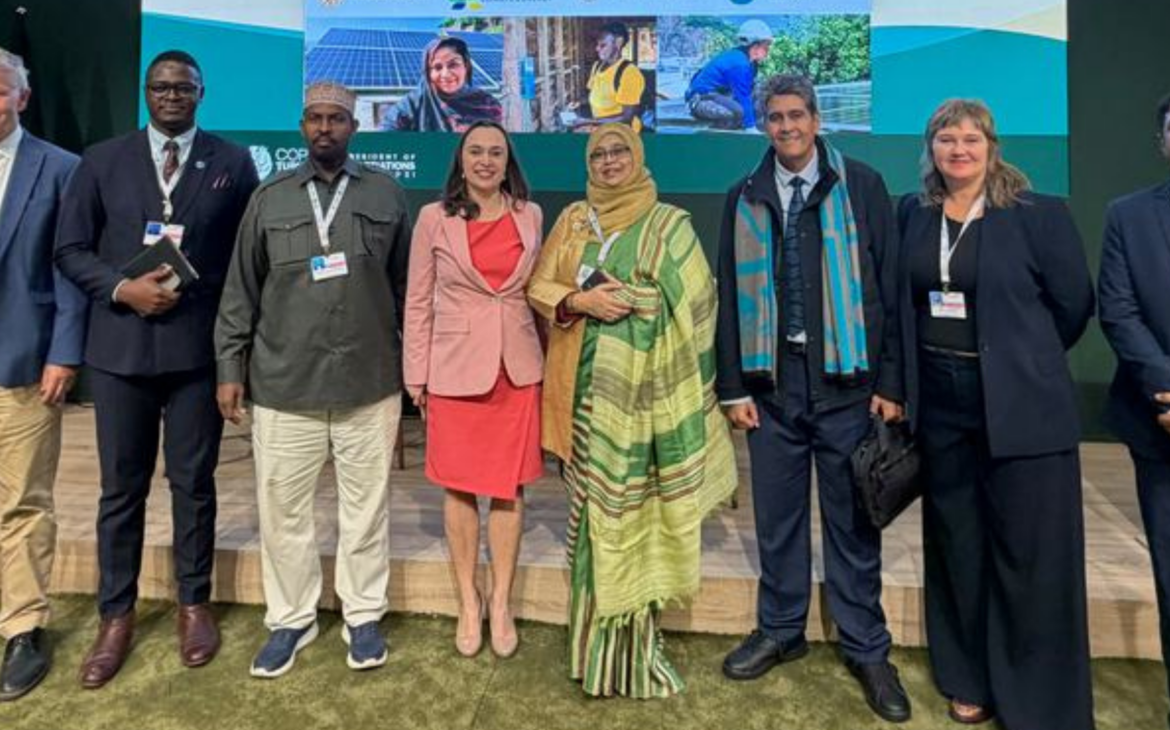
At COP31 in Antalya, leaders from Africa, Asia and the Pacific endorsed a global declaration seeking to expand household solar access, reduce energy costs and accelerate the transition to cleaner electricity.
A global coalition of leaders from Africa, Asia and the Pacific has endorsed a declaration calling for accelerated investment in rooftop solar, as countries seek more affordable, reliable and cleaner alternatives to conventional electricity systems.
The endorsement, announced on November 10 at the ongoing COP31 climate conference in Antalya, Türkiye, builds on Australia’s initial support for the Global Rooftop Solar Declaration. It signals growing interest among emerging economies in decentralised renewable energy as a means of strengthening energy security, expanding electricity access and supporting economic development.
At the centre of the declaration is an ambitious global target to reach 300 million solar-powered homes by 2030, through the 300 Million Solar Homes initiative. The initiative seeks to double the number of households powered by solar energy within four years.
Rather than relying solely on large-scale electricity generation projects, the declaration places households and communities at the centre of the energy transition, recognising the potential of rooftop solar and battery storage to provide electricity closer to where it is consumed.
For countries still working to expand electricity access, particularly across developing regions, decentralised solar could offer an additional pathway to addressing energy gaps while reducing dependence on fossil fuels.

The declaration identifies several barriers that governments must address to accelerate adoption, including complicated installation permits, high upfront costs, inadequate electricity grids and shortages of skilled workers.
It calls for governments to simplify permitting procedures, integrate rooftop power into national energy and climate policies, improve access to affordable financing, modernise electricity grids and expand local workforce training.
These measures are particularly important for households and small businesses that may struggle to meet the initial cost of installing solar systems, even where the long-term financial and environmental benefits are considerable.
In Nigeria, the economic case for expanding decentralised solar is closely linked to electricity access and the need for more reliable power.
Ibrahim A. Shelleng, Senior Special Assistant to the President on Climate Finance and Stakeholder Engagement, said international cooperation would be necessary to ensure that communities across different geographical settings benefit from clean and reliable electricity.
He added that investment in sun-power infrastructure could strengthen economic stability, create local employment opportunities, reduce long-term infrastructure costs and improve energy independence.

Bangladesh also outlined its ambitions for rooftop solar development, with Mirana Mahrukh, Secretary of the Power Division at the Ministry of Power, Energy and Mineral Resources, announcing a target of 5,500 megawatts of rooftop solar capacity by 2030.
The country’s indicative implementation pathway covers approximately 870,000 rooftops. Under a proposed financing arrangement involving 20 per cent domestic resources and 80 per cent international financing, about 174,000 rooftops would be supported through domestic efforts, while the remaining 696,000 would require international cooperation.
Mahrukh called on global partners to support the country through affordable financing, advanced technologies and investment, describing rooftops as potential sources of clean energy, economic opportunity and sustainable development.
The declaration builds on existing distributed solar developments in several participating countries.
According to the announcement, Pakistan has expanded its rooftop power capacity to 51 terawatt-hours (TWh), reportedly tripling its capacity as households and businesses seek protection from fluctuations in fossil fuel prices.
Nigeria, meanwhile, has extended electricity access to 5.3 million people through decentralised solar, while Ethiopia is expanding rural electrification around agricultural hubs. In the Pacific, Palau is pursuing household solar development to reduce dependence on expensive diesel and maintain electricity supply during extreme weather.
For the Global Solar Council, which represents the solar industry internationally, the initiative presents an opportunity to accelerate the expansion of household solar beyond established markets.
Sonia Dunlop, the council’s chief executive, said the world had taken approximately 30 years to reach its first 150 million solar-powered homes. The initiative seeks to add another 150 million within four years.
She called on governments to build on the commitments announced in Antalya, arguing that rooftop power and battery storage could make reliable and affordable electricity more accessible to households.

Heidi Lee Douglas, Chief Executive of Solar Citizens, similarly described rooftop solar backed by batteries as an opportunity to reduce electricity costs, strengthen energy security and expand access to clean electricity.
She said achieving the 300 million household target could empower approximately one billion people as solar citizens by 2030.
However, translating the declaration’s ambitions into measurable progress will depend on how governments address the financial, regulatory and infrastructure barriers that continue to limit household solar adoption.
The declaration therefore calls for more than political endorsements. It emphasises affordable financing, supportive electricity policies, modernised grids and investment in the technical skills needed to sustain the expansion.
For developing economies, international cooperation will be particularly important in mobilising the capital and technology required to make household power accessible beyond wealthier communities.
As COP31 discussions continue, the Global Rooftop Solar Declaration adds to the broader conversation about how countries can accelerate the energy transition while ensuring its benefits reach households, businesses and communities.
The ambition is clear: to make solar power more accessible, affordable and central to the way communities meet their electricity needs by the end of the decade.
Author Profile

-
Seeker.
Inspire AFRIKA.
Latest entries
 Climate12 November 2026Early Warning Systems Reach 70% of Countries, but Africa and Vulnerable Nations Face Gaps
 COP3111 November 2026300 Million Solar Homes by 2030: Global Coalition Pushes Rooftop Solar as Energy Security Solution
 Biodiversity10 November 2026Who Speaks for Indigenous Peoples? Thomas Joseph on the Fight for Land, Rights and Biodiversity
 COP319 November 2026New Zealand Earns Fossil of the Day as Brazil Receives Ray of the Day in COP31