
When you’re a bluesman, you’ll know that art, in its best form, preserves the story of man and our society. From a gifted bard plucking on strings, a painter gracefully stroking his brush on a wall, to the slow, delicate chipping of a sculptor, our imaginations take form and a life of their own, and our stories are told.
“Transformative environmental storytelling,” beamed Rob Barnes, a creative lead at GRID-Arendal, a non-profit environmental organization established by the Norwegian government to support the United Nations Environment Programme (UNEP).
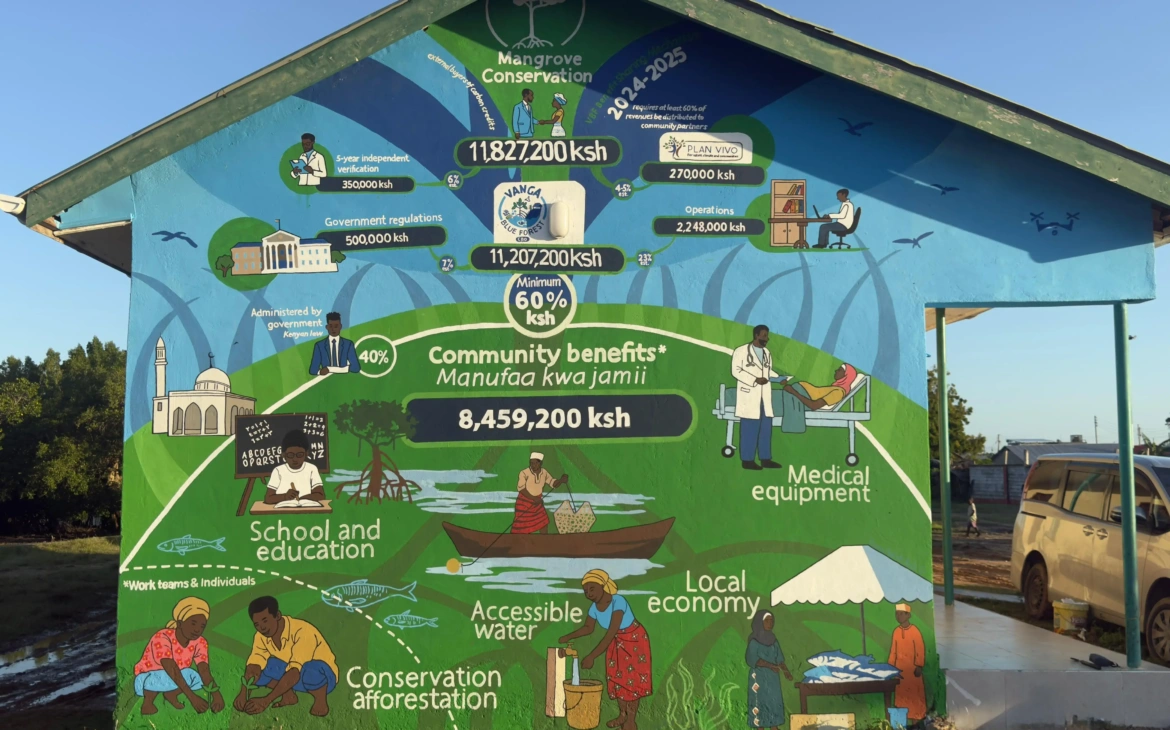
Down in Vanga, that philosophy has taken shape in a community mural that tells the story of blue carbon, how mangrove conservation generates carbon credits and how those benefits flow back to local people.
Blue carbon projects generate carbon credits by protecting coastal ecosystems such as mangroves, with revenues supporting conservation and community development.
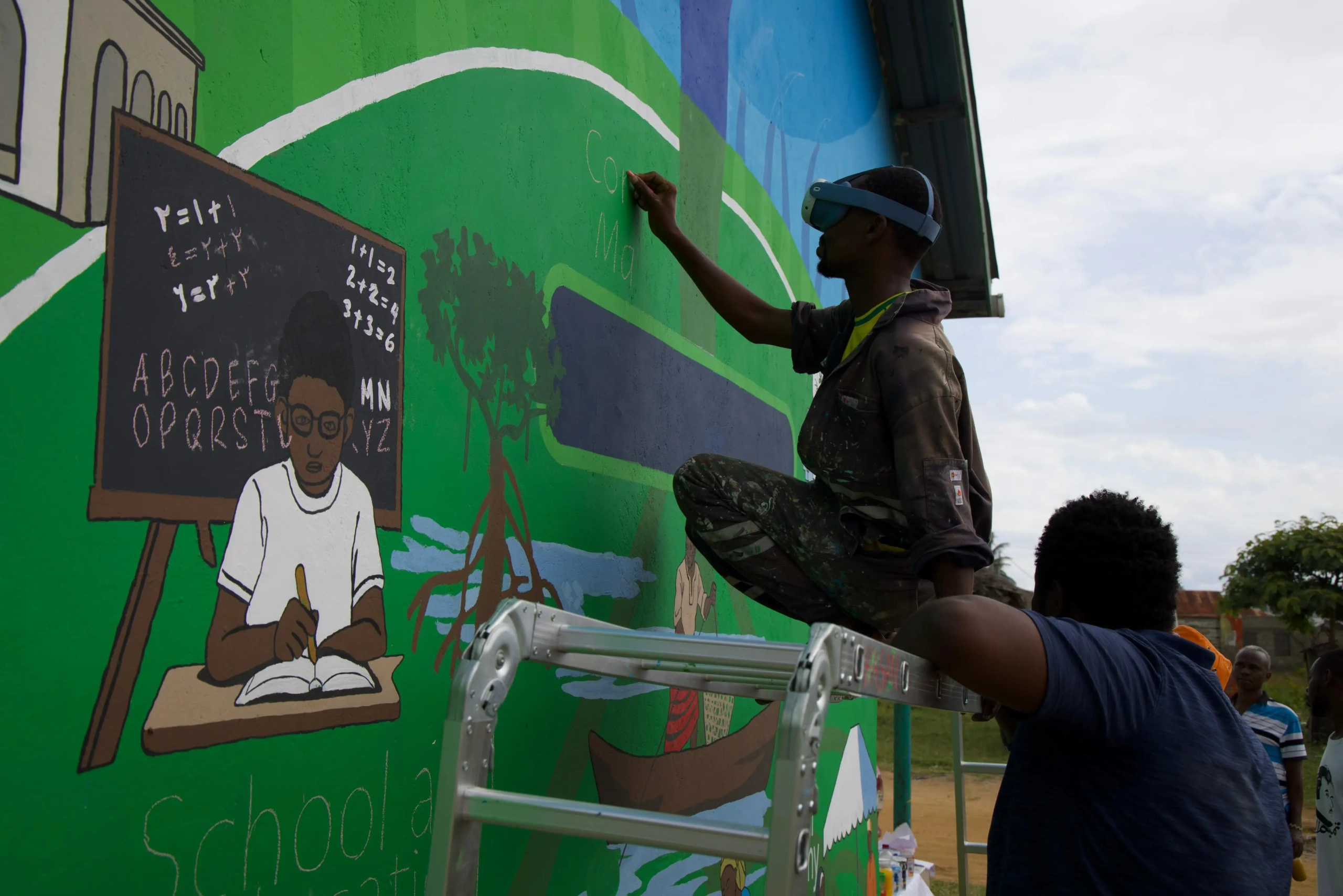
“Well, communication about climate finance must be understandable to everyone,” he explains. Adding that, besides the creativity in expression, the idea wasn’t new at all, but was inspired by a poster hanging on the wall in the community leaders’ office.
Drawing from the lessons of the NIMPA Plus Project in Namibia, where murals had successfully helped communities understand marine protected areas, the project used the same approach to work with the community to paint murals, “to inform and engage with them.”
The community was central to the project’s success. For Rob, the goal was never simply to produce a mural, but to create one that the community genuinely owned.
“We wanted to give them 100% ownership of the mural.”
With pride, he recounts the story of an old fisherman who came over and said, “‘No, no, no, that’s all wrong….’ He took the paintbrush from the artist and started painting how he wanted it.”
“Now it’s there. He painted it, he owns that, and it’s 100% perfect how it should be,” he recalls.
The mural visualizes how carbon credit revenues flow back into the community, promoting transparency, and has also become a community celebration every year.
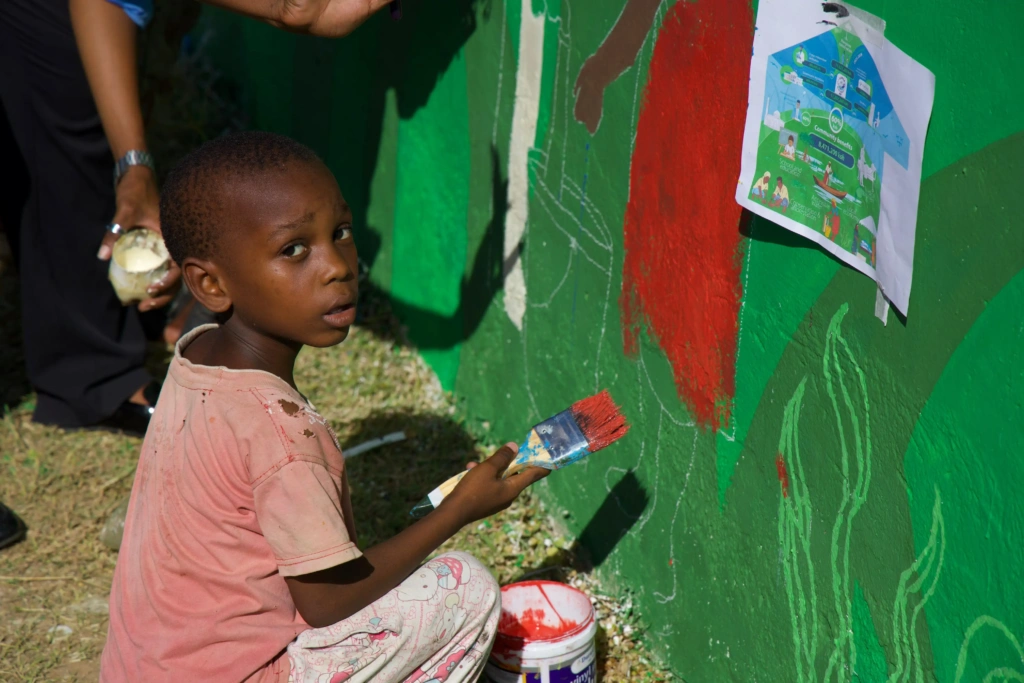
He emphasizes spending time in the community rather than making short visits. “Being with them is a fantastic experience… it feels safe, it’s calm. By the end of the week we had the kids there painting on the wall,” he says.
Moreover, Rob and team learnt that small cultural details matter. One important lesson came from clothing. Scientists approved an illustration of a woman planting mangroves; community members immediately noticed she lacked a traditional head covering.
“Looking at things through a community member’s lens is really, really helpful,” he explains.
And now, the neighboring village wants its own mural as the project is creating demand beyond its original location.
What set the project apart was the marriage of art with technology. Earlier projects relied on grids and stencils, while this project introduced augmented reality (AR) goggles, which the local artists were enthusiastic to try out.
Highlighting that the exchange benefited him as much as the community, he concludes, “I’m going back to Namibia now… so I will be using the things that we’ve learned here.”
The mural in Vanga may depict the flow of carbon revenues, but its greatest achievement is perhaps less visible. It transformed climate communication from something communities are told into something they helped create.


