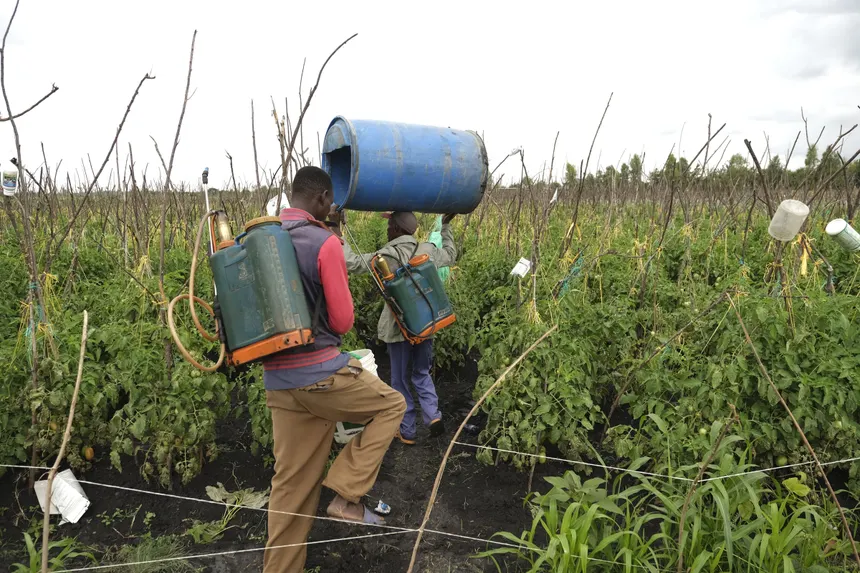
The continued use of highly hazardous pesticides in Kenya raises questions about international trade double standards, occupational safety, and the availability of safer alternatives for farmers.
For nearly two decades, Isaac Drauna has lived in a house he has never seen in Kenya’s Rift Valley. He is blind, a condition he associates with years of exposure to pesticides while working for an agricultural aviation company.
His work involved mixing pesticides for application on large commercial farms. He recalls experiencing breathing difficulties and skin irritation, particularly when cleaning the large chemical tanks used by the company.
“I would come from cleaning those tanks, which were huge, so we’d have to go all the way in. Immediately, I would have problems breathing. I would need to sit down,” he recalls.

When he raised concerns about his health and requested better protective equipment, his complaints were dismissed. On one occasion, he was instructed to climb into a recently emptied pesticide tank for a 45-minute flight back to the work site.
The journey left him violently ill. His eyes became bloodshot, discharge began coming from his mouth, and by the following day, blisters had appeared across his body. He subsequently began losing his sight.
Years later, a Kenyan court found his employer fully responsible for the injuries he suffered at work.
Drauna’s experience illustrates the human cost of occupational pesticide exposure, a concern that extends beyond individual cases to the wider agricultural industry. Across Kenya, pesticides remain an important component of crop production, yet questions persist over the safety of some of the chemicals farmers and agricultural worker’s handle.
According to the Heinrich Böll Foundation, nearly three-quarters of the pesticides used on Kenyan farms contain at least one ingredient classified as highly hazardous. Some of these ingredients have been associated with cancer, respiratory illnesses and neurological and reproductive health concerns.
The issue is further complicated by international trade, particularly the continued export to developing countries of pesticide ingredients that have been prohibited or restricted in the European Union (EU).
Europe’s pesticide double standard
Kenya’s coffee industry offers a revealing example of this contradiction.
According to Coffee Watch, close to 60 per cent of the pesticide ingredients used in coffee production are banned in the EU. However, some of these products continue to be legally marketed in countries such as Kenya, which supplies coffee to European markets.
Silke Bollmohr, an environmental scientist at INKOTA, questions the unequal standards governing pesticide use in different parts of the world.
“It’s a classic double standard where, you know, pesticides are banned in Europe because they’re harmful to farmers and to consumers, but they’re still allowed in other countries, and we say this is like a Kenyan farmer is the same as the life of a European farmer,” she says.
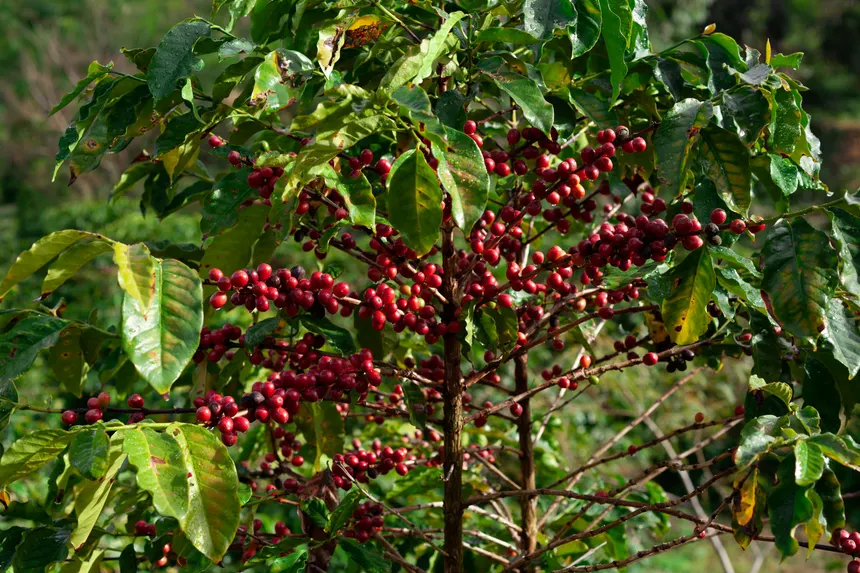
The concern extends beyond the conditions under which coffee is grown to the possibility of pesticide residues entering international food supply chains.
Coffee Watch reports that pesticide residues were detected in nearly one in five green coffee samples analysed, with some containing chemicals banned in the EU.
Bollmohr questions the effectiveness of border controls, noting that not every shipment entering the European market is necessarily subjected to testing. She also challenges assumptions that pesticide residues will break down during coffee roasting and brewing.
Her organization’s findings, she says, indicate that some pesticide residues can remain despite these processing stages.
The findings raise questions about the consistency of food safety standards, particularly when agricultural workers in exporting countries may face exposure to chemicals that are considered unacceptable in importing markets.
The European Commission’s response
The European Commission maintains that its food safety monitoring systems provide safeguards against potentially harmful pesticide residues entering the European market.
Eva Hrncirova, the European Commission’s spokesperson for Health and Food Safety, says the bloc regularly audits its controls and is increasing the number of audits and border checks.
“We do regular audits and checks to increase the number of audits and to increase the number of border checks, so the whole system is very strictly monitored, and this is a guarantee of food safety in the European Union,” she says.
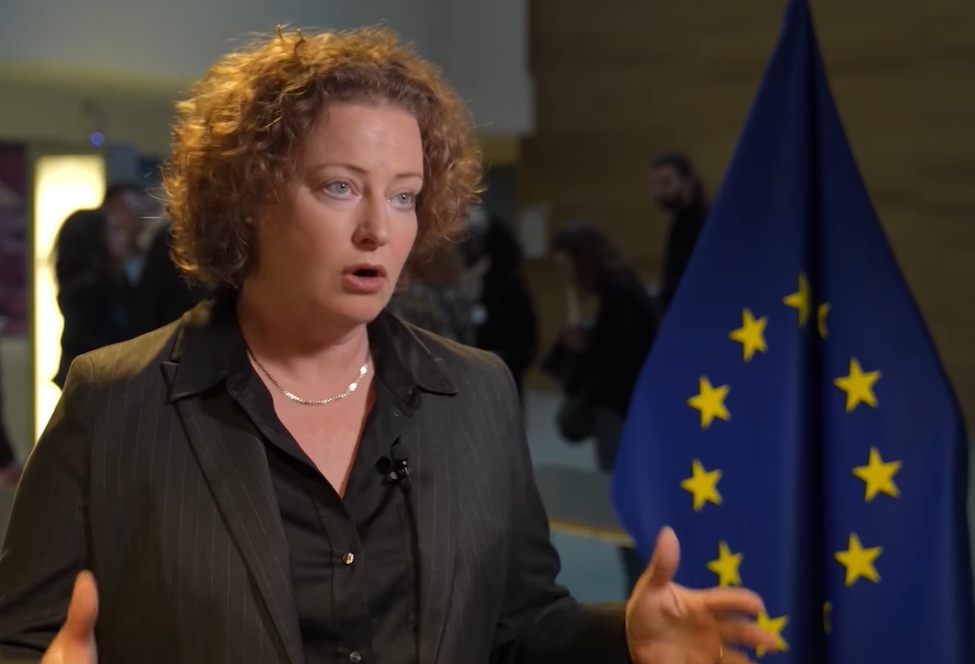
However, the distinction between regulating food entering the European market and regulating the chemicals used by farmers producing that food remains central to the debate.
While European consumers benefit from stringent residue controls, farmers and farm workers in exporting countries may continue handling products that have lost approval in Europe because of health or environmental concerns.
A wider African health and environmental concern
For Elizabeth Atieno-Opolo, a food campaigner with Greenpeace Africa, Kenya’s experience reflects a wider challenge confronting agricultural systems across the continent.
She cites the example of mancozeb, a fungicide used by Kenyan potato farmers to control late blight. The EU ended its approval over concerns about reproductive harm and disruption of the hormonal system.
Yet, in 2024, companies from the Netherlands notified plans to export approximately 53,000 kilogrammes of the product to Kenya.
Atieno-Opolo argues that African governments must question the evidence used to justify allowing the importation and sale of chemicals that have lost approval elsewhere.
“When a pesticide has lost approval somewhere else because of the serious health and environmental concerns around it, what evidence are we really relying on as a continent when it comes to allowing it to be sold here, to be imported and being sold here?” she asks.
The health implications are already evident in research involving Kenyan agricultural workers. Atieno-Opolo cites a survey of approximately 1,500 farmers and farm workers across three Kenyan counties, in which more than a third reported symptoms associated with pesticide exposure.
She also highlights concerns surrounding chlorpyrifos and children’s brain development, as well as mancozeb’s potential reproductive effects.
Beyond human health, highly hazardous pesticides pose risks to biodiversity and ecosystems that underpin agricultural production.
Atieno-Opolo says some chemicals disrupt the nervous systems of aquatic organisms, while others are highly toxic to bees, with even brief exposure potentially causing significant mortality.
Yet, routine monitoring of pollinators, aquatic life and soil organisms remains limited or almost non-existent in some African countries.
She argues that governments must invest in ecological monitoring and make the findings publicly available.
“Our pesticides can look cheap when you count the price on the bottle, but the question is, what is the ecological cost of this? What is it doing to our fish? What is it doing to our insects? What is it doing to our pollinators?” she says.
The concern is that the long-term ecological damage may outlast the pest problem the chemicals were intended to address.
Finding a safer path for farmers
Reducing dependence on highly hazardous pesticides, however, requires more than prohibitions. Farmers need affordable, accessible and reliable alternatives that protect their harvests without compromising their health or the ecosystems on which agriculture depends.
Humphrey, a Kenyan farmer who transitioned to organic production five years ago, offers one example of what this transition can look like.
After watching friends and family struggle with lifestyle diseases, he began questioning the food he consumed and the chemicals used in its production.
Although the transition was initially challenging, he says the economics of farming have improved because he now undertakes most of the farm activities himself, reducing production expenditure.
“Conventionally, I was getting more income and more produce, but the expenditure is way too big, so I was left with nothing. Right now, most of the things I do them myself, so most of the harvest is completely by profit,” he explains.
However, organic farming is not an immediately accessible option for every farmer. The cost of transitioning, access to information and the availability of alternative pest-control products remain significant barriers.
Atieno-Opolo argues that governments must combine restrictions on highly hazardous pesticides with investments in independent agricultural extension services, local field trials and affordable alternatives.
She points to push-pull technology, a companion-cropping approach tested in Kenya, Tanzania and Uganda, as one practical example. An on-farm study cited in the interview found approximately 87 per cent less fall armyworm damage in maize grown using the system compared with maize grown alone.
Such approaches demonstrate that farmers can manage pests through alternatives that do not necessarily depend on conventional chemical applications.
However, their wider adoption requires sustained public investment, farmer training and access to the necessary materials before planting seasons begin.
For Kenya and other African countries, the pesticide debate ultimately presents a question of agricultural priorities. Protecting yields, securing food supplies and sustaining export markets remain essential, but these objectives cannot come at the expense of the people producing the food or the ecosystems supporting production.
As Drauna’s experience demonstrates, the consequences of unsafe pesticide handling can be devastating and long-lasting.
The challenge for governments, regulators, and agricultural stakeholders is to ensure that farmers are not forced to choose between protecting their livelihoods and protecting their health.
Source: DW News
Author Profile

- How can we learn if we don't question?
Latest entries
 Agriculture16 November 2026Europe’s Pesticide Double Standard Puts African Farmers in Harm’s way
 Cities12 November 2026COP31: Why Local Governments Must Have a Bigger Voice in Climate Action
 COP3111 November 2026COP31 Ocean Dialogue Calls for Urgent Shift from Commitments to Action
 COP3110 November 2026COP31: Health Must Become a Central Pillar of Climate Adaptation, Stiell Says