Juba, South Sudan – Authorities in Lafon County of Eastern Equatoria State have confirmed that at least eight people have died from hunger, as a worsening food crisis driven by drought, recurrent flooding, displacement, and poor road infrastructure pushes thousands of residents into desperate conditions.
Speaking during an interview, Lafon County Commissioner Hon. Orupi Davidsaid the humanitarian situation in the county has deteriorated significantly, forcing many families to flee their homes while those who remain struggle to survive on wild fruits and other unsafe food sources.
“The situation in Lafon County remains very severe,” Commissioner David said. “We have now recorded eight people who have died because of hunger, while the remaining population is surviving mainly on wild fruits as a coping mechanism.”
The commissioner said the crisis has triggered widespread displacement across several payams, including Burgilo, Marguna, Pacidi, Kurumi, Lipul, and Upuo, with many residents seeking refuge in neighbouring counties and parts of Central Equatoria State, while others have crossed into refugee camps.
According to the commissioner, three major factors have contributed to the worsening food insecurity.
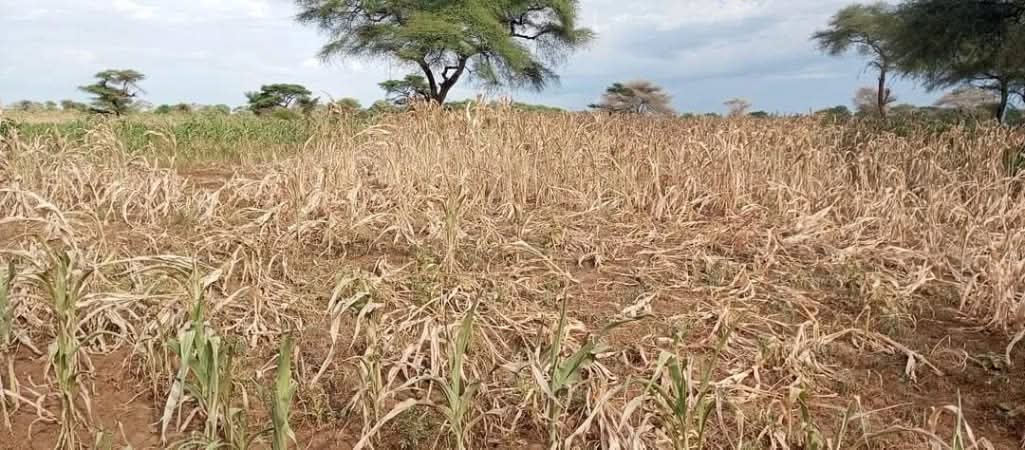
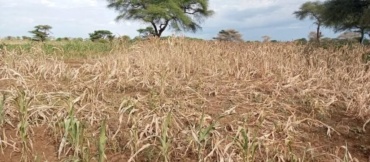
He explained that years of recurrent flooding, including last year’s floods, destroyed crops and significantly reduced agricultural production. The situation has been compounded this year by a prolonged dry spell that has left crops withering in the fields after nearly four months without adequate rainfall.
“In previous years, this would have been the harvesting season when people had enough food,” he said. “But this year, the drought has severely affected crop production, leaving communities with nothing to harvest.”
Poor road conditions have further aggravated the crisis by limiting access for traders transporting food into the county, resulting in severe shortages of essential food commodities.

The county administration has appealed to the Eastern Equatoria State Government and humanitarian organizations for urgent assistance. Commissioner David said assessment teams, including officials from the World Food Programme and other humanitarian partners, have visited the affected communities and confirmed the severity of the situation.
“They conducted assessments, interviewed community members, observed the conditions on the ground, and confirmed that people are dying and surviving on wild fruits,” he said.
Despite the assessments, the commissioner noted that no humanitarian food assistance has yet reached the affected communities.
He called on humanitarian agencies, development partners, and government authorities to urgently provide emergency food assistance and other lifesaving support before the situation worsens.
“We appeal to all humanitarian and development partners to intervene immediately with food and other essential assistance to save our people,” he said. “As the county authority, we do not want to see our people displaced, especially as the country prepares for the December 2026 general elections.”
The commissioner also urged parents and community leaders to prevent children from consuming potentially poisonous wild fruits, warning that hunger has driven many families to eat unsafe foods that pose additional health risks.
“We are raising awareness among communities because some of these wild fruits can be harmful to human life, particularly for young children,” he added.
Khadija Clement, the Deputy Chairperson of the Relief and Rehabilitation Commission (RRC) in Eastern Equatoria State, has warned that the food crisis continues to worsen across the state, leaving many communities in urgent need of humanitarian assistance.
She said three people have so far died in Torit due to hunger, while Greater Kapoeta, Ikwoto County, and the state’s administrative areas are facing severe food shortages as a result of prolonged drought.
Additionally, Hon. Owar Mark Ugude, Chairperson of the Specialized Committee for Quality Assurance, Monitoring and Evaluation of the South Sudan National Youth Council also made an urgent appeal for emergency food assistance to the people of Lafon County in Eastern Equatoria State following a worsening hunger crisis caused by a prolonged dry spell.
According to Owar, at least 15 school-going children have reportedly died from hunger, while elderly residents are also losing their lives.
“Schools have closed, villages have been deserted, and families are reportedly surviving on wild vegetation.”
He called on humanitarian agencies and partners to urgently intervene to save lives.
Local authorities continue to appeal for immediate humanitarian intervention to avert further loss of life as food insecurity intensifies across Lafon County.
The South Sudan Meteorological Service (SSMS) has forecast drier-than-normal conditions and above-average temperatures across much of the country in August 2026.
According to the monthly weather outlook presented by Senior Meteorologist Emmanuel Qurino, most areas have a 40–80 percent probability of receiving below-normal rainfall, with the greatest likelihood in parts of Eastern Equatoria, Western Equatoria, and Western Bahr El Ghazal. Meanwhile, temperatures are expected to remain above normal nationwide, with some areas of Upper Nile, Jonglei, Greater Pibor Administrative Area, and Eastern Equatoria facing an over 80 percent chance of unusually high temperatures.
Author Profile

Latest entries
 Climate18 August 2026GHACOF 74: Regional Leaders Call for Stronger Climate Action as El Niño Risks Loom
 Climate11 August 2026Climate Change Leaves Lake State Farmers Watching Their Crops Wither
 Food6 August 2026Eight Die of Hunger as Food Crisis Deepens in South Sudan’s Lafon County
 Agriculture7 July 2026Double Threat to Food Production: Drought and Suspected Locust Invasion Alarm Farmers in Eastern Equatoria