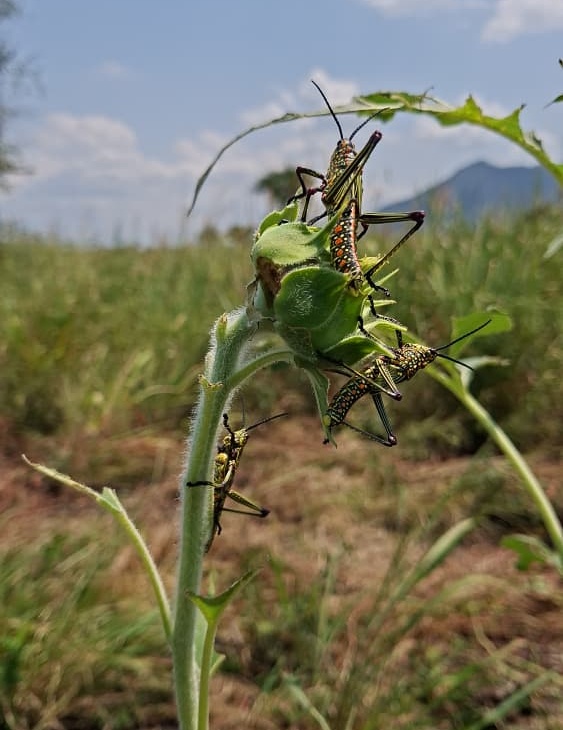
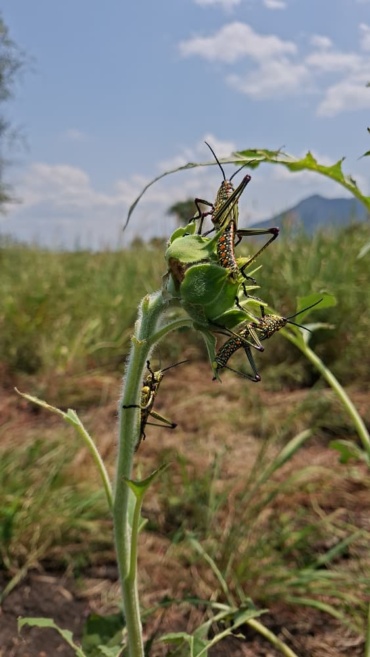
In Ikwoto County, Eastern Equatoria State, South Sudan, farmers are facing a growing agricultural crisis as prolonged drought and a suspected locust invasion after insects believed to be locusts or destructive grasshoppers were discovered attacking sunflower crops at Lokurdek Farm threaten food production and livelihoods, raising fresh concerns over food security in the region.
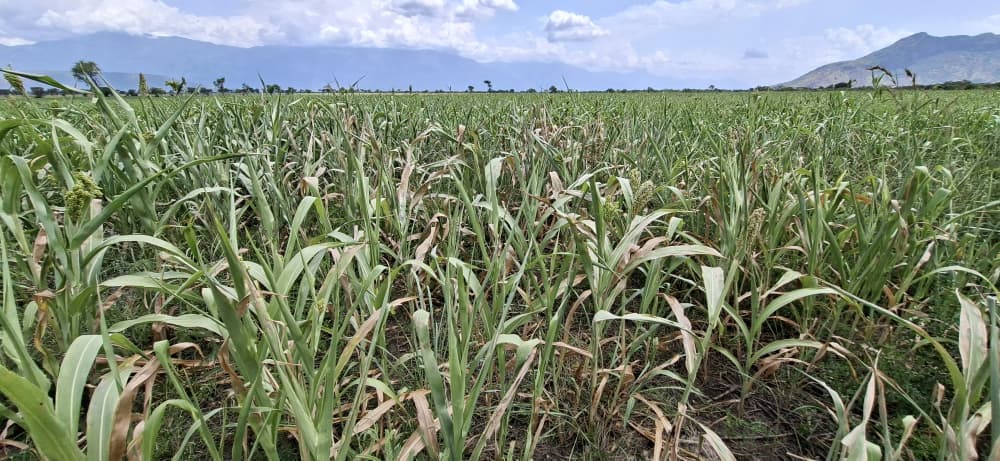
The Manager, Abuna Luke Clement, says farmers are struggling to recover from more than 40 consecutive days without rainfall, which has devastated crop production. Just as they continue to count losses from the prolonged dry spell, the discovery of destructive insects suspected to be locusts has heightened fears that the remaining crops could also be wiped out.
“They had already destroyed the leaves and even the flowering parts of the sunflower,” Abuna explained, noting that although the insects were still few in number, they could multiply rapidly if not contained.
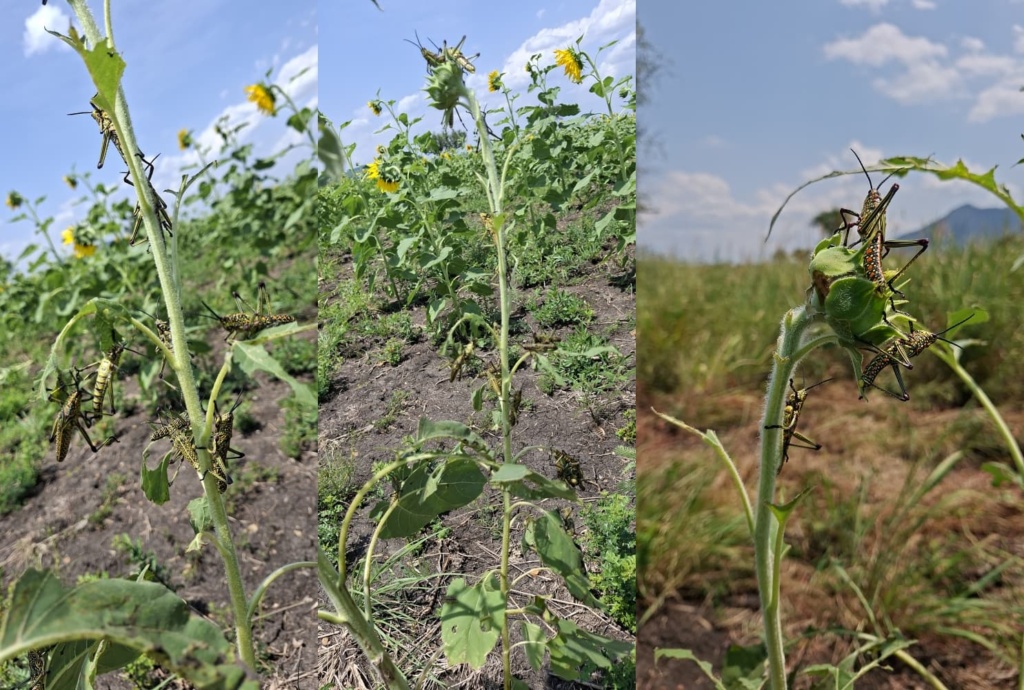
Abuna said the insects were discovered during a routine inspection of the farm around midday, where they had already damaged sunflower leaves and flowers. Although the insects were few in number, he warned that failure to contain them at an early stage could result in a larger infestation capable of destroying farms across the county.
“If they are not controlled at this early stage, their numbers can increase and destroy farms across the county,” he warned.
In response, farm workers immediately sprayed the affected area with a chemical pesticide while cultivating the land bordering the farm and nearby bush, where the insects are believed to have originated. According to Abuna, in dealing with the locust invasion many of the insects died immediately after spraying, but the farm remains on high alert.
The management is now preparing a formal report to the Ikwoto County Director of Agriculture, urging authorities to investigate the suspected locust invasion and support early intervention before the situation escalates into a wider agricultural emergency.
The suspected locust invasion comes at a particularly difficult time for farmers already battling one of the most challenging growing seasons in recent years. Abuna said the prolonged drought destroyed the farm’s maize crop, leaving nothing to harvest.
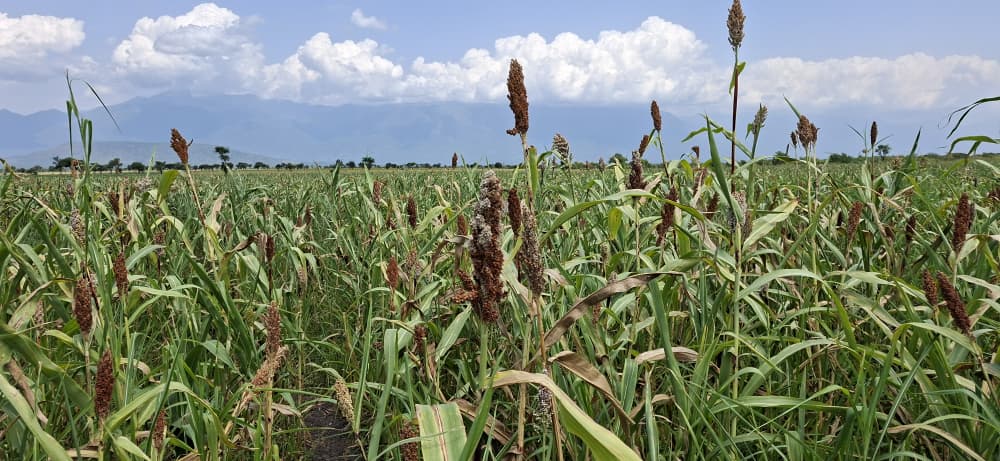
“Sorghum has also been affected, with poor grain development during the flowering stage, while onion seedlings have remained in nursery beds for nearly two months because there has been insufficient rainfall and no nearby water source for irrigation.”
“We lost maize completely because we depend on rain,” Abuna said, adding that the drought has left the farm without a single maize harvest this season.
He noted that only sunflower production has shown some resilience, although parts of the crop have now been affected by the suspected insect attack.
Beyond the immediate crop losses, Abuna highlighted another challenge facing farmers: limited access to reliable weather information. He said farmers currently rely mainly on weather forecasts obtained through social media, but the predictions are not always accurate. Recent forecasts had indicated several consecutive days of rainfall in Ikwoto County, yet no rain was received.
He noted that many farmers are unaware that weather and climate information is produced by South Sudan’s meteorological authorities and said access to timely and reliable forecasts would help farming communities make informed planting decisions and better prepare for changing weather conditions.
Despite the setbacks, Abuna encouraged farmers not to lose hope. He urged them to adapt to increasingly unpredictable weather by planting crop varieties that are better suited to dry conditions and investing in improved seed varieties that mature earlier and are more resilient to climate stress.
As climate variability continues to affect agricultural production across South Sudan, farmers in Ikwoto are calling for stronger government support through early pest surveillance, improved access to climate information, and practical interventions that will help communities protect their crops and strengthen food security before future shocks become even more severe.
When contacted for comment, Eastern Equatoria State Minister of Agriculture Ocholla Bosco Oringa said he was not aware of the reported presence of insects suspected to be locusts or destructive grasshoppers in Ikwoto County. He said he would follow up with the relevant authorities on the ground to verify the reports and assess the situation.
Author Profile

Latest entries
 Climate18 August 2026GHACOF 74: Regional Leaders Call for Stronger Climate Action as El Niño Risks Loom
 Climate11 August 2026Climate Change Leaves Lake State Farmers Watching Their Crops Wither
 Food6 August 2026Eight Die of Hunger as Food Crisis Deepens in South Sudan’s Lafon County
 Agriculture7 July 2026Double Threat to Food Production: Drought and Suspected Locust Invasion Alarm Farmers in Eastern Equatoria