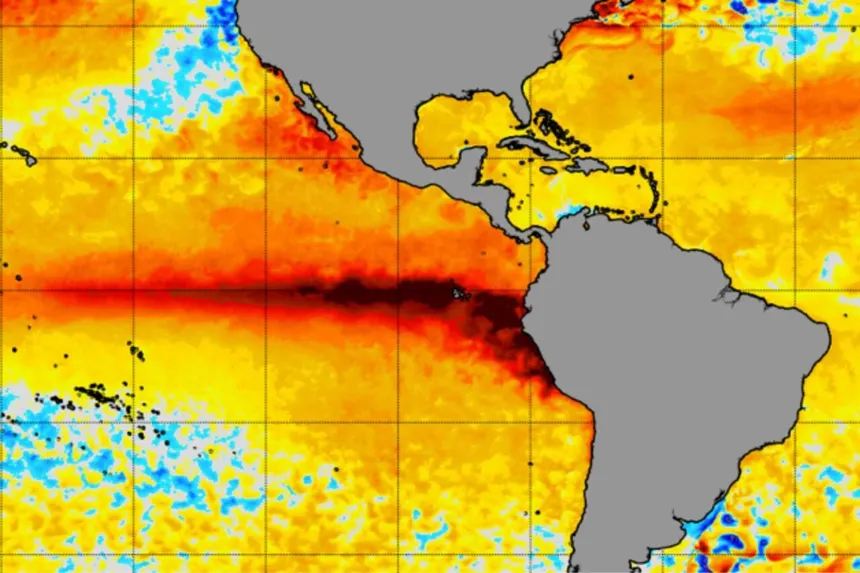
This summer’s heatwaves scorched cities, wildfires raged across continents, and floods swept away homes and livelihoods.
According to a new report from the UN Environment Programme (UNEP), these are previews of what’s coming, because global temperature rise is now set to cross the critical 1.5°C threshold, likely within the next few years.
But the report, titled Limiting Overshoot, insists this isn’t game over. It lays out what it calls an “overshoot, peak, and decline” pathway: the world will exceed 1.5°C, but how high temperatures peak, how long they stay there, and whether they can be brought back down again is still within our control.
UN Secretary-General António Guterres put the challenge starkly, calling for what he described as an “overshoot of ambition” to keep the breach as brief and shallow as possible.
Why every fraction of a degree counts
The most optimistic scenario in the report has temperatures peaking at 1.8°C, already well above the Paris Agreement’s target.
Most scenarios predict worse. Beyond 1.5°C, risks compound with every additional fraction of a degree: fiercer extreme weather, collapsing ecosystems, and the submersion of small island nations and low-lying coastal cities. Human health, food security, water supplies, and economies all take direct hits.
Most alarming is the growing risk of irreversible tipping points, the destabilization of major ice sheets, the degradation of the Amazon rainforest, and disruption to the ocean current system that helps regulate the planet’s climate. Some of these shifts could happen abruptly rather than gradually, giving the world little time to react.
UNEP Executive Director Inger Andersen didn’t mince words, saying, “There are no good outcomes if we remain above 1.5°C.” She argues the moment calls for doubling down, cutting emissions, building resilience, and shrinking the overshoot window as much as possible.
What it will take
Getting back below 1.5°C means two things happening at once: aggressive, immediate cuts to greenhouse gases, including methane, on the path to net-zero, and eventually going further into net-negative territory.
That second part depends heavily on carbon dioxide removal (CDR), whether through afforestation or other methods, to actively pull carbon back out of the atmosphere.
The report is careful to note that CDR is a supplement, not a substitute, for cutting emissions in the first place, and it only works if peak warming stays well below 2°C, with strong governance to keep the process credible and equitable.
Adaptation matters just as much. Communities, economies, and infrastructure need to build resilience to impacts that are already locked in, even as there are real limits to how much adaptation can achieve if peak temperatures aren’t kept in check.
A test for COP31
The report lands as attention turns to COP31, where the pathway described could move from paper to policy. Australia’s Chris Bowen, President of Negotiations for the summit, framed the goal as delivering “a practical, solutions-focused COP.”
COP31 President-Designate Murat Kurum was equally direct about what’s at stake, warning that delay only deepens the danger: “every year spent in overshoot increases climate risks.”
The long shadow
Even in the best case, the report highlights that some damage is already done. Years of delay mean that even a successful return below 1.5°C won’t undo everything; some communities will still face relocation, livelihoods will still be upended, and societies will have to grapple with losses that can’t be reversed.
That raises hard questions about justice and fairness: who bears the cost, and who is responsible for fixing it?
Author Profile

- How can we learn if we don't question?
Latest entries
 Oceans22 October 2026Seamounts Under Threat: Can Governments Turn Ocean Promises into Protection?
 Events21 October 2026New Guide Links Animal Welfare to Biodiversity and Human Health
 COP1717 October 2026The World Has a Plan to Save Nature. Can It Deliver by 2030?
 Agriculture16 October 2026“There Is No Shortcut”: A Kiambu Grower’s Decade in Mushrooms