As countries work towards the global goal of conserving 30% of land and sea by 2030, new findings highlight pressure on critical biodiversity sites and the need to recognise Indigenous Peoples’ rights.
Nineteen per cent of Key Biodiversity Areas (KBAs) in tropical forest regions overlap with mining concessions, according to findings presented at the 17th Conference of the Parties (COP17) to the UN Convention on Biological Diversity (CBD) in Yerevan, Armenia.
The finding means that roughly one in five identified sites of global biodiversity importance intersects with areas allocated for mining, raising concerns about potential conflicts between extractive industries and conservation.
Dr Andrew Plumptre of the KBA Secretariat, who presented the findings, cautioned that the figure could be an underestimate because some important biodiversity sites remain unidentified.
“There are likely KBAs out there that we haven’t identified,” he told journalists, calling on countries to establish national KBA coordination groups. About 50 countries have already established such groups.
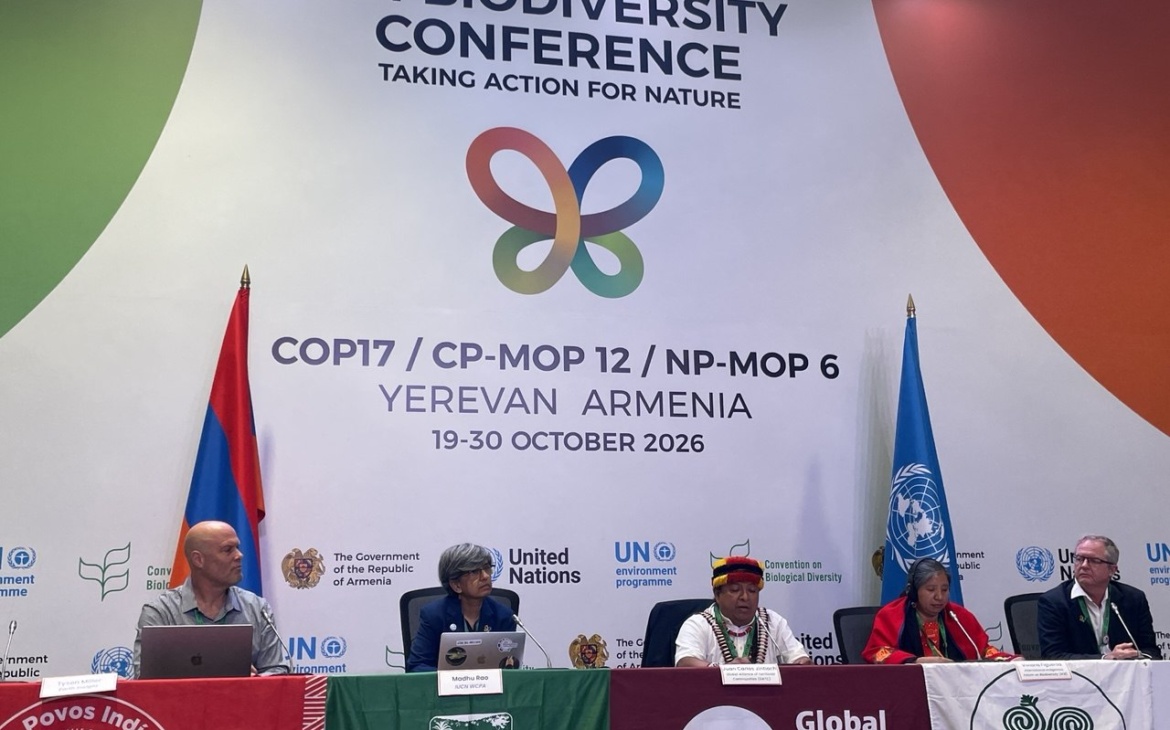
The findings were presented during a press conference titled Safeguarding the World’s Most Biodiverse Areas: Industrial Threats and Solutions at the 30×30 Halfway Point. Speakers from the International Union for Conservation of Nature’s World Commission on Protected Areas (IUCN WCPA), the Global Alliance of Territorial Communities, the International Indigenous Forum on Biodiversity, Earth Insight and the KBA partnership warned that achieving global biodiversity targets requires more than expanding protected areas. It also demands effective conservation and respect for the rights of Indigenous Peoples and local communities.
Key Biodiversity Areas are sites identified for their global importance to threatened species, significant wildlife populations and ecosystems. They inform biodiversity monitoring under the Sustainable Development Goals and the Kunming-Montreal Global Biodiversity Framework, including Target 3, which calls for conserving at least 30% of the world’s land, inland waters, coastal areas and oceans by 2030.
The overlap with mining concessions does not necessarily mean that extraction is taking place at every affected site. However, it highlights potential risks to ecologically important areas where development and conservation priorities intersect.
Conservation Must Recognise Territorial Rights
Madhu Rao of IUCN WCPA said countries were making progress in expanding protected and conserved areas but remained collectively off track to achieve Target 3 by 2030. Beyond increasing coverage, she stressed the need to improve conservation effectiveness through biodiversity-inclusive spatial planning and rights-based approaches.
She pointed to examples in Canada, Ghana, and Colombia, emphasising the importance of placing Indigenous Peoples and local communities at the centre of conservation decisions.
For Juan Carlos Jintiach of the Global Alliance of Territorial Communities, these debates reflect the growing pressure on Indigenous territories from mining, oil and gas extraction, logging, and agribusiness. He said concessions are sometimes granted without proper community consent, while roads and pollution threaten territories, including those inhabited by Indigenous Peoples living in voluntary isolation.
Jintiach also warned that the energy transition could create new extraction pressures as demand grows for minerals used in clean energy technologies. He argued that moving away from fossil fuels must not reproduce the same extractive practices that have historically marginalised Indigenous communities.
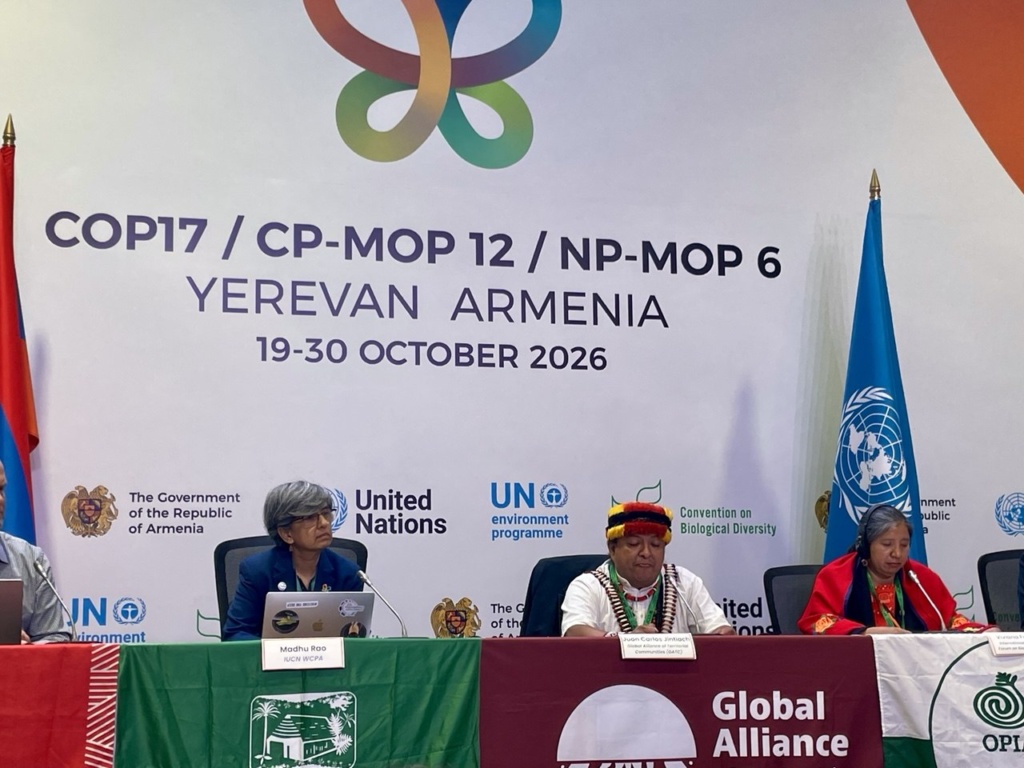
He called for secure land tenure, recognition of Indigenous territorial governance, direct access to conservation funding, and an end to new oil and mining concessions in Indigenous territories. He also cited Colombia’s approach to restricting new extraction in its Amazon region as an example of the policy choices governments can make.
Viviana Figueroa of the International Indigenous Forum on Biodiversity raised concerns about how Indigenous conservation efforts are recognised. She argued that Indigenous Peoples conserve biodiversity as part of their cultures, identities, and relationships with their territories, rather than simply to meet government targets.
Figueroa cautioned against requiring communities to adopt state-defined conservation categories, including protected areas and other effective area-based conservation measures (OECMs), before their stewardship is recognised. She described cases in which communities discovered that their lands had been designated as protected areas or OECMs without their consent.
The political challenges facing conservation in Latin America also featured in the discussion, particularly tensions between territorial rights and extractive development. The Indigenous representatives urged governments to implement existing rights protections and support the communities already conserving biodiversity.
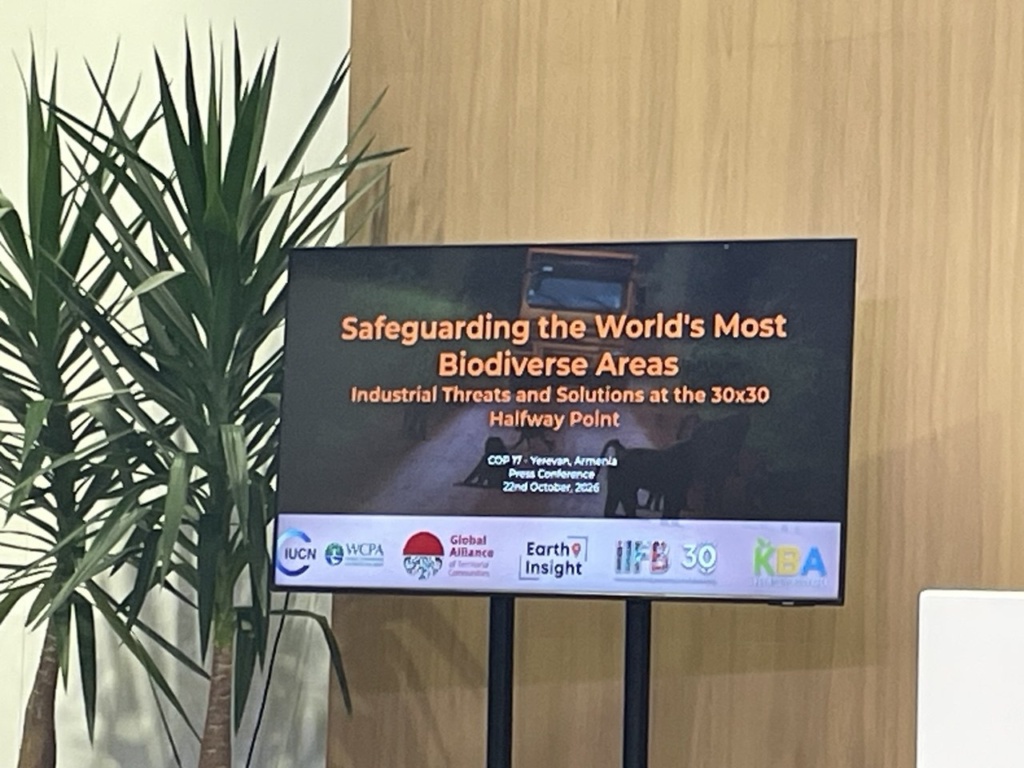
Plumptre acknowledged that balancing economic development and conservation remains difficult in many developing countries. He argued that some areas must remain off-limits to extraction, while biodiversity-inclusive spatial planning should guide development elsewhere.
As the 2030 deadline approaches, the findings presented at COP17 emphasise the need to identify critical biodiversity sites, strengthen conservation measures, and recognise the rights of the people who protect them.
With mining concessions overlapping one in five identified Key Biodiversity Areas in tropical forest regions, the challenge is not simply to expand conservation coverage, but to ensure that development does not undermine the ecological value of these sites.
For the speakers at the press conference, achieving the 30×30 target will depend in part on whether governments secure Indigenous territorial rights, respect community consent, and give Indigenous Peoples a meaningful role in determining the future of their lands.
This story was produced as part of the 2026 CBD COP17 Fellowship, operated by Informed Earth in collaboration with Internews’ Earth Journalism Network.
Author Profile

-
Seeker.
Inspire AFRIKA.
Latest entries
 Biodiversity22 October 2026One in Five Tropical Biodiversity Sites Overlapped by Mining Concessions, COP17 Report Finds
 Biodiversity21 October 2026COP17 Opens in Armenia with Global Biodiversity Progress Under Scrutiny
 Biodiversity19 October 2026Yerevan Declaration Sets Tone for COP17 as World Leaders Demand Real Action on Biodiversity
 Changemakers19 October 2026How Earth Wise Storage Plans to Expand Smallholder Poultry Farming in Rwanda