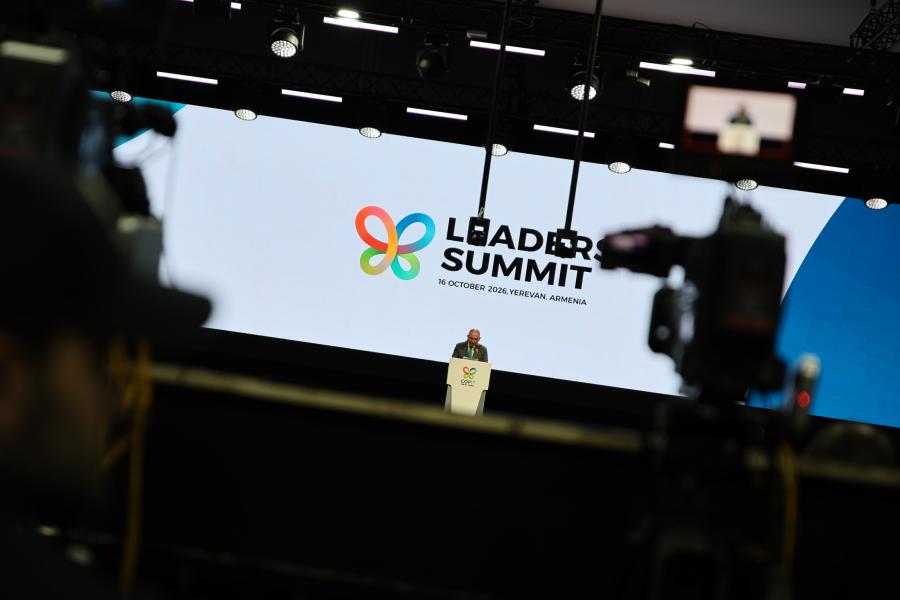
World leaders have adopted the Yerevan Declaration: Taking Action for Nature, renewing political commitments to halt and reverse biodiversity loss by 2030 while calling for accelerated implementation of global conservation targets.
Adopted at the Leaders for Nature Summit ahead of the 17th Conference of the Parties (COP 17) to the Convention on Biological Diversity (CBD), the declaration reaffirms the Kunming-Montreal Global Biodiversity Framework (GBF), a blueprint setting out 23 targets to guide global conservation action by 2030.
However, global progress remains insufficient, underscoring an urgent need for stronger national policies, increased financing, and enhanced international cooperation.
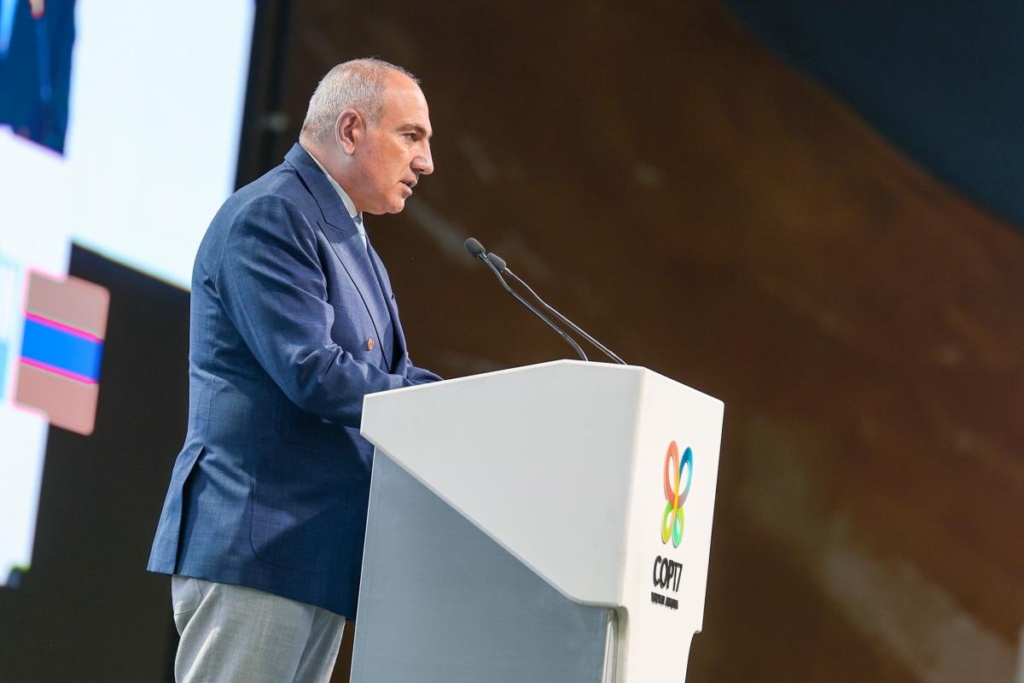
Armenian Prime Minister Nikol Pashinyan emphasized the necessity of moving beyond pledges and focusing strictly on execution. “Our task now is not to formulate new promises. Our task is to translate the commitments we have already made into real action,” Pashinyan stated at the summit.
His remarks highlight the central challenge facing the global biodiversity agenda: turning high-level political commitments into measurable outcomes for nature and the communities dependent on it.
Yerevan Declaration Looks to Measurable Action
It calls on governments to strengthen national implementation through coordinated policies, effective environmental governance and sustained political leadership. It also emphasises the need to conserve, restore and sustainably manage terrestrial, freshwater, coastal and marine ecosystems.
Beyond conservation, the Yerevan declaration urges countries to integrate biodiversity into economic sectors and public policies, recognising that decisions on production, consumption and development can either protect or undermine ecosystems.
The coming global review of progress under the GBF will be a critical test of these commitments. It is expected to help countries assess collective progress, identify persistent gaps and determine where action must accelerate to meet the framework’s 23 targets.
CBD Executive Secretary Astrid Schomaker said the participation of thousands of people in Armenia demonstrated that multilateral cooperation remained possible despite geopolitical tensions and an accelerating planetary crisis.
She described the upcoming global review as pivotal and called on the COP 17 Presidency to provide the leadership needed to accelerate implementation.
“The global review of progress that will take place in the coming days will be pivotal. We look forward to seeing the Presidency of COP 17 exercise its leadership and vision to chart a pathway for swifter and more impactful biodiversity action around the globe: the Yerevan Pathway,” Schomaker said.
Her remarks place the review at the centre of COP 17’s work, with the proposed Yerevan Pathway offering an opportunity to translate political commitments into faster and more effective biodiversity action.

Financing Remains a Major Test
The Yerevan declaration places renewed emphasis on mobilising adequate, predictable, timely and accessible public and private finance for biodiversity.
Financing remains a critical challenge, particularly for developing countries seeking to protect ecosystems while addressing competing development priorities. The declaration calls for stronger international partnerships, capacity-building, scientific and technical cooperation, and technology transfer to support implementation.
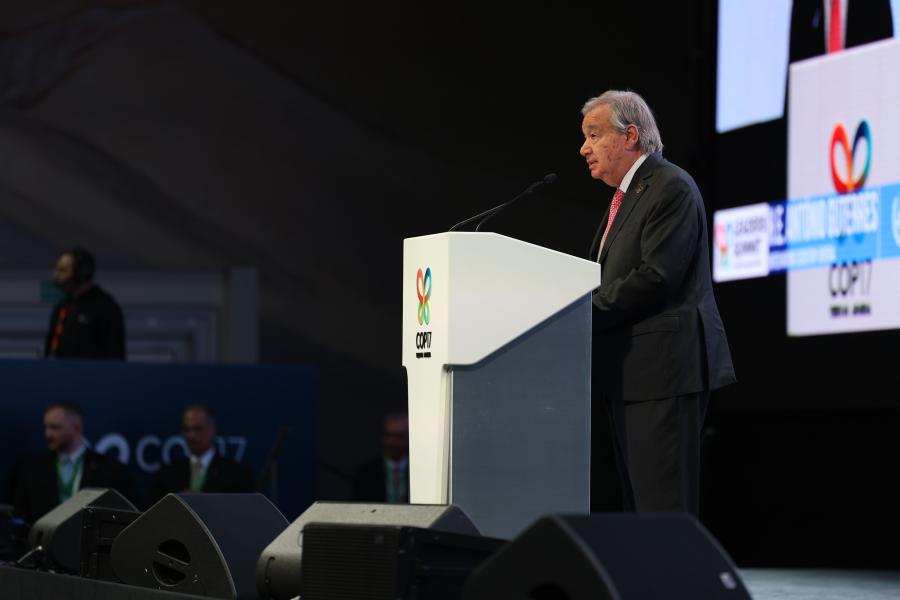
UN Secretary-General António Guterres highlighted the imbalance between investment in nature protection and spending that contributes to environmental damage.
“For every dollar invested in protecting nature, $30 are spent destroying it,” Guterres said at the summit.
His remarks underline the need to align financial flows with biodiversity goals and redirect support away from activities that harm ecosystems.
The Yerevan declaration also emphasises the participation of Indigenous Peoples and local communities, women, young people, civil society, academia and the business and finance sectors.
Their involvement matters because conservation outcomes often depend on communities managing and protecting natural resources. Meaningful participation must therefore be accompanied by the support and resources needed to sustain their contributions.
A Political Signal Ahead of COP 17
Although the declaration reinforces global political support for biodiversity action, it does not by itself resolve the gaps in financing or implementation. Its impact will depend on how governments translate its commitments into national policies, budgets and practical conservation measures.
The declaration calls for its political vision to inform the negotiations and outcomes of COP 17, as countries assess progress and consider how to strengthen implementation before 2030.
As the global review approaches, the proposed Yerevan Pathway offers an opportunity to give renewed direction to international biodiversity efforts. Whether it delivers meaningful progress will depend on the willingness of countries to honour their commitments and turn political ambition into action for nature and people.
ALSO READ: https://climate.co.ke/the-world-has-a-plan-to-save-nature-can-it-deliver-by-2030/
Author Profile

-
Seeker.
Inspire AFRIKA.
Latest entries
 COP319 November 2026New Zealand Earns Fossil of the Day as Brazil Receives Ray of the Day in COP31
 Climate9 November 2026The Ocean Has a Fever, and It Is About to Exhale
 COP319 November 2026COP31: Africa Must Power Its Farms to Secure Food Sovereignty
 COP318 November 2026One Shared Calendar: What COP31 Is and What It Hopes to Achieve