
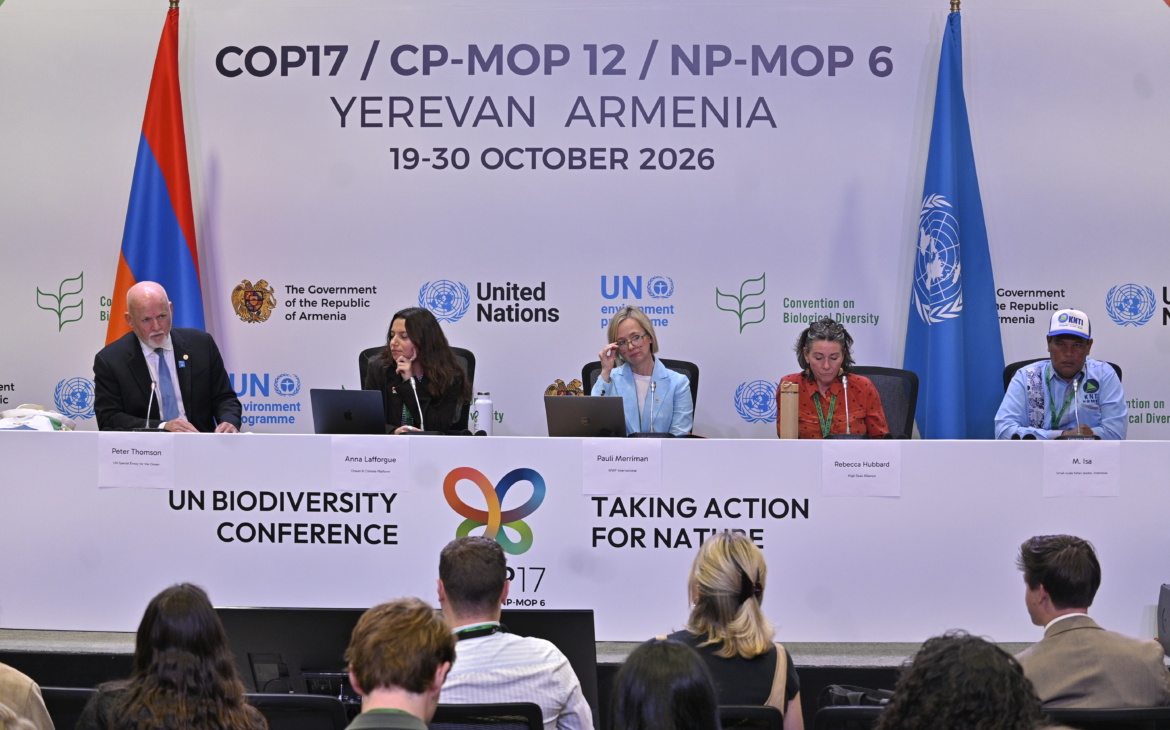
Speakers at a press briefing in Yerevan warn that the 30 by 30 target remains far from being reached, as financing gaps, unresolved negotiations, and the realities facing coastal communities expose the distance between global promises and action.
The ocean is gaining visibility in global biodiversity negotiations; notably, progress in protecting marine ecosystems remains far behind governments’ 2030 ambitions, speakers at the briefing during the 17th Conference of the Parties to the Convention on Biological Diversity (CBD COP17) in Yerevan warned.
With the 2030 deadline approaching, the gap between designated protected areas and those effectively conserved, alongside persistent financing shortages, threatens the global commitment to protect and conserve at least 30% of the world’s land and ocean, known as the 30 by 30 target.
For UN Secretary-General’s Special Envoy for the Ocean Peter Thomson, the growing attention is significant, particularly as landlocked Armenia hosts a conference whose high-level segment opens with an “ocean dinner”.
“It’s great that the ocean is being brought to the centre of these international meetings. Finally, it’s taken a long time to get there,” Thomson said.
He argued that the ocean deserves a central place in biodiversity discussions because of the life it supports and its influence on the planet’s natural systems.
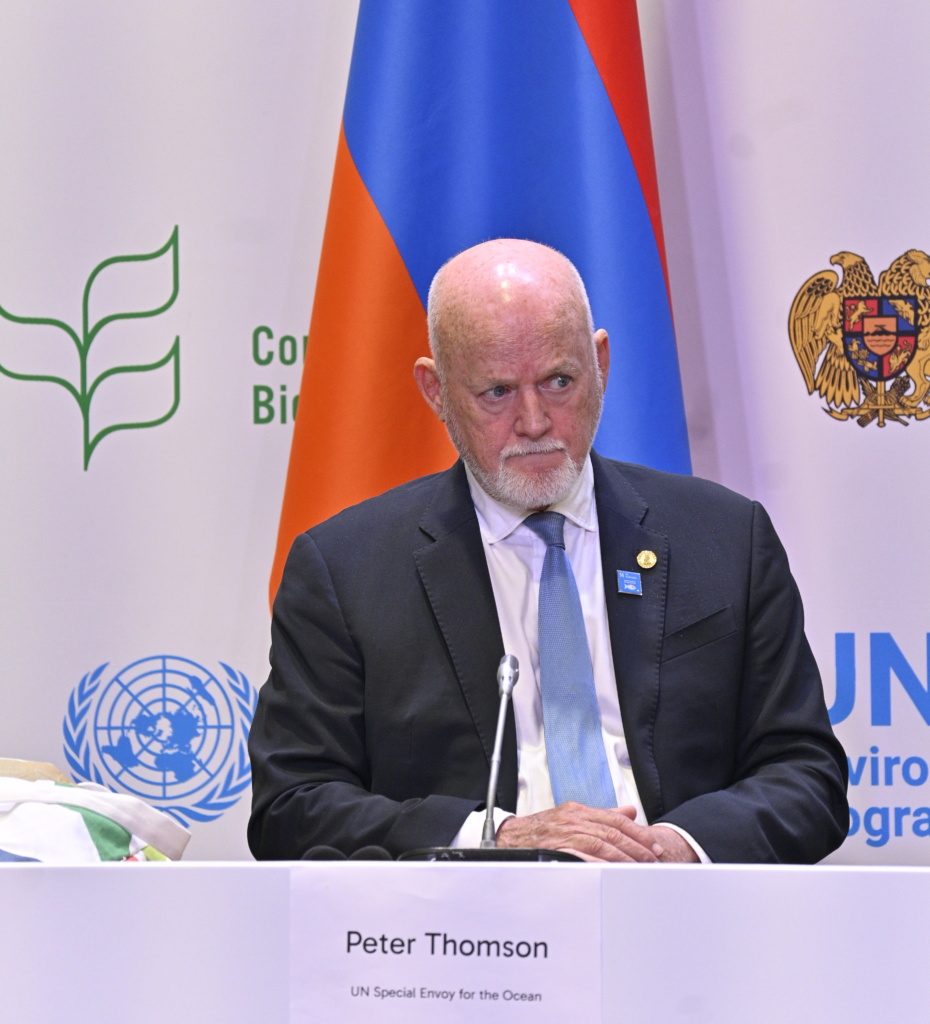
“Biodiversity is life. Where is the majority of life, i.e. biodiversity, on the planet? It’s in the ocean,” he said, adding that a single litre of healthy seawater contains around a million life forms.
Thomson also highlighted the ocean’s role in absorbing 90% of the excess heat caused by greenhouse gas emissions as he pointed to COP31 in Antalya, Türkiye, where plans include an Antalya Ocean Declaration and a task force to help countries strengthen ocean-related commitments in their national climate plans.
Yet, speakers cautioned that greater visibility does not necessarily translate into effective protection.
The gap between protection and delivery
Anna Lafforgue of the Ocean & Climate Platform described the negotiations as a moment for “careful optimism”, revealing that the draft text recognises the implementation gap facing marine and coastal ecosystems, although the language remains weak and subject to change.
“Nothing is set in stone,” she said, noting that meaningful progress may depend on ministers arriving as the second week of talks is undertaken.
Lafforgue said countries were working to resolve bracketed text on marine and coastal biodiversity, although one country continued to block progress. She also raised concern that the latest draft contained fewer references to the relationship between the ocean and climate than the text adopted at COP16.
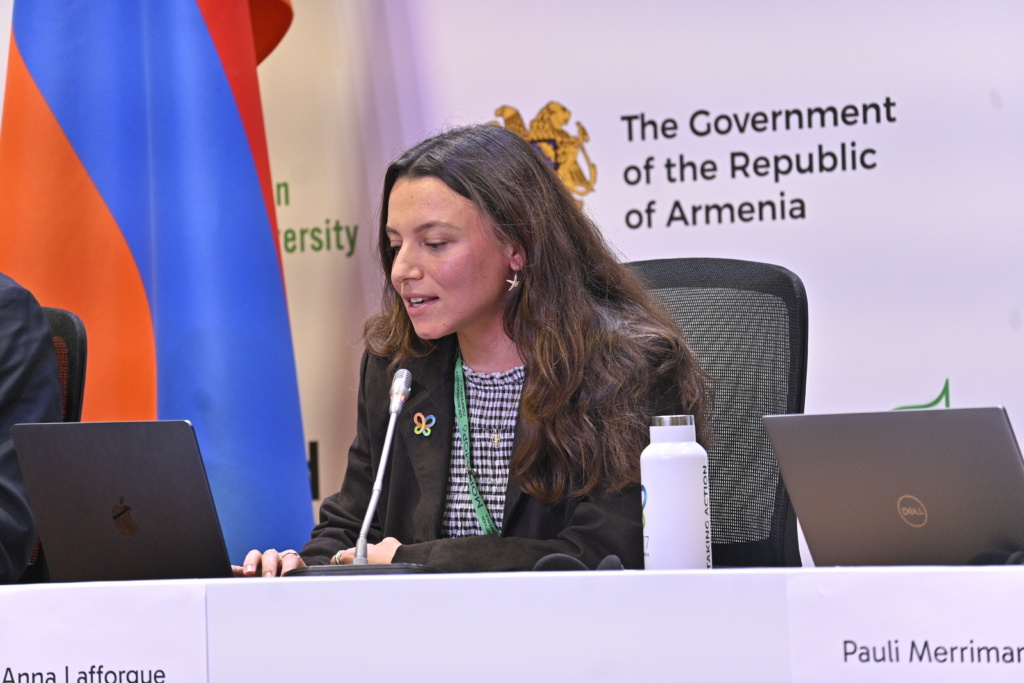
Asked whether the ocean was receiving the attention it deserved, her response was direct: “Not yet.” She nevertheless credited the first CBD Ocean Pavilion with making “a significant difference” in showcasing solutions.
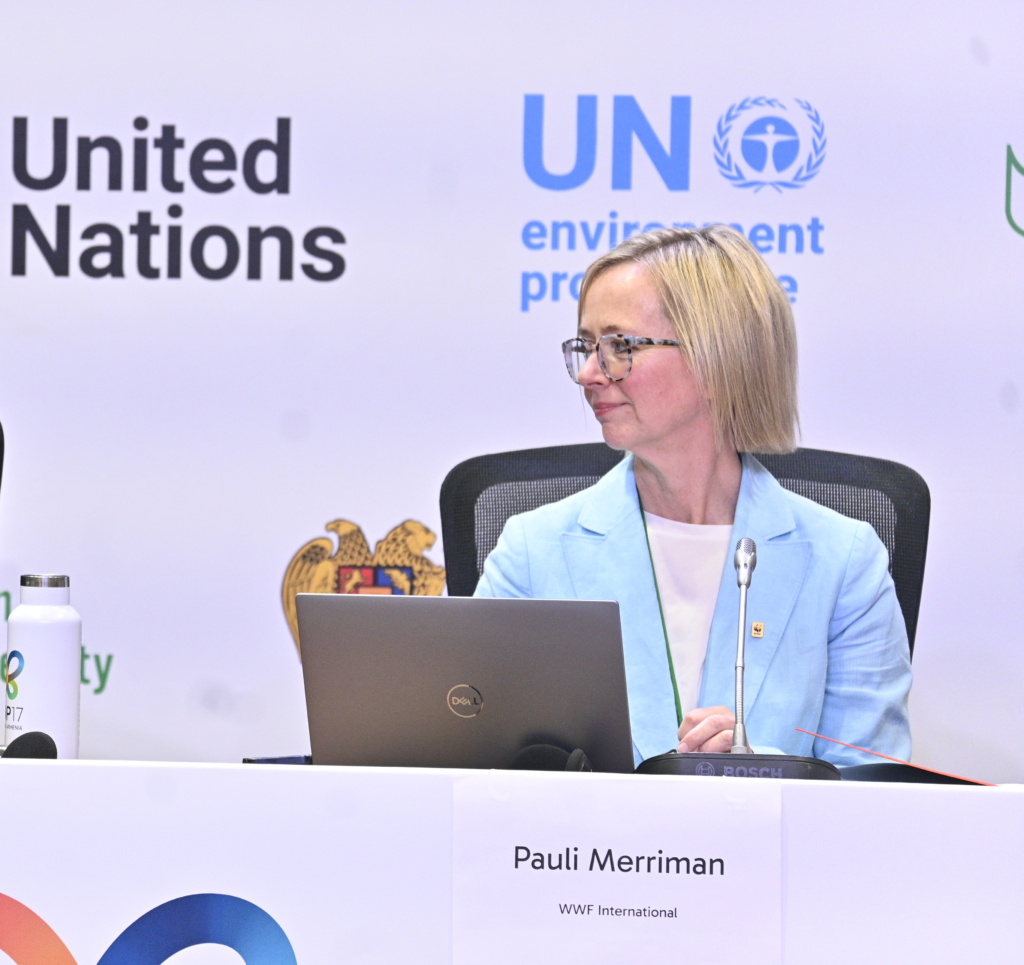
The challenge becomes clearer in the figures presented by Pauli Merriman, interim senior director of oceans at WWF International. Around 10% of the ocean is currently designated for protection and conservation. Even if existing national commitments are fulfilled, that figure would rise to only about 12% by 2030.
Only 3.5% of the ocean is assessed as effectively protected. “So when it comes to 30 by 30, the ocean is furthest behind,” Merriman said. “Protection on paper does not necessarily mean protection in the water,” she added.
Citing the Beyond the Percentage report, Merriman argued that conservation success must be measured beyond the area designated. Ecosystem recovery, effective management, adequate financing and respect for the rights and leadership of Indigenous Peoples and local communities are equally important.
Finance remains a major obstacle. Merriman estimated that marine 30 by 30 requires approximately $16 billion annually, compared with current spending of around $1.8 billion, leaving a substantial funding gap.
The figures underline that ocean conservation is not simply an environmental undertaking. Healthy marine ecosystems support food security, livelihoods and coastal resilience, making their protection an economic and social concern as well.
More than 140 organisations and leaders have consequently called on governments to accelerate delivery of the global target. A survey of 20,000 people across 20 countries, cited by Merriman, found that eight in ten respondents wanted faster government action on ocean protection, while 95% said conservation areas should be effectively managed rather than protected in name only.
“We have no time to lose,” she said.
Beyond national waters: People and politics
Reaching 30 by 30 also requires cooperation beyond national borders. Thomson urged the Commission for the Conservation of Antarctic Marine Living Resources (CCAMLR), meeting that week, to approve long-deadlocked marine protected areas in the Southern Ocean, including the area around the Antarctic Peninsula.
“There is only one way to do it,” he said of reaching the 30% target.
Rebecca Hubbard, director of the High Seas Alliance, highlighting another major gap, pointed out that the high seas cover roughly two-thirds of the global ocean, yet only about 1.5% is protected, according to figures she presented.
The High Seas Treaty, which entered into force in January 2026, provides a legal framework for conserving marine biodiversity in areas beyond national jurisdiction. Its first Conference of the Parties is scheduled for 11–22 January.
Hubbard said countries must now establish the institutional arrangements and decision-making processes needed to make the treaty effective. “We need to build it right, build it to deliver and build it to last,” she said.
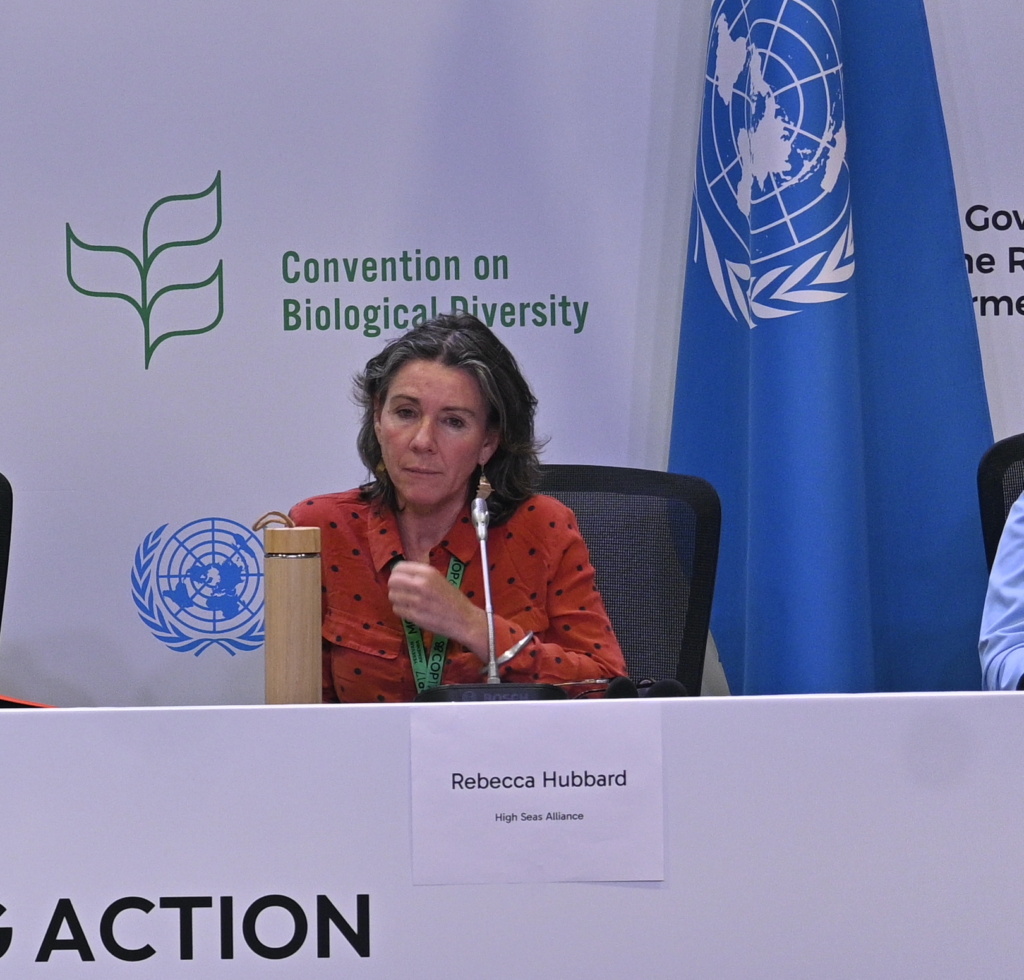
She called for universal ratification and stronger cooperation between the treaty, the Convention on Biological Diversity and other international processes, emphasising the need to ensure countries with fewer resources can participate and lead.
Even though the consequences of inadequate protection are felt far beyond negotiating rooms.
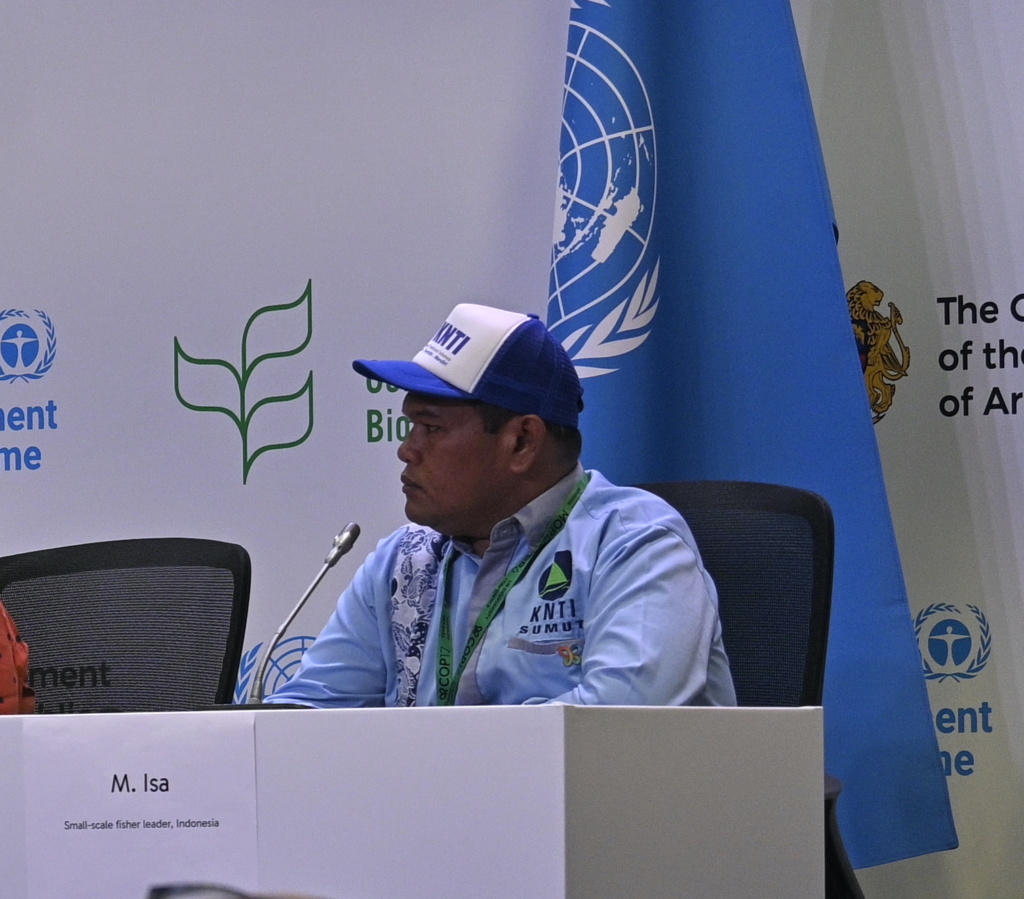
Muhammad Issal Basir, a traditional fisher from Medan, North Sumatra, and a member of the Indonesian Traditional Fisherfolk Union, brought the perspective of communities whose lives depend directly on the ocean.
“I have been a fisher for 25 years, and I have seen life become more difficult for traditional fishers over the past 20 years,” he said.
Basir described illegal, unreported and unregulated fishing, including trawling and fish bombing, as threats to marine biodiversity and fishing grounds that contribute to declining catches. He also raised concerns about a proclamation affecting traditional fishers’ access to coastal areas and fishing spots.
His testimony brought the global protection debate into the everyday lives of fishing communities, for whom healthy marine ecosystems mean food, income and the ability to sustain their livelihoods.
As COP17 negotiations continue, ministers face the task of turning biodiversity commitments into action. That means mobilising finance, strengthening protected-area management, improving international cooperation and respecting the rights of communities whose lives are intertwined with the ocean.
With the 2030 deadline approaching, the test is no longer simply whether the ocean receives greater attention at global meetings. It is whether that attention translates into protection that works in the water and sustains life along its shores.
This story was produced as part of the 2026 CBD COP17 Fellowship, operated by Informed Earth in collaboration with Internews’ Earth Journalism Network.
Author Profile

-
Seeker.
Inspire AFRIKA.
Latest entries
 Biodiversity27 October 2026COP17 Puts Ocean Protection in Focus, but Delivery Remains Uncertain
 Biodiversity26 October 2026Beyond Biodiversity Finance, A Justice Gap Governments Must Confront
 Biodiversity24 October 2026Faith Leaders and Civil Society Call for Stronger Partnerships to Restore Nature
 Biodiversity23 October 2026Inside Kobe’s Grassroots Effort to Train the Next Generation of Biodiversity Leaders


