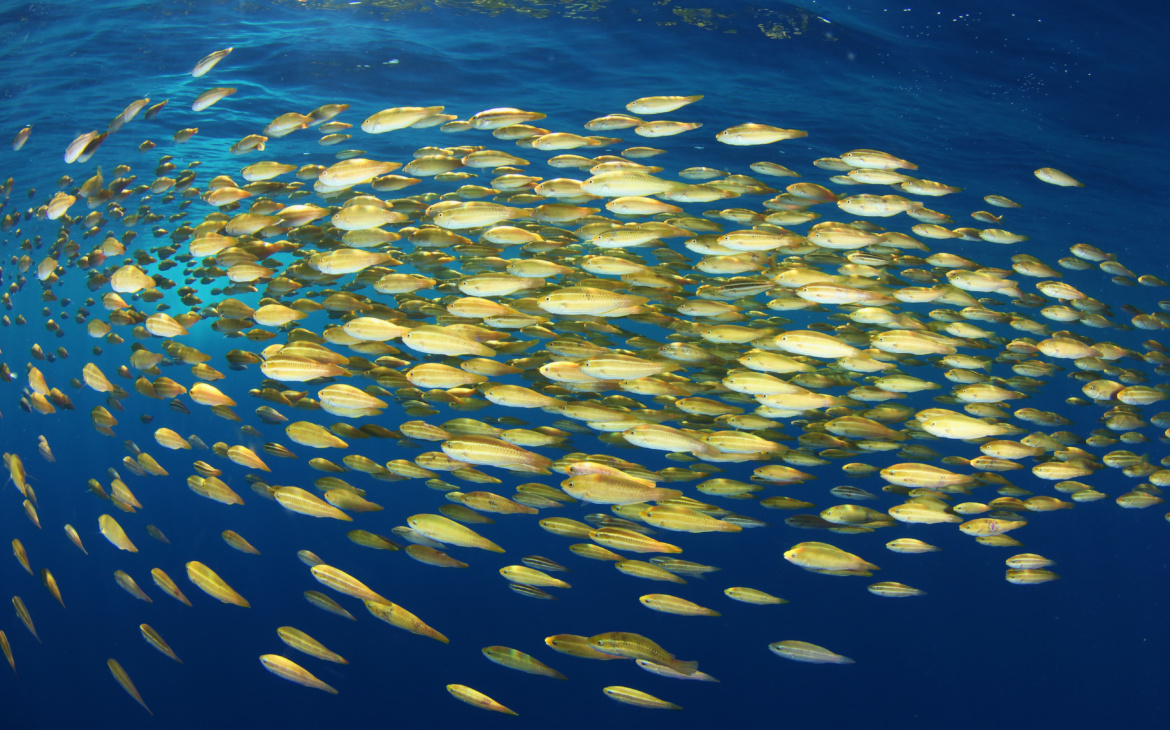
Launched at CBD COP17, a new marine action plan for the Greater Antilles seeks to connect protected areas, safeguard migratory corridors and address financing gaps in cross-border conservation for Caribbean Nations.
As countries debate how to turn global biodiversity commitments into measurable action at the UN Biodiversity Conference (CBD COP17) in Yerevan, Armenia, Caribbean nations are advancing a regional approach to protecting their shared ocean ecosystems.
The plan was unveiled during the Ocean Pavilion session, “Connected Seas, Collective Action: Making 30×30 Count,” bringing together government representatives and conservation partners to discuss how regional cooperation can strengthen marine protection.
Its central premise is that protecting individual marine areas may not be enough when ecosystems, ocean habitats and the species that depend on them extend across national boundaries.
The initiative is designed to support Target 3 of the Kunming-Montreal Global Biodiversity Framework, which calls for the effective conservation and management of at least 30 per cent of the world’s land, inland waters, coastal areas and oceans by 2030.
However, meeting the target requires more than increasing the area designated for protection. The ecological connections between protected areas, the effectiveness of management and the resources available to sustain conservation efforts are equally important.
“The ocean knows no borders, and neither should our conservation efforts,” said Pamela Castillo, WCS 30×30 Marine Director.
Castillo warned that progress towards global marine conservation targets risks falling behind because of mounting pressures on ocean ecosystems, governance gaps and limited resources.
She said regional cooperation could help connect isolated protected areas and translate shared ambitions into collective results.
For the Greater Antilles, the proposed approach places particular emphasis on shared offshore areas and migratory corridors used by threatened marine species.
Through consideration of these ecological connections alongside national conservation priorities, participating countries aim to build a more coordinated approach to protecting marine biodiversity.
José “Pepe” Gerhartz, Conservation Specialist at the CBC Secretariat, pointed out that the plan provides an opportunity to bring national conservation efforts together under a common regional vision.
“Our countries share an ocean, and the responsibility to protect it,” he said.
Gerhartz added that success should be measured not only by the areas conserved but also by the quality and effectiveness of their protection, including the habitats and ecological connections that sustain marine life and coastal communities.
The initiative builds on nearly two decades of environmental cooperation through the CBC, an intergovernmental platform supporting collaboration across the region. Its development also draws on partnerships involving WCS, the UN Environment Programme (UNEP), the Caribbean Biodiversity Fund and REV Ocean.
Yet, turning a shared conservation vision into effective protection will require more than regional agreements and technical expertise.
Financing connected seas
One of the challenges highlighted during the launch was how conservation finance is structured.
Funding mechanisms that are restricted to individual countries can make it difficult to support initiatives designed to protect ecosystems spanning several national jurisdictions.
This creates a potential mismatch between the ecological scale of marine conservation and the administrative boundaries through which funding is allocated.
The Caribbean Nations action plan’s implementation will therefore depend partly on whether financing can be mobilised and coordinated across borders, allowing countries to support shared conservation priorities rather than treating each protected area as a separate undertaking.
The launch called for funding arrangements that can better support multi-country initiatives, reduce investment risks and provide resources for transboundary marine corridors beyond initial political commitments.
The involvement of the Caribbean Biodiversity Fund and other conservation partners offers a platform for collaboration, although the announcement does not specify how much funding has been secured for implementation or how much individual countries will contribute.
Scientific information will also be important in determining where protection is most urgently needed and how regional agreements can be designed.
An anticipated REV Ocean scientific expedition in 2027 is expected to provide baseline data to inform multi-country conservation agreements and joint offshore protection. Such evidence could help participating countries identify important marine habitats and strengthen the scientific basis for coordinated management.
National leadership remains central to the process. Ambassador Prof. Dale Webber, Jamaica’s Special Envoy for Climate Change, Environment, Ocean and Blue Economy, said the country is working to expand its protected-area network towards the 30×30 target.
Jamaica’s efforts include its overarching policy for protected areas, while its programme of work on protected areas is informed by the Global Biodiversity Framework and the CBC 30×30 Plus Marine Action Plan.
Webber also pointed to the government’s establishment of a Ministry of Water, Environment and Climate Change as evidence of policy leadership. Jamaica is scheduled to host the 13th Our Ocean Conference in 2029.
For the Caribbean nations, the challenge now is to translate these national efforts and regional commitments into protection that works across the wider seascape.
The plan offers an example of how countries can pursue biodiversity goals through shared science, institutional cooperation and conservation finance that reflects the connected nature of marine ecosystems.
At COP17, where implementation of the Global Biodiversity Framework remains a central concern, the Greater Antilles initiative emphasises a broader lesson: achieving the world’s ocean conservation ambitions will depend not only on how much area is protected, but also on whether countries can work together to protect the ecological systems that cross their borders.
This story was produced as part of the 2026 CBD COP17 Fellowship, operated by Informed Earth in collaboration with Internews’ Earth Journalism Network.
Author Profile

-
Seeker.
Inspire AFRIKA.
Latest entries
 Biodiversity28 October 2026Biodiversity Commitments Face a Defining Test as Yerevan Talks Enter Final Week
 COP1727 October 2026Caribbean Nations Turn to Regional Cooperation to Advance Ocean’s 30×30 Target
 Biodiversity27 October 2026COP17 Puts Ocean Protection in Focus, but Delivery Remains Uncertain
 Biodiversity26 October 2026Beyond Biodiversity Finance, A Justice Gap Governments Must Confront