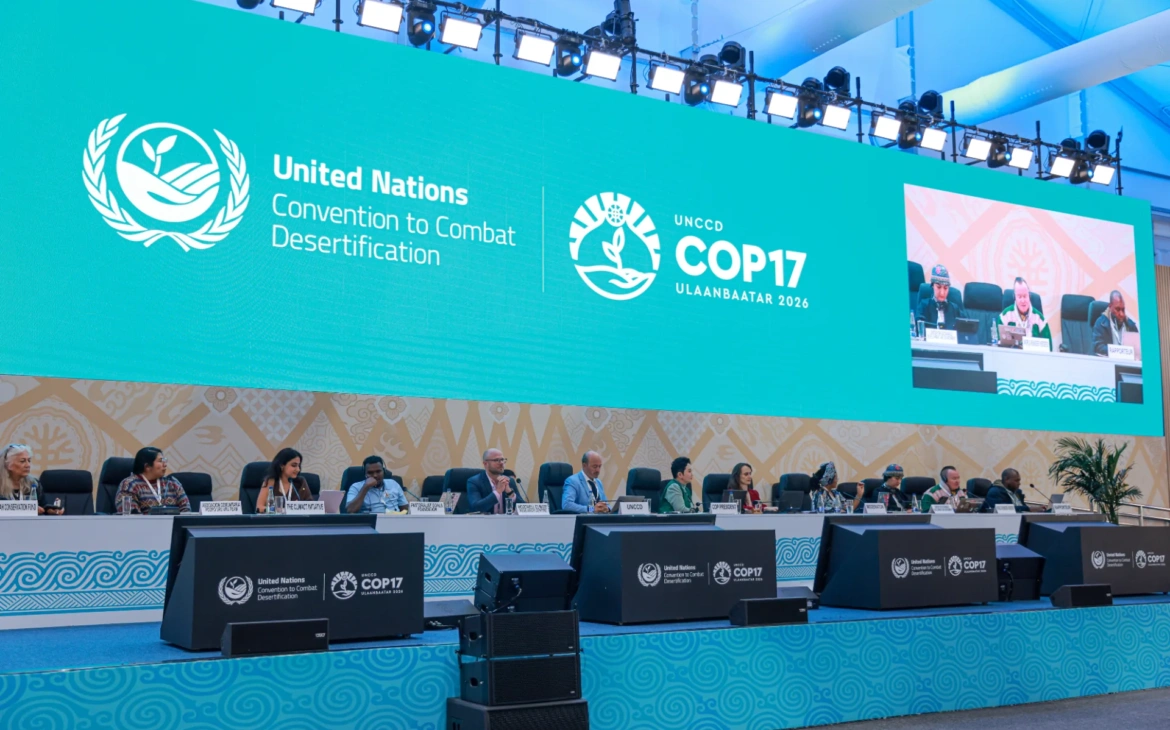
At UNCCD COP17 in Mongolia, delegates are drawing a powerful connection between degraded land, migration, secure tenure and private investment, arguing that restoring landscapes is ultimately about giving communities the ability to remain, move or return by choice.
For years, the debate around climate and migration has often been framed around a simple question: Will climate change force people from their homes?
But discussions at the 17th Conference of the Parties to the United Nations Convention to Combat Desertification (UNCCD COP17) in Ulaanbaatar are pointing to a more complicated, and potentially more important question: What happens when the land itself can no longer sustain the people who depend on it?
The Committee of the Whole’s discussion on migration, land tenure and private-sector engagement brought these issues together, revealing an emerging view that land restoration is not simply about repairing degraded ecosystems. It is also about protecting livelihoods, securing rights and giving people choices about where and how they live.
COP17, running from 17–28 August, has placed land restoration, drought resilience and sustainable land management at the centre of international discussions. Its agenda specifically includes migration, land tenure and private-sector participation. (UNCCD)
When degraded land drives mobility
For many communities, land degradation is first experienced not as an environmental statistic but as declining productivity, disappearing livelihood opportunities and growing pressure on food and water.
Tunisia, speaking for the African Group, directly captured the connection between land and livelihoods, stating that “restoring land is synonymous with restoring livelihoods.”
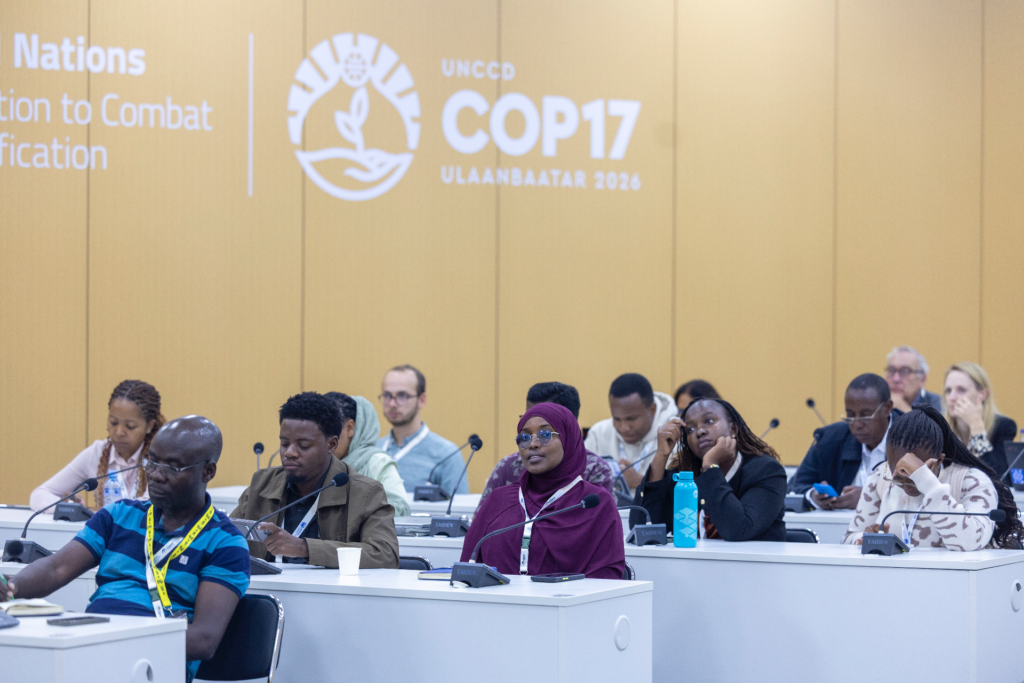
The African Group argued that land degradation can contribute to precarious livelihoods, pressure on water and natural resources and, ultimately, migration as people search for viable economic opportunities.
Yet delegates cautioned against portraying all movement as forced migration.
Mongolia highlighted the importance of pastoral mobility, while other interventions stressed that seasonal and circular movement can be an adaptation strategy rather than evidence of environmental displacement.
That distinction matters. If pastoralists are able to move livestock between grazing areas and water sources, mobility can help communities adapt to changing conditions. But when land degradation, insecure tenure or shrinking access to resources remove those options, movement can become increasingly driven by necessity.
Switzerland offered perhaps the clearest expression of the objective: land restoration should help people remain where they are or return home “by choice, not through need.”
That shifts the conversation from simply asking how many people climate change might displace to asking what can be done to prevent displacement from becoming the only option.
The missing link: who has rights to the land?
This is where land tenure becomes critical.
Kenya, speaking on behalf of the African Group, argued that secure tenure should be placed at the centre of the UNCCD’s future strategic framework. The intervention linked secure land rights to sustainable land management, restoration and investment in agricultural productivity.
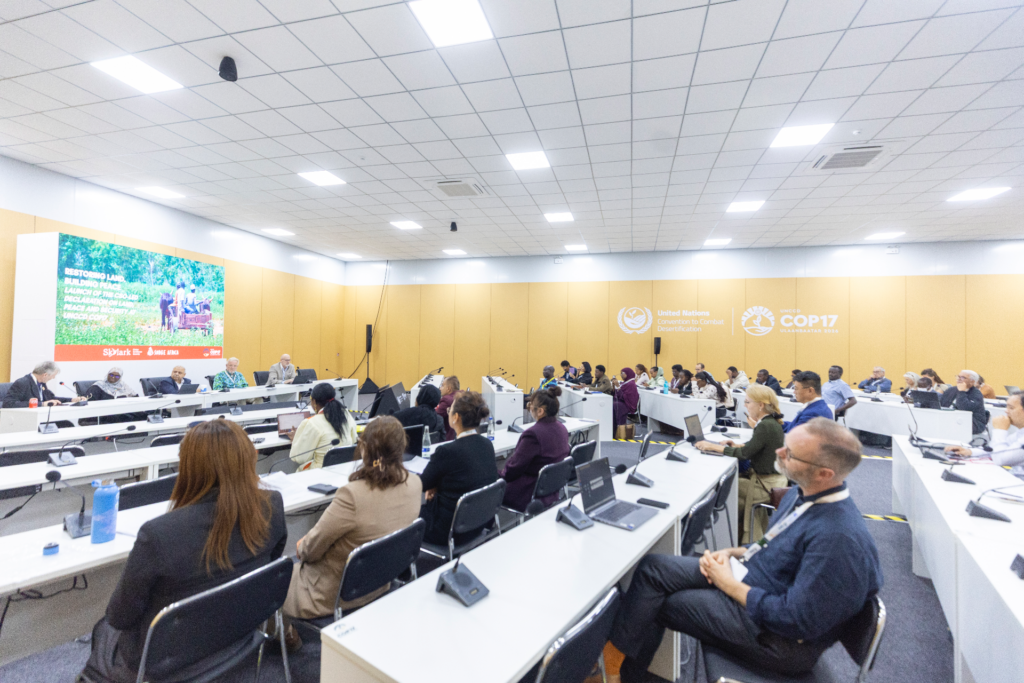
The argument is straightforward: people are more likely to make long-term investments in soil, water conservation, trees and restoration when they have confidence that they will continue to benefit from the land.
Botswana reinforced this point, noting that insecure tenure can discourage investment in soil and water conservation, while women and young people can remain disadvantaged in accessing land.
Switzerland similarly described secure and equitable tenure as essential to sustainable land management and land degradation neutrality, stressing that tenure security encourages long-term investment in food security, livelihoods and community resilience.
Guyana provided a practical example. Its representative told delegates that the country’s experience shows that communities with secure land rights “will invest in it, restore it, and defend it.”
The message emerging from these interventions is therefore powerful: land restoration may begin with land rights.
The capital question
But restoring degraded landscapes at scale requires more than secure tenure. It requires money.
This brought the private sector into the discussion.
The World Business Council for Sustainable Development (WBCSD), representing more than 250 companies, told delegates that businesses increasingly see land degradation as a direct threat to supply chains through soil degradation and water stress.
Companies are already investing in regenerative agriculture and nature-based solutions. Participants in the COP Action Agenda on regenerative landscapes have committed more than $9 billion by 2030, covering 210 million hectares and reaching 12 million farmers.
Yet investment is not flowing at the scale required.
According to WBCSD, fragmented and misaligned policy and regulatory frameworks remain a barrier. Its consultations with more than 50 organisations identified three priorities: stable policy environments; long-term finance and mechanisms to de-risk investment; and trusted systems for accountability, target-setting and impact measurement.
Botswana put the financing challenge bluntly: “The challenge is no longer proving what works [but] financing restoration at scale.”
But whose land, whose investment?
The push for private capital comes with an important warning.
Brazil argued that private investment must operate within strong transparency, accountability, and environmental and social safeguards, while respecting national laws and community rights. Private finance, it stressed, should complement, not replace, public and international commitments.
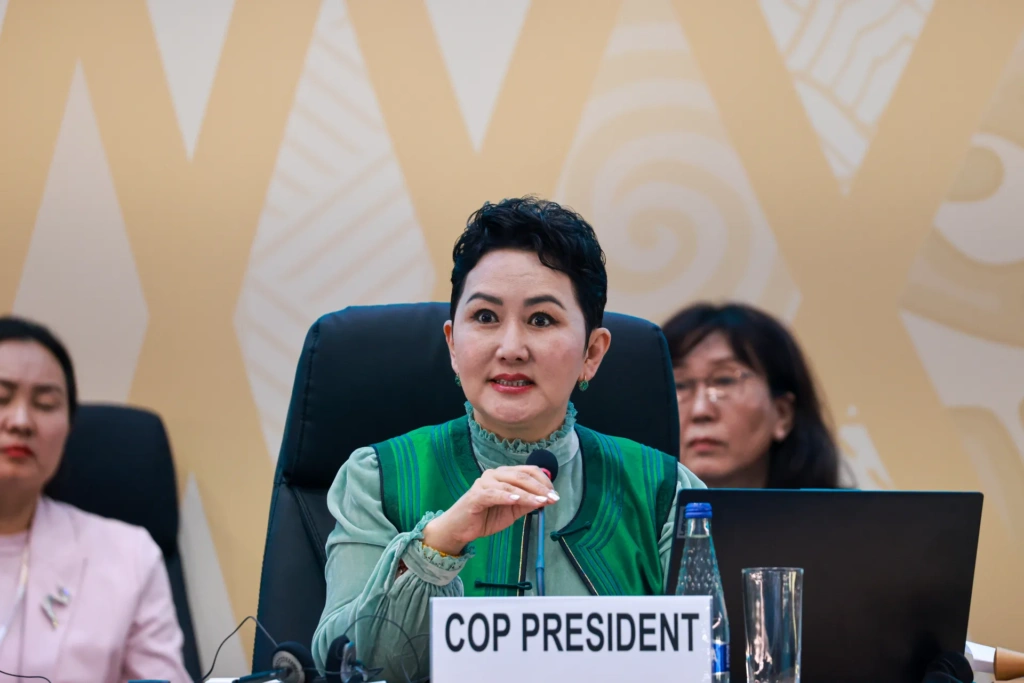
Civil society and Indigenous representatives made a similar case, calling for meaningful community participation, respect for land and tenure rights, free, prior and informed consent and equitable benefit sharing.
This creates the central challenge for the next phase of land restoration:
How can degraded land become investable without making the people who depend on it an afterthought?
Restoring more than landscapes
The discussions at COP17 suggest that the answer lies in connecting three issues too often treated separately: land, people and capital.
Secure tenure can give communities an incentive to restore land. Restoration can strengthen livelihoods and resilience. Stronger livelihoods can reduce the pressure for distress migration. And predictable policies, safeguards and clear investment frameworks can help responsible private capital reach landscapes at scale.
Ultimately, the success of land restoration may therefore be measured not only in hectares restored, trees planted or tonnes of carbon stored.
It may also be measured in choices restored.
The choice to stay.
The choice to move safely when mobility is necessary.
The choice to return.
And, above all, the choice to invest in the land without fear of losing it.
As the civil society intervention reminded delegates, “Land is not just where we live. It is who we are.”
At COP17, that idea is becoming more than a statement about identity. It is emerging as a central question of climate resilience, economic security and the future of land restoration.
Read Also: Behind Restoring Hope
Author Profile

- How can we learn if we don't question?
Latest entries
 COP1717 October 2026The World Has a Plan to Save Nature. Can It Deliver by 2030?
 Agriculture16 October 2026“There Is No Shortcut”: A Kiambu Grower’s Decade in Mushrooms
 COP3115 October 2026Pacific Leaders Call for Urgent Climate Action Ahead of COP31
 Agriculture13 October 2026Can the buffalo fix Kenya’s milk problem? Farmers say start with the feed bill