As 25 countries, including Kenya, endorse a declaration at COP31 calling for wildlife protection to become part of global climate action, growing scientific evidence is highlighting the role wild animals play in sustaining ecosystems and their ability to store carbon.
The African forest elephant does more than roam the tropical forests of the Congo Basin. Through its feeding habits and movement, it helps shape forest composition, influencing which trees survive and how much carbon the ecosystem can store.
By trampling smaller trees and creating space for larger, slower-growing trees with greater carbon-storage capacity, these giants contribute to the functioning of tropical forests. Research suggests that forests with elephants in the Congo Basin store approximately seven per cent more carbon than those without them.
It is an ecological contribution often overlooked in climate discussions, which traditionally focus on protecting forests, restoring degraded land and reducing greenhouse gas emissions. Yet the animals inhabiting these ecosystems are also part of what makes them effective natural carbon sinks.
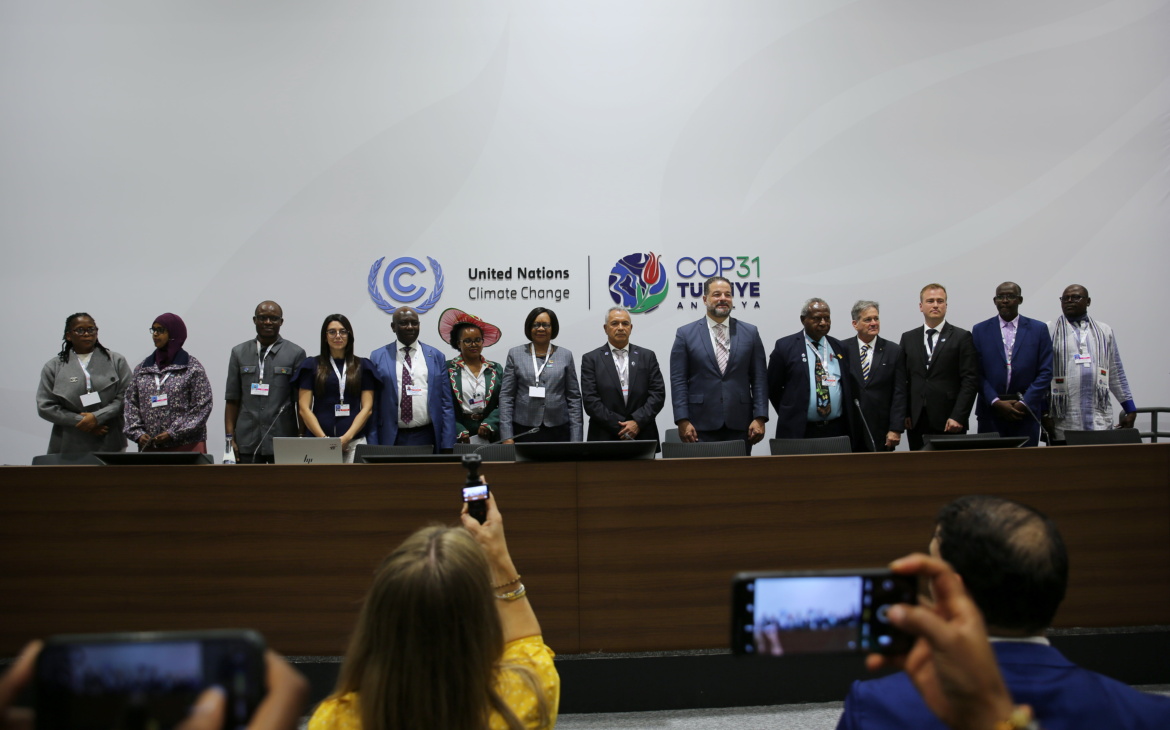
This relationship is attracting growing scientific and political attention. At the 31st United Nations Climate Change Conference (COP31) in Antalya, Türkiye, 25 countries from Africa, Europe, Latin America, the Caribbean and the Pacific endorsed the Wildlife for Climate Declaration, committing to protect, conserve and restore wild animal populations and their habitats as a cornerstone of science-based climate action.
The declaration marks the first time a group of governments has jointly promoted wildlife protection as part of climate action at a UN Climate Conference. Kenya is among the endorsing countries, alongside Zimbabwe, the Democratic Republic of the Congo, Zambia, Lesotho and Madagascar.
The animals behind functioning ecosystems
Wildlife’s contribution to climate mitigation extends beyond forests and elephants. Across terrestrial and marine ecosystems, animals influence the natural processes that determine how carbon is absorbed, transferred and stored.
Through grazing, predation, seed dispersal and nutrient cycling, wild animals shape vegetation, soils and sediments, influencing the capacity of forests, grasslands, wetlands, coastal ecosystems and oceans to retain carbon.
In marine environments, sea otters illustrate this relationship. By preying on sea urchins, which feed on kelp, they prevent excessive grazing that can destroy entire kelp forests. This allows kelp to flourish, supporting marine biodiversity and carbon storage. One study cited in the declaration found that kelp forests protected by sea otters can absorb up to 12 times more carbon dioxide than those without them.
These examples demonstrate why wildlife conservation cannot be separated from ecosystem restoration. Protecting habitats requires maintaining the animal populations and ecological relationships that allow ecosystems to function. Conversely, overexploitation, deforestation, agricultural expansion and urbanisation threaten these relationships and weaken wildlife’s contribution to climate resilience.
What the science tells us
The contribution of wildlife to climate mitigation is increasingly being quantified through scientific research.
A 2023 paper published in Nature Climate Change, led by researchers associated with Yale University and the Global Rewilding Alliance, found that protecting and restoring functional populations of nine terrestrial and marine wildlife groups could help capture an additional 6.4 gigatonnes of carbon dioxide annually.
This represents a significant potential contribution to climate mitigation, equivalent to roughly one-sixth of global carbon dioxide emissions from fossil fuels in 2024.
The findings reinforce calls for wildlife to feature more prominently in climate policies, particularly as governments increasingly turn to natural ecosystems to support their mitigation and adaptation commitments.
The Scientific Consensus on Wildlife and Climate, supported by more than 350 scientists from 47 countries, similarly calls on governments to explicitly account for wild animals and their ecological functions in climate policies and frameworks.
The scientists argue that assessing nature-based climate solutions without considering the animals that sustain ecosystem functioning leaves an important gap in climate planning. Restoring a forest, for instance, involves more than planting trees. The animals that disperse seeds, regulate vegetation and facilitate regeneration also influence its long-term health and resilience.
Bringing wildlife into the climate agenda
Against this scientific background, the Wildlife for Climate Declaration seeks to address a gap in international climate policy.
While wildlife’s contribution to ecosystem health has received recognition under multilateral environmental agreements such as the Convention on Biological Diversity and the Convention on Migratory Species, its role has yet to receive comparable recognition within the United Nations Framework Convention on Climate Change (UNFCCC).
The declaration encourages governments to recognise the role of wild animals in maintaining natural carbon sinks, address their overexploitation, protect and connect habitats, and advance sustainable food systems that reduce pressure on ecosystems. It also calls for these measures to be incorporated into national climate and biodiversity plans.
For countries such as Kenya, where wildlife conservation is closely connected to ecosystem management, tourism and community livelihoods, this presents an opportunity to strengthen the relationship between biodiversity commitments and climate action.
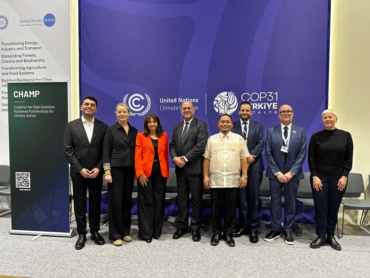
Speaking at a COP31 side event, Zimbabwe’s Minister of the Environment, Climate and Wildlife, Honourable Evelyn Ndlovu, emphasised the importance of recognising wildlife as part of the broader climate response.
“When we lose wildlife, it is not only a loss of species; it is a loss of the living processes that keep natural systems working as they should. That is why protecting and restoring wildlife is climate action. It must be recognised and prioritised as such.
“This Declaration is the beginning of a shared commitment to see climate action more clearly. To understand that healthy wildlife and healthy ecosystems belong together, and that both are essential to a resilient future. Zimbabwe is ready to work with all countries in a spirit of partnership, openness and common purpose.”
From recognition to implementation
The declaration represents an important step towards bringing wildlife conservation into international climate discussions. However, its significance will ultimately depend on how governments translate this recognition into policies, financing and conservation measures.
Protecting wild animals requires addressing the pressures threatening their populations and habitats, including illegal and unsustainable exploitation, habitat fragmentation and ecosystem degradation. It also requires greater coordination between climate and biodiversity policies, which have often been pursued through separate international processes despite their close ecological connections.
Ed Goodall, Climate Policy Specialist at the World Federation for Animals, argues that recognising wildlife’s role is an important missing element in the global climate response.
“The science has proved that animals are playing active roles in ecosystems that help forests, oceans, and mangroves to help fix and store more carbon, which is a missing part in the quest to tackle climate change. This Declaration is a game-changer, showing that governments acknowledge this and are ready to act on it, to make lasting change to protect wild animals and their habitats so they can continue to act as ecosystem engineers through their natural behaviour”.
For Matt Collis, Senior Director of Policy at the International Fund for Animal Welfare (IFAW), the next challenge is ensuring that political recognition produces tangible results.
“For too long, wildlife has been the missing piece in global climate policy. This declaration marks an important shift, recognising that protecting wild animals is not separate from climate action, but can help strengthen it.
The real test now is whether this recognition translates into national climate plans, meaningful investment, and action on the ground. Governments have an opportunity to turn a scientific breakthrough into lasting change for wildlife, people, and the planet.”
As countries strengthen their climate commitments, protecting the ecological relationships that sustain forests, wetlands, grasslands and oceans will be essential to maintaining their capacity to store carbon and withstand climate pressures.
The endorsement of the Wildlife for Climate Declaration by 25 countries signals growing recognition of this connection. The next step is to ensure wildlife is not merely acknowledged in climate discussions, but becomes an integral consideration in the policies and investments shaping global climate action.
Author Profile

- How can we learn if we don't question?
Latest entries
 COP3119 November 2026COP31: 25 Countries Call for Wildlife Protection to Become Climate Action
 Agriculture17 November 2026Tanzania and Kenya Sign Five-Year Potato Seed and Trade Agreement
 Agriculture16 November 2026Europe’s Pesticide Double Standard Puts African Farmers in Harm’s way
 Cities12 November 2026COP31: Why Local Governments Must Have a Bigger Voice in Climate Action