
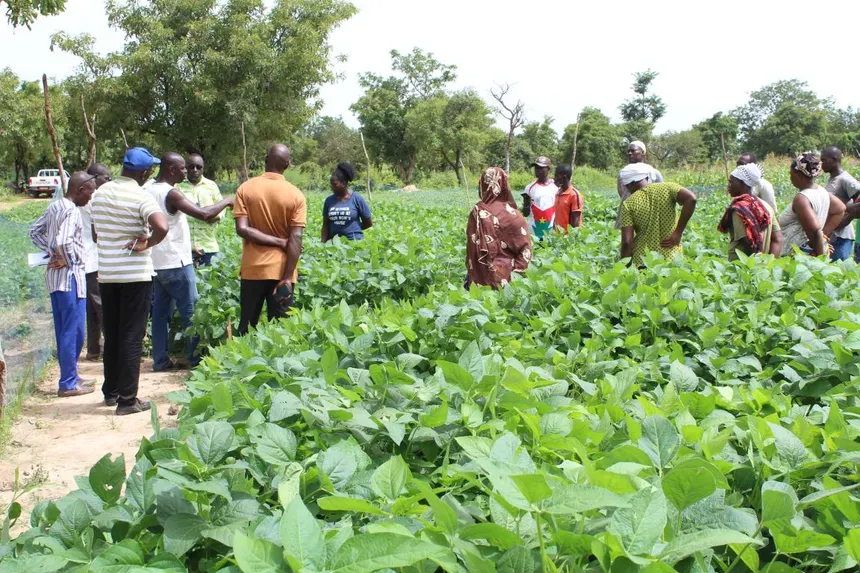
For years, the response to Africa’s declining farm yields has followed a familiar script: use more fertilizer. But across Eastern Africa, that approach has run into a hard limit, which is the soil itself.
Decades of intensive farming, erosion, and nutrient loss have left large stretches of farmland too degraded to respond to fertilizer alone, even as the region’s food import bill balloons and 25 million smallholder farming households look for a way to stay afloat.
Now, a new $1 million regional initiative is betting that the fix lies not in more inputs, but in a fundamentally different relationship with the land.
A costly gap
The scale of the problem is visible in Africa’s trade figures. According to Elizabeth Nsimadala, President of the Eastern Africa Farmer Federation, the continent’s food import bill has climbed fivefold, from $20 billion to $100 billion. That surge reflects a farming system struggling to feed its own population, even as millions of smallholders work the land every season.
It’s against this backdrop that the Farmers Organisation for Transformation of Agri-Food Systems, known as GIZ-FO HUB, is rolling out across the region.
What the project does
The initiative will run in ten countries, Kenya, Uganda, Tanzania, Rwanda, Burundi, Ethiopia, Djibouti, the Democratic Republic of Congo, South Sudan, and Eritrea, reaching more than 25 million smallholder members. Its core focus is climate resilience through sustainable land and soil management, paired with support for farmer-led economic initiatives.
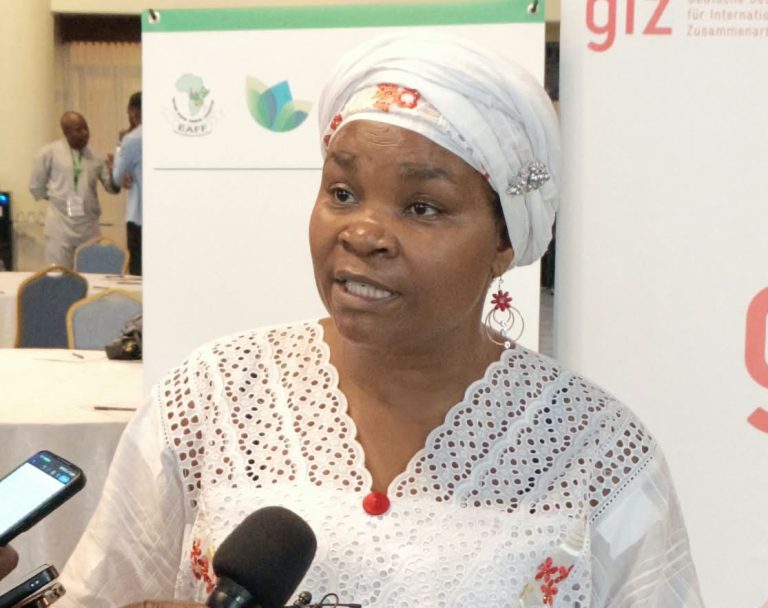
Nsimadala says the project’s ambitions go beyond technical fixes to the soil. It seeks to strengthen how farmers organize and advocate for themselves.
“Efforts will be directed to strengthening the voice and institutional capacity of farmers’ organisations so they can effectively represent smallholder farmers and build strategic partnerships,” she said.
The project, she added, “includes fostering sustainable and adaptive farmer-led economic initiatives.”
Rethinking the fertilizer-first approach
Perhaps the most striking admission behind the project comes from Dr. Sylvia Henga, a Policy and Food Security expert at the Intergovernmental Authority on Development (IGAD).
She points to a continental policy that hasn’t delivered as promised: the Malabo Declaration, which pushed African governments to raise fertilizer use to around 50 kilograms per acre.
That target was met in various forms across the region, but the underlying soil health crisis didn’t budge. “The Malabo declaration advocated increasing fertilizer usage to around 50 kilograms per acre, though the same did not change the expected situation as the soils are fully degraded,” Dr. Henga said.
“So, we are pushing towards a balanced approach where we use both fertilizer and organic inputs and elements.”
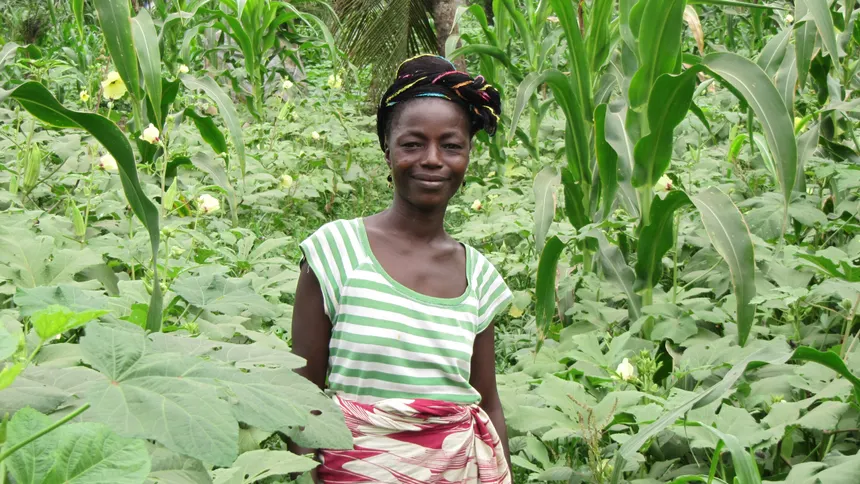
That shift, from a fertilizer-only mindset to integrated soil fertility management, sits at the heart of the new project’s technical strategy. Rather than treating degraded soil as something to be masked with chemical inputs season after season, the approach aims to rebuild soil health itself, combining organic matter with more targeted fertilizer use.
Widening who gets a seat at the table
The project also puts a spotlight on who participates in agricultural decision-making. Kennedy Oketch, GIZ’s Senior Technical Advisor, says a central goal is bringing more women and young people into leadership roles within the sector.
“The project will transform agriculture and agri-food systems by enhancing the participation of women and youth in decision-making,” he said.
Oketch also connects the project to broader continental policy goals, noting that “agriculture value chain players will benefit through domestication of continental framework”, a reference to translating regional agricultural frameworks into practical, on-the-ground action across the ten participating countries.
What to watch
The project’s ambitions are broad: restoring degraded soils, strengthening farmer organizations, widening participation for women and youth, and doing it all across ten countries and 25 million smallholder members. Against that scale, $1 million is a modest budget, and questions remain about implementation, how resources will be distributed across such a wide geography, what timeline farmers can expect to see results, and how success will be measured on the ground.
For now, the project marks a notable shift in regional thinking: an acknowledgment that Africa’s food security problem cannot be solved by input intensity alone.
As Dr. Henga’s comments suggest, the soil itself has been sending a signal for years. The question is whether this new, more balanced approach reaches farmers fast enough to matter.
Read Also: Eight Die of Hunger as Food Crisis Deepens in South Sudan’s Lafon County
Author Profile

- How can we learn if we don't question?
Latest entries
 Events12 October 2026Cybersecurity in the Floriculture Industry
 Opinion & Analysis8 October 2026Why Africa Must Look to What Already Exists in Its Blue Economy
 Agriculture5 October 2026The Search for a Smarter Way to Feed Crops
 Events30 September 2026The Goat, the Market and the Dryland: Heifer International’s Push for Livestock Resilience


