
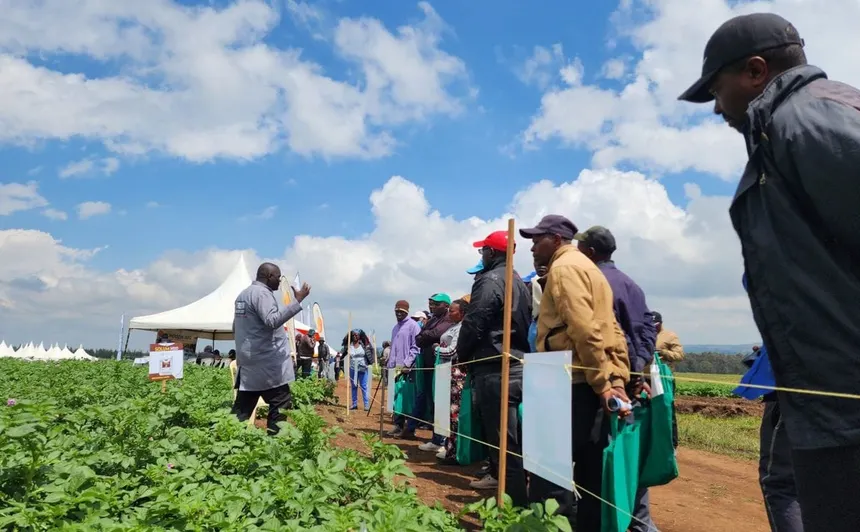
The 13th World Potato Congress brought together more than 1,000 delegates in Naivasha, placing climate-resilient production, scientific collaboration and investment in local processing at the centre of efforts to strengthen food security and transform Africa’s potato industry.
Kenya’s ambition to attract investment, expand agricultural processing and strengthen climate resilience took center stage as the 13th World Potato Congress opened in Naivasha, bringing together more than 1,000 delegates from approximately 67 countries.
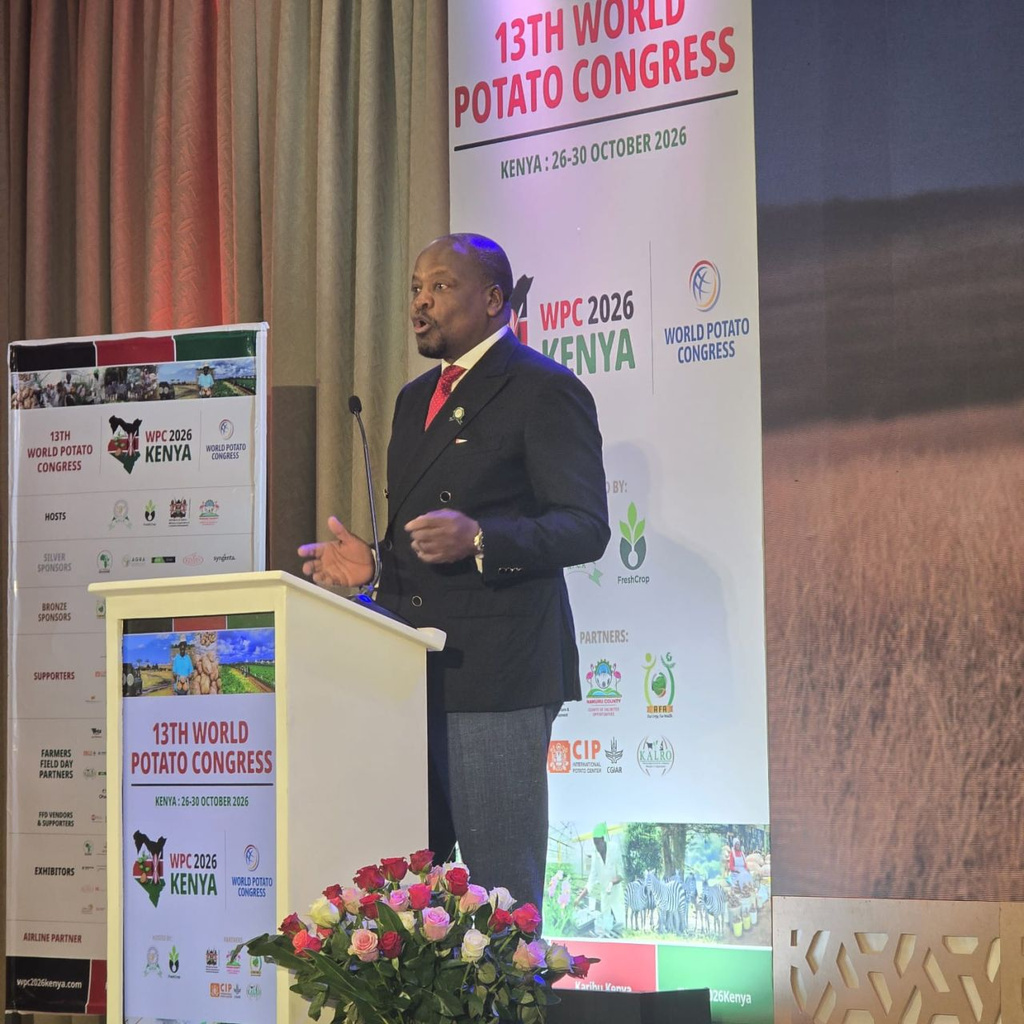
Agriculture Cabinet Secretary Mutahi Kagwe opened the five-day congress on October 27, challenging international partners and industry players to translate global cooperation into practical solutions that improve productivity, strengthen farmer incomes and secure food supplies amid growing climate pressures.
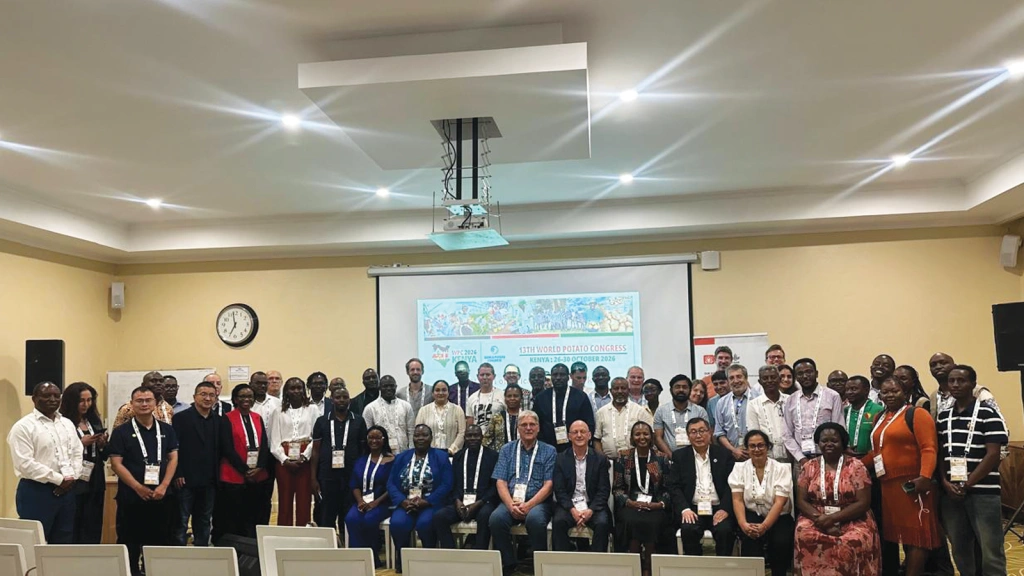
Held from October 26 to 30 at Sawela Lodges and Convention Centre, the gathering was the first World Potato Congress to take place in sub-Saharan Africa. Under the theme Global Potato Partnership for Enhanced Food Systems, Nutrition Security and Trade, it brought together policymakers, researchers, farmers, processors, seed specialists and investors to explore opportunities across the potato value chain.
For Kenya, the congress provided an opportunity to showcase its agricultural potential while attracting partnerships in research, seed production, mechanization, storage and processing.
Among the industry leaders present was Dr Bimal Kantaria, chairman of the Agriculture Sector Network (ASNET), who emphasised the need to move beyond production towards profitable farming, value addition, commercialisation and stronger market linkages.
The congress was hosted by the National Potato Council of Kenya (NPCK), under the leadership of chairman Kimani Rugendo and chief executive Wachira Kaguongo, with support from national and international partners, including the International Potato Center (CIP) and the Kenya Agricultural and Livestock Research Organization (KALRO).
Closing the import gap
Kenya’s push for investment is partly driven by the opportunity to expand domestic processing and reduce reliance on imported potato products.
Kagwe cited estimates indicating that local production meets approximately 40 per cent of the country’s demand for processed potato products, leaving imports to supply the remaining 60 per cent.
He called on investors to establish processing facilities and strengthen links between farmers and buyers, including hotels, restaurants and fast-food businesses. Expanding local manufacturing, he argued, would retain more value within the country, create employment and open opportunities for Kenyan products in regional markets.
The Cabinet Secretary also highlighted the government’s Land Commercialisation Initiative, which offers long-term leases on idle public land to private investors for agricultural production. The initiative seeks to encourage commercial farming supported by irrigation, technology, value addition and reliable markets.
However, expanding processing capacity will also require consistent supplies of quality potatoes. This places renewed importance on improving farm productivity, strengthening seed systems and helping farmers respond to increasingly unpredictable weather conditions.
Climate resilience begins with research
Kenya produced approximately 2.2 million tonnes of potatoes valued at KSh72.5 billion in 2024, according to the Kenya National Bureau of Statistics, compared with about 2.3 million tonnes in 2023.
The decline was partly attributed to unfavorable rainfall, including failed short rains and excessive long rains that created conditions favorable to fungal diseases such as late blight.
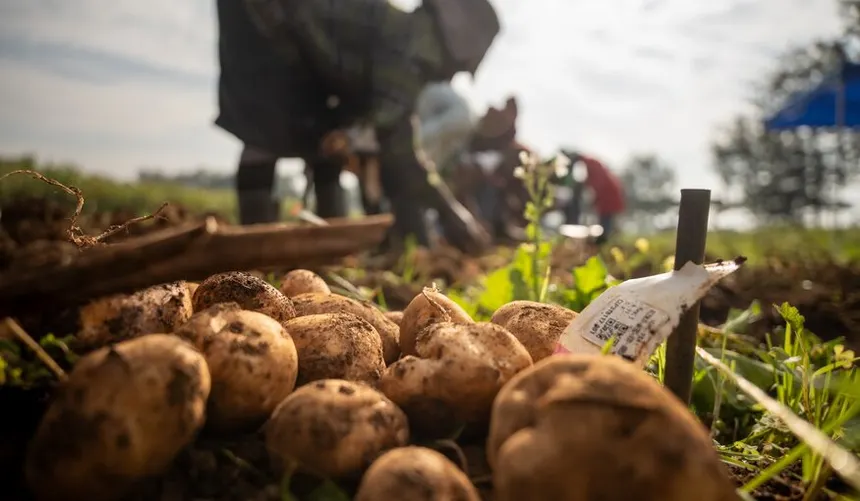
Kagwe said the congress offered an opportunity to develop practical responses to these challenges, particularly for smallholder farmers.
He called on delegates to “explore new strategies for revitalizing the potato subsector and ensure the crop thrives despite challenges such as climate change, pests and diseases.”
Among Kenya’s priorities is the development and deployment of climate-resilient, disease- and pest-resistant varieties through partnerships with international research institutions.
One of the advances highlighted was a biotechnology-based version of the popular Shangi potato variety, incorporating three resistance genes and demonstrating complete resistance to late blight in field trials. If successfully developed and approved, the variety could help reduce crop losses and the need for repeated fungicide applications.
Another promising development is Clone IG-70, a drought- and blight-tolerant variety from KALRO’s Tigoni research centre that is approaching final verification.
Research into genetic diversity is also contributing to the search for more resilient varieties. The Crop Trust and CIP highlighted the next phase of the BOLD project, which is exploring useful traits from wild Andean potato relatives, including disease resistance and heat tolerance, to strengthen breeding programmes. The initiative also seeks to involve farmers, including women, in evaluating improved varieties under local conditions.
Beyond breeding, the government is pursuing expanded access to certified seed, farmer training and improved irrigation infrastructure to reduce dependence on unpredictable rainfall. These interventions are intended to strengthen production while protecting farmers from climate-related losses.
Africa unites against potato blight
One of the significant outcomes of the congress was the official launch of the AfricaBlight Network on October 27, an African-led collaboration aimed at improving regional responses to late blight, one of the most destructive diseases affecting potato production.
Caused by Phytophthora infestans, late blight is highly sensitive to weather conditions and can spread rapidly under favourable environmental conditions. The disease threatens harvests, farmer incomes and food security, while increasing production costs through repeated fungicide applications.
Modelled on existing regional collaborations such as AsiaBlight, EuroBlight and Tizón Latino, AfricaBlight Network seeks to coordinate research, surveillance and disease management across African potato-producing countries.
Its priorities include establishing national coordinators, beginning with countries such as Kenya, Rwanda, Ethiopia and Eritrea, strengthening pathogen surveillance and genotyping, developing weather-based disease forecasting systems and expanding farmer training.
Dr Joyce Maru, CIP Regional Director for Africa, said the initiative would help countries and research partners address a shared challenge.
“The launch of AfricaBlight Network provides an opportunity to bring countries and partners together around a shared challenge that affects potato productivity, farmer incomes and food security,” she said.
She added that stronger collaboration, co-designed innovations and shared expertise could support more coordinated and effective approaches to late blight management across the continent.
Dr Kalpana Sharma, CIP’s Plant Health Lead, also emphasized the importance of understanding pathogens and developing prediction and decision-support tools to help farmers and agricultural advisers respond to disease outbreaks.
“The experience of established blight networks shows the importance of sustained collaboration across countries and institutions. AfricaBlight can build on these lessons to connect expertise, strengthen national capacities and support practical solutions that respond to farmers’ needs,” said Dr. Peter VanderZaag, President of the World Potato Congress Inc.
The network therefore seeks to move beyond reliance on resistant varieties and fungicides towards integrated disease management informed by research, surveillance and weather-based forecasting.
Taking innovation to farmers
The congress also placed emphasis on ensuring that research and technological advances translate into practical improvements at farm level.
Workshops and technical sessions explored approaches including rooted apical cuttings, hybrid true potato seed, aeroponics, sustainable production and smart farming technologies suited to different production conditions.
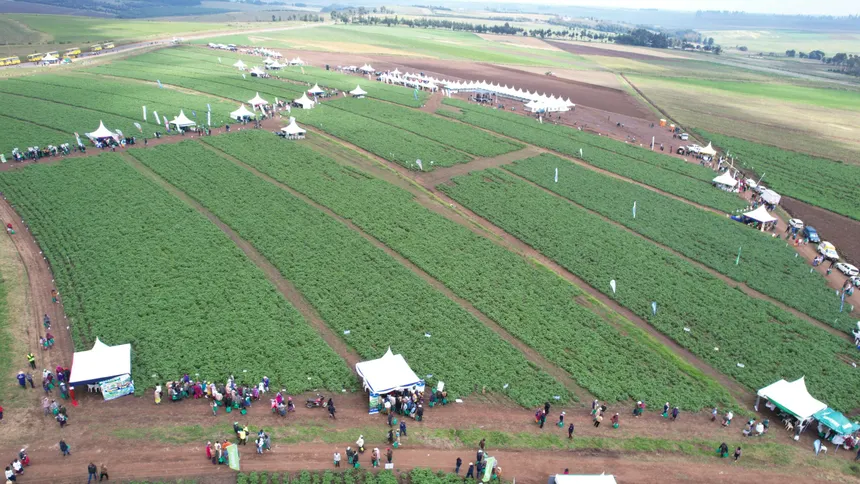
On October 29, a Farmers Field Day at FreshCrop in Mau Narok brought international delegates together with more than 1,500 Kenyan farmers for demonstrations of potato varieties, crop nutrition, crop protection and improved production practices.
The event provided an opportunity to connect international research and industry expertise with the realities of local farming, while exposing farmers to technologies that could improve productivity and resilience.
For Kenya’s potato sector, these interventions are particularly important given the central role smallholder farmers play in production. Expanding access to certified seed, appropriate technologies, improved storage and reliable markets will be essential in ensuring that the benefits of innovation reach beyond research institutions and large commercial farms.
Beyond the congress
The World Potato Congress brought international attention to Kenya’s ambitions for agricultural investment and a more competitive potato industry. However, its longer-term significance will depend on whether the partnerships and commitments translate into tangible improvements across the value chain.
For farmers, this means access to better varieties, quality seed, climate-smart production practices and markets that reward their efforts. For investors, it presents opportunities in processing, storage, mechanisation and agricultural technology.
Ultimately, strengthening Kenya’s potato industry will require more than increasing production. It will depend on building a resilient food system capable of withstanding climate pressures, reducing post-harvest losses, creating value locally and improving livelihoods.
Naivasha brought the global potato industry to Kenya. The lasting measure of success will be whether the connections made translate into stronger farm businesses, scientific collaboration, local manufacturing and more secure food systems.
Read Also: Can Kenya’s Gum Arabic Trade Help Protect Its Drylands?
Author Profile

- How can we learn if we don't question?
Latest entries
 Agriculture30 October 2026Kenya Turns to Research and Investment to Build a Climate-Resilient Potato Sector
 COP1729 October 2026COP17: Yerevan Hub Seeks to Close Global Biodiversity Monitoring Gap
 Food28 October 2026Can Kenya’s Gum Arabic Trade Help Protect Its Drylands?
 COP1727 October 2026A Bard, the Blues and the Stories of Our Land


