
When rain finally reaches the world’s rangelands, the transformation can be dramatic. Parched landscapes turn green, water sources refill, and pastoralists’ communities can move from managing scarcity to rebuilding livelihoods around fresh pasture. However, climate change is making that recovery increasingly uncertain as rainfall has become more erratic, with intense downpours often producing runoff rather than the sustained moisture needed to restore degraded land.
This challenge was central to discussions at the 17th Conference of the Parties to the United Nations Convention to Combat Desertification (UNCCD COP17) in Ulaanbaatar, Mongolia, where governments and stakeholders placed rangelands and pastoralists closer to the centre of global land policy.
The discussions reflected a growing recognition that rangelands are not empty or marginal spaces as often thought, but rather critical ecosystems that support food production, livelihoods, biodiversity, and climate resilience, while pastoralists are among those managing these landscapes daily.
Yet COP17 also exposed a persistent question: does recognition translate into influence?
From Being in the Room to Having a Voice
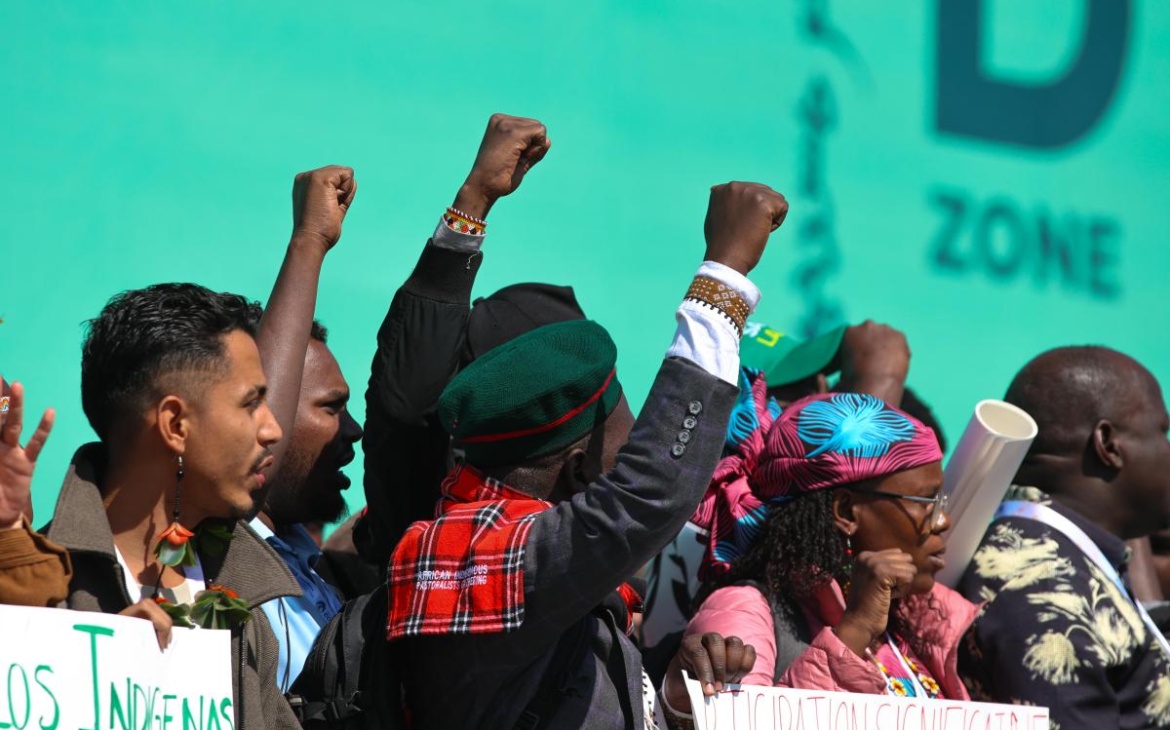
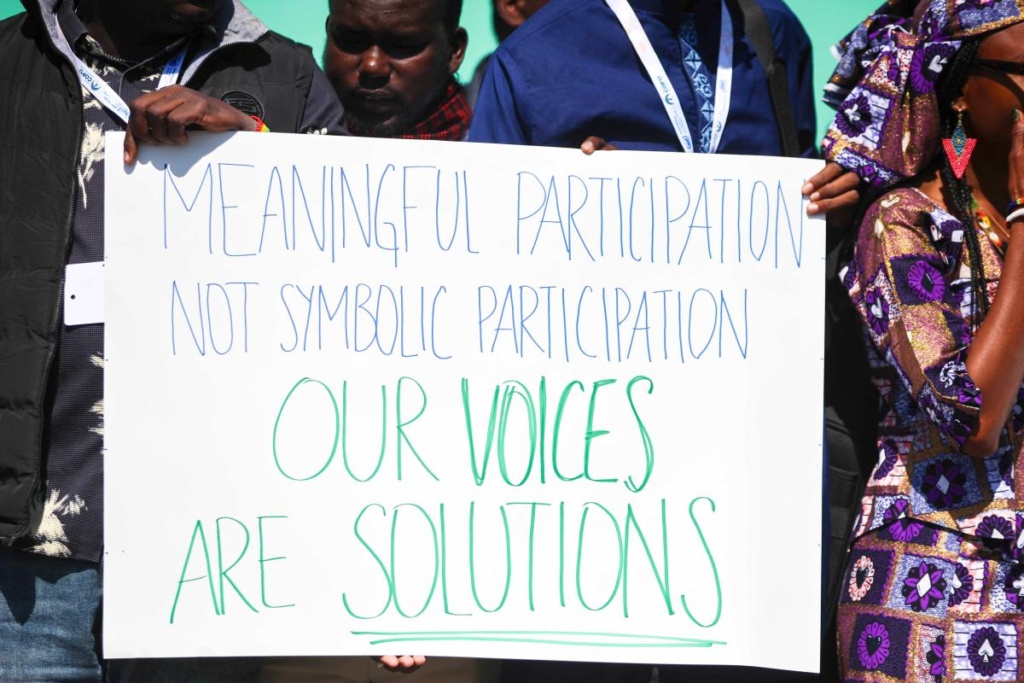
The question became particularly visible when agenda items concerning gender-responsive approaches, civil society engagement and Indigenous Peoples’ participation were deferred early in the conference. Civil society organisations, Indigenous Peoples, pastoralists, women and youth responded with a joint statement warning that sidelining those groups at a conference focused on land restoration would have consequences.
On August 20, Indigenous rights advocate Hindou Oumarou Ibrahim delivered the message directly to demonstrators outside the COP17 venue as they mobilised and organised a small parade with placards of calls for real, meaningful engagement and consideration in decision-making.
“There will be no COP without the people of the land,” she said.
Her argument was not simply about attendance, as it emphasised that indigenous Peoples and pastoralist communities should be involved in decisions affecting their territories, rather than being invited primarily to side events or consultations after key decisions have already been shaped.
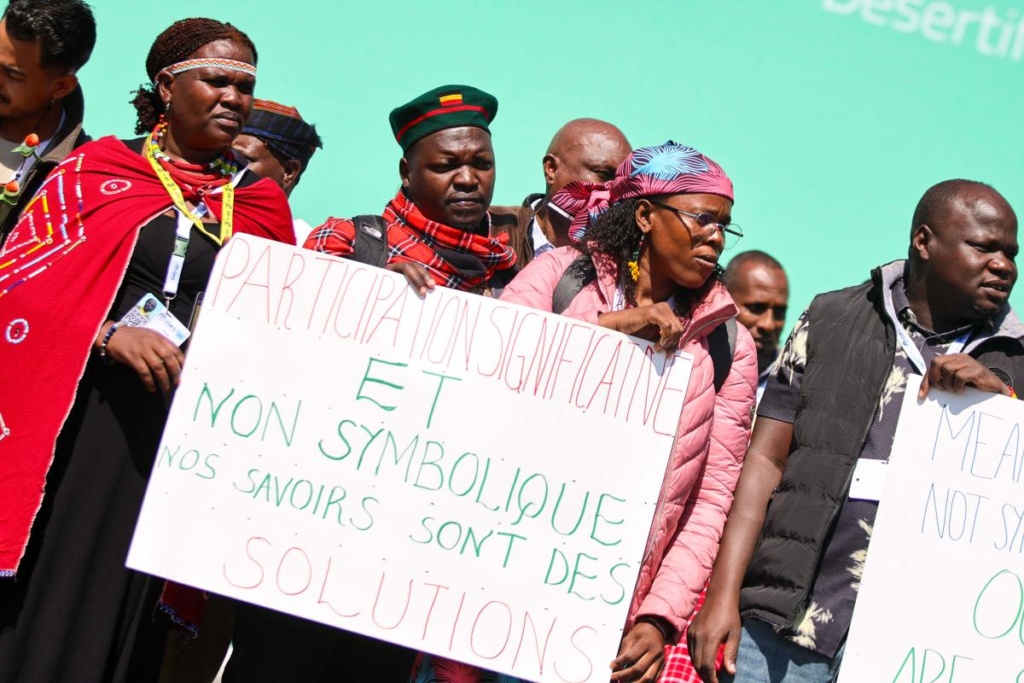
Sohanur Rahman, Executive Coordinator of YouthNet Global, made a similar point, arguing that land restoration cannot be separated from the people who live on and manage those landscapes.
The debate came as COP17 tested new mechanisms intended to strengthen Indigenous and local participation. Following a decision at COP16, governments had worked toward establishing an Indigenous Peoples Caucus and a Local Communities Caucus.
Their emergence at COP17 represented a significant institutional step, with organisers highlighting what they described as the largest Indigenous representation in UNCCD history. Even though it’s notable now more than ever that representation alone does not guarantee influence.
UNCCD Deputy Executive Secretary Andrea Meza Murillo described the establishment of the caucuses as a milestone, while acknowledging that participation must go beyond simply having a presence in the room and still needs to be operationalised. That distinction became one of the defining issues of the conference.
Why Rangelands Matter, and Who Gets to Shape Their Future
The debate over participation unfolded alongside a stronger push to elevate rangelands within global land and climate policy.
Rangelands cover more than half of the Earth’s land surface and support an estimated 500 million pastoralists globally. A report launched during COP17, Rangelands Rising, estimated that rangelands generate between $21 trillion and $47 trillion in annual benefits.
Those figures underline the scale of what is at stake.
At a ministerial dialogue on rangeland restoration and pastoralist well-being, India’s Minister of Environment, Forest and Climate Change Bhupender Yadav argued that successful restoration must begin by recognising pastoralists as custodians rather than merely beneficiaries.
The point was echoed by Beth Bechdol, Deputy Director-General of the Food and Agriculture Organisation of the United Nations, who cautioned against measuring restoration simply by whether degraded landscapes become green.
“What grows matters,” she said, pointing to the importance of the quality and composition of vegetation for livestock, biodiversity and ecosystem health.
For pastoralists, restoration is therefore not simply an environmental exercise. It is tied to mobility, food security, culture, livelihoods and the ability to access and manage land.
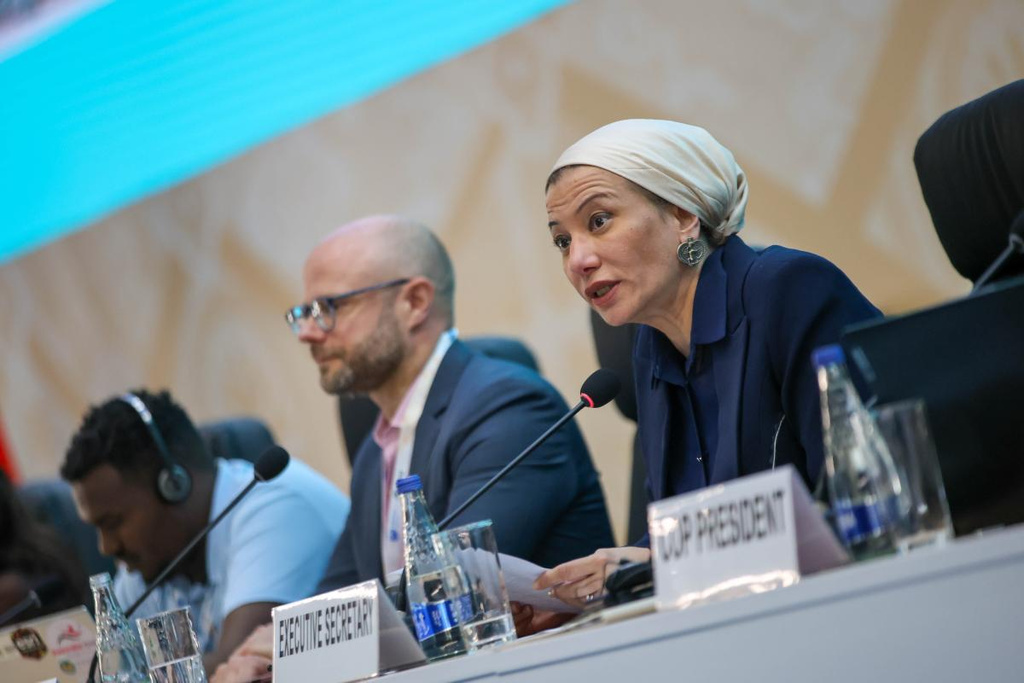
These concerns were reflected in the Global Pastoralist Declaration, also referred to as the Ulaanbaatar Declaration 2026, presented to UNCCD Executive Secretary Yasmine Fouad by pastoralist representatives from around 100 countries.
It called for stronger protection of land tenure and customary mobility, greater safeguards against the fragmentation of rangelands, improved access to climate finance, and stronger roles for pastoralist women and girls.
Fouad, reflecting on the Silk Road Caravan journey that preceded the COP, said communities had demonstrated how closely rangelands are connected to their identities, economies, cultures and ways of life.
“People are at the heart of restoration,” she said.
COP17 also produced a significant financial commitment. The Rangelands Flagship Initiative was launched with about $1.2 billion committed across dozens of projects, alongside three pillars focused on knowledge, investment and institutions.
The initiative represents an important step in addressing the historic financing gap facing rangelands. But money alone will not resolve the governance questions raised during the conference.
Pastoralist and Indigenous representatives are seeking financing that reaches communities, stronger recognition of customary land and mobility rights, and a meaningful role in designing and implementing restoration programmes.
Towards the close of COP17 on August 28, the conference had adopted declarations on Indigenous Peoples and Local Communities and recorded what UNCCD described as its largest Indigenous presence to date. Rangelands had also secured a major new investment platform and greater political visibility. Nevertheless, the deeper test begins after the conference.
COP17 brought pastoralists closer to the negotiating table. The next measure of progress will be whether they have the power to influence what happens there.
