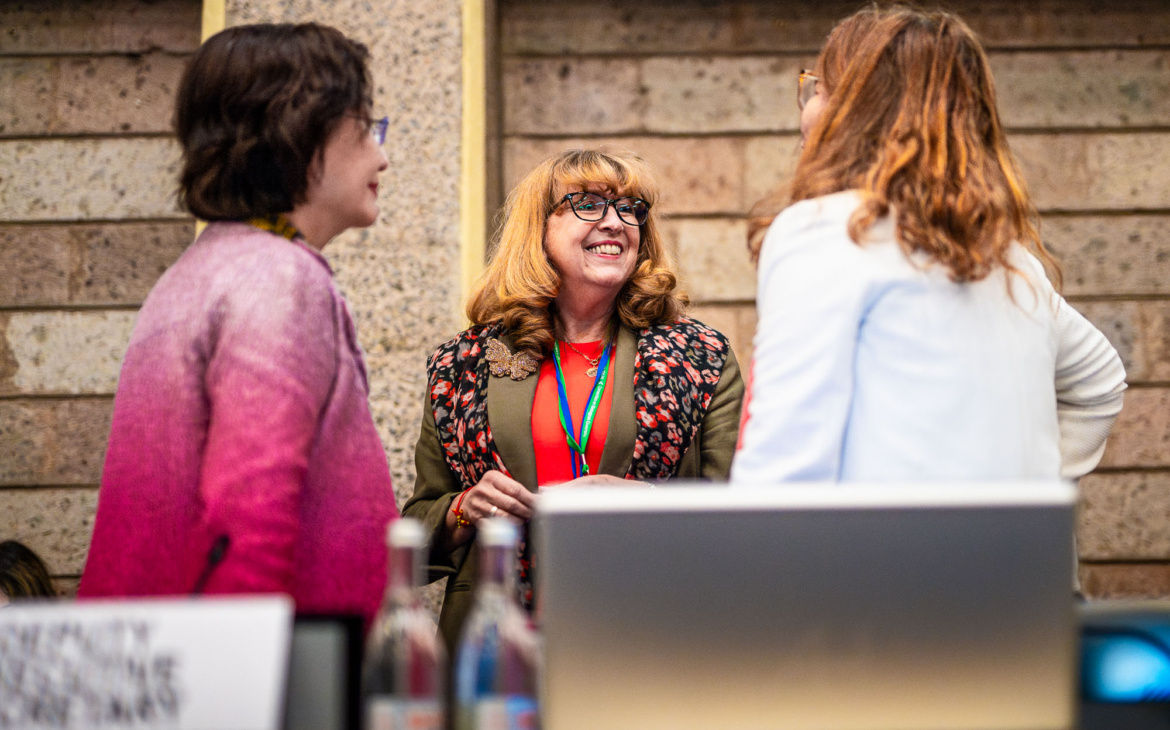
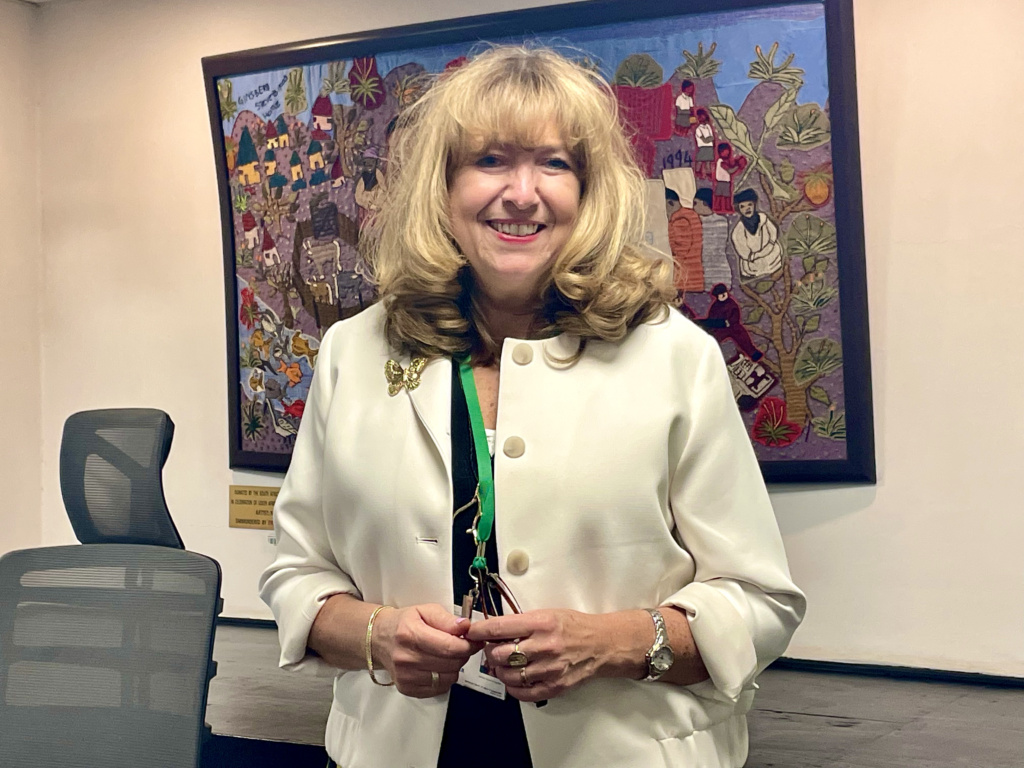
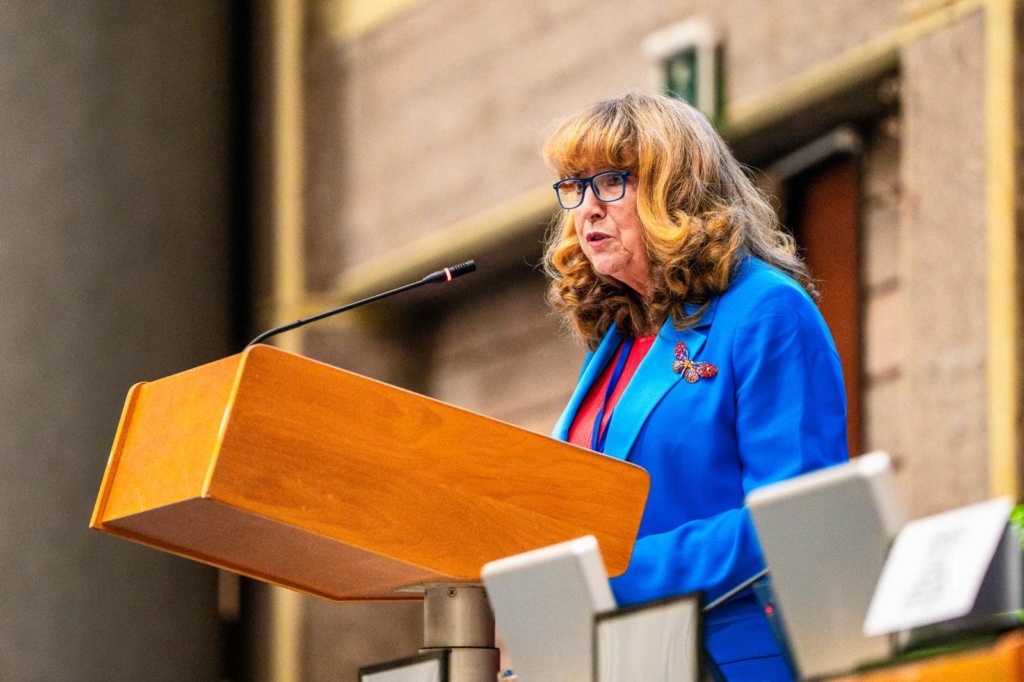
Halfway to the world’s 2030 deadline for halting and reversing biodiversity loss, Astrid Schomaker, leading the Convention on Biological Diversity (CBD), has a clear message for governments: ambition alone will not save nature.
Speaking to Climate Lens News during the UN biodiversity meetings in Nairobi, the Executive Secretary of the Convention on Biological Diversity (CBD) says countries have made significant political commitments since adopting the Kunming-Montreal Global Biodiversity Framework (KMGBF) in 2022. But with only four years remaining to meet its targets, implementation is falling behind.
“In short,” she says, “the world is currently not on track to meet the 2030 targets.”
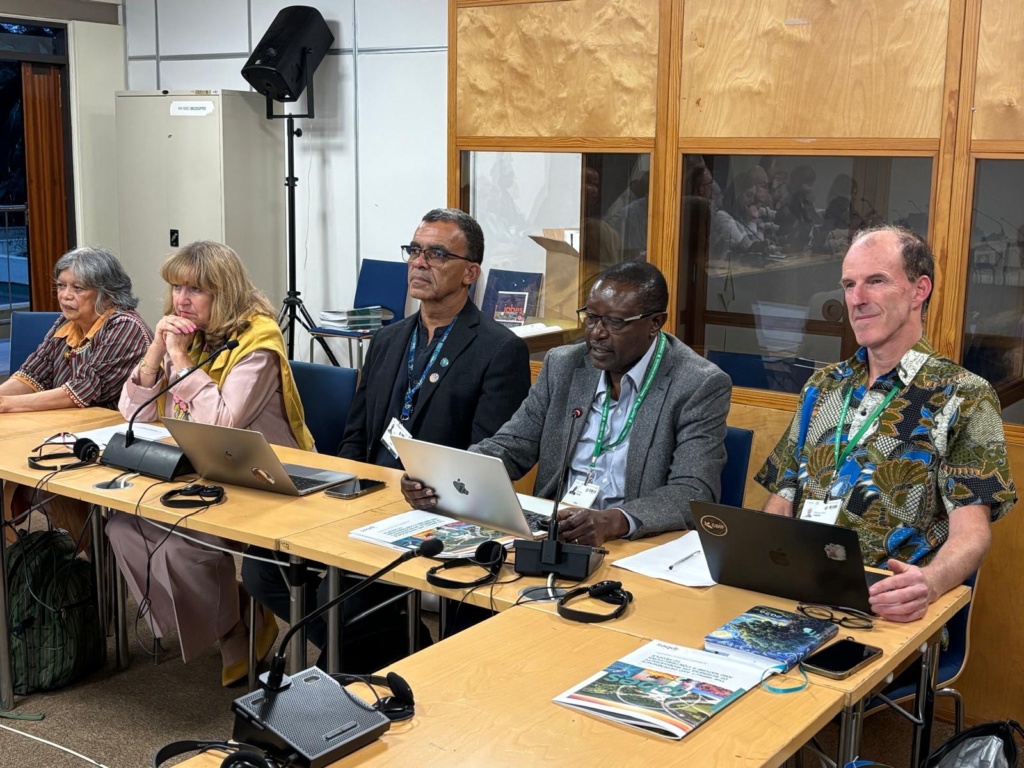
Her warning comes as governments, scientists and conservation experts gather at the United Nations Office at Nairobi to review the first global assessment of progress under the landmark biodiversity agreement.
The meetings will help shape negotiations ahead of the 2026 UN Biodiversity Conference (COP17) in Yerevan, Armenia, where countries will conduct the first Global Review of Collective Progress under the framework.
The newly released State of Biodiversity Action report offers the clearest picture yet of how the world is performing against the Framework’s 23 global targets. While there are encouraging signs of progress, Schomaker says the findings leave little room for complacency.
Progress Is Real, But Too Slow
For Schomaker, the report should not be viewed as a scorecard of failure, but as a practical guide for where governments need to focus their efforts.
“This report is not just a critical snapshot of where the world stands on halting and reversing biodiversity loss,” she says. “Its findings are a call for urgent, whole-of-government and whole-of-society acceleration and a compass for where action should be focused.”
The assessment highlights progress in expanding protected and conserved areas, restoring degraded ecosystems, tackling pollution and managing invasive alien species. However, fewer than half of the Parties to the Convention reported being on track in any of these areas.
Those findings mirror broader global trends. According to the Intergovernmental Science-Policy Platform on Biodiversity and Ecosystem Services (IPBES), around one million plant and animal species are threatened with extinction, many within decades unless current trends are reversed.
Human activities have already significantly altered about 75 per cent of the Earth’s land surface, while wetlands continue to disappear at an alarming rate.
The latest WWF Living Planet Report also found that monitored wildlife populations have declined by an average of 73 per cent since 1970, highlighting the growing pressure on ecosystems that support food production, clean water, climate regulation and human health.
Against that backdrop, Schomaker believes governments already know what needs to be done. “The challenge now is implementation,” she says.
Why Africa Matters
Africa occupies a unique place in the global biodiversity conversation, considering it is home to over 25% of the biodiversity available globally, which is genuinely immense.
The continent is home to roughly a quarter of the world’s biodiversity, including the Congo Basin, the world’s second-largest tropical rainforest, as well as vast savannahs, freshwater ecosystems, mangrove forests and coral reefs that support millions of livelihoods.
Healthy ecosystems underpin agriculture, fisheries, tourism and water security across Africa. They also help communities adapt to climate change by protecting soils, regulating rainfall and storing carbon.
“Protecting this biodiversity is not only critical for Africa, but for achieving the goals of the Kunming-Montreal Global Biodiversity Framework globally,” Schomaker says.
She commends many African countries for strengthening their National Biodiversity Strategies and Action Plans, but says ambition must now be matched by investment, technical expertise and scientific cooperation.
The Convention continues to support countries through regional scientific cooperation centres across Africa, helping governments strengthen biodiversity monitoring, research and knowledge-sharing.
Closing the Finance Gap
While biodiversity has gained political attention in recent years, financing remains one of the greatest barriers to implementation.
Schomaker points to one statistic that illustrates the scale of the challenge. “For every $1 we are investing in nature, there are $30 being invested in activities which actively undermine it,” she says. “That must change over the next four years.”
The Kunming-Montreal Framework calls for closing a global biodiversity finance gap estimated at US$700 billion annually, partly by increasing investment while reforming subsidies that continue to drive ecosystem destruction.
For Schomaker, protecting biodiversity should never be viewed as competing with economic development.
“It should not have to be investing either in nature or development,” she says. “It should be investing in nature and development; in nature for development.” The economic case is becoming increasingly difficult to ignore.
Nature-based solutions already support an estimated 60 million jobs worldwide and have the potential to create another 32 million while helping countries strengthen food security, improve water resources and build resilience against climate change.
For developing countries, however, political commitment alone will not be enough. Schomaker says long-term success will depend on predictable financing, technology transfer, capacity building and stronger scientific cooperation.
She also sees growing potential in innovative financing mechanisms such as the Cali Fund, which channels benefits arising from the use of digital sequence information on genetic resources towards biodiversity conservation and local communities.
“As the Fund grows, it has the potential to become an important source of support,” she says. “But it has to be one part of a broader resource mobilisation effort.”
Science and Indigenous Knowledge Must Drive Action
While the Nairobi meetings focus heavily on technical negotiations, Schomaker says the decisions being made will directly influence how countries implement the biodiversity framework over the coming years.
Delegates are discussing issues ranging from marine and coastal biodiversity to protected areas, sustainable wildlife management and synthetic biology.
“The Convention’s scientific processes ensure that biodiversity policy remains grounded in evidence,” she says, adding that strong science allows governments to translate global commitments into practical action.
She is equally emphatic about the role of Indigenous Peoples and local communities. “They are not only stewards of a significant share of the world’s biodiversity, but also holders of knowledge, innovations and practices that have sustained biodiversity for generations.”
Recognising those contributions, she says, is essential if countries hope to meet the Framework’s ambitious targets while ensuring conservation benefits the communities that have protected nature for centuries.
Looking Towards COP17
As governments prepare for COP17 in Yerevan, Schomaker believes the next phase of negotiations must focus less on making new promises and more on delivering existing ones.
The first Global Review of Collective Progress will allow countries to identify where implementation is working, where it is lagging and what additional support is needed.
For Schomaker, success will ultimately be measured not by declarations but by tangible progress on the ground.
“Nairobi has shown that governments remain committed to the Global Biodiversity Framework,” she says. “Now that commitment has to translate into faster implementation.”