Thirty years after Kenya’s flower growers came together to create an organisation to give the industry a collective voice, the country’s floriculture sector has reached another defining moment.
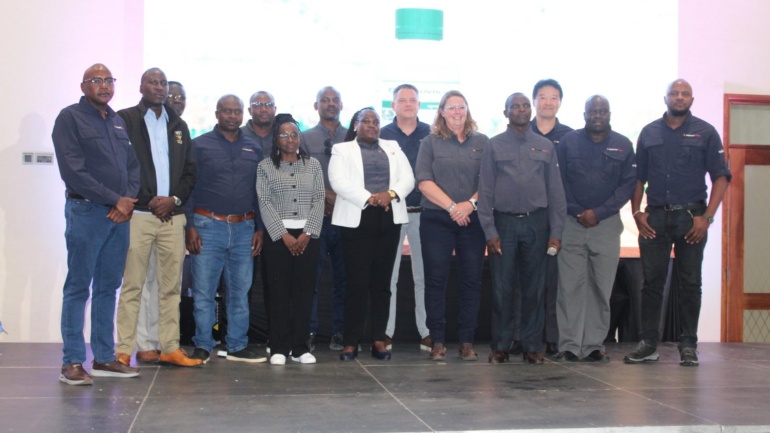
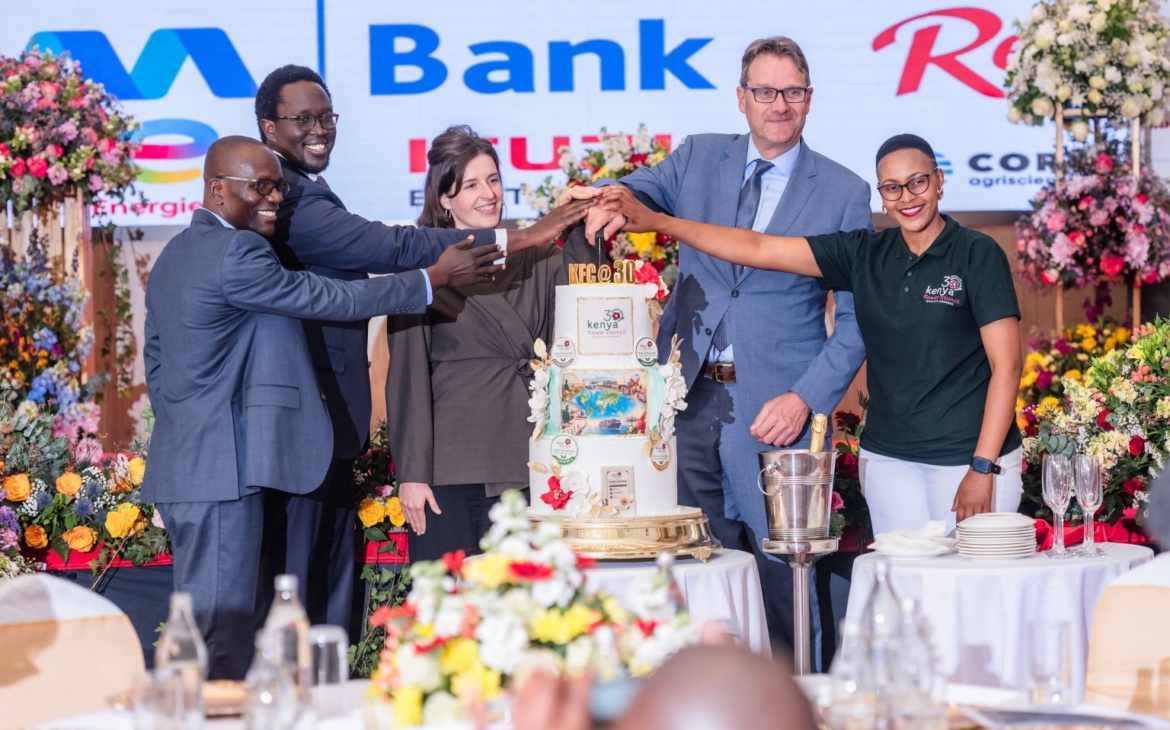
The Kenya Flower Council (KFC) marked its 30th anniversary this week under the theme “Driving Resilience and Global Competitiveness, 30 Years On!”, bringing together growers, industry leaders, partners, former council leaders and other stakeholders to reflect on how far the industry has come and, more importantly, what it will take to remain competitive over the next three decades.
The anniversary comes at a time when Kenya’s flower industry is no longer competing simply on production volumes and favourable growing conditions. The new competition is increasingly about efficiency, traceability, sustainability, logistics, innovation, labour standards, market access and the ability to respond quickly to changing buyer and consumer expectations.
KFC was established in 1996 by five Kenyan flower growers and exporters at a time when the industry was still establishing itself as a major export business. Three decades later, Kenyan flowers have become a familiar presence in international markets, particularly in Europe, while the industry has developed sophisticated production, postharvest, logistics and compliance systems.
In 2025, Kenya exported approximately 130,600 tonnes of cut flowers valued at KSh81.3 billion, with flowers accounting for about 62 per cent of the value of fresh horticultural exports. But the numbers tell only part of the story. Behind the export figures is an industry that has had to continually reinvent itself as markets have become more demanding and the cost of producing and moving flowers has risen.
Speaking during the anniversary celebrations, KFC Chief Executive Officer Clement Tulezi said the milestone was about recognising the people, partnerships and resilience behind the industry’s development. “We are not simply celebrating the longevity of an organisation. We are celebrating the remarkable journey of an industry, the people who built it, the partnerships that sustained it, and the resilience that has made Kenyan flowers globally competitive.”
From compliance to competitiveness
One of the most significant changes over the past three decades has been the transformation of sustainability from a voluntary industry ambition into an increasingly important condition of doing business.
Kenya’s sustainability journey began with the KFC Code of Practice in 1996 before evolving into the Flowers and Ornamentals Sustainability Standard (FOSS) in 2014. The evolution reflects a wider shift in global floriculture. Environmental performance, worker welfare, responsible chemical use, water management, resource efficiency and continuous improvement are no longer issues that can be treated separately from commercial performance.
For growers, the challenge is becoming increasingly complex. Production costs are rising. Logistics remain vulnerable to disruption. Climate variability is affecting water availability and production conditions. Buyers are demanding greater transparency, while regulatory requirements in export markets continue to evolve. The result is a new competitive equation: producing a good flower is no longer enough. The flower must also be produced efficiently, responsibly and with evidence that it meets increasingly demanding market requirements. That puts sustainability firmly inside the business model rather than outside it.
Logistics is now a competitiveness issue
For an industry whose product is perishable and highly time-sensitive, the journey from greenhouse to international market can determine whether a flower retains its value or loses it.
KFC has therefore continued to emphasise the strategic importance of logistics, arguing that horticultural logistics should be treated as economic infrastructure rather than simply as a service supporting exporters. The issue is becoming more urgent as growers confront higher freight costs, disruptions in international aviation, changing trade routes and increasing pressure to deliver consistent quality within narrow market windows.
A flower can spend months being grown to precise specifications, yet its commercial value can be compromised within hours if handling, cold chain, transport or export processes fail. The next phase of competitiveness will therefore depend not only on what happens inside the greenhouse, but also on what happens after harvest.
A partnership built around more than flowers
The anniversary also highlighted the strategic relationship between Kenya and the Netherlands, one of the most important partnerships in global floriculture. The celebrations were attended by H.E. Henk Jan Bakker, Ambassador of the Kingdom of the Netherlands to Kenya, who served as Chief Guest.
The relationship between the two countries extends well beyond the movement of flowers between markets. It encompasses breeding and genetics, biological crop protection, greenhouse technology, water management, logistics, research, investment and market infrastructure.
The Ambassador described the relationship as one built around horticulture rather than simply flower trade. “Kenya and the Netherlands do not simply trade flowers. We have built a horticultural partnership around flowers.” That partnership is likely to become even more important as the industry enters a period in which technology, sustainability and resource efficiency will increasingly determine commercial success. The Ambassador also warned against treating sustainability as a series of regulatory hurdles that growers must simply clear. “Sustainability should not become a race to comply with the next requirement. It should be a race to become better.”
For Kenyan growers, that distinction is important. Compliance may open the door to a market, but efficiency, innovation, consistency and sustainability will increasingly determine whether a grower remains competitive once inside it.
The next 30 years will be different
The first three decades of organised industry development were largely about building production capacity, opening markets, developing standards and establishing Kenya as a credible global flower supplier.
The next three decades will be more demanding. Kenya will have to compete in a market where buyers have more production origins to choose from, consumers are asking harder questions about sustainability and retailers are demanding greater transparency throughout the supply chain.
At farm level, that means greater attention to water productivity, energy use, soil health, integrated pest management, biological control, responsible crop protection, labour productivity and postharvest efficiency.
It also means investing in data.
The flower industry increasingly needs to know not only what it produces, but how efficiently it produces it, how much water and energy goes into every stem, what happens to inputs and waste, how resilient the farm is to climate shocks and whether the production system can withstand changing market requirements.
This is where the next chapter of Kenyan floriculture will be written. The industry cannot rely indefinitely on the advantages that made it successful in the first place. Altitude, climate, skilled labour and an established export reputation remain important, but they must increasingly be matched with productivity, technology, resilience and market intelligence.
Thirty years is a milestone. It is not a guarantee. The greatest message from KFC’s 30th anniversary may therefore not be about how far Kenya’s flower industry has travelled, but about how quickly the competitive landscape around it is changing.
The industry that emerged in 1996 could compete by establishing production and finding markets.
The industry entering its fourth decade must compete on much more. It must produce better with fewer resources, manage risk more intelligently, move flowers more reliably, demonstrate sustainability more convincingly and respond faster to buyers whose expectations are changing almost as rapidly as the markets themselves.
For growers, resilience can no longer mean simply surviving the next crisis. It must mean building farms capable of absorbing shocks, adapting to new requirements and remaining commercially viable while doing so. That is the real test facing Kenyan floriculture as it enters its next 30 years. The first 30 years established Kenya as a global flower power. The next 30 will determine how long it can remain one.
Source: Floriculture