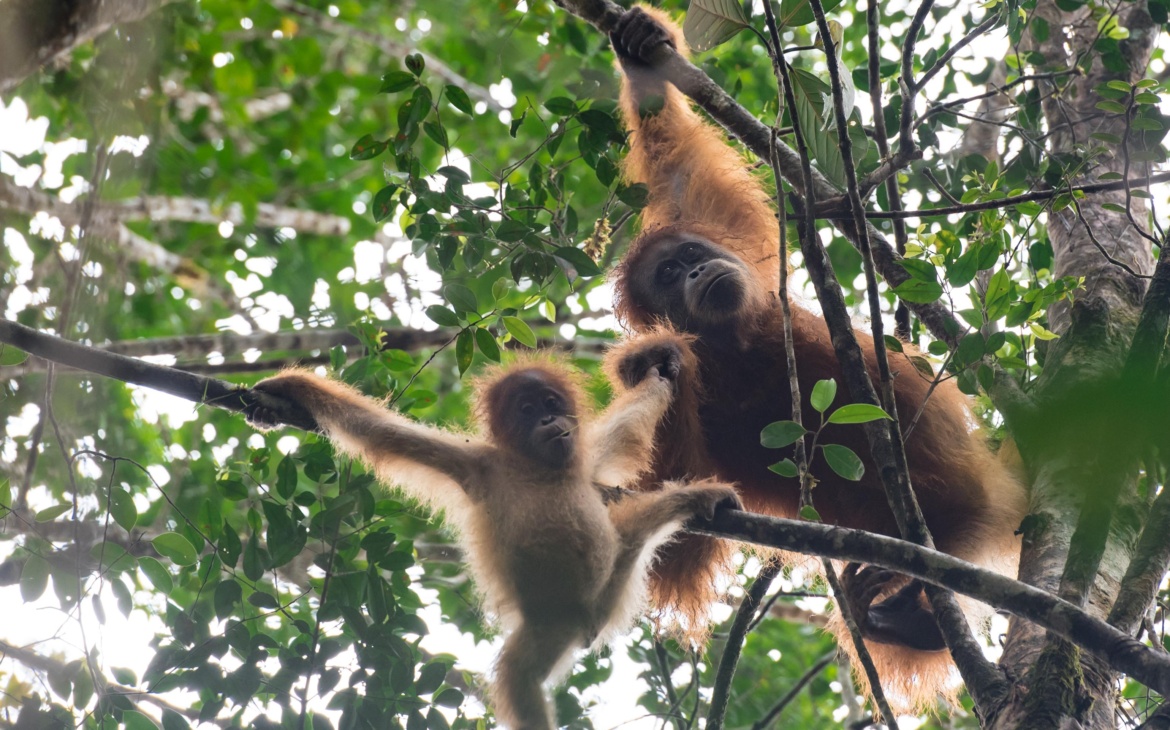
With cyclone-triggered landslides damaging its last remaining habitat and development pressures continuing across northern Sumatra, the Tapanuli orangutan faces an urgent conservation challenge as global leaders meet at CBD COP17.
The world’s rarest great ape faces a critical test in the forests of northern Sumatra, Indonesia, where devastating storms, habitat destruction, and mounting development pressures have pushed an already vulnerable species closer to extinction.
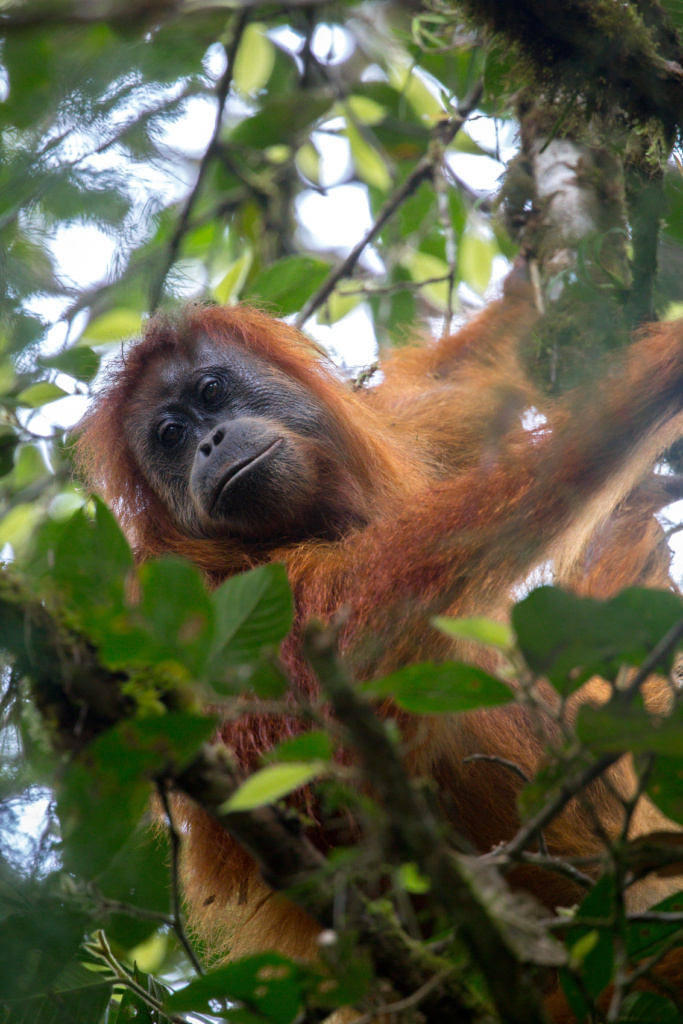
The Tapanuli orangutan (Pongo tapanuliensis), recognized as a distinct species in 2017, survives only in the Batang Toru ecosystem. Its restricted range makes the protection of this forest central to the species’ future, given that it has one of the smallest wild populations among great apes.
A new report by environmental organisations Mighty Earth and Satya Bumi, launched during the 17th Conference of the Parties to the United Nations Convention on Biological Diversity (CBD COP17) in Yerevan, Armenia, warns that the species could disappear without an immediate and coordinated recovery effort.
The report, Code Red for the Tapanuli Orangutan, estimates that only 658 individuals may remain in the wild. This figure is based on a pre-disaster population estimate of 716 orangutans and a modelled estimate of 58 potential deaths following severe flooding and landslides in November 2025. It is not a confirmed post-disaster census, and the full extent of the losses remains uncertain.
The warning comes as countries gather in Yerevan to review global progress under the Kunming-Montreal Global Biodiversity Framework, which includes a commitment to halt human-induced extinctions of known threatened species and support their recovery.
The Tapanuli orangutan presents a stark test of that commitment. Discovered as a distinct species less than a decade ago, it represents a unique evolutionary lineage that has survived for millions of years but now faces an uncertain future.
A disaster in an already threatened forest
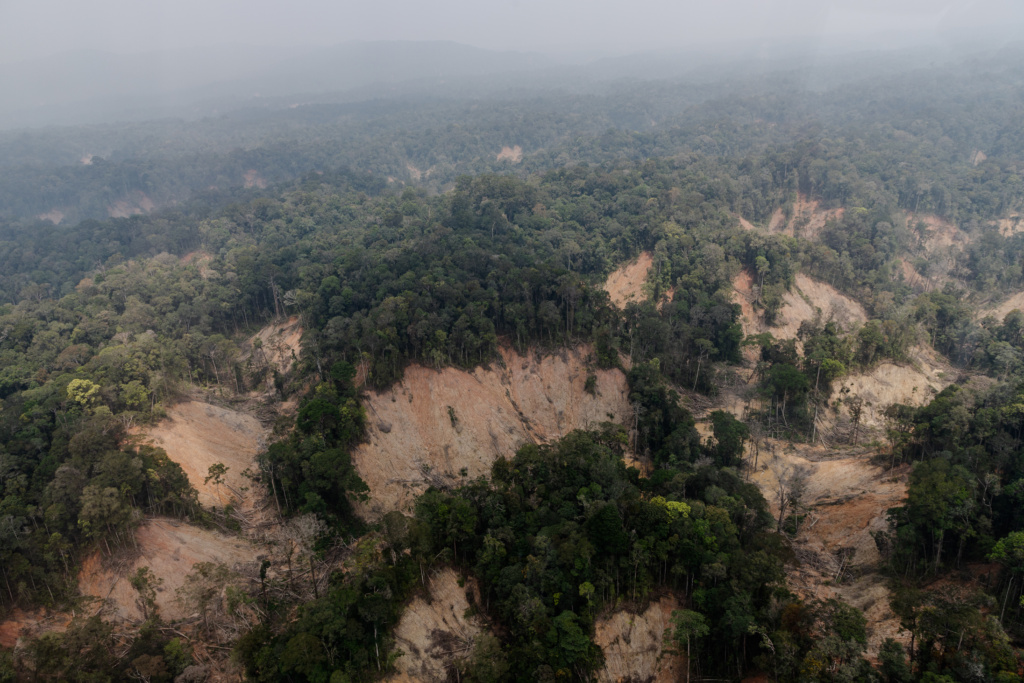
In November 2025, Cyclone Senyar brought extreme rainfall to northern Sumatra, triggering widespread flooding and landslides across the Batang Toru ecosystem.
A scientific study published in Current Biology in June 2026 estimated that the landslides affected more than 8,300 hectares of forest in the ecosystem’s western block, equivalent to approximately 11.7 per cent of its forest cover. Researchers concluded that around 58 individuals may have been killed by comparing landslide-affected areas with orangutan distribution estimates.
The estimated losses are particularly concerning for a species with a small population and a slow reproductive rate. Losing even a limited number of individuals can undermine its ability to recover, especially when surviving groups are already separated by fragmented habitat.
The disaster has also raised concerns about the condition of the forest itself. Beyond the potential deaths of individual orangutans, damaged vegetation, disrupted forest connections, and changes to the availability of food could complicate efforts to sustain the remaining population. The longer-term ecological consequences are not yet fully established.
Yet, the cyclone struck a habitat that was already under severe strain.
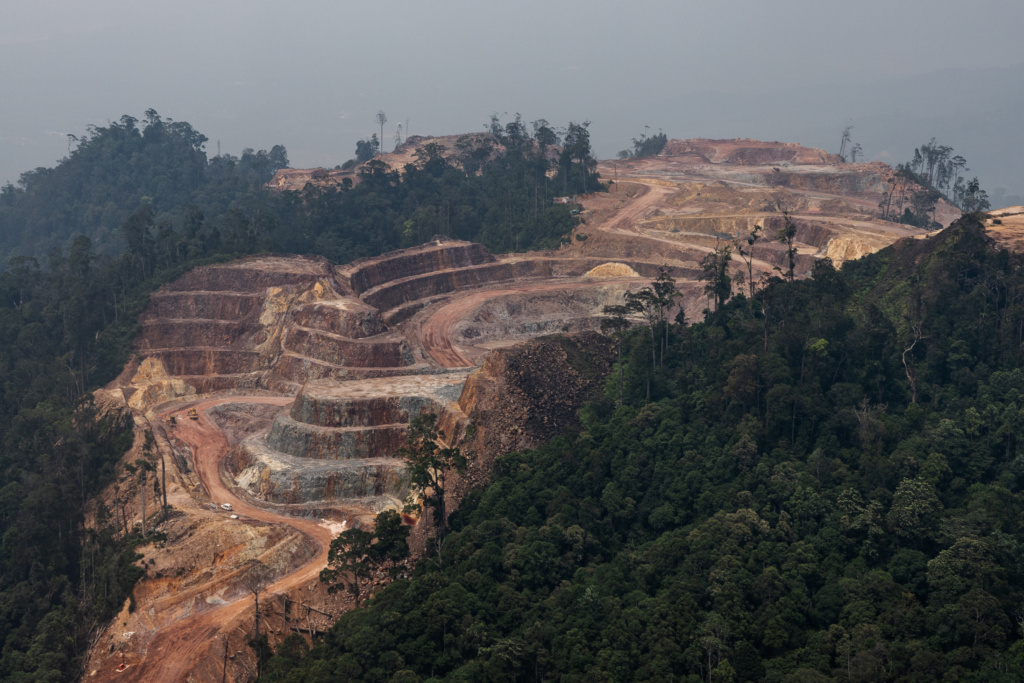
For years, the Batang Toru ecosystem has faced pressure from deforestation, mining, logging, agricultural expansion, and infrastructure development. The report identifies the Batang Toru hydropower project and the Martabe gold mine among the primary developments threatening further habitat loss and fragmentation.
These pressures matter because the orangutans depend on a forest landscape that is increasingly divided into isolated population groups. Severing forest corridors restricts movement between these groups, reducing their ability to interbreed and recover over time.
A September 2026 report by Mongabay also highlighted these ongoing developments and pointed to the absence of a coordinated recovery strategy almost a year after the cyclone. The publication reported that satellite imagery showed new ground disturbances around the Martabe mine concession, though the exact causes and implications remain contested.
The combination of sudden disaster and long-term environmental degradation presents a critical conservation challenge. Protecting the remaining orangutans will require more than responding to the immediate impacts of the storm; it will depend on safeguarding their remaining forest habitat from further destruction.
From global commitments to recovery on the ground
For conservationists, the immediate priority is to establish a coordinated recovery plan that brings together government agencies, scientists, conservation organisations, businesses and local communities.
Amanda Hurowitz, Great Apes programme lead at Mighty Earth, said the Tapanuli orangutan species still has a chance of survival if action is taken quickly.
“There is still an opportunity to protect the remaining population, restore damaged forests and secure a future for this remarkable species,” she said in the report’s accompanying statement, warning that the window for action was narrowing.
The report calls for six priority interventions: updated population surveys, an end to further forest loss, restoration of damaged habitat in western Batang Toru, stronger protection against hunting and other threats, greater involvement of local communities, and sustained funding for recovery.
These measures address different but connected aspects of the crisis. Updated surveys would help establish how many orangutans survived the disaster and assess the condition of their habitat. Forest restoration and the reconnection of fragmented areas would support movement between populations, while stronger protection would help prevent additional losses.
The report also stresses the importance of involving Indigenous and local communities in conservation planning and supporting sustainable livelihoods. Protecting the species will require cooperation with the people who live in and around its habitat, rather than treating conservation as an exercise confined to forests and wildlife alone.
Professor Jatna Supriatna, chairman of the Institute for Sustainable Earth and Resources at the University of Indonesia, said existing conservation efforts need stronger coordination, clear population and habitat targets, and dedicated funding.
He called for collaboration among government agencies, civil society organisations, local communities, and businesses to strengthen conservation work already underway on the ground.
According to the report, the International Union for Conservation of Nature (IUCN) has also called for a moratorium on projects threatening the orangutan’s habitat until a formal conservation management plan is adopted.
The immediate challenge is translating these calls into a practical, adequately funded plan with measurable targets and clear accountability for implementation.
As countries at COP17 review whether their collective actions are sufficient to meet global biodiversity commitments, the plight of the Tapanuli orangutan illustrates what is at stake when a species has so little margin left to withstand further losses.
Its long-term future depends on whether the remaining forest can be protected, damaged habitat restored, and isolated groups given a realistic path toward recovery.
For a species found nowhere else on Earth, there is no alternative habitat to fall back on. Whether the Tapanuli orangutan endures will ultimately depend on turning international commitments into coordinated on-the-ground action before further degradation makes recovery impossible.
Author Profile

-
Seeker.
Inspire AFRIKA.
Latest entries
 Animals23 October 2026As COP17 Meets, World’s Rarest Great Ape Faces a Make-or-Break Test in Indonesia
 Biodiversity22 October 2026One in Five Tropical Biodiversity Sites Overlapped by Mining Concessions, COP17 Report Finds
 Biodiversity21 October 2026COP17 Opens in Armenia with Global Biodiversity Progress Under Scrutiny
 Biodiversity19 October 2026Yerevan Declaration Sets Tone for COP17 as World Leaders Demand Real Action on Biodiversity