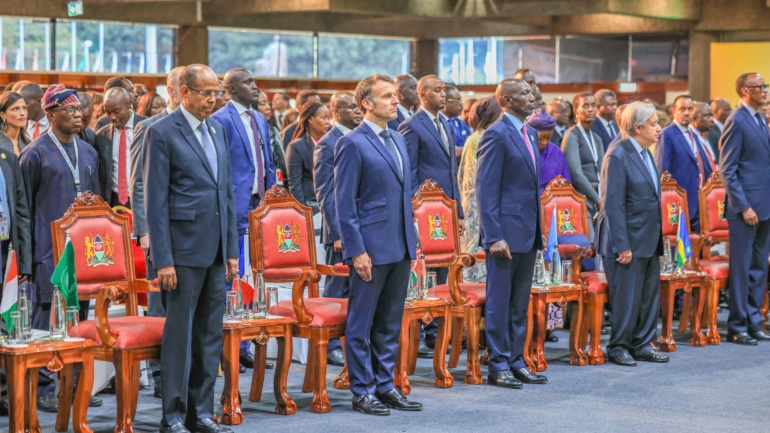
Nairobi became a meeting point for one of the world’s biggest environmental challenges: how to halt the loss of biodiversity. Delegates gathered at the United Nations Environment Programme headquarters for two linked meetings under the Convention on Biological Diversity (CBD), first the Subsidiary Body on Scientific, Technical, and Technological Advice (SBSTTA-28) and then the 7th Meeting of the Subsidiary Body on Implementation (SBI-7).
The delegates were tasked with examining how far countries have progressed in implementing the Kunming-Montreal Global Biodiversity Framework, the global agreement adopted in 2022 that set 23 targets for conserving and restoring nature.
The Nairobi meetings considered the first global assessment of collective progress against those targets. They developed advice and recommendations to feed into the next CBD Conference of the Parties, COP17, in Armenia in October 2026.
What actually happened in Nairobi
The talks ran in two parts. The 28th meeting of the Subsidiary Body on Scientific, Technical and Technological Advice (SBSTTA-28) ran from 27 July to 1 August, reviewing the scientific evidence on what’s working, and what isn’t, in global biodiversity conservation.
It was chaired by Jean-Bruno Mikissa of Gabon, and brought together governments, scientists, Indigenous peoples’ representatives, youth delegates, and civil society organisations.
The Subsidiary Body on Implementation (SBI-7) picked up immediately after, running through 12 August, shifting the focus from evidence to the harder question of execution: how countries actually embed biodiversity commitments into national policy and, above all, how they pay for it.
A first-ever global progress report on the Kunming-Montreal Global Biodiversity Framework, compiled from submissions by 125 countries, found real engagement and innovation across the framework’s 23 targets, but also persistent shortfalls in financing, capacity-building, and technology transfer. Delegates reportedly expressed deep concern that the current pace of implementation isn’t enough to meet the framework’s targets.

The Kunming-Montreal framework is ambitious. Its targets cover everything from protecting and restoring ecosystems to tackling biodiversity loss caused by pollution, unsustainable production and consumption, and harmful subsidies. However, having targets is one thing while implementing them is another.
The Nairobi meetings therefore focused heavily on the practical side of implementation, including monitoring, reporting, finance, capacity-building and resource mobilisation.
The finance question
Countries cannot simply be asked to protect ecosystems without the resources, technology and capacity to do so. This is particularly important for developing countries, where governments are often trying to balance conservation with competing development needs.
The Nairobi discussions included work on the financial mechanism and resource mobilisation, as well as capacity-building and other elements needed to help countries implement the biodiversity framework. A government may commit to restoring degraded ecosystems. But restoration requires people, equipment, scientific information and long-term funding. A country may want to improve biodiversity monitoring, but it needs the systems and technical capacity to collect and use that information.
CBD Executive Secretary Astrid Schomaker used her closing remarks to make a financing argument in blunt terms: the world spends roughly thirty times more destroying nature than it spends protecting it. “The world keeps bankrolling this destruction of nature,” she said.
Schomaker also placed Africa at the centre of the imbalance, noting the continent holds a quarter of the world’s biodiversity while facing some of the sharpest climate impacts and the least financial and technological capacity to respond. In separate UN News coverage of the same talks, she framed the challenge ahead simply, asking how the world can reverse the current trajectory.

From Nairobi to Yerevan
Hosting these talks in Nairobi rather than Geneva or Montreal was quite meaningful. Kenya and East Africa are at the middle of nearly every pressure point the talks are meant to address, from land degradation to wildlife displacement to communities whose adaptive capacity is thinnest exactly where the shocks are landing hardest.
The Nairobi meetings have now ended, but the work is far from over. The recommendations emerging from SBSTTA-28 and SBI-7 will help inform negotiations at CBD COP17 in Yerevan, Armenia, this October. This presents another opportunity for countries to assess progress and decide how to move forward.
For Africa, however, the bigger question is whether the global biodiversity framework will be matched with the finance, technology and support needed to turn its targets into action. Nairobi may have hosted the negotiations, but the real test begins when countries return home and begin implementing what was agreed.
Ultimately, the success of a global biodiversity framework will be measured by whether forests remain standing, ecosystems recover, wildlife has space to survive, and the people who depend on nature can continue to thrive and not by the number of meetings held or targets adopted.
Author Profile

Latest entries
 Energy21 September 2026Egypt wants to manufacture its wind-energy transition. Can the model work across Africa?
 Climate16 September 2026What Happens When Climate Change Has Schools Closed? A Growing Education Crisis
 Agriculture8 September 2026More Than Half of Nigeria’s Cocoa Farmers Could Lose EU Market Access as Deforestation Law Nears
 Events25 August 2026Kenya triples its clean energy ambitions: Will power get any cheaper?