Agribusinesses are collecting more data than ever before. Production figures, financial records, logistics information, greenhouse measurements, transport data and operational reports are becoming part of everyday farm management.
But collecting data and making use of it are two different things.
For many businesses, information remains scattered across different systems, spreadsheets or even individual computers, making it difficult for managers to obtain a clear picture of what is happening in the organisation.
That is the gap that Sunesis Consulting is trying to address through business intelligence, helping companies bring fragmented information together so that it can be used for faster reporting and decision-making.
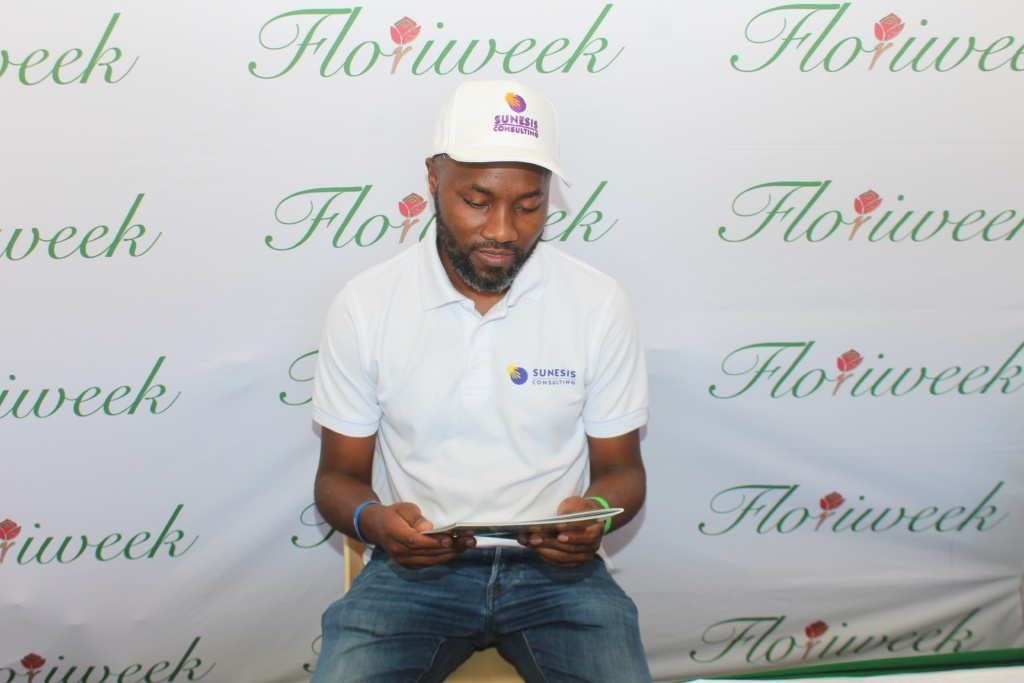
“If you’re sitting on data that is not able to make you make a decision, then it’s as good as useless to you,” says Caleb Bett of Sunesis Consulting.
Bett says the company helps organisations create a single view of information drawn from different systems and manual tools.
“A lot of these organisations generate a lot of data. Farm data, operational data, transport, logistics, farm data and, at times, they are not able to make decisions based on that data because it may be in different systems or sitting in Excel, maybe in someone’s laptop,” he says.
The answer, he explains, is to bring the information together into dashboards that management can use.
“We are able to just help them have that one view, one dashboard, one click dashboard that pulls from whatever different systems they have or whichever manual tools they are using into one view that can now allow the management to make a decision.”
Making reporting work harder
Sunesis operates across multiple sectors and countries, with Bett saying the company currently supports operations in 10 African countries.
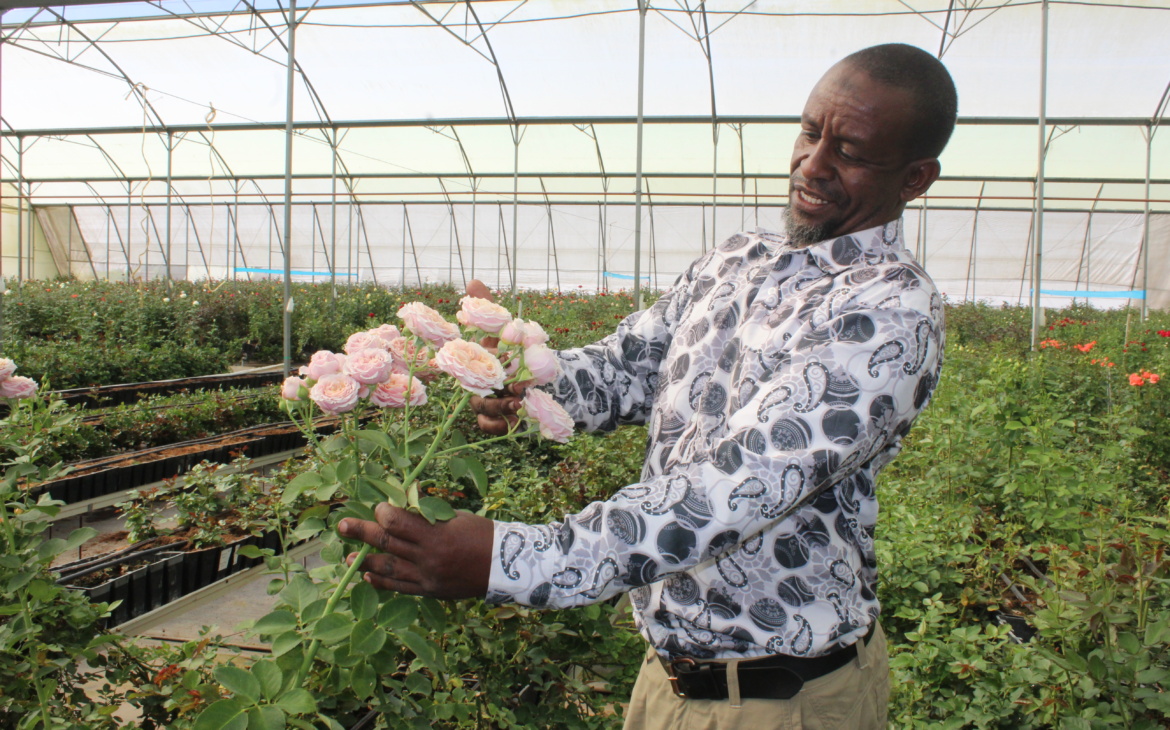
Its clients have included businesses in fast-moving consumer goods, manufacturing and agriculture. In the agricultural sector, the company has worked with organisations including Majinpa or Kariki and Rift Valley Roses.
But Bett says the work is not limited to building dashboards.
An important part of the company’s approach is helping employees acquire the skills to generate and use reports themselves.
Sunesis offers training in tools including Excel, Power BI and Python, with programmes designed for people at different levels of proficiency.
The idea is to move beyond simply giving employees access to information and help them understand how to work with it.
That becomes particularly important when reporting is tied directly to financial and operational planning.
Bett points to an example involving budgeting at a flower company, where the business needed to work backwards from its expected stem production to determine how much it needed to produce to meet its revenue projections.
The process, he says, was previously extremely time-consuming.
“Most of the firms would want to, especially flower firms, to budget using the stems that they expect to produce because at the end of the day, the revenue is based on how much of a harvest from the stems,” he explains.
Sunesis developed a budgeting tool for one of the firms, with Bett saying the exercise that previously took about six months could subsequently be completed in about two weeks.
“One of the value propositions we usually say is that we save clients 60% of the time, more than 60% of the time they would take to produce those reports,” he says.
For an industry where production forecasts, revenues and costs have to be constantly monitored, the ability to shorten a reporting process can have practical implications. Instead of spending months compiling information, management can potentially have more time to analyse it and respond.
Technology and people
Bett says digital transformation does not necessarily begin with a company buying a completely new system.
Sunesis has three main ways of engaging clients.
The first is through training and upskilling. A company may already have the systems it needs but lack the internal skills to use them effectively.
Sunesis works with human resources and learning and development teams to assess employees’ capabilities and develop training around their needs.
The second approach is project delivery.
During training or discussions with a client, the company may identify a repetitive process that consumes significant amounts of staff time. Sunesis can then develop a customised solution around that particular business need.
“When they identify that, A, you could help us with maybe a tool that would help us in one, two, three,” Bett says. “There are things that maybe are so repetitive… So now that’s where we bring in the second way of engaging with them, which is called the project delivery service.”
Once the solution is developed, Sunesis conducts a knowledge-transfer session with the employees who will manage it internally.
The third approach is longer-term support.
Some clients, Bett says, choose to retain Sunesis under a service-level agreement, allowing the company to continue maintaining dashboards and providing technical support while the client’s internal team focuses on its core responsibilities.
Custom solutions or ready-made tools?
The business intelligence market also raises another question for companies: should they build something specifically for their operations or adopt an existing product?
Bett says Sunesis largely differentiates itself through customised solutions, although it also has tools that can be adapted for clients.
One example is a funding tracker designed primarily for non-profit organisations. The company also has a budgeting tool that can be adjusted according to what a particular business needs to track.
For now, however, these solutions have not been developed as independent, branded products.
“They are yet to trademark,” Bett says, adding that giving the tools their own identities and developing them as independent products could be a future step.
For businesses requiring broader enterprise systems, Sunesis also works with Microsoft and Sage. Bett says the company can assist clients with platforms such as Microsoft Dynamics 365 and Sage X3, including systems covering areas such as inventory, finance and operational data.
Turning data into decisions
For agriculture, the bigger challenge may not be how to generate more data but how to make sense of the information already being collected.
Modern farms can generate huge volumes of information. Bett points to greenhouse data as an example, where measurements can be captured at frequent intervals.
“If you have such kind of data, and I’m assuming maybe it’s collected every 15 minutes, that’s volumes of data,” he says. “So how are you able to make a decision from that?”
The question captures the changing role of business intelligence in agriculture.
A farm may know how much it produced last year, how much money it made and which factors affected its performance. But unless that information can be brought together in a form that management can understand, its value remains limited.
For Bett, the objective is therefore not simply to help companies collect more information.
It is to make the information they already have useful.
“You’re collecting your data from the firm. You need to make a decision. You don’t know how much it lasts time,” he says.
The future, in his view, is one where businesses can leave the heavy work of compiling and maintaining reports to the technology and concentrate more on what the information is telling them.
“Us, we’ll bring you the infrastructure, and your work will just be to make decisions,” Bett says.
For an agricultural sector increasingly driven by production data, tighter margins, changing conditions and the need for faster responses, that may be the more important question: not how much data a business has, but how quickly it can turn that data into a decision.
Author Profile

- How can we learn if we don't question?
Latest entries
 Oceans22 October 2026Seamounts Under Threat: Can Governments Turn Ocean Promises into Protection?
 Events21 October 2026New Guide Links Animal Welfare to Biodiversity and Human Health
 COP1717 October 2026The World Has a Plan to Save Nature. Can It Deliver by 2030?
 Agriculture16 October 2026“There Is No Shortcut”: A Kiambu Grower’s Decade in Mushrooms