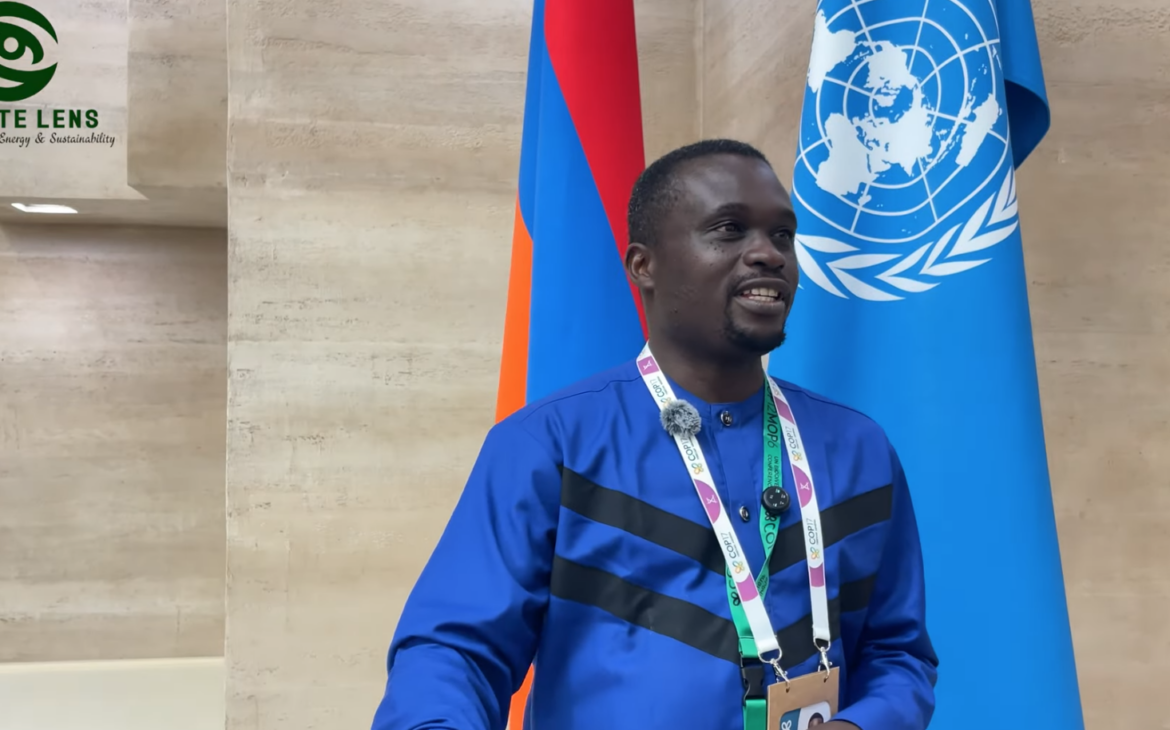
At COP17 in Yerevan, a Cameroonian forest ecologist carried the work of forest communities onto the global stage and asked the world to fund it.
When Dr Agbor James Ayamba talks about the forest, he does not start with carbon or hectares. He starts with the people who live in it.
“Communities are the best guardians of the forest,” he says. “When they protect the forest, the forest becomes secure.”
Ayamba is a forest ecologist and conservation specialist with Ajemalebu Self Help, a Cameroon-based organisation working on forest conservation and community-led development.
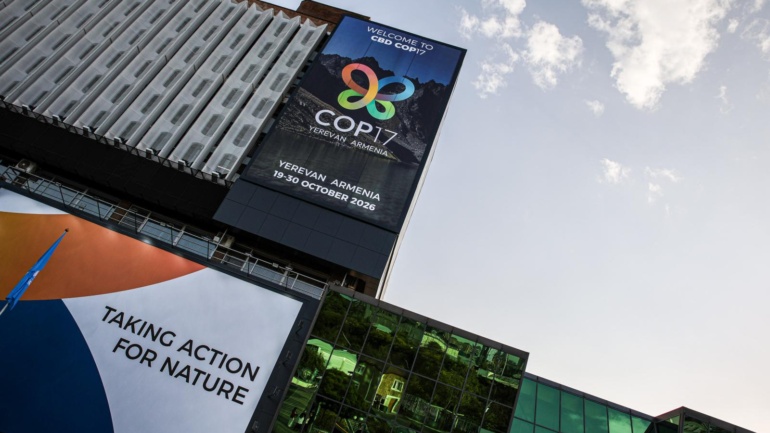
This October he was in Yerevan, Armenia, for COP17 of the UN Biodiversity Conference. He came, he says, for one main purpose: to bring the work of local communities to the international stage.
A resolution with a deadline attached
The story begins a year earlier, at the 2025 IUCN World Conservation Congress. There, Ajemalebu Self Help and its partners helped push through a resolution on keeping the Congo Basin below its tipping point, the threshold beyond which the forest could no longer hold together.
The threats are well known to him: industrial logging, land grabbing, deforestation, poaching, and mining, especially for oil, gas and minerals.
“That has caused a lot of land grabbing, which has violated communities’ rights,” Ayamba explains. “It has shifted community people from their cultural values, from their heritage, and pushed them to the limit of poverty.”
The damage reaches beyond people, he adds, adding that it has also worsened flooding, degraded soils and contributed to warming.
Communities, he says, face a three-part injustice: “First, they are not consulted. Secondly, they are evicted. And thirdly, their livelihood sources are cut off.” Yet they are the custodians of those forests.
From resolution to action
Passing the resolution was only the start, as pointed out by Ayamba; the Ajemalebu Self Help and its partners have since moved on several fronts:
- A follow-up task force to assess how far the resolution has been implemented and to produce a science-based report.
- Secured community land rights, supporting communities to map their cultural values and protect their land from encroachers.
- Other effective area-based conservation measures (OECMs), which communities manage and protect themselves.
- A community-led national park process, which he describes as the first of its kind, with the proposed park led by community people.
The ask: voice and money
Ayamba’s expectations for COP17 were specific, as he wanted to see more Indigenous Peoples and local communities in decision-making and negotiation rooms. “We hope that at the end of this COP17, we should have that achieved,” he said.
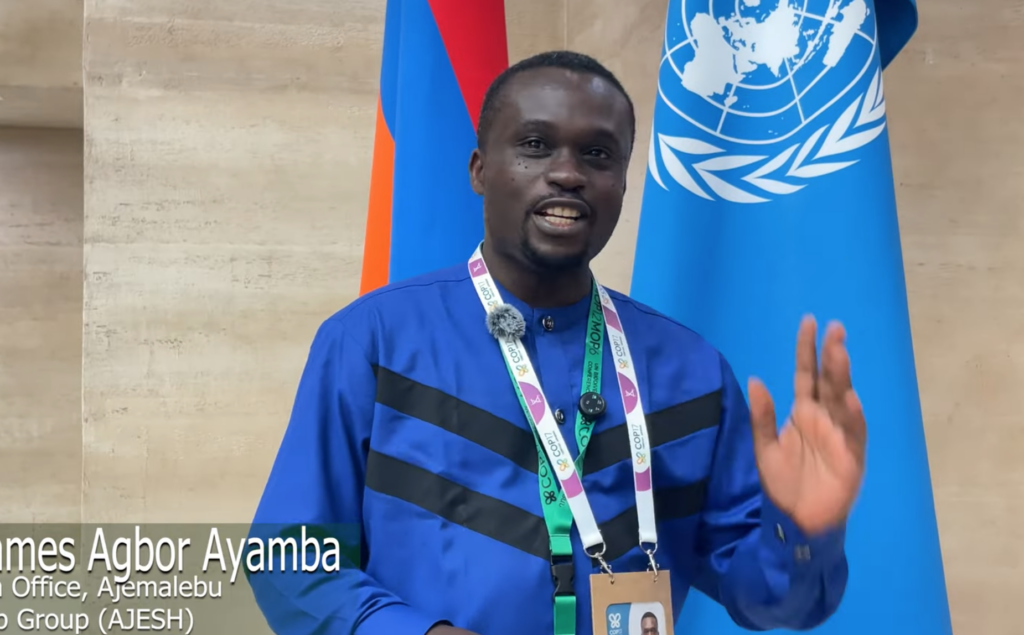
The second issue is money. “The Congo Basin has a lot of problems, but there is limited finance,” he says. “I think it is time the world concentrates finance on the Congo Basin.”
He also points to regional coordination. COMIFAC, the Central African forest commission, already brings Congo Basin partners together, but he says it needs more support from other partners.
There is some domestic momentum too. Ayamba notes that Cameroon has signed on to the 30 by 30 target, which he reads as a signal that the government is ready to help communities secure their land and resources.
What COP17 delivered
COP17 closed on 30 October with more than 40 decisions adopted. The headline outcome was the Yerevan Pathway, a response to the first global review of progress on the Kunming-Montreal Global Biodiversity Framework, which found the world off track on its 23 targets.
The Pathway covers harmful subsidies, more financial, scientific and technical support for developing countries, aligning national budgets with the framework, and stronger monitoring, reporting and review.
For Ayamba, those themes of finance, accountability and implementation are exactly where forest communities need results.
Asked what he will tell the communities he works with, his answer is simple. He wants to show them, including the community he calls the Mervalos, that their contribution to protecting biodiversity is being recognised.
“There is hope,” he says. “There is life. The world is hearing their plea to secure their land and their resources, and they should continue putting their efforts into that.”
This story was produced as part of the 2026 CBD COP17 Fellowship, operated by Informed Earth in collaboration with Internews’ Earth Journalism Network.
Author Profile

-
Seeker.
Inspire AFRIKA.
Latest entries
 Adaptation27 November 2026Agbor James Ayamba’s Case for Community-Led Conservation in COP17
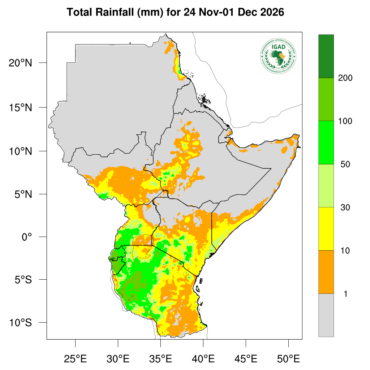 Weather Forecasts26 November 2026Rwanda, Burundi Face Widespread Flooding Risks as East Africa Records Uneven Rainfall
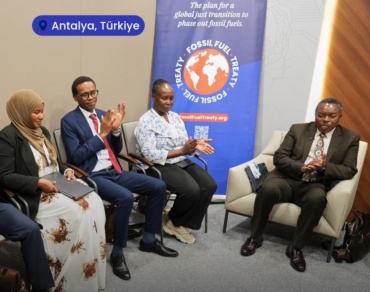 Energy25 November 2026Kenya Teams Up with Fossil Fuel Treaty Initiative to Chart a Fair Exit from Fossil Fuels
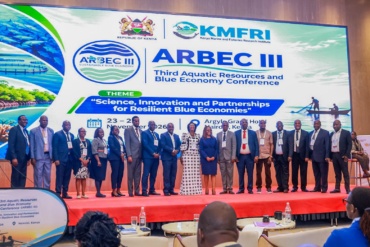 Fisheries25 November 2026ARBEC III: Bridging Science, Investment and Livelihoods in Africa’s Blue Economy