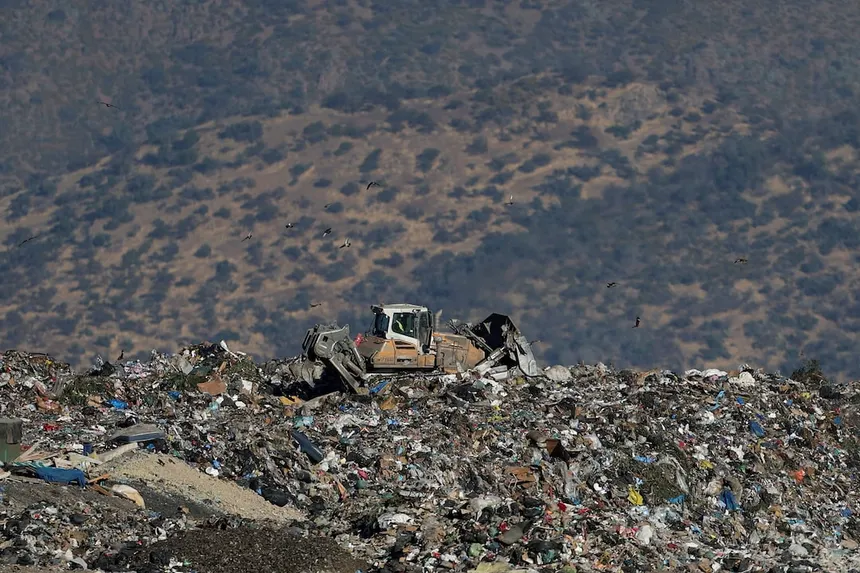
A landfill in Chile has been identified as one of the world’s largest sources of climate-warming methane emissions.
The Lomas Los Colorados landfill, located on the outskirts of Santiago, Chile’s capital, was ranked highest among 50 human-made methane super-emitters identified through satellite image data published by the United Nations Environment Programme (UNEP) in April.
The study estimated that emissions from the landfill are equivalent to those produced by nearly two million cars driven annually.
Methane from the waste sector is the third-largest human source of methane after agriculture and fossil fuels. The landfill receives waste from homes across an area with more than 7 million people.
“Most of the waste here is organic, which is what produces methane gas, a molecule that’s more potent than carbon dioxide in trapping heat,” said Mauricio Fabry, Santiago’s head of regional planning and development.
“That means smaller quantities can still cause significant global warming.”
Methane is about 80 times more powerful than carbon dioxide in the short term, though it has a much shorter lifespan and breaks down in the atmosphere after about a decade.
That means cutting methane emissions acts like a climate emergency brake, slowing global warming as the world transitions to a clean energy future.
The study further showed that waste collected at the landfill produces more than 100,000 metric tons of methane each year, around 20,000 more than the second-ranked site on the list, an oil and gas facility in Turkmenistan.
What Next?
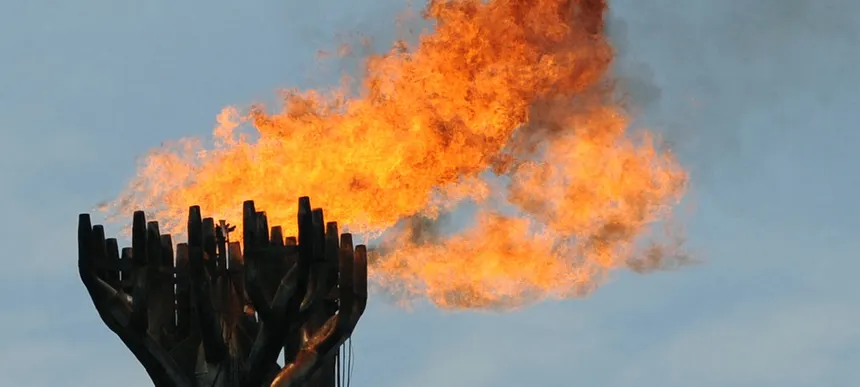
The findings also highlight how advances in satellite technology are reshaping global methane monitoring. Scientists have long understood which industries emit the most methane, but satellites now allow experts to pinpoint specific sources and target solutions more effectively.
Through its Methane Alert and Response System (MARS), UNEP’s International Methane Emissions Observatory (IMEO) uses data from 35 satellite instruments to detect super-emitters, human-caused methane sources large enough to be seen from space.
MARS is the only open satellite-based system that detects super-emitters and links directly to a global mechanism that engages countries to reduce them. Through the system, IMEO notifies governments and companies so they can act to reduce emissions of the powerful greenhouse gas.
“The world now has a roadmap of where methane action can target the biggest climate wins — and a view of who is seizing this opportunity,” said Ruth Zugman do Coutto, Deputy Director of UNEP’s Climate Change Division.
In addition to identifying the world’s biggest methane sources, IMEO is also publishing country-level response rates to MARS alerts in the oil and gas sector. The metric shows how governments are using satellite data to respond to methane emissions and where more progress is still needed.
Back to Chile
The landfill’s management company, KDM Empresas, says that since 2007, the site has helped fuel a nearby power station through a programme that converts captured methane into biogas. According to the company, the initiative has prevented the emission of more than 700 million cubic meters of methane and 11 million tons of carbon dioxide.
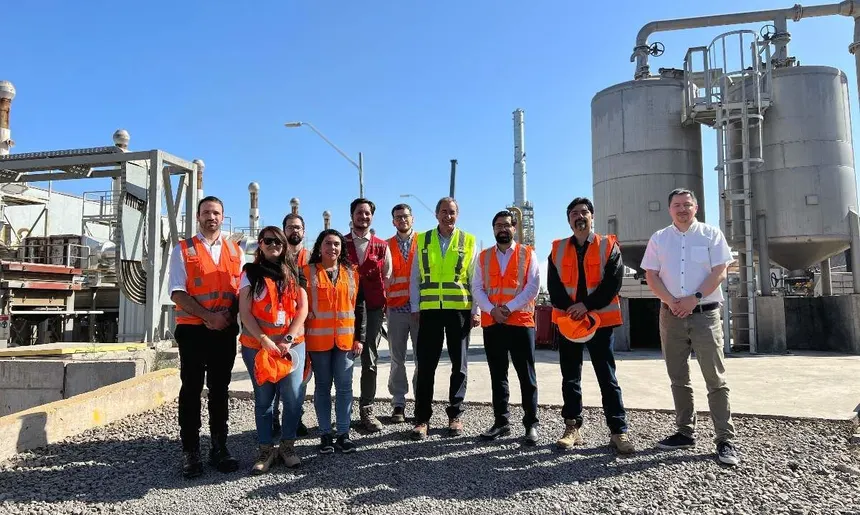
The resulting energy, which can reach up to 100,000 megawatt-hours (MWh), supplies the Loma Los Colorados power station while demonstrating how waste management can also contribute to climate mitigation efforts.
Author Profile

- How can we learn if we don't question?
Latest entries
 Oceans22 October 2026Seamounts Under Threat: Can Governments Turn Ocean Promises into Protection?
 Events21 October 2026New Guide Links Animal Welfare to Biodiversity and Human Health
 COP1717 October 2026The World Has a Plan to Save Nature. Can It Deliver by 2030?
 Agriculture16 October 2026“There Is No Shortcut”: A Kiambu Grower’s Decade in Mushrooms