
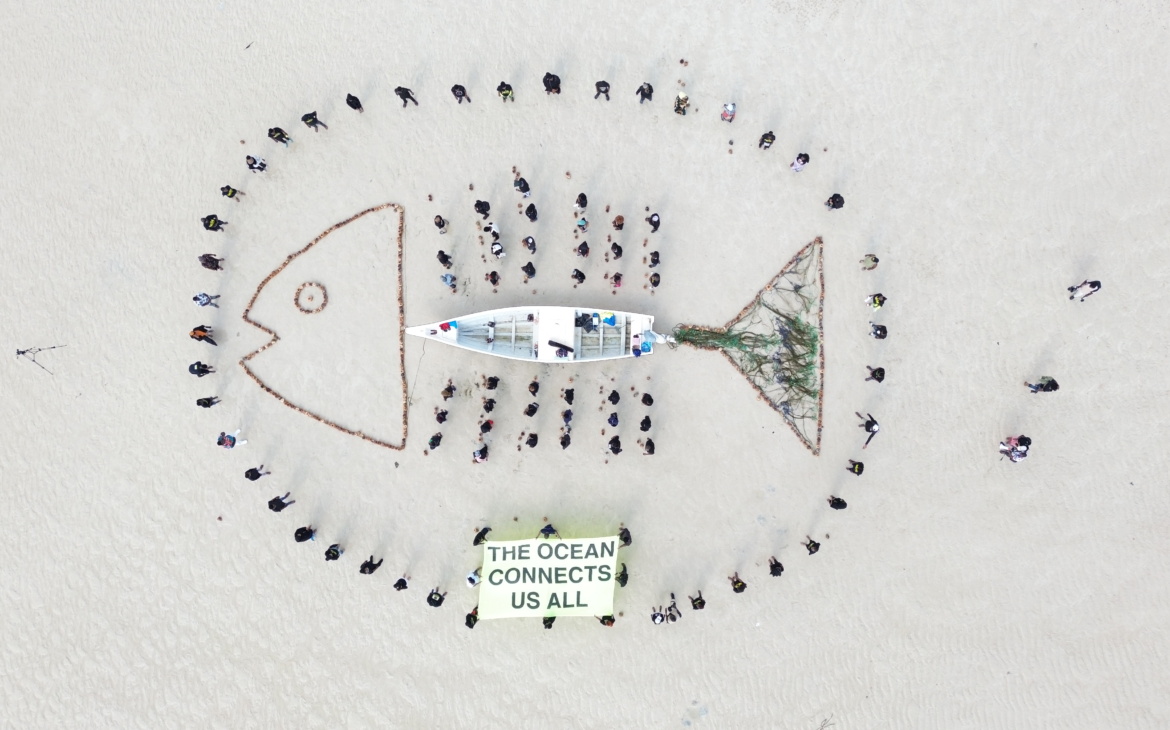
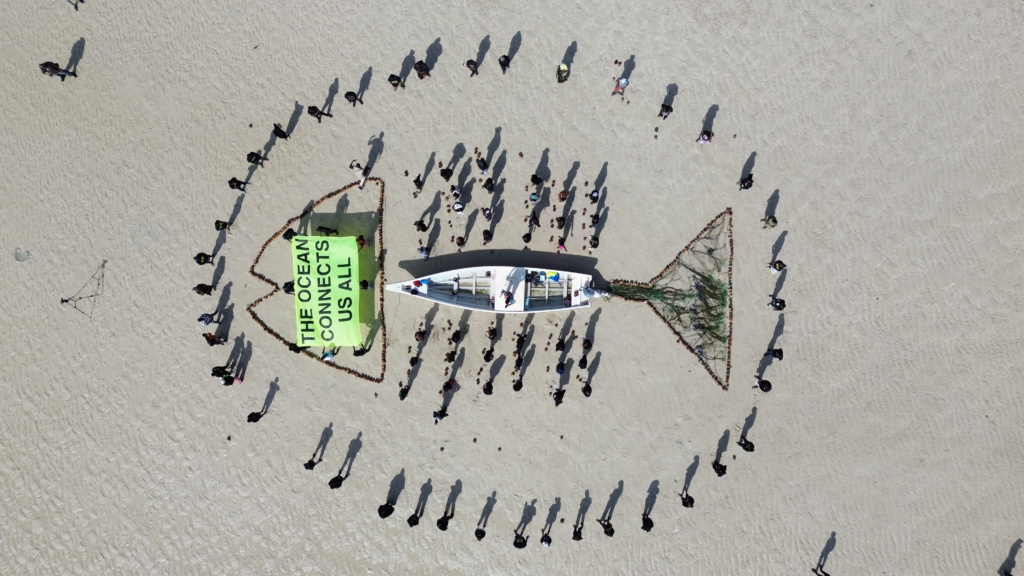
Greenpeace Africa has unveiled a large-scale sand art installation at Pirates Beach in Mombasa, calling on African governments attending the United Nations Ocean Conference from June 16–18 to strengthen commitments toward ocean protection. The 11th Our Ocean conference (OOC11) is the first ever on the continent, which is a significant placement of the region on a greater vantage point.
Created by Greenpeace Africa staff, volunteers, and local community members, the artwork displayed on the shoreline and visible from the air carries the message: “The Ocean Connects Us All.“
The initiative comes as governments gather to discuss measures to address growing pressures on marine ecosystems, including illegal, unreported, and unregulated (IUU) fishing, plastic pollution, and climate change.
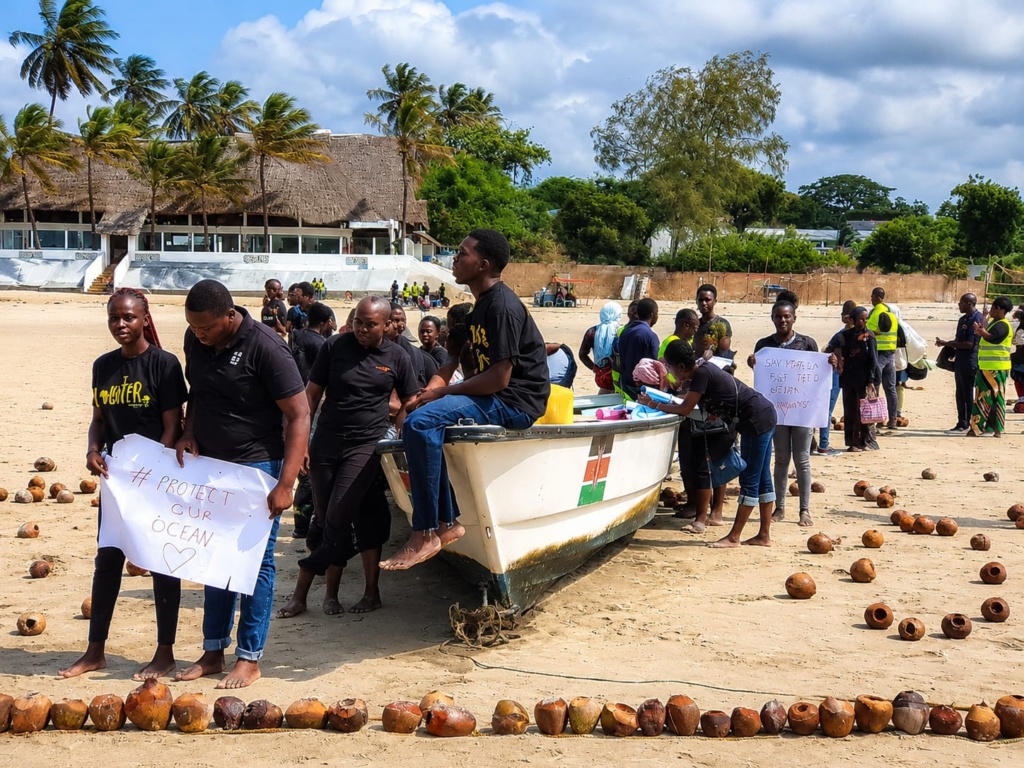
Speaking during the beach activation, Greenpeace Africa volunteer Norwich Mandu said coastal communities are increasingly feeling the effects of declining fish stocks and environmental degradation.
“Fish are becoming scarce, and livelihoods are under pressure, yet solutions exist. Protecting the ocean means protecting people, particularly local fishers who depend on these waters,” said Mandu.
Greenpeace Africa is using the conference to urge African governments to advance the implementation of the Biodiversity Beyond National Jurisdiction (BBNJ) Agreement, a global treaty that provides a framework for establishing Marine Protected Areas in international waters.
According to Greenpeace Africa Oceans Campaign Lead Dr. Aliou Ba, the agreement presents an opportunity for countries to strengthen protection of marine biodiversity while addressing threats to fisheries.
“IUU fishing continues to affect marine ecosystems and the livelihoods of coastal communities. Governments need to accelerate action on the BBNJ Agreement and strengthen efforts to protect ocean resources,” said Ba.
The organization also highlighted plastic pollution as a growing challenge for Africa’s coastlines and marine ecosystems.
Greenpeace Africa Plastics Campaign Lead Hellen Dena said addressing marine pollution should be integrated into broader ocean conservation efforts.
“Plastic waste is increasingly affecting marine environments. Efforts to protect ocean biodiversity should go hand in hand with measures that reduce pollution at its source,” she said.
Throughout the conference, Greenpeace Africa said it will advocate for accelerated ratification and implementation of the BBNJ Agreement, stronger measures to tackle IUU fishing and harmful industrial fishing practices, and greater participation of coastal communities in ocean governance.
The organization is also calling for political support for the establishment of a High Seas Marine Protected Area in the Canary-Guinea Convergence Zone under the BBNJ framework.
Africa’s oceans support millions of livelihoods through fisheries, tourism, trade, and coastal economies. However, increasing pressure from overfishing, pollution, and climate-related impacts continues to threaten marine biodiversity and the communities that depend on it.
As discussions continue at the UN Ocean Conference, ocean conservation groups are urging governments to translate commitments into concrete actions aimed at safeguarding marine ecosystems and supporting sustainable livelihoods.


