In a modest compound in Kondele, Kisumu, a quiet revolution is underway, one that smells faintly of fermented wheat bran and hums with the soft buzz of industrious wings of the black soldier flies. At the centre of it all is Colette Agunda, a community organiser whose group has found in a small, unremarkable fly an unlikely answer to one of Kenya’s most stubborn urban problems: organic waste.
Agunda leads a Community-Based Organisation (CBO) that has, for years, been at the frontline of waste management in one of Kisumu’s busiest neighbourhoods. The group already ran a modest recycling operation of sorting plastics and metals for scrap dealers, and leaving organic waste to the county government’s collection trucks.
Although when trainers from AICAD (African Institute for Capacity Advancement and Development) arrived in Kisumu, they saw something the CBO had not yet seen in itself: potential.
“When they came, they found us when we were doing organic waste management,” Agunda recalls.
“We had chicken, poultry farming, we were doing fish farming, and then we were doing our members; we trained them to do the kitchen gardening. When they came, they told us that we are not doing it in a good way, and they have a solution for us.”
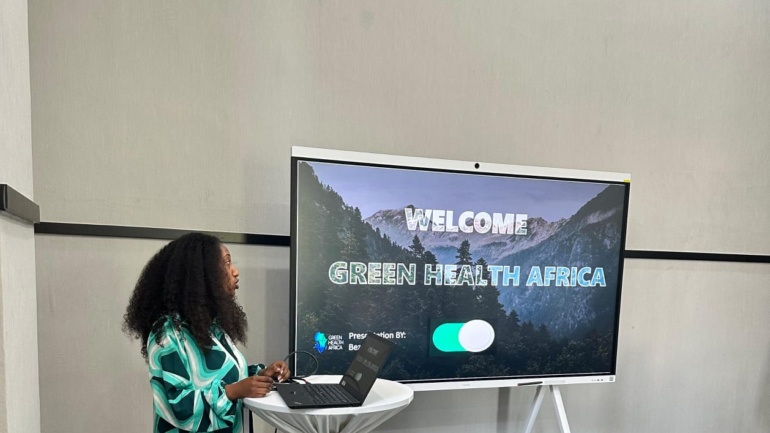
In an interview with Climate Lens News during the STRI4 week that was held at KICC, Colette revealed that this solution for them came and it had wings, which became the black soldier flies that they have entirely embraced to date and are teaching more farmers about their advantages in aiding a circular economy.
The Black Soldier Flies That Don’t Sting
The Black Soldier Fly — Hermetia illucens — is not the kind of insect that announces itself with drama. It does not sting. It does not spread disease. It does not even feed as an adult. What it does, with remarkable efficiency, is eat.
“Black Soldier Flies are called black soldier flies because it is black in colour, and when it is decomposing, when it is eating the waste, they eat like soldiers,” Agunda explains, gesturing toward the trays in her facility. “And then it is a fly, that is why it is called Black Soldier Fly.”
For communities like Kondele, which sit adjacent to some of Kisumu’s most congested open-air markets, organic waste is not an abstract environmental concern; hence, with black soldier flies, there lies a solution at hand.
It is a daily reality, rotting fruit, vegetable offcuts, food scraps, that accumulate faster than any municipal system can manage. The Black Soldier Fly, it turns out, has evolved precisely for this problem.
“It doesn’t give us diseases like any other fly, like the house fly. It doesn’t sting, like the bee and the wasp,” Agunda says. “It is helpful, very helpful. If you have the organic waste, its work is just to decompose it.”
A Life Lived in Stages
To understand how the fly earns its keep, you must first understand its lifecycle, a journey Agunda walks visitors through with the ease of someone who has given the tour many times before.
She begins with the love cage: a mesh enclosure where male and female flies meet, mate, and, in the case of the male, promptly die. “The male dies instantly,” she says plainly. “Because it has completed its job. That is its job.”
The female, her work not yet done, retreats to lay her eggs in hidden crevices, a behaviour Agunda likens to an instinct for protection. “Just like human beings, because they know that if they lay eggs anywhere, on the surfaces, there are predators.” Once she, too, has laid her eggs, the female dies.
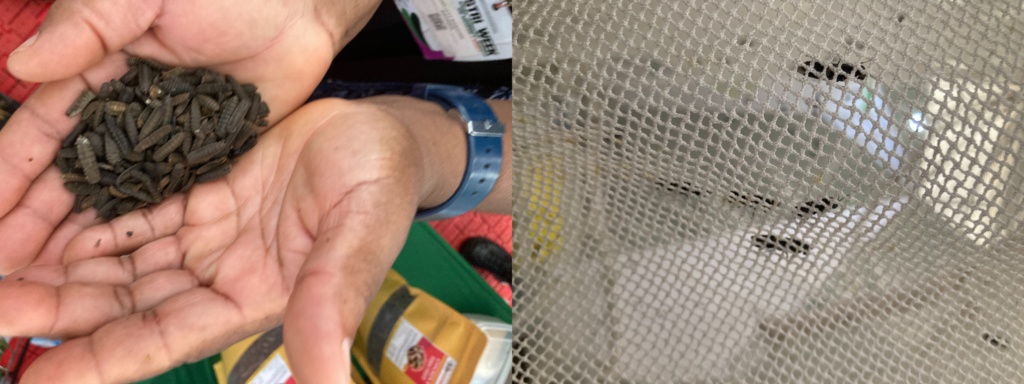
What follows is a meticulously managed sequence of growth. The eggs are collected and placed into what Agunda calls eggies, small textured boards saturated with fermented wheat bran. “It has a scent that will attract the readily hatched eggs,” she explains.
The scent draws the newly hatched larvae, invisible to the naked eye, down into their first feeding substrate.
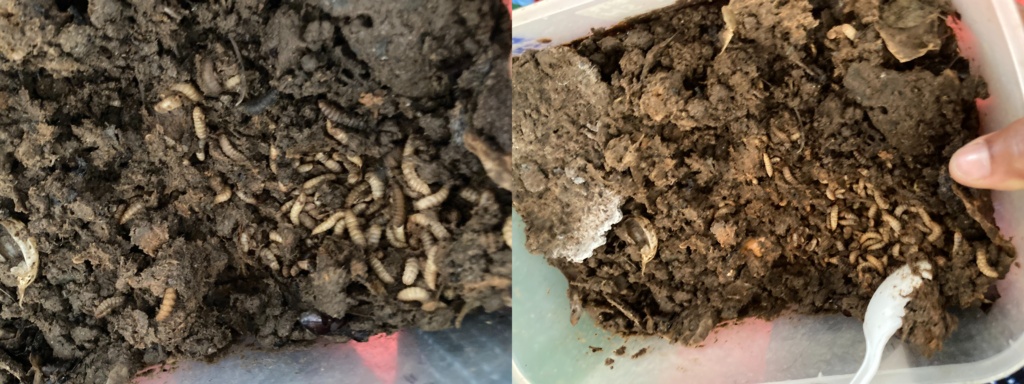
This marks the beginning of Insta-1, the larval phase where hatchlings are fed a light paste. From there, the larvae progress to Insta-2, growing visibly in size and appetite, before reaching Insta-3, where they are robust enough to process harder organic material.
“The more it feeds, the more it grows,” Agunda says, holding a tray of plump, wriggling larvae for inspection. “You can see, they have grown even in size.”
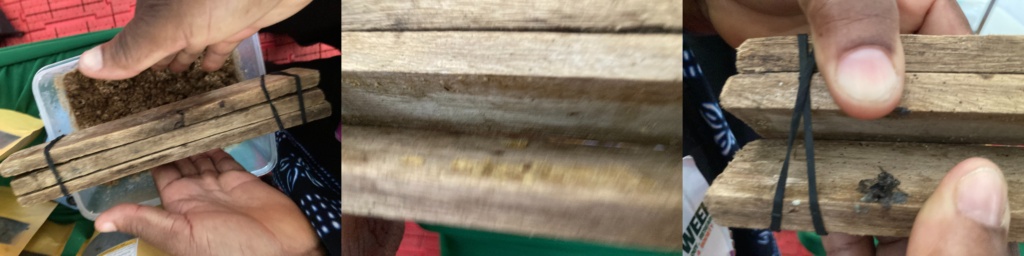
When a larva begins darkening and slowing, it is approaching the pupa stage, the point of transformation.
“Once we start to be in pupa, it will not eat. It will look for a place to go and sleep, so that it can change to a pupa,” she says. “Pupa is now the last stage, where it turns into a fly.” And with that, the cycle begins again.
The Products That Pay
The lifecycle of the Black Soldier Fly is not merely a biological curiosity; it is a production line. At each stage, the insect yields something of commercial value.
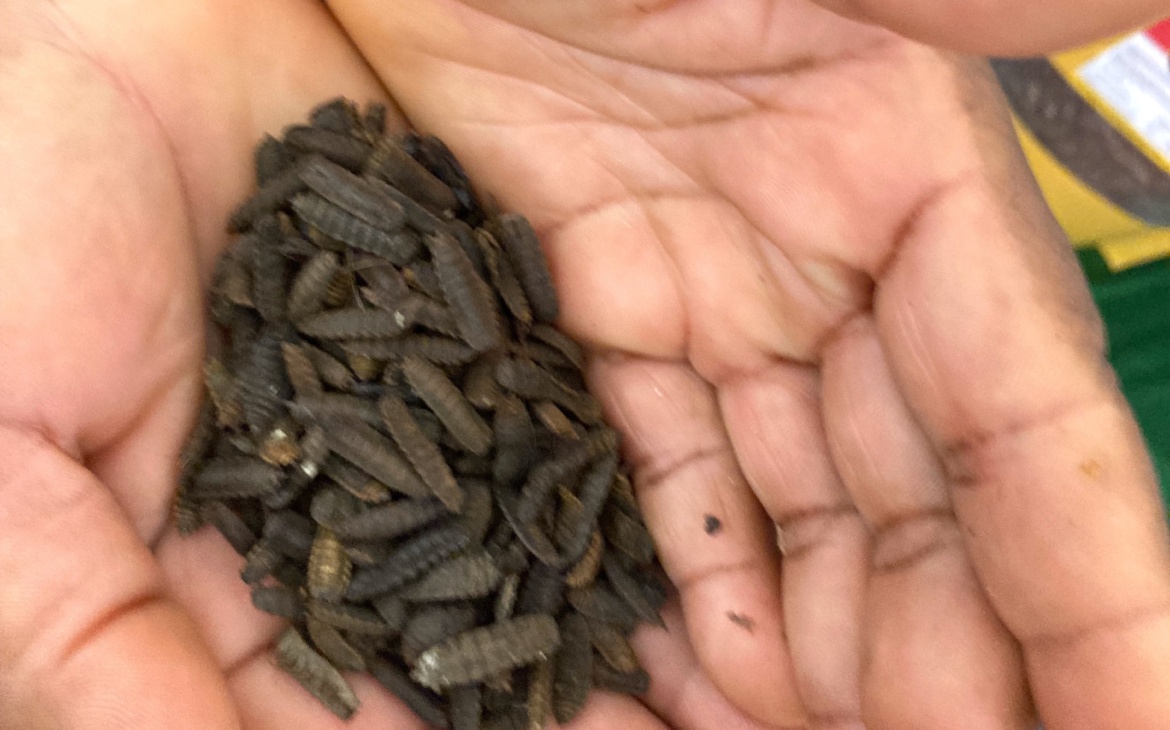
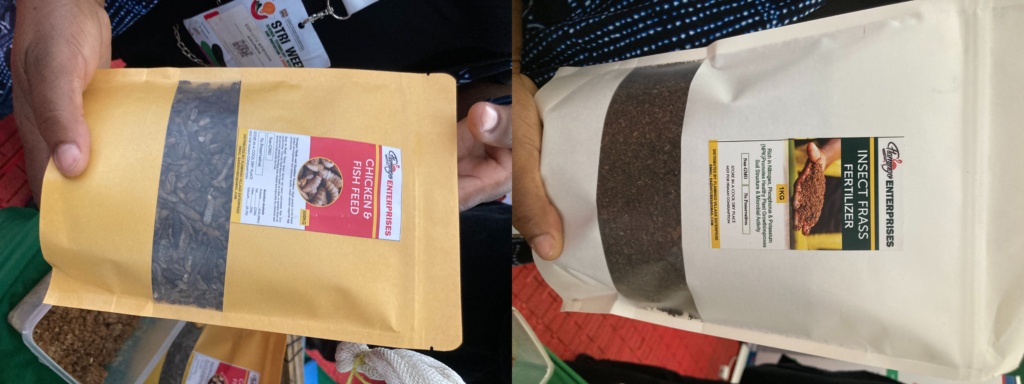
The larvae themselves are the most prized output. Dried and packaged, they fetch 100 Kenyan shillings for a modest portion and can be stored for up to a year without preservatives. Their value lies in their protein density: fed to poultry, fish, or livestock, they function as a premium, natural feed supplement.
“It is rich in protein,” Agunda says, holding a packet of dried larvae. “When the poultry or the fish or the animals feed on this, they are very healthy.”
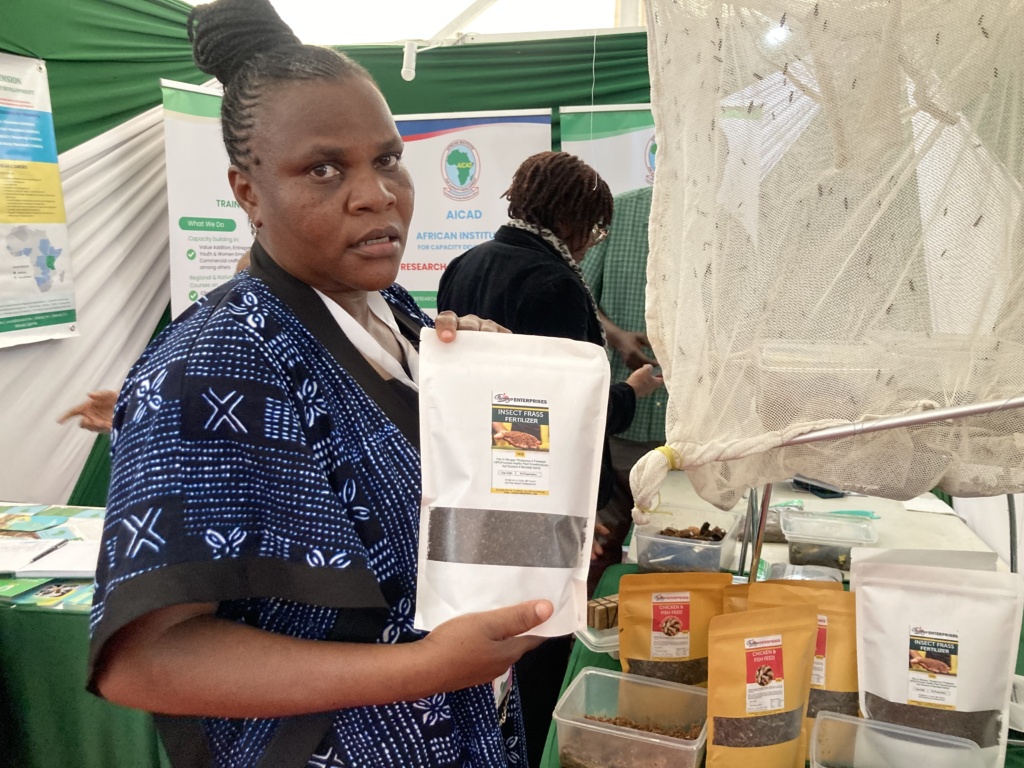
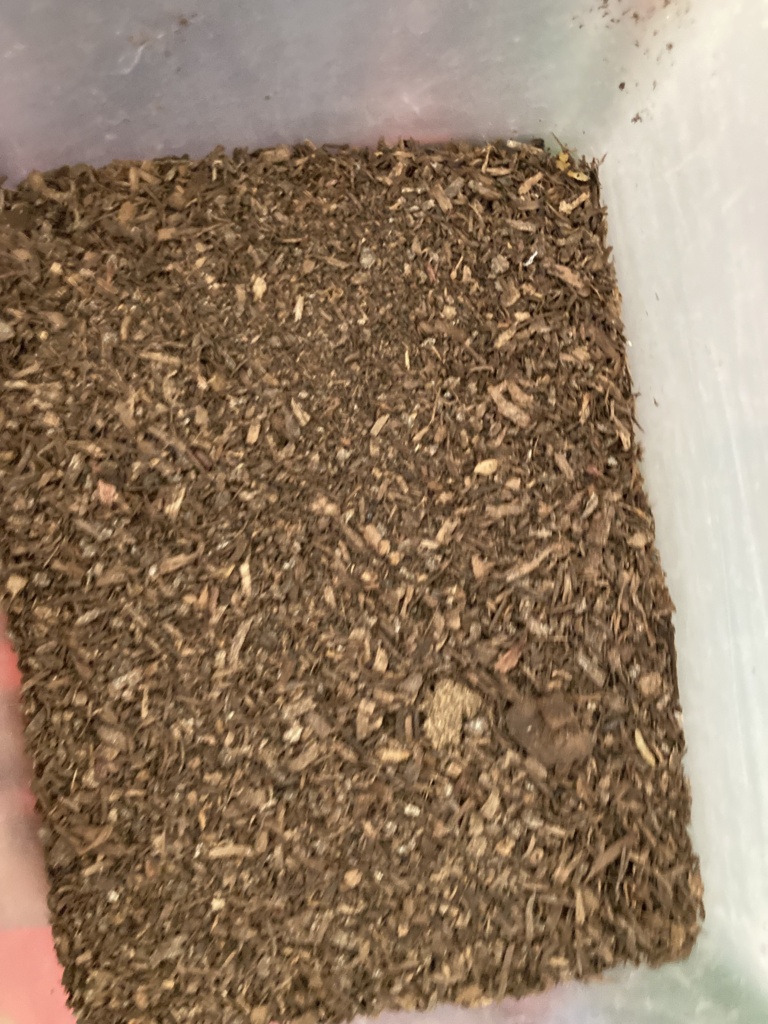
Equally significant, and perhaps more transformative for smallholder farmers, is what the larvae leave behind. As they consume organic waste, they produce a dark, granular residue called frass: a nutrient-rich organic fertiliser.
“This is the frass we have sieved,” Agunda says, presenting a container of the dark material. “This one is organic fertiliser. We normally advise people to use organic fertiliser.”
Like the larvae, it sells for 100 shillings a packet, modest individually, but meaningful at scale.
A Solution for the Streets
What makes Agunda’s work compelling is not just the ingenuity of the Black Soldier Fly itself, but its potential reach. Kisumu’s markets remain, by her account, overwhelmed with organic waste, a challenge that municipal collection services have struggled to address comprehensively. The CBO now envisions a future where BSF units are deployed directly at market sites.
“The BSF decomposes the waste,” she says. “If we take this to our markets and place it there, the BSF, I think it can be a solution for this waste management that has been a menace in the country.”
The community has already attracted the attention of partner organisations after showcasing its work at a recent gathering. Potential funders, she says, are beginning to take notice.
“At least we have partners with other organisations. They are looking forward to coming to our site so that they can at least give us funding.”
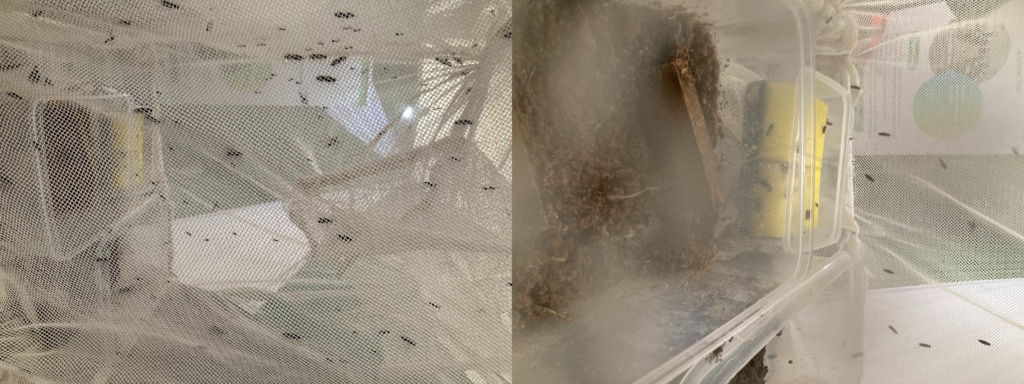
In nature, the Black Soldier Fly’s lifecycle is humble and brief. In Kondele, it is becoming the basis of a livelihood.
Agunda’s CBO has taken something most people consider a nuisance, organic waste, and, with a little help from an unlikely insect, turned it into protein, fertiliser, and possibility.
The love cage buzzes gently in the background. Somewhere inside, the next generation is already beginning.