
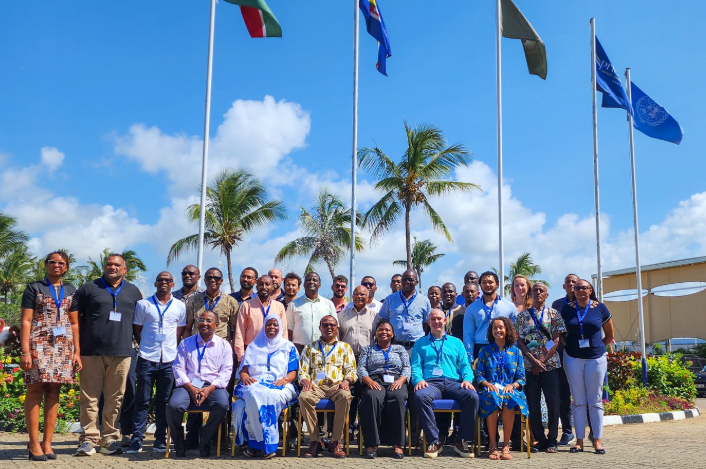
At the acclaimed Pride Inn Flamingo Beach Resort & Spa in Mombasa, Kenya, just a few kilometres from the very coral reefs that are in discussion, scientists, government officials and conservationists across the globe spent three days doing something they are well versed in: agreeing on a methodology.
The document they were working on is the 2026 West Indian Ocean Coral Reef Status Report. It is worth noting that this is the first attempt, in nearly a decade, to try and answer a question that has grown more urgent with each passing year: exactly how much of the region’s coral is actually still active?
From 29th to 31st July, the West Indian Ocean Inception Workshop, organised by the United Nations Environment Programme (UNEP), the Nairobi Convention, and CORDIO East Africa, was the event in which the roadmap to writing the aforementioned report was planned. Of importance to note is that the last regional assessment on the same was published in 2017, and it has been nine years since the last update.
What’s actually at stake
For a lot of people, coral reefs are things that are talked about in abstract. In the workshop’s concept note, the exact figures at stake were well documented. The regional blue economy was valued at an estimated USD 333.8 billion, with coral reefs accounting for approximately USD 18.1 billion in asset value and generating close to USD 8.4 billion annually in benefits through fisheries, tourism, and coastal protection.
Covering an estimated 6% of the world’s coral reef area, the Western Indian Ocean reefs are where an estimated 48 million people live, according to the same concept note.
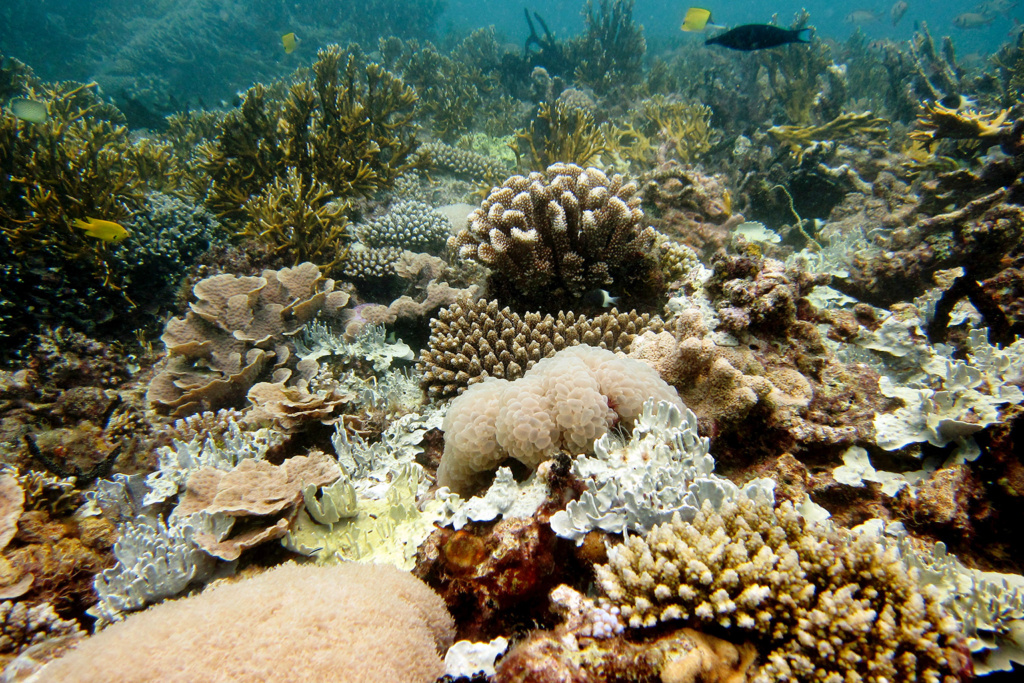
For many coastal communities, that proximity is their direct survival. The concept note, citing CORDIO-EA’s research, states that small-scale fisheries tied to reef ecosystems provide up to 99% of protein intake and roughly 82% of household income in some communities along the coast.
It puts reef-based tourism revenue, coming from activities like diving, snorkelling and boat excursions, at more than USD 830 million annually, naming Seychelles and Mauritius as economies where the sector drives significant job creation in hospitality.
It also cites reef structures reducing wave energy by up to 97%, a figure the document uses to frame reefs as natural coastal infrastructure against storm surges and sea-level rise. Despite the enormous economic contribution of coral reefs in the region, they remain under serious threat.
Building the report, country by country
The workshop’s agenda showed each day opening with presentations from the different countries present. Comoros, France (representing Mayotte and Réunion), Kenya, Madagascar, Mauritius, Mozambique, Seychelles, Somalia, South Africa, and Tanzania were each scheduled to present their own data and priorities on day one.
Kenya’s national presentation was delivered by Juliet Furaha, followed by a separate, dedicated session titled “Miamba Yetu” (Swahili for Our Reefs) presented by Peter Musembi and Julius Pagu.
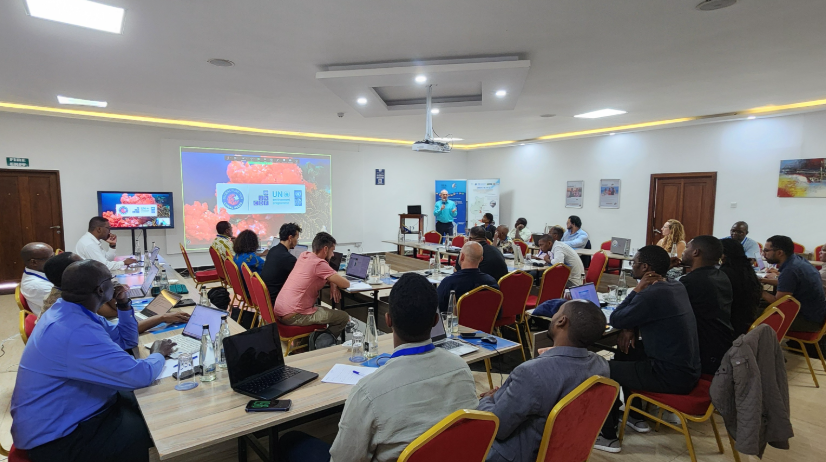
For day two, the focus turned to methodology on how the data from the ten different countries could be standardised into one coherent regional picture. This was led by technical specialists including Jeremy Wicquart and CORDIO’s Karin Moejes. Alongside were sessions on policy linkages led by Nairobi Convention’s Theuri Mwangi.
The last day was dedicated to answering harder institutional questions such as what happens once the report is done.
A warning that predates this week
Gabriel Grimsditch, the UNEP Programme Management Officer leading the workshop’s introductory sessions, has previously spoken publicly about the pressures facing coral reefs, though not specifically in relation to this workshop.
In earlier remarks to UNEP on coral bleaching, unrelated to this event, he described coral reefs as among the ecosystems most sensitive to human pressure, and said mass bleaching and mortality events are expected to grow more frequent and severe as ocean temperatures rise.
The workshop came to an end on 31st July 2026. The deliverables for this workshop were: an assessment of data availability and gaps across the region, an agreed methodology for the report, a finalised chapter outline, and an agreed review process running through the Nairobi Convention’s Coral Reef Technical Working Group. While we hope the workshop was successful, no date has yet been set for when the full 2026 status report itself will be published.

