
Across Africa, much of the vegetables and food lost between farm and market is lost after harvest. At the Africa Food Systems Forum 2026, innovators, financiers and farmers argued that solar-powered cooling could help close part of that gap, but only if capital, regulation and institutions move with the technology.
Notably, vegetables can leave a farm fresh and still become a loss before it reaches a consumer, which is a similar case for so many horticulture products.
For vegetables and other highly perishable foods, the journey from field to market is a race against time. Where reliable electricity and refrigeration are unavailable, delays in transport, storage or marketing can quickly turn a harvest that should generate income into food that can no longer be sold.
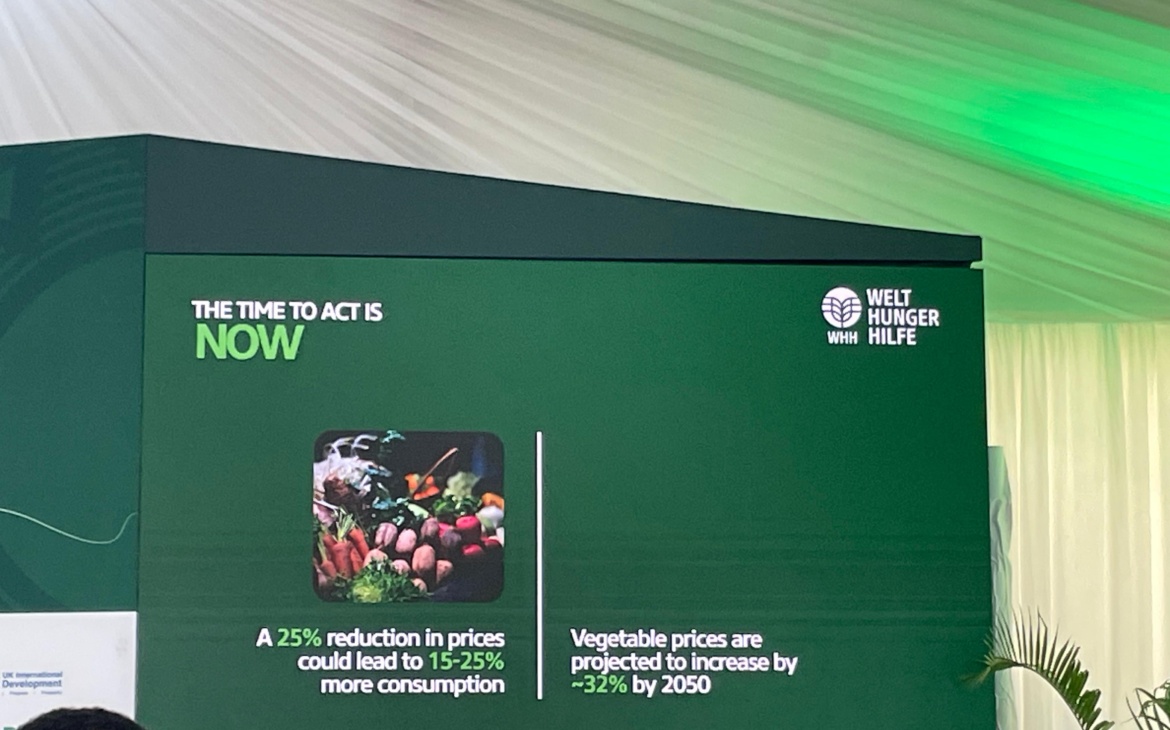
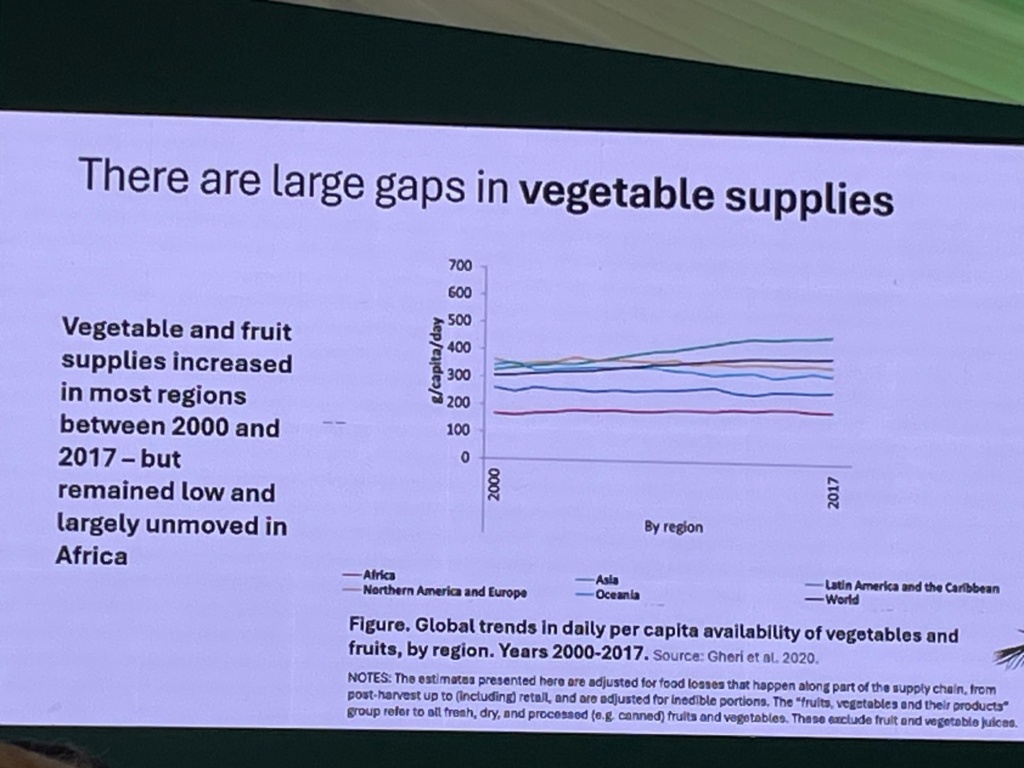
That is the problem behind a statistic presented by FAO Chief Economist Dr Maximo Torero at the Africa Food Systems Forum 2026: roughly 70 per cent of Africa’s vegetable losses occur after harvest.
“Vegetables produced but lost between the farmer and the market do not improve dietary quality,” Torero said during the forum’s “Power the Plate, Energy for Nutrition” session. “It generates little value for the vegetable farmer.”
For Elizabeth Nsimadala, a smallholder farmer from Uganda and president of the Eastern Africa Farmers Federation, the pressures facing farmers are also increasingly shaped by a changing climate.
“Being in Kigali, you can see how hot it is. This is actually not supposed to be a hot season; it’s supposed to be a planting season, but it is very hot,” she said. “Climate change is real; it has no borders.”
The combination of climate pressure, unreliable energy and highly perishable crops is making the systems between farm and market increasingly important. One of those systems is cold storage.
Closing the cooling gap
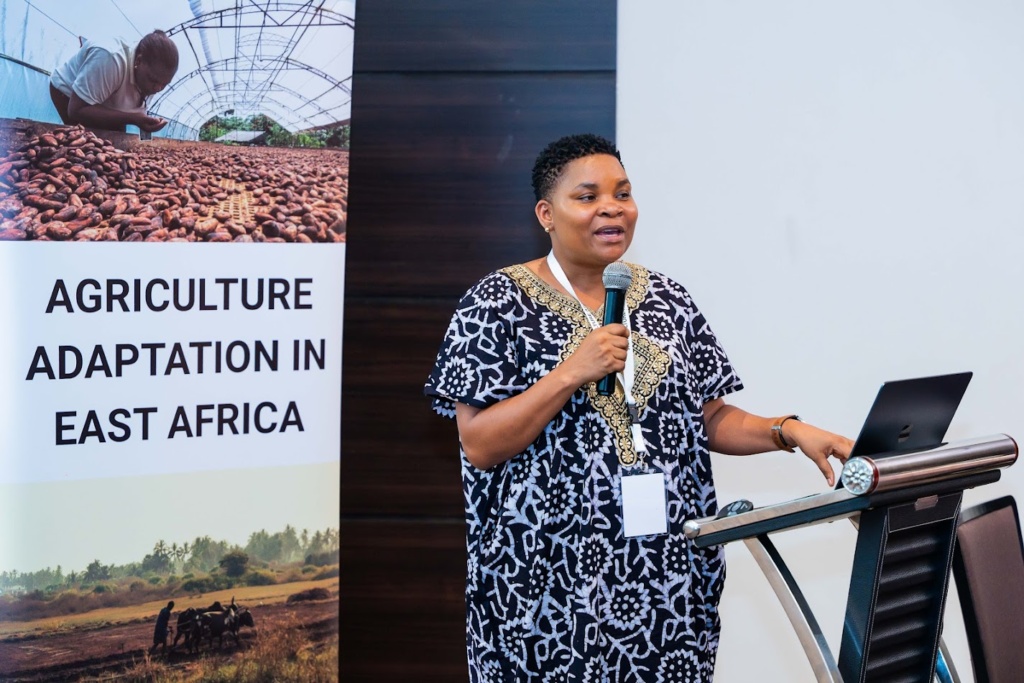
For Ayoola Dominic, co-founder and president of climate-tech company Koolboks, the challenge begins with a basic reality: a farmer without reliable cooling does not have unlimited time.
Dominic, a trained pharmacist and former commercial executive, co-founded Koolboks in 2018 around the idea that refrigeration should not depend entirely on a reliable electricity grid.
The company develops solar-powered refrigeration systems for communities and businesses where electricity is unreliable or unavailable. Its financing models include Pay-As-You-Go, lease-to-own and Cooling-as-a-Service, allowing customers to access refrigeration without meeting the full upfront cost of conventional cold-storage systems.
The approach is aimed at one of the most difficult points in the food chain, the last mile between production and markets.
Solar can help address the energy challenge, particularly in areas with abundant sunlight but unreliable grids, but the solution has to go beyond generating electricity. Cooling systems must remain useful when sunlight is unavailable and must be affordable for farmers and businesses operating with limited cash flow. That is where technology and financing begin to overlap.
The missing capital
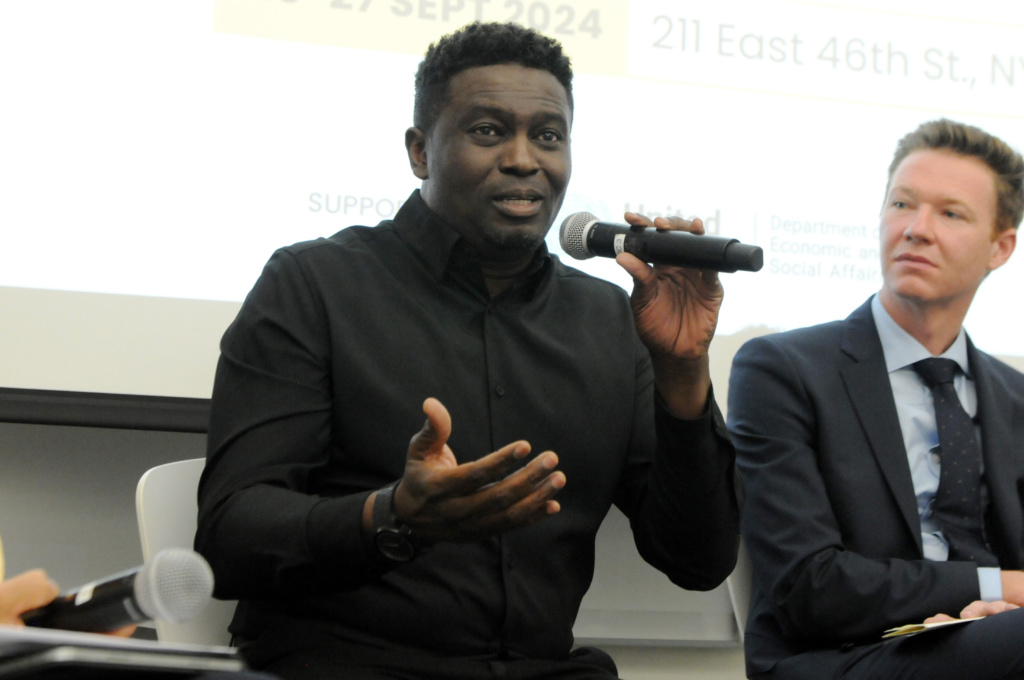
Carlos Sordos, Associate Director of GOGLA’s PURE programme, sees Koolboks as part of a wider shift toward what he described as “agri-energy,” businesses combining agricultural needs with the energy solutions required to meet them.
Potential customers, companies and government officials, he said, still need greater awareness of the technologies available. Distribution systems then have to reach farmers and agricultural businesses beyond established markets. And finally, the technology has to be affordable.
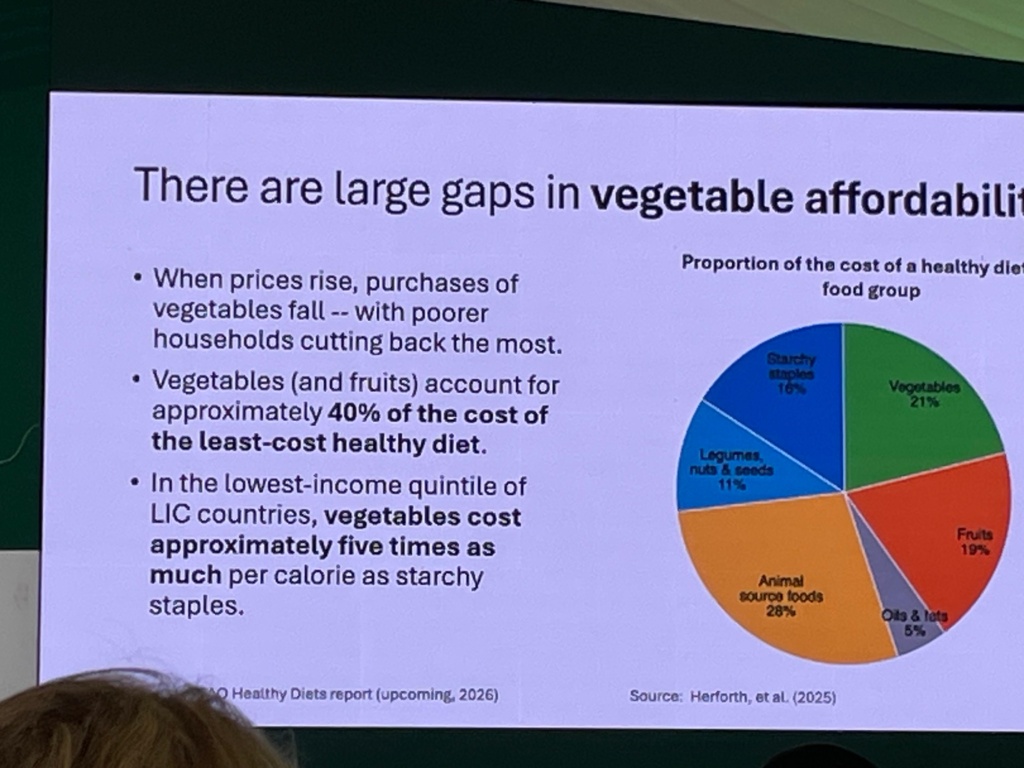
Small solar devices can increasingly be financed through Pay-As-You-Go models. Larger infrastructure, shared cold rooms, aggregation centres and processing facilities requires longer-term, more patient capital.
That is where Jayadeep “Jay” Akkireddy, who leads Business & Financing Innovations at Welthungerhilfe, sees a major gap.
Businesses working in agricultural storage, processing, logistics and cooling can struggle to attract conventional commercial investors because they are often young, relatively small or perceived as too risky.
Akkireddy argued for a financing sequence in which catalytic capital comes first, followed by patient, risk-tolerant funding from foundations, development institutions and other investors willing to absorb some of the early risk.
The objective is to help businesses prove their models and become attractive enough for commercial capital to follow.
The financing challenge, he argued, extends beyond refrigeration to the wider vegetable value chain, including transport, storage, processing and market access.
The coordination problem
Even technology and capital, however, may not be enough if the institutions behind them continue to work separately.
Sordos offered an example of an impact investor operating two separate investment vehicles, with one supporting solar power while another was advising on diesel power.
He argued that similar fragmentation exists within governments and development institutions, where energy and agriculture are often treated as separate policy areas.
For farmers and food businesses, they are not. Cold rooms need energy. Irrigation needs energy. Processing needs energy. Transport and storage are affected by infrastructure and energy costs.
Treating each challenge in isolation can therefore make it harder to build a functioning food system.
Sordos argued that energy should be viewed not simply as a cost of agricultural production but as a tool for reducing investment and climate risks.
Organisers said 2026 also marked the first time in the Africa Food Systems Forum’s 20-year history that energy appeared on the forum’s logo, a symbolic recognition of the growing connection between energy and food systems.
Taking solutions to farmers
By the end of the session, the speakers were broadly aligned on one point: Africa does not lack solutions but rather the challenge is creating the conditions for them to reach scale.
Dominic pointed to public and private investment working in sequence. Akkireddy emphasised regulation and stronger coordination between government sectors. Sordos called for energy and agriculture to be treated as connected parts of the same investment system.
Nsimadala brought the discussion back to the people expected to use these solutions. Farmers, she argued, are already on the frontline of climate adaptation and need to be able to access the finance being discussed in policy and investment circles.
“We need to get financing direct to the farmers,” she said.
Closing the session, former Ethiopian Prime Minister Hailemariam Desalegn similarly argued that Africa already has solutions in areas including solar irrigation, cold chains, storage, processing and market development.
The task now is to identify what works and create the conditions for those solutions to scale.
Solar refrigeration will not solve every cause of vegetables and food loss considering limitations like inability to fix poor roads, weak markets or inadequate transport on its own.
However, for a farmer whose vegetables are losing value simply because there is nowhere to keep them cold, reliable refrigeration can help close one of the most immediate gaps between harvest and market.
Since the technology is increasingly available, the harder question remains whether the money, infrastructure and institutions can move quickly enough to put it where it matters most.


