A weekly regional IGAD Climate Prediction and Applications Centre (ICPAC) outlook points to above-normal rainfall in parts of Sudan, South Sudan, Ethiopia, Somalia and Kenya, while much of the Greater Horn is expected to remain warmer than usual.
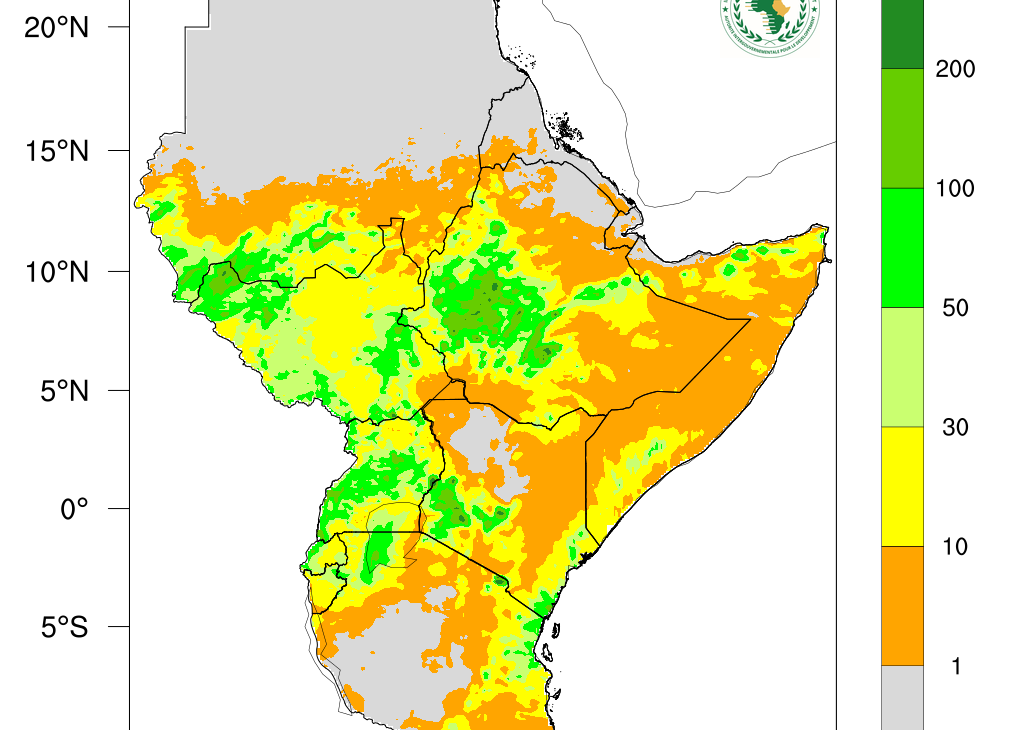
Based on the forecast, parts of the Greater Horn of Africa are expected to experience above-normal rainfall between 15 and 22 September 2026, with isolated areas of Ethiopia and Kenya expected to receive more than 200 millimetres of rain.
The latest ICPAC outlook indicates a mixed rainfall pattern across the region, with some areas likely to receive heavy or moderate rainfall while others are expected to remain relatively dry. At the same time, temperatures are forecast to remain warmer than usual across most of the Greater Horn, with elevated heat stress expected in several countries.
Heavy rainfall of more than 200 mm is expected in isolated parts of central to western Ethiopia and central and western Kenya, while moderate rainfall, ranging between 50 and 200 mm, will be over southwestern Sudan, parts of western and eastern South Sudan, isolated areas of northern and southern Somalia, central to southern Uganda, and western to northern Ethiopia.
Elsewhere, rainfall totals of less than 50 mm are expected across most of Somalia, central to western and coastal Kenya, eastern and southern Tanzania, central Sudan, eastern South Sudan and parts of eastern to southern Ethiopia.
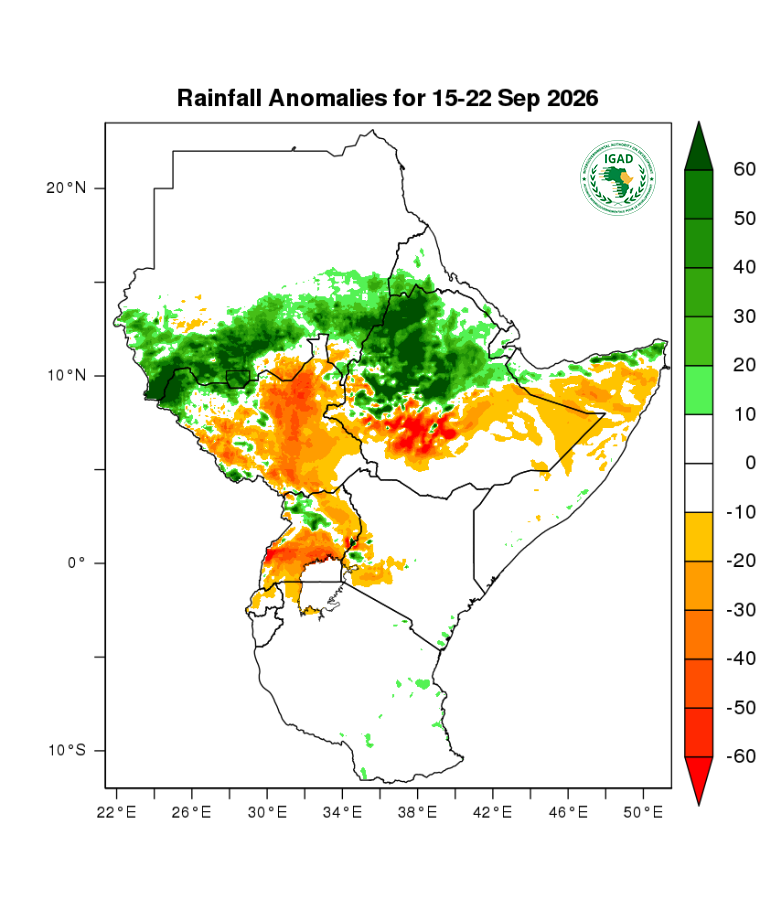
The forecast also points to rainfall that is higher than the usual levels for this period over central and southern Sudan, northwestern South Sudan, eastern to northern Ethiopia, northern Somalia, isolated parts of northern Uganda, and isolated areas of western and coastal Kenya. Some parts of western Eritrea are also expected to receive more rainfall than usual.
However, central Ethiopia, central Kenya, and most parts of South Sudan and Uganda are expected to receive less rainfall than usual.
Notably, the combination of rainfall amounts and departures from normal conditions is important when assessing potential impacts. Areas receiving moderate rainfall may not necessarily experience unusual conditions if those amounts are close to the seasonal average, while relatively lower rainfall can still be significant where it falls below what is normally expected.
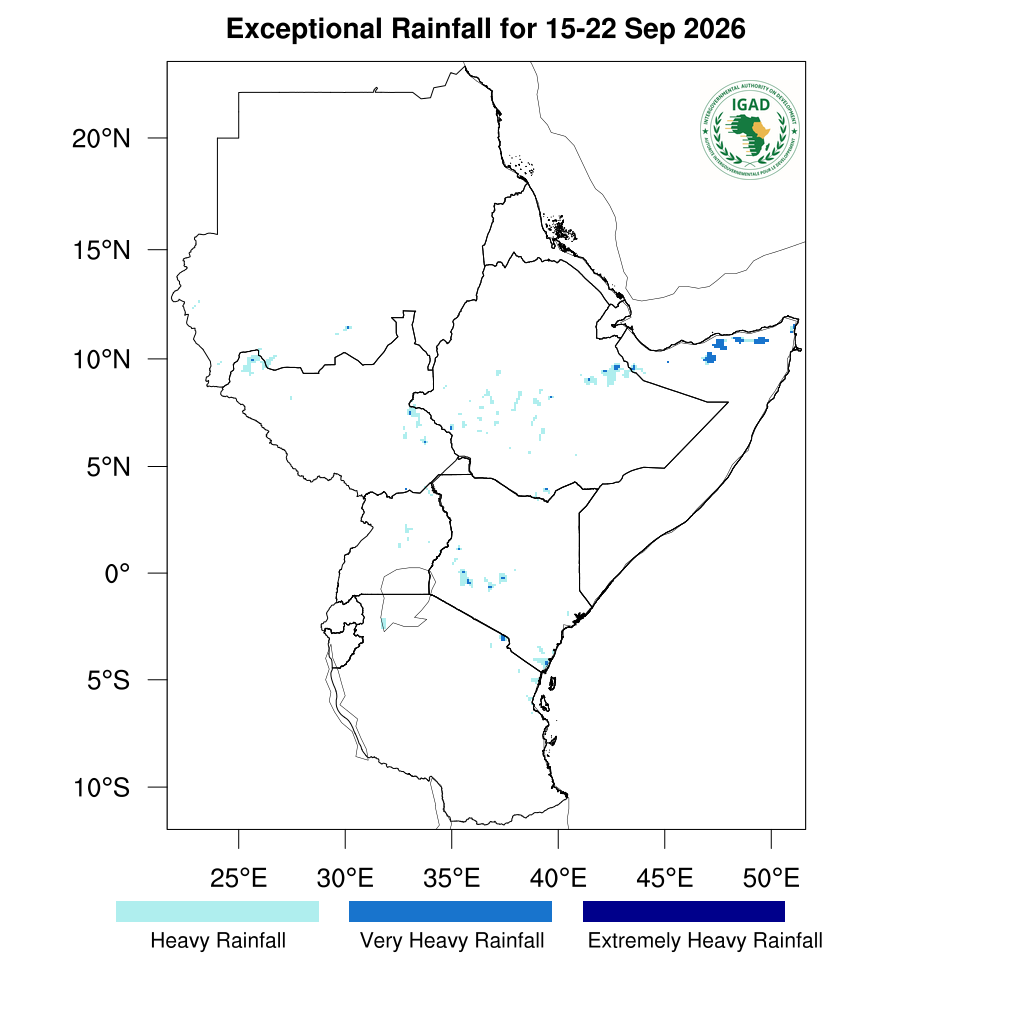
The outlook identifies isolated areas of southern Sudan, western to eastern Ethiopia, western and central Kenya, and northern coastal Somalia where rainfall could exceed the 90th percentile.
Rainfall exceeding the 90th percentile indicates conditions that are unusually wet compared with the historical distribution used in the forecast. Such areas may require closer monitoring for localised flooding, particularly where heavy rainfall coincides with saturated soils, poor drainage or communities located in flood-prone areas.
This combined approach is particularly relevant for agriculture, pastoralism, disaster risk management and water-resource planning.
Heat remains a concern in the Greater Horn of Africa
While some areas are expected to receive substantial rainfall, warmer-than-usual conditions are forecast across most of the Greater Horn of Africa.
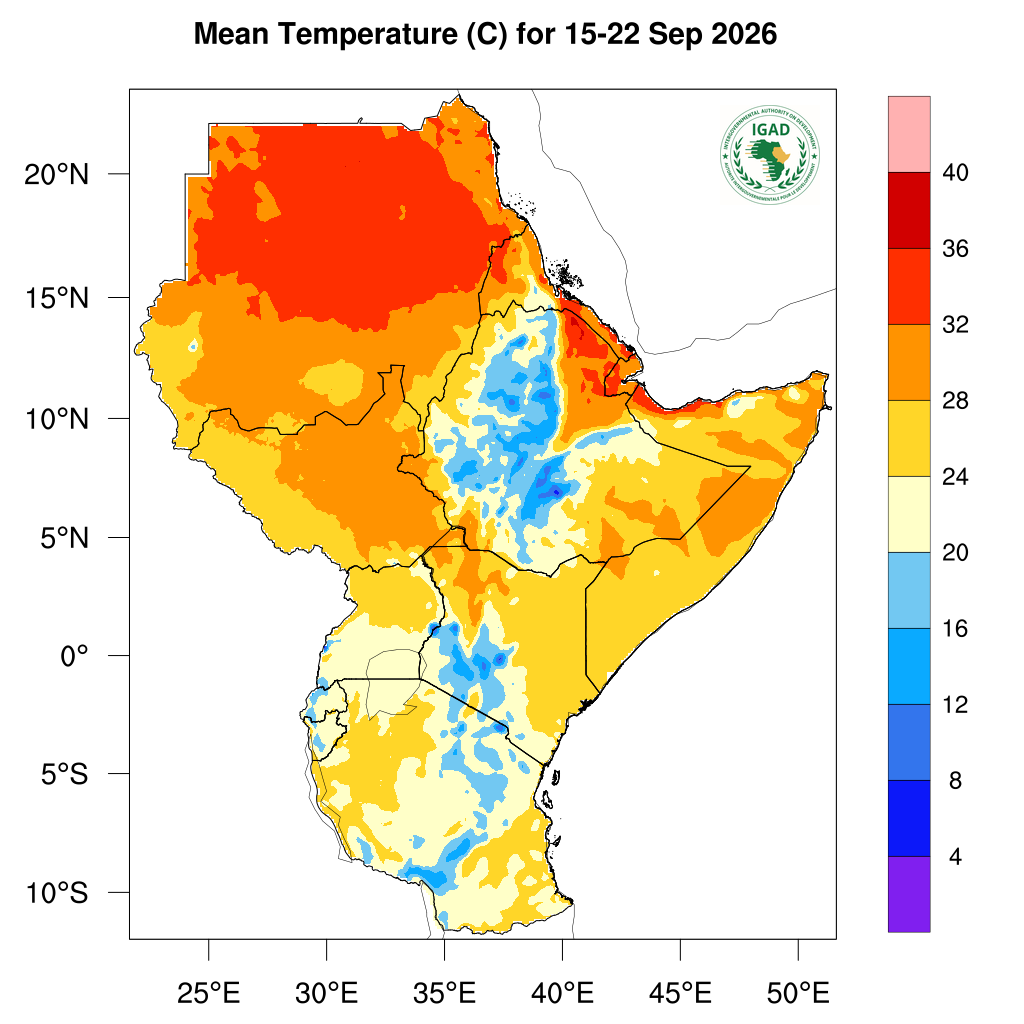
The outlook indicates that most of the region will experience temperatures between 20°C and 32°C. Temperatures exceeding 32°C are expected over Djibouti, central to northern Sudan, coastal Eritrea, northern coastal Somalia and northeastern Ethiopia.
Milder conditions below 20°C are expected over central to western Kenya, central to southern Tanzania, central to northern Ethiopia and western Rwanda and Burundi.
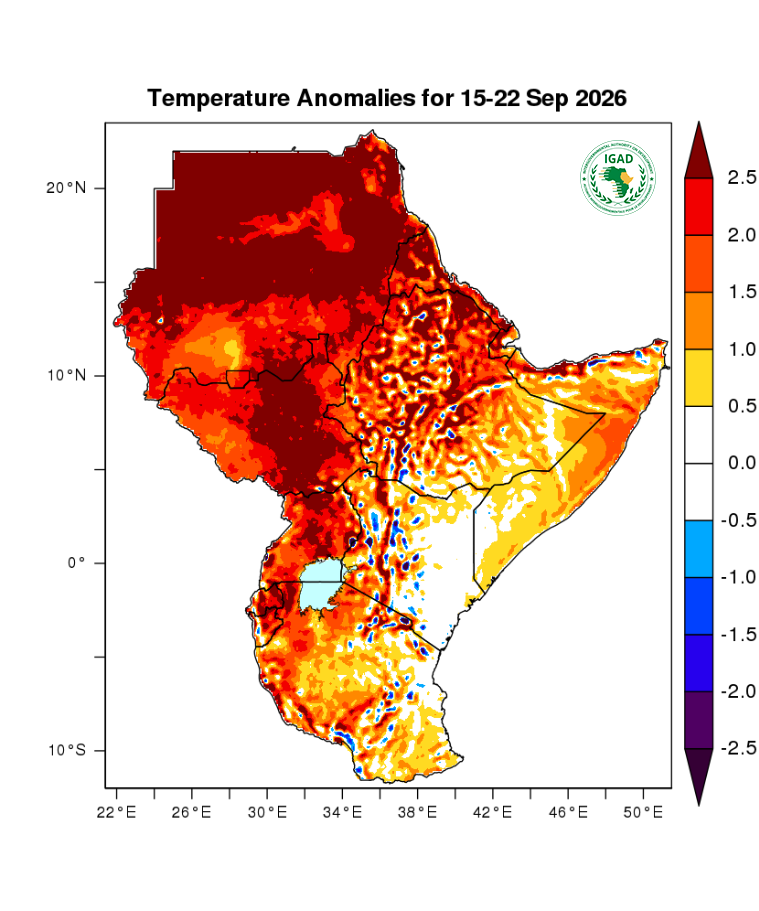
Temperature anomalies point to warmer-than-usual conditions over most parts of the Greater Horn, although a few isolated areas may experience cooler-than-usual temperatures.
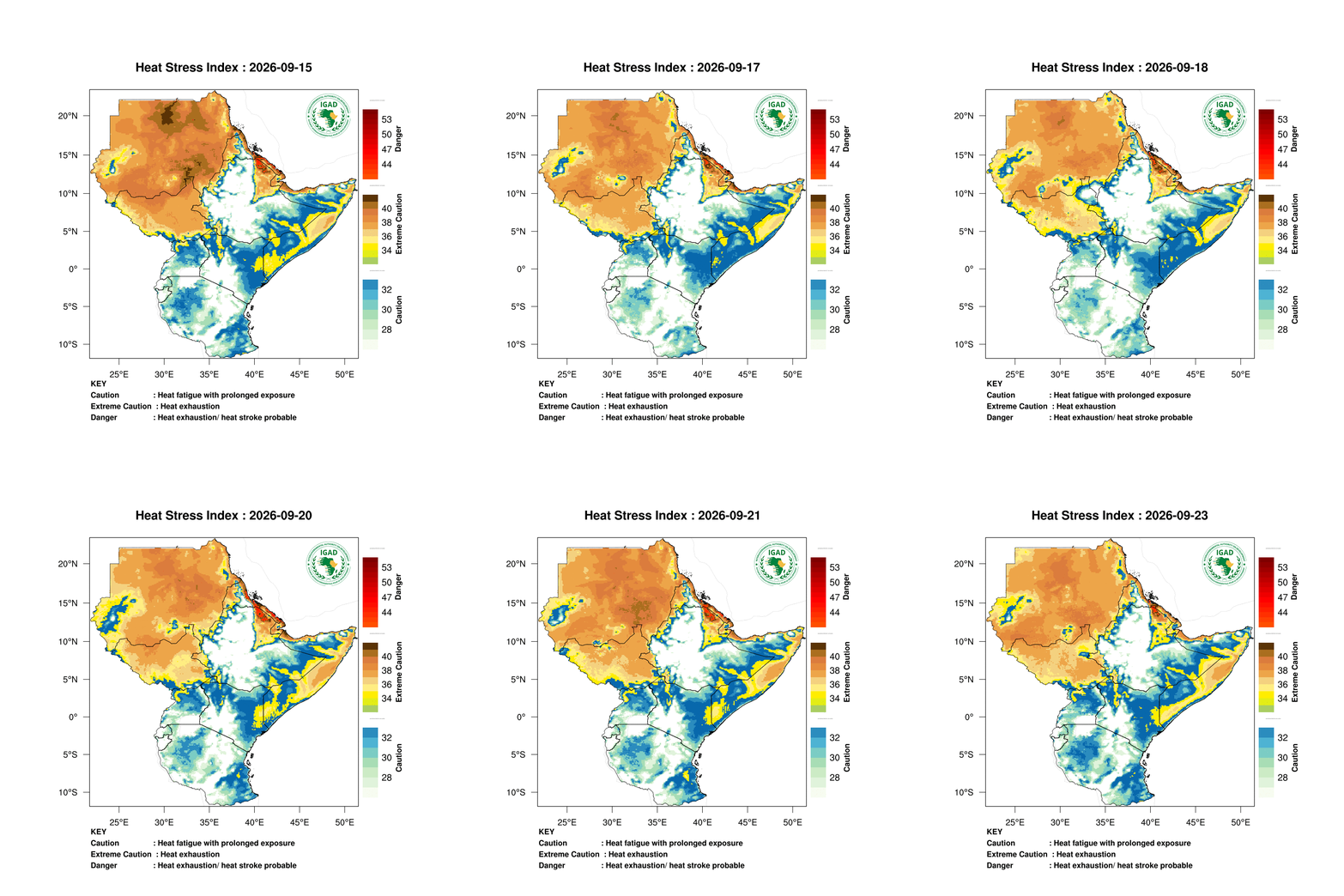
Heat stress is expected to be particularly significant across northern and eastern parts of the region. The forecast places most parts of South Sudan, Sudan, Eritrea, Djibouti and Somalia, together with parts of eastern Kenya and northeastern Ethiopia, in the “Extreme Caution” category.
More severe heat stress, classified as “Danger,” is expected in parts of Ethiopia’s Afar region extending into central Eritrea, as well as isolated areas along Eritrea’s coastline.
A week of contrasting climate conditions
The forecast presents a region facing contrasting climate conditions: intense rainfall in isolated parts of Ethiopia and Kenya, wetter-than-usual conditions across sections of Sudan and the northern Greater Horn, and below-normal rainfall in parts of Kenya, Uganda, South Sudan and Ethiopia.
At the same time, much of the region is expected to remain warmer than usual, with heat stress posing an additional concern for communities and climate-sensitive sectors.
For decision-makers, the outlook highlights the importance of using rainfall totals, rainfall anomalies and exceptional rainfall indicators together when planning for the week ahead.
The information can support early preparedness across farming, livestock production, water management and disaster-risk reduction.