

As climate impacts accelerate, governments, businesses and civil society are calling for predictable adaptation financing to protect vulnerable communities, strengthen resilience and address unavoidable losses ahead of COP31.
The devastating floods that swept through Nepal’s Himalayan region in August have brought renewed attention to the growing risks facing mountain communities and the urgent need for international climate finance.
The disaster, triggered by a glacier collapse, overwhelmed communities, damaged infrastructure and disrupted livelihoods. By September 19, Nepal’s disaster authorities had reported 1,411 fatalities and 5,875 people missing, illustrating the scale of the humanitarian emergency and the challenges of recovery.
For Nepal, the disaster has become a reminder that climate impacts are increasingly stretching national resources beyond their capacity to respond.
Speaking during a high-level dialogue held alongside the 81st United Nations General Assembly in New York, Prakriti Dhakal, Personal Under Secretary in Nepal’s Office of the Prime Minister, called for international support that extends beyond immediate humanitarian relief.
Drawing on her experience responding to the Rasuwa floods, Dhakal explained that protecting mountain ecosystems is a responsibility shared by countries far beyond the Himalayas. Rivers originating in mountain regions sustain downstream agriculture, water supplies and communities across national borders.
Her message was clear: countries confronting increasingly severe climate disasters need adequate, predictable and long-term adaptation and loss-and-damage finance, alongside technology transfer and sustained capacity-building.
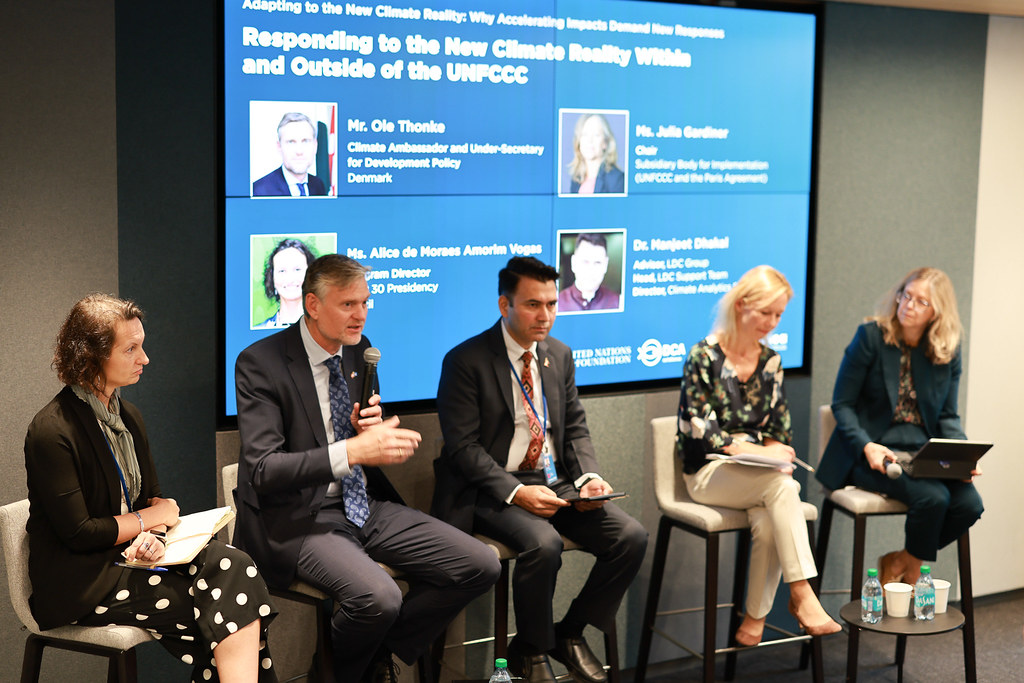
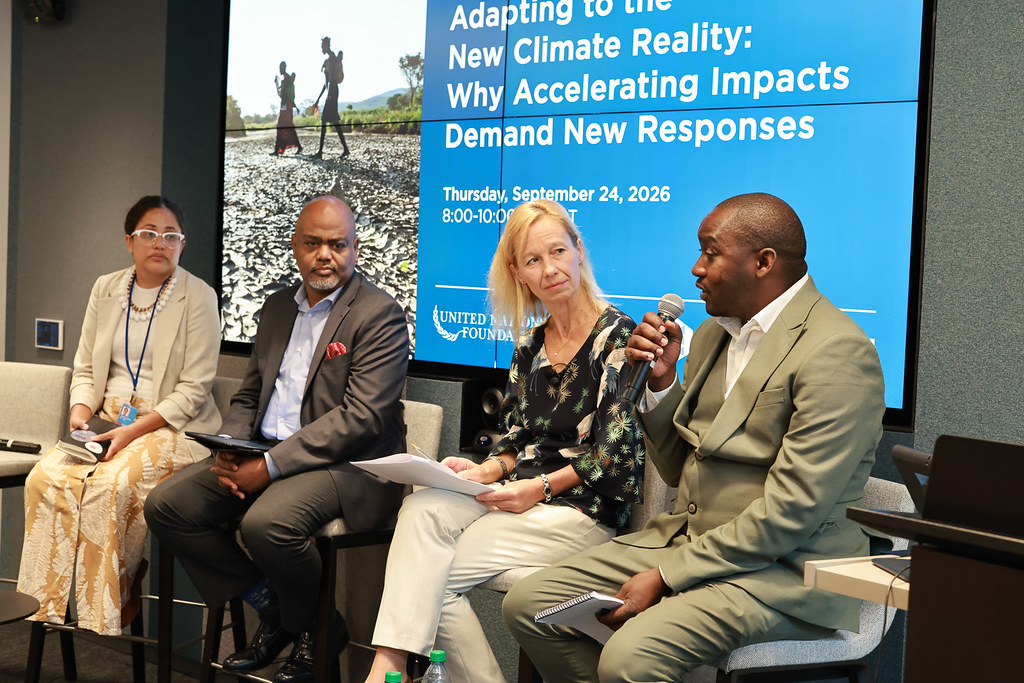
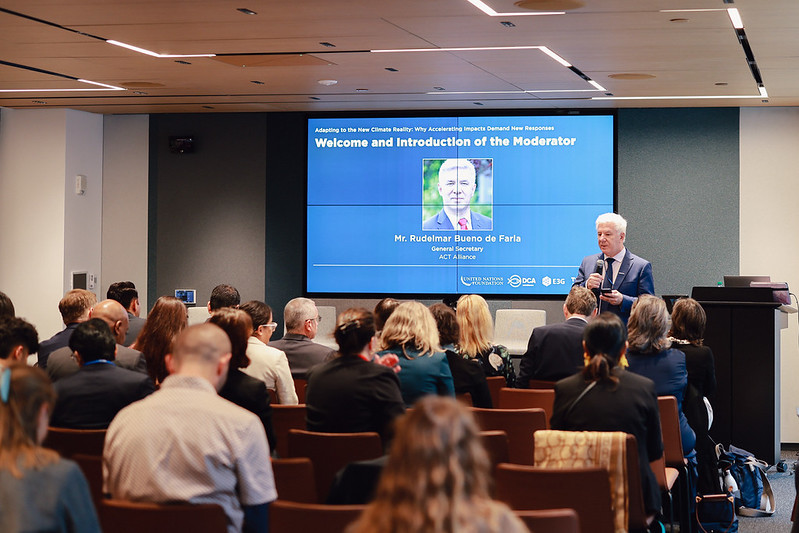
The dialogue, titled Adapting to the New Climate Reality: Why Accelerating Impacts Demand New Responses, was convened by the United Nations Foundation, DanChurchAid, E3G and the Talanoa Institute. Moderated by Climate Home News editor Megan Rowling, it brought together representatives from governments, international institutions, businesses and civil society to examine the responses required as climate risks intensify.
A changing climate demands a new approach
The discussions followed the September 2026 release of the United Nations Environment Programme’s report, Limiting Overshoot: Navigating Exceedance of 1.5°C and Pathways Towards Return.
The report concludes that temporarily exceeding the Paris Agreement’s 1.5°C warming threshold is now widely assessed as unavoidable under current policies and near-term emissions trajectories. However, UNEP stresses that exceeding the threshold does not mean abandoning it. Limiting the extent and duration of warming remains essential to reducing the risks of extreme weather, ecosystem destruction and potentially irreversible climate impacts.
For governments, the findings present two simultaneous priorities: accelerating emissions reductions to limit further warming while strengthening the ability of communities and economies to withstand impacts that can no longer be avoided.
Pete Ogden, Vice President of Climate and Environment at the UN Foundation, warned that adaptation strategies based on historical climate conditions are increasingly inadequate.
He argued that existing adaptation and resilience approaches can protect lives and livelihoods, but their effectiveness depends on rapid deployment and sufficient financial support.
This changing reality is particularly significant for developing countries, where climate-related disasters can overwhelm public budgets already supporting essential services, infrastructure and economic development.
Nepal estimates that implementing its adaptation priorities between 2025 and 2035 will require $18-$20 billion in international climate finance. These priorities include early warning systems, integrated watershed management and measures to reduce the risks of glacial lake outburst floods.
The scale of these financing requirements highlights a central challenge facing international climate negotiations: translating commitments into accessible resources that enable vulnerable countries to prepare for and recover from increasingly severe disasters.
For communities living in mountainous regions, adaptation could mean improved early warning systems, safer infrastructure and stronger disaster preparedness. For farmers, it may involve climate-resilient agriculture, improved water management, and access to information to support decision-making amid increasingly unpredictable weather.
Yet adaptation has limits.
Manjeet Dhakal, an adviser to the Least Developed Countries Group, warned that early warning systems and adaptation measures cannot eliminate every climate risk. He called for deep emissions reductions alongside predictable adaptation funding and rapid, accessible, grant-based loss-and-damage finance when communities experience impacts beyond their ability to adapt.

From global commitments to local resilience
Although Nepal’s experience provided a central focus for the dialogue, speakers emphasised that the need for stronger adaptation extends across continents.
For African cities experiencing extreme heat, flooding and rapid urbanisation, investing in climate-resilient infrastructure is becoming increasingly important.
Freetown Mayor Yvonne Aki-Sawyerr highlighted the economic case for such investments, explaining that the longer-term benefits of resilient infrastructure can outweigh the initial costs.
Her remarks reflected a broader argument emerging from the discussions: adaptation should be incorporated into development planning rather than treated as a separate environmental intervention.
Natalie Unterstell, President of the Talanoa Institute, warned that rising global temperatures are undermining assumptions on which existing infrastructure, public budgets and development strategies were built.
Governments, she argued, must simultaneously reduce emissions and redesign their economies to withstand changing climatic conditions.
The challenge also extends to financing mechanisms. While adaptation initiatives are already taking place on farms, in cities and within communities, speakers stressed that many require accessible and sustained funding to expand.
For developing countries facing limited fiscal space, the availability and terms of climate finance can determine whether adaptation projects move beyond planning into implementation.
Mattias Söderberg, Global Climate Lead at DanChurchAid, emphasised that the prospect of exceeding 1.5°C should strengthen rather than weaken international climate action.
He called for rapid emissions reductions alongside increased adaptation investment to help vulnerable communities protect their homes, livelihoods and long-term security.
As countries prepare for COP31, the discussions in New York underscore the need to connect international climate commitments with practical interventions in agriculture, water, health and infrastructure.
They also highlight the importance of addressing adaptation and loss and damage together, recognising that even well-designed resilience measures cannot prevent every climate-related loss.
For Nepal, the immediate challenge remains recovery from a devastating disaster while preparing for future risks. For the international community, the broader question is whether financial commitments and development strategies can keep pace with accelerating climate impacts.
The emerging message is that adaptation is no longer solely an investment in future resilience. It is an immediate development priority whose benefits extend from individual communities to interconnected economies worldwide.


