Heavy Rainfall and Flood Risks Forecast in Ethiopia and Somalia as Temperatures Rise Across the Greater Horn of Africa
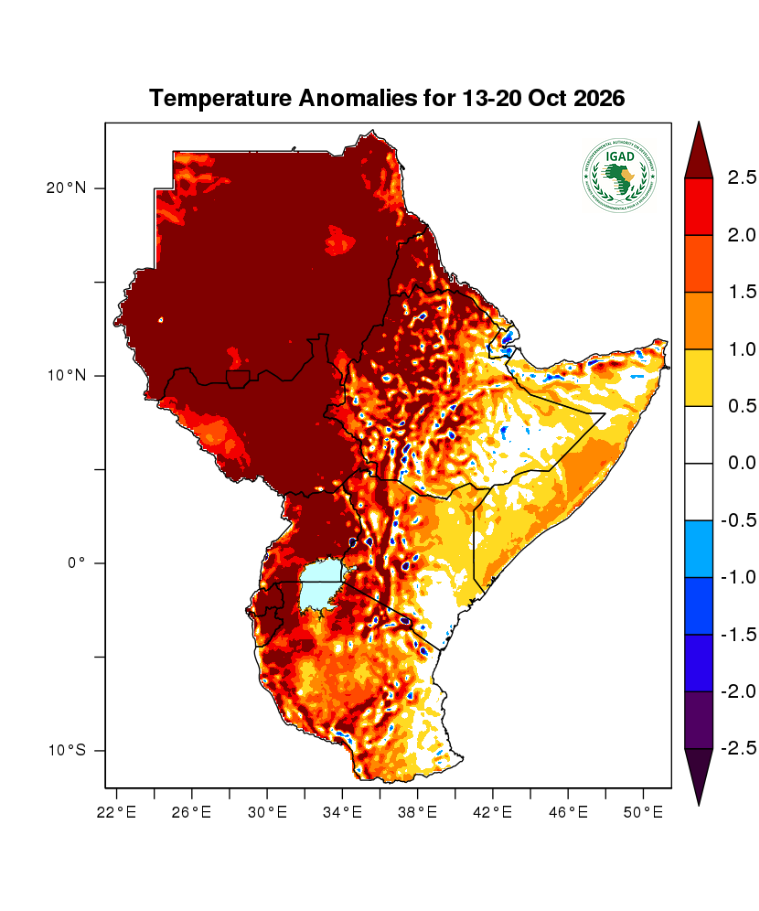
Above-normal rainfall is expected across parts of Ethiopia, Somalia, South Sudan and Sudan, while warmer-than-usual conditions and elevated heat stress are forecast across much of the Greater Horn of Africa.
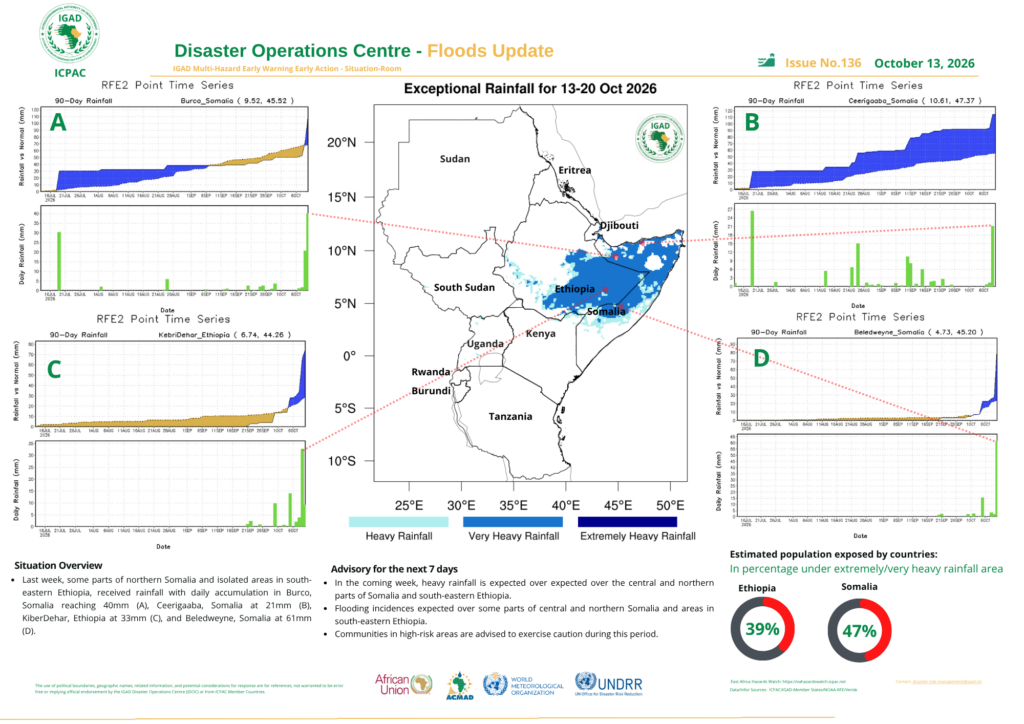
Parts of Ethiopia and Somalia are expected to receive enhanced rainfall between 13 and 20 October 2026, with isolated areas facing exceptionally heavy precipitation and an increased risk of flooding.
At the same time, temperatures are expected to remain above seasonal averages across most of the region, presenting additional challenges for communities and climate-sensitive sectors.
Heavy Rainfall Raises Concerns in Ethiopia and Somalia
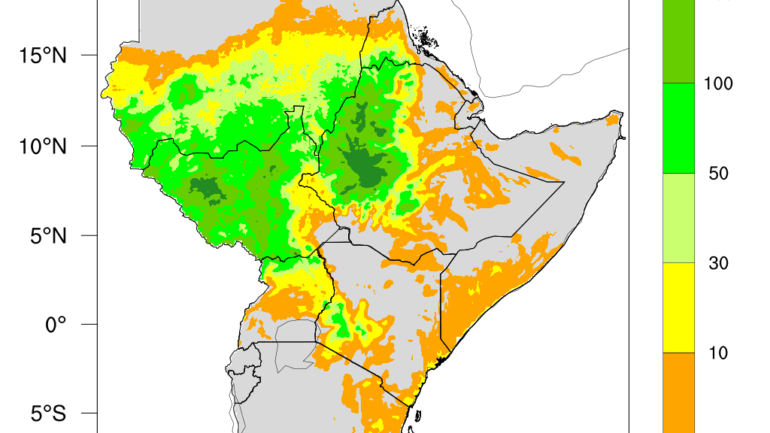
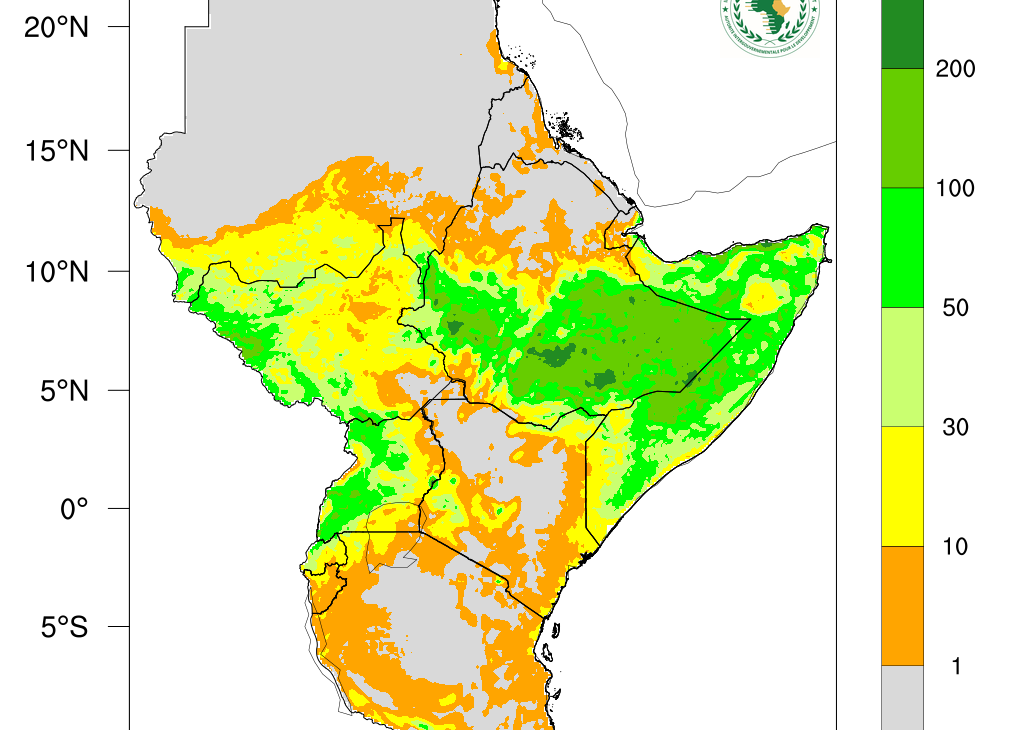
According to the regional forecast, heavy rainfall exceeding 200 millimetres is expected in isolated areas of western and southeastern Ethiopia during the forecast period. Moderate rainfall, ranging from 50 to 200 millimetres, is forecast over central to southern Ethiopia, northern and central Somalia, central to western Uganda, and western South Sudan.
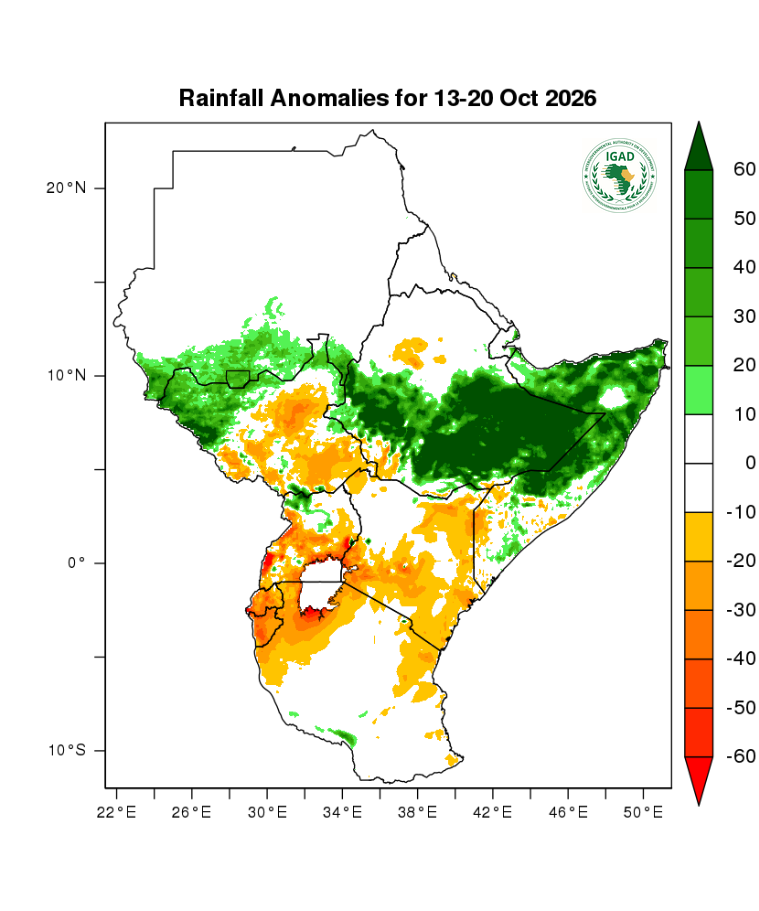
Rainfall is also expected to be higher than usual across northern and central Somalia, western, central and southeastern Ethiopia, isolated parts of northwestern South Sudan, and southern Sudan.
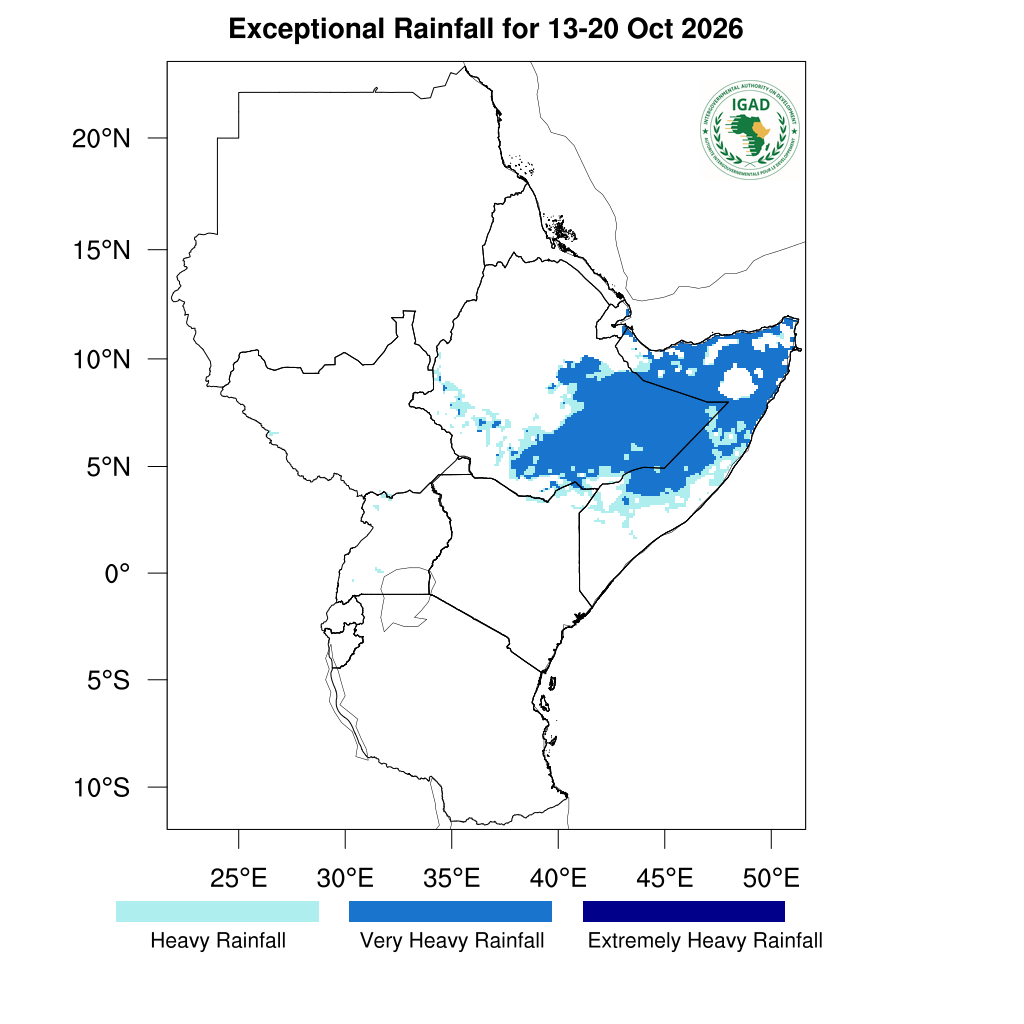
The outlook identifies northern and central Somalia and southeastern Ethiopia as areas where rainfall could exceed the 95th percentile, indicating exceptionally wet conditions compared with the historical distribution used in the forecast. Flooding is consequently expected in some parts of central to northern Somalia and southeastern Ethiopia.
These conditions warrant close monitoring, particularly in flood-prone locations and areas where heavy rainfall can affect transport, settlements, agricultural land and livestock.
In contrast, light rainfall of less than 50 millimetres is forecast over most of southern Sudan, much of South Sudan, central Ethiopia, central to western and northeastern Kenya, coastal Kenya, eastern and western Tanzania, most of Rwanda and Burundi, and eastern Uganda.
The differences in rainfall distribution highlight the need for localised preparedness rather than assuming uniform conditions across the region.
Warmer Conditions, Heat Stress to Persist
Alongside the rainfall outlook, most parts of the Greater Horn of Africa are expected to experience warmer-than-usual temperatures.
Temperatures exceeding 32°C are forecast over central Sudan, isolated areas of western Eritrea and northeastern Ethiopia. Moderate to high temperatures, ranging from 20°C to 32°C, are expected across most of the region.
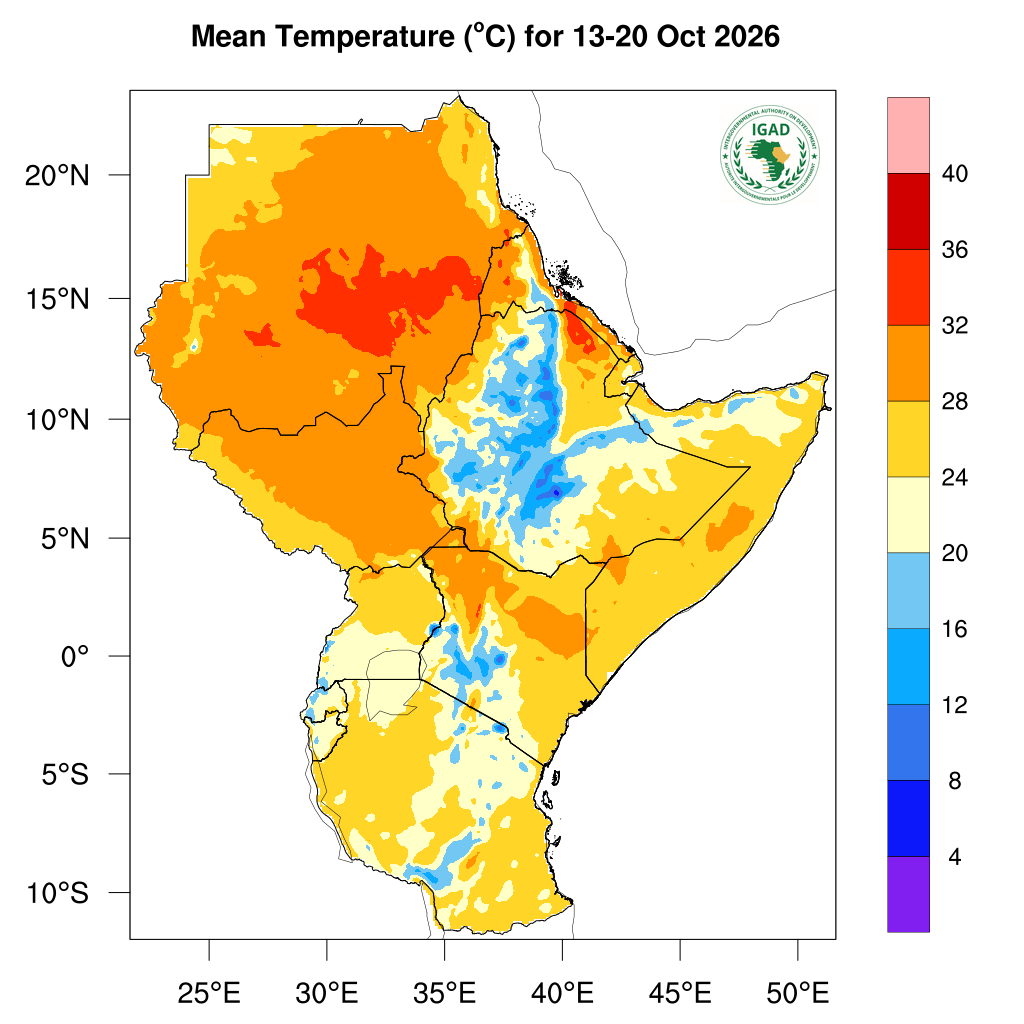
Milder conditions below 20°C are forecast over central to western Kenya, central to southern Tanzania, central to northern Ethiopia and western Rwanda.
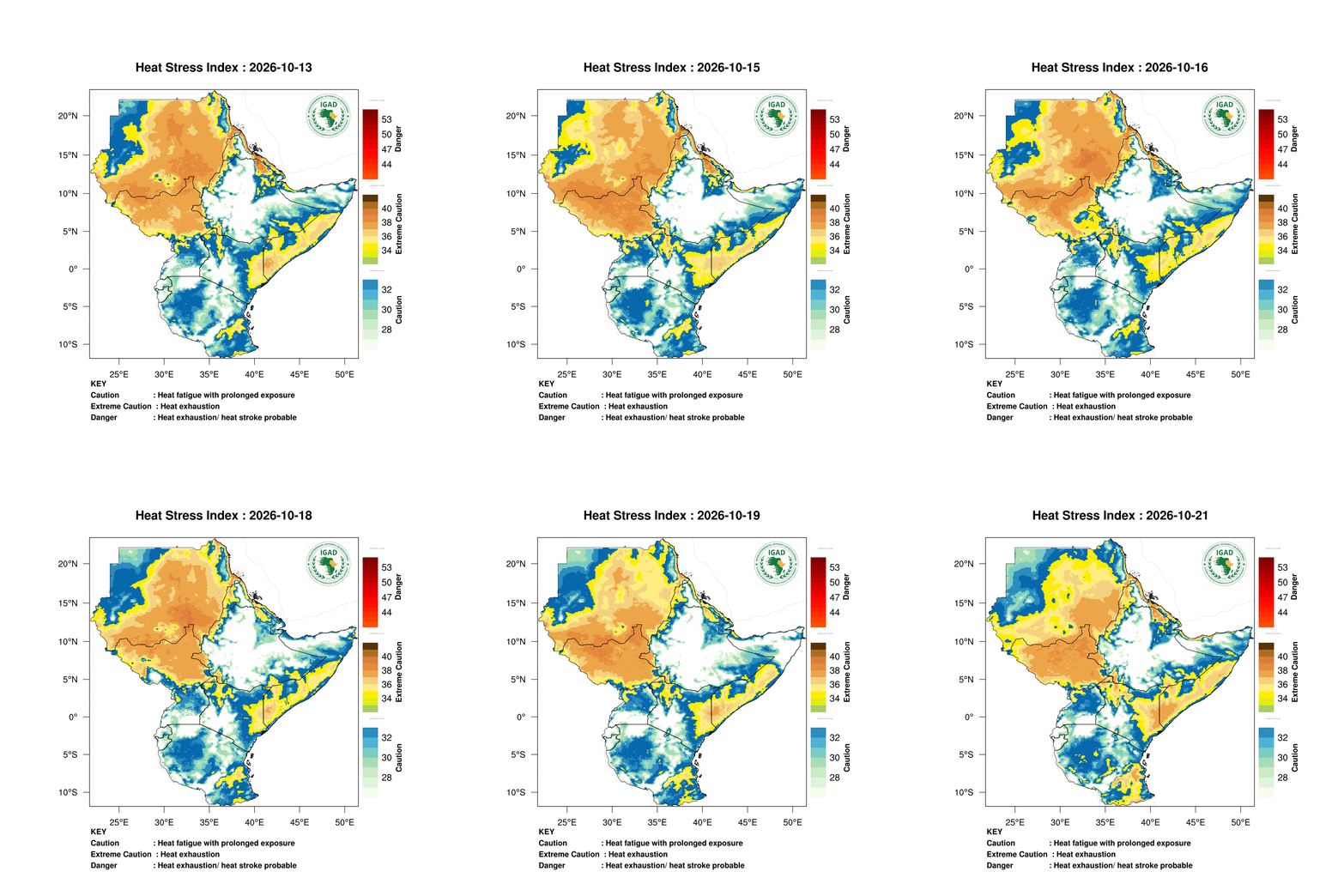
Elevated heat stress in the “Extreme Caution” category is expected across much of South Sudan, Sudan, Eritrea and Somalia, as well as parts of eastern Kenya, northeastern Ethiopia and southern Tanzania.
The combination of high temperatures and heat stress underscores the importance of heat-safety measures, particularly for people working outdoors, pastoral communities and others whose livelihoods depend on prolonged exposure to the elements.
Preparedness remains critical
The forecast presents a week of contrasting climate conditions, with potential flood risks in parts of Ethiopia and Somalia occurring alongside widespread warmer-than-usual temperatures.
For farmers and pastoralists, the distribution of rainfall may influence agricultural activities, water availability and livestock management. For disaster management agencies and local authorities, the exceptional rainfall forecast highlights the importance of monitoring local conditions and communicating timely warnings to vulnerable communities.
The regional outlook provides advance guidance, but actual conditions may vary between locations. Communities and decision-makers should therefore follow updates from their national meteorological agencies and relevant authorities as the forecast period progresses.
The broader message is one of preparedness: while rainfall may bring benefits to some areas, unusually wet conditions in flood-prone locations and persistent heat across much of the Greater Horn of Africa require locally informed planning to protect lives, livelihoods and infrastructure.
Author Profile

-
Seeker.
Inspire AFRIKA.
Latest entries
 Animals24 November 2026Where Is the Milk? Feed Is the Missing Link in Kenya’s Dairy Sector
 Events23 November 2026A Chapter at a Crossroads: WFF Kenya Looks Back to Move Forward
 COP3120 November 2026The Age of Electricity? Antalya’s Big Bet on 35 by 35 in COP31
 Agriculture20 November 2026Kenya’s Indigenous Seeds: The Farmers Keeping Food Sovereignty Alive