Parts of the Greater Horn of Africa are expected to receive enhanced rainfall between July 1 and July 8, 2026, with western Ethiopia and central to western South Sudan forecast to experience wetter-than-normal conditions even as warmer-than-average temperatures continue across much of the region.
The latest outlook from the IGAD Climate Prediction and Applications Centre (ICPAC) indicates a mixed weather pattern, where localized heavy rainfall contrasts with drier conditions elsewhere, reflecting the increasingly variable nature of weather across East Africa.
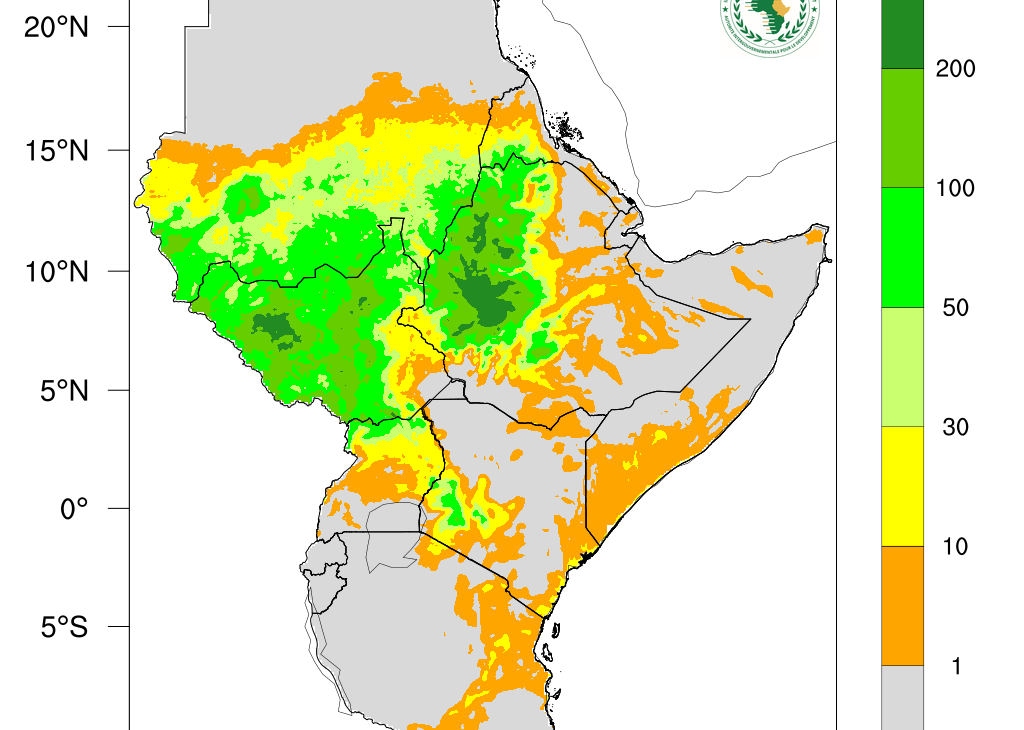
Forecasts indicate moderate rainfall of 50 to 200 millimeters over parts of southern Sudan, most of South Sudan, northern Uganda, western Kenya, and western to northern Ethiopia. Meanwhile, light rainfall of less than 50 millimeters is expected across eastern and southern Tanzania, southern Kenya, southern Somalia, central Sudan, and parts of eastern Ethiopia.
Meteorologists note that one millimeter of rainfall is equivalent to one litre of water per square meter, illustrating the amount of water expected to reach the ground during the forecast period.
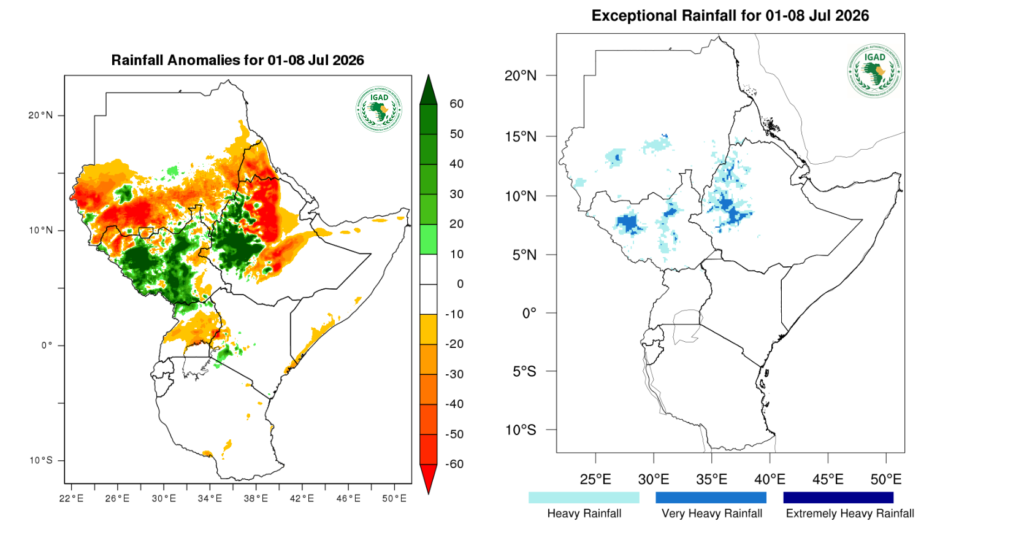
Rainfall is expected to be above normal across central to western South Sudan and western Ethiopia, with additional wetter-than-average conditions forecast over parts of northern Uganda, western Kenya, and southern Sudan.
However, below-normal rainfall is expected over southern Sudan, western Eritrea, central to eastern Uganda, western Kenya, and along the central to northern highlands of Ethiopia, highlighting the uneven distribution of rainfall across the region.
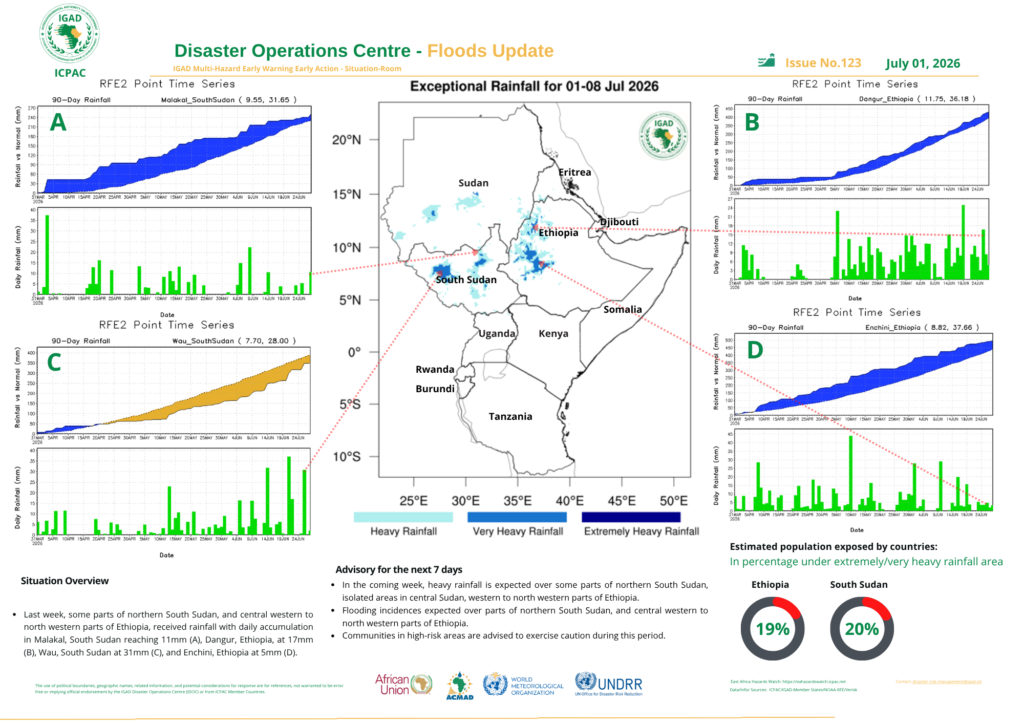
Forecasters are also warning of exceptionally heavy rainfall, with precipitation exceeding the 90th percentile over parts of northern and western South Sudan, isolated areas of central South Sudan, and western to northern Ethiopia.
The intense rainfall increases the likelihood of flooding, particularly across northern South Sudan and central to north-western Ethiopia, where communities living in flood-prone areas are advised to remain alert for possible flash floods and rising river levels.
Heat Builds Across the Greater Horn
Alongside the rainfall, temperatures are expected to remain above average across most parts of the Greater Horn of Africa.
Temperatures exceeding 32°C are forecast over Djibouti, central and eastern Sudan, coastal Eritrea, northern coastal Somalia, and north-eastern Ethiopia. In comparison, most of the region is expected to record moderate to high temperatures ranging between 20°C and 32°C.
Cooler conditions, with temperatures below 20°C, are expected across Rwanda, Burundi, central to western Kenya, central to southern Tanzania, and parts of central to northern Ethiopia, mainly in highland areas.
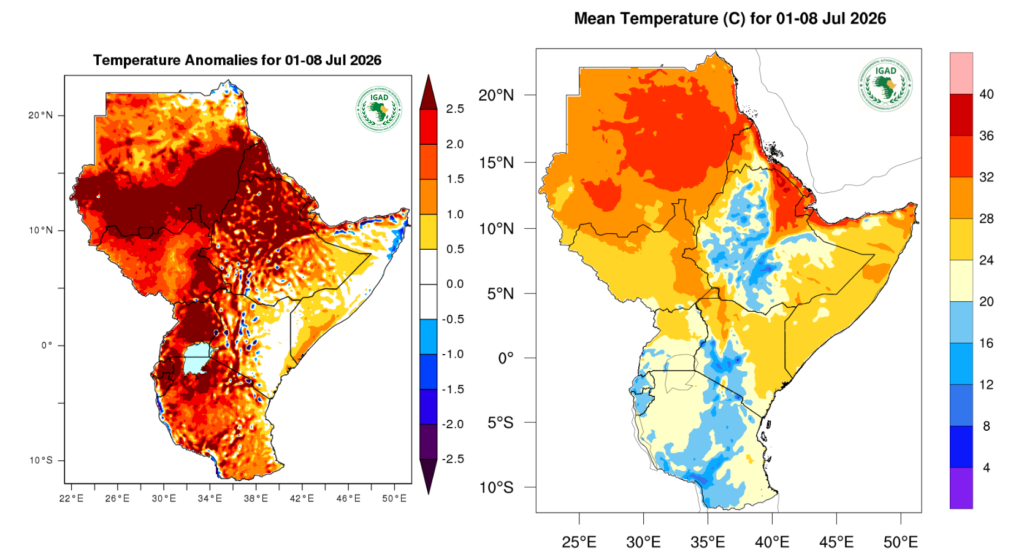
The broader outlook continues to point to warmer-than-normal temperatures across much of the Greater Horn, with only a few isolated areas expected to experience cooler-than-average conditions.
Heat stress also remains a concern. ICPAC forecasts “Extreme Caution” heat stress levels across most parts of South Sudan, Sudan, Eritrea, Djibouti, central to northern Somalia, and north-eastern Ethiopia.
In addition, parts of Ethiopia’s Afar region extending into central Eritrea are expected to reach the more severe “Danger” category, indicating a heightened risk of heat-related illnesses, particularly for vulnerable populations and people working outdoors.
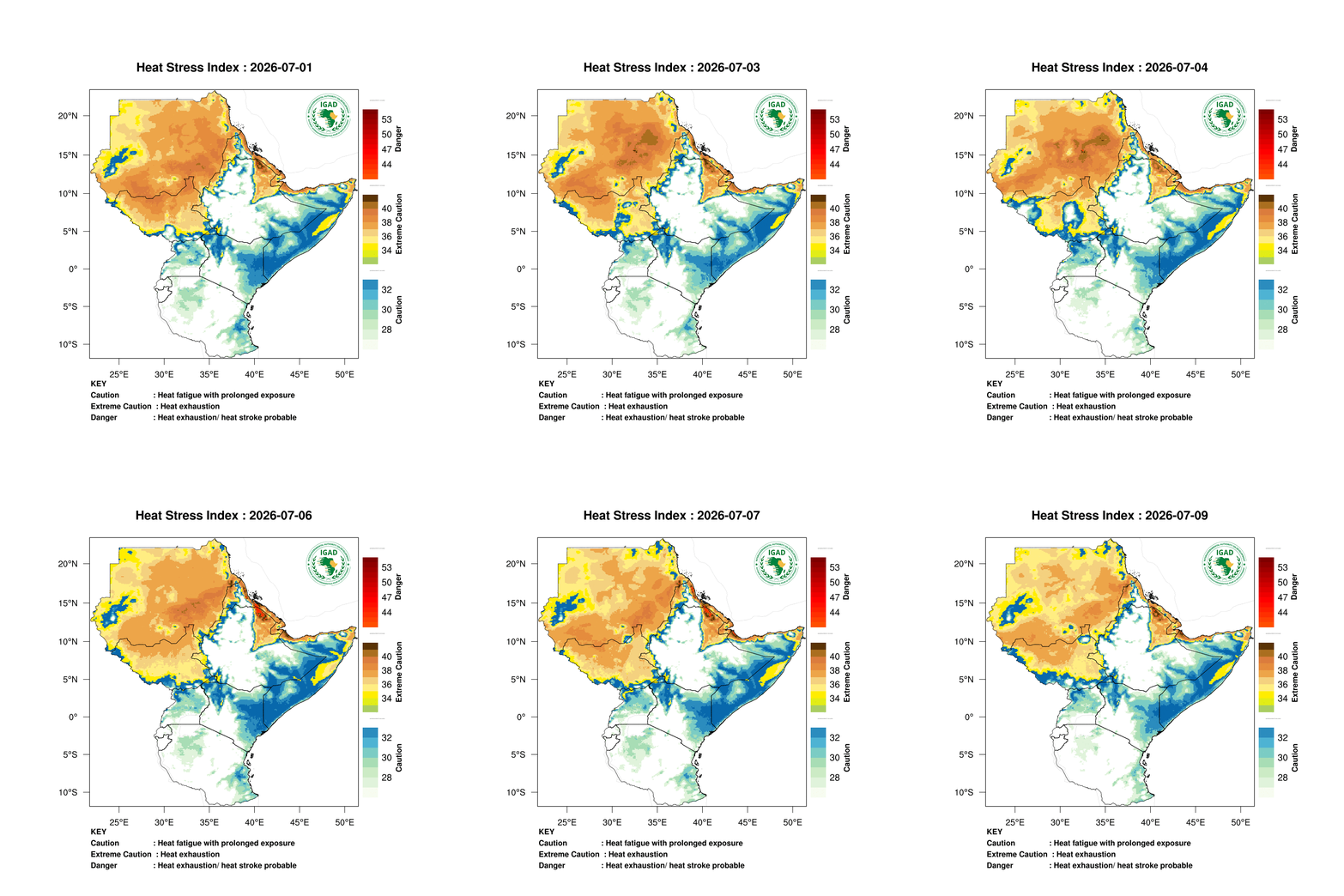
The latest outlook highlights a region experiencing increasingly contrasting weather conditions, with localized heavy rainfall and flood risks unfolding alongside widespread warmth and elevated heat stress.
As climate variability continues to influence seasonal weather patterns, communities are encouraged to keep track of official forecasts and prepare for rapidly changing conditions.